
Edith Södergran (1892–1923)
Author of Collected Poems
About the Author
Reduced to poverty by the Russian Revolution and dying of tuberculosis, young Edith Sodergran made an indelible impact on Swedish-language verse in particular, and modern poetry in general. Still moving today, her poems are powerful, expressionistic evocations of emotions and moods which range from show more invigoration to resignation. She was the foremost Finland-Swedish modernist and introduced many new poetic devices to Scandinavian poetry. (Bowker Author Biography) show less
Series
Works by Edith Södergran
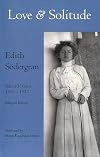
Love & Solitude: Selected Poems, 1916-1923 (English and Swedish Edition) (1981) 52 copies, 2 reviews
Rosenaltaret 2 copies
Piimata 1 copy
La luna e altre poesie 1 copy
Dikt i utvalg 1 copy
Min lyra : dikter i urval 1 copy
Edith Södergrans dikter 1 copy
Edith Södergrans dikter 1 copy
Edith Södergran: Runoja 1 copy
Samlande dikter 1 copy
Poi@0113mata 1 copy
The Poet Who Created Herself: The Selected Letters of Edith Sodergran (Series a (Norvik Press), No. 18.) (2000) 1 copy
Edith Sodergrans Dikter 1 copy
Breve til Hagar Olsson 1 copy
Associated Works
World Poetry: An Anthology of Verse from Antiquity to Our Time (1998) — Contributor — 496 copies, 2 reviews
Women in Praise of the Sacred: 43 Centuries of Spiritual Poetry by Women (1994) — Contributor — 382 copies, 5 reviews
Ordens musik : dikter med klang och rytm från Lasse Lucidor till Tage Danielsson : en antologi (1990) — Contributor — 38 copies
Tagged
Common Knowledge
- Canonical name
- Södergran, Edith
- Legal name
- Södergran, Edith Irene
- Birthdate
- 1892-04-04
- Date of death
- 1923-06-24
- Gender
- female
- Education
- Petrischule, St Petersburg, Russia
- Occupations
- poet
writer - Relationships
- Olsson, Hagar (friend)
- Short biography
- Edith Södergran was born in St. Petersburg, Russia, the only child of a middle-class Swedish-Finnish family. Her first language was German and her earliest poetry was written in that language. She was educated in Russia and learned to speak several languages. In 1908, she stopped writing in German and made Swedish her main literary language. At the age of 16, Edith Södergran contracted tuberculosis, the same disease that had killed her father the year before. From 1911 to 1914, she lived mainly in sanatoria in Switzerland, where she started to study Italian and read Dante. In 1914 she returned home with high hopes for the future. In 1916, at age 24, she published her first collection of verse, Dikter (Poems). With the outbreak of the Russian Revolution in 1917, Edith and her mother took refuge permanently in the family's summer home on the Karelian Isthmus, on the Finnish-Russian border. She suffered from depression and extreme poverty, but produced further collections of verse, including Septemberlyran (September Lyre, 1918), Rosenaltaret (The Rose Altar, 1919), and Framtidens skugga (The Shadow of the Future, 1920). Landet som icke är (The Land that Is Not) was published posthumously in 1925. Edith Södergran died from tuberculosis at age 31. Although she did not receive much recognition in her lifetime, she's now considered one of the first modernists and a pioneer of poetry in the Swedish language in Finland.
- Nationality
- Finland
- Birthplace
- St. Petersburg, Russian Empire
- Places of residence
- St. Petersburg, Russian Empire
- Place of death
- Raivola, Finland
- Burial location
- Raivola, Karelia, Finland
- Associated Place (for map)
- Finland
Members
Reviews

Your teeth are strong, sister, your tongue beautiful and mysterious. “Det är som gästade jag jorden tillfälligt, flyktigt, lätt / för att med en skur av speord väcka den.” (“Sol,” p. 157) Did you know how far your words would fly? You knew ;-)
This is always beautiful, sometimes painful lyric poetry written by the Swedish language's greatest poet.

Awards

You May Also Like


Associated Authors
Statistics
- Works
- 69
- Also by
- 7
- Members
- 600
- Popularity
- #41,874
- Rating
- 4.0
- Reviews
- 12
- ISBNs
- 113
- Languages
- 13
- Favorited
- 17