
James Haskins (1941–2005)
Author of Rosa Parks: My Story
About the Author
Author Jim Haskins was born in Demopolis, Alabama on September 19, 1941. He received a B.A. from Georgetown University in 1960, a B.S. from Alabama State University in 1962, and a M.A. from the University of New Mexico in 1963. After graduation, he became a special education teacher in a public show more school in Harlem. His first book, Diary of a Harlem School Teacher, was the result of his experience there. He taught at numerous colleges and universities before becoming an English professor at the University of Florida, Gainesville in 1977. He wrote more than 100 books during his lifetime, ranging from counting books for children to biographies on Rosa Parks, Hank Aaron and Spike Lee. He won numerous awards for his work including the 1976 Coretta Scott King Award for The Story of Stevie Wonder, the 1984 Coretta Scott King Award for Lena Horne, the 1979 ASCAP Deems Taylor Award for Scott Joplin: The Man Who Made Ragtime; and the 1994 Washington Post Children's Book Guide Award. He also won the Carter G. Woodson Award for young adult non-fiction for Black Music in America; The March on Washington; and Carter G. Woodson: The Man Who Put "Black" in American History in 1989, 1994, and 2001, respectively. He died from complications of emphysema on July 6, 2005 at the age of 63. (Bowker Author Biography) show less
Disambiguation Notice:
Do not separate James Haskins into multiple authors unless you are certain this is correct. James Haskins (often Jim Haskins), an educator in New York City and Florida, wrote more than 100 books on subjects as diverse as African-American history, child abuse, alcoholism, werewolves, street gangs, religions, Indian history, sports and music biographies, and the Count Your Way series. The academic site listed in the sidebar has a large list of his many books.
Image credit: University of Florida
Series
Works by James Haskins
Black Eagles Africanamericans in Aviation (pb): African-americans In Aviation (1995) 346 copies, 2 reviews
Hippocrene U.S.A. Guide to Historic Black South: Historical Sites, Cultural Centers, and Musical Happenings of the African-American South (1993) 5 copies
Cocktail Piano 2 2 copies
Resistance; profiles in nonviolence 2 copies
Cocktail Piano XIV 1 copy
Cocktail Piano I 1 copy
Cocktail Piano Vol. 11 1 copy
Cocktail Piano V 1 copy
Cocktail Piano Vol. 10 1 copy
Cocktail Piano IV 1 copy
What are the handicapped 1 copy
John Lewis in the Lead: A Story of the Civil Rights Movement by Haskins, Jim, Andrews, Benny (2006) Paperback 1 copy, 1 review
Black Manifesto for Education. — Editor — 1 copy
Arab wold 1 copy
Associated Works
Cobblestone: Martin Luther King, Jr. and the Civil Rights Movement 1994.02 (1994) — Contributor — 5 copies
Tagged
Common Knowledge
- Legal name
- Haskins, James S.
- Other names
- Haskins, Jim
- Birthdate
- 1941-09-14
- Date of death
- 2005-07-06
- Gender
- male
- Education
- Georgetown University (BA|1960)
Alabama State University (BS|1962)
University of New Mexico (MA|1963) - Occupations
- university professor
music teacher
special education teacher
curator
editor
book reviewer (show all 7)
stock trader - Organizations
- University of Florida, Gainesville
Smithsonian Institution Traveling Exhibition Service
Statue of Liberty-Ellis Island Foundation, Inc.
National Education Advisory Committee of The Commission on the Bicentennial of the United States Constitution
CIVITAS
The Gainesville Sun (show all 8)
Opportunity magazine
Footsteps magazine - Awards and honors
- James Haskins Visiting Scholar Fellowship named in his honor (University of Florida)
- Cause of death
- emphysema
- Nationality
- USA
- Birthplace
- Demopolis, Alabama, USA
- Places of residence
- New York, New York, USA
Roxbury, Massachusetts, USA - Place of death
- Manhattan, New York, USA
- Disambiguation notice
- Do not separate James Haskins into multiple authors unless you are certain this is correct. James Haskins (often Jim Haskins), an educator in New York City and Florida, wrote more than 100 books on subjects as diverse as African-American history, child abuse, alcoholism, werewolves, street gangs, religions, Indian history, sports and music biographies, and the Count Your Way series. The academic site listed in the sidebar has a large list of his many books.
- Associated Place (for map)
- USA
Members
Reviews

I found this book in a used book store, it was a discarded library book! I snapped up quickly because I have always looked up Shirley Chisolm. I remember watching her speeches on her one run for the presidency.
This biography shows why I loved her so much! She was born in Brooklyn, New York of immigrant parents, the oldest of children. She was so smart, learning to read at young age and was found to have an I.Q of 170! She was introduced to politics by her much loved father. She was black, a show more woman and from a hard working family. She loved reading biographies and quoted from Harriet Tubman and Susan B.Anthony. She won prizes on the high school debating team but when it came to finding a job it was very difficult. She had to be daring to even get a job at child daycare center. She had to tell her employers to put her on a trial basis to see if she could do the job. (I wish that I had thought of that during my early job interviews!)
She worked in the daytime and took college classes at night. She joined political clubs, and worked hard to become the first black woman in Congress. I remember her stirring speeches. She wanted to represent all of us, not just the blacks and not just the women. I loved her! My mother when asked in high school was asked what she wanted to do in her life. Everyone laughed, as I am sure that they laughed at her. She was practical and wanted government to serve the needs of the people. She was a trailblazer and it is important to remember from her life lessons especially now.
You could count on her, she was for rights back then that are being crushed right now. She did not get press coverage that she needed and it upset her that people did not stand firm in their convictions, candidates then and still do now say one thing in the northern states and another in the southern states. She was a bright star that was not allowed to shine for long. show less
This biography shows why I loved her so much! She was born in Brooklyn, New York of immigrant parents, the oldest of children. She was so smart, learning to read at young age and was found to have an I.Q of 170! She was introduced to politics by her much loved father. She was black, a show more woman and from a hard working family. She loved reading biographies and quoted from Harriet Tubman and Susan B.Anthony. She won prizes on the high school debating team but when it came to finding a job it was very difficult. She had to be daring to even get a job at child daycare center. She had to tell her employers to put her on a trial basis to see if she could do the job. (I wish that I had thought of that during my early job interviews!)
She worked in the daytime and took college classes at night. She joined political clubs, and worked hard to become the first black woman in Congress. I remember her stirring speeches. She wanted to represent all of us, not just the blacks and not just the women. I loved her! My mother when asked in high school was asked what she wanted to do in her life. Everyone laughed, as I am sure that they laughed at her. She was practical and wanted government to serve the needs of the people. She was a trailblazer and it is important to remember from her life lessons especially now.
You could count on her, she was for rights back then that are being crushed right now. She did not get press coverage that she needed and it upset her that people did not stand firm in their convictions, candidates then and still do now say one thing in the northern states and another in the southern states. She was a bright star that was not allowed to shine for long. show less
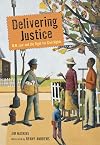
The story of a boy who grew up to be one of Savannah’s Civil Rights leaders is simply told and illustrated with striking oil-and-collage paintings. Jim Crow informed Westley Law’s childhood, as he and his family endured the routine humiliation of segregation. From this beginning, he grew up to become a voters’ rights activist with the NAACP, an activity that barred him from becoming a teacher; instead, he became a letter carrier, a perfect occupation, it turns out, for a grass-roots show more organizer. Haskins’s understated text is divided into one-spread “chapters,” a technique that helps to lead readers through the rather esoteric process of non-violence training and protest-organizing. These “chapters” are paired with Andrews’s striking paintings, his elongated forms and elegant verticals underscoring the resoluteness of Law’s protesters and the relative peacefulness of the change he was able to effect in Savannah, in dramatic contrast to much of the rest of the South. This pleasing treatment of one man’s efforts to bring about seismic change is marred by a lack of documentation of quoted material, but is followed up with a biographical note. (Picture book/biography. 6-10)
-Kirkus Review show less
-Kirkus Review show less
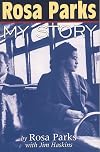
1st December 1955, Montgomery, Alabama. Rosa Parks, a black woman, refused to give up her seat to a white man. She wasn't the first one to do so, and so the usual procedure was well followed: the driver stopped the bus, called the police, she was arrested, spent a night in jail, and went to court the next day to be sentenced to paid a fine. End of the story...
… Beginning of History.
Rosa Parks was indeed a member of the NAACP. She was also, as a Baptist Christian, member of a strong church show more community unafraid to campaign on various issues affecting then black people. The two movements will combine to support her; and it will trigger the whole Civil Right Movement that would ultimately transform the segregationist USA.
Where to seat, if at all, in buses? It will take one year of clashes, pressures, and violence before racial segregation in public transport to be declared unconstitutional by the Supreme Court... and for Rosa Parks to become a whole symbol of political freedom.
This autobiography is at the image of such a courageous lady: simple, humble, yet dignified and truly brave. A lesson in humanity. show less
… Beginning of History.
Rosa Parks was indeed a member of the NAACP. She was also, as a Baptist Christian, member of a strong church show more community unafraid to campaign on various issues affecting then black people. The two movements will combine to support her; and it will trigger the whole Civil Right Movement that would ultimately transform the segregationist USA.
Where to seat, if at all, in buses? It will take one year of clashes, pressures, and violence before racial segregation in public transport to be declared unconstitutional by the Supreme Court... and for Rosa Parks to become a whole symbol of political freedom.
This autobiography is at the image of such a courageous lady: simple, humble, yet dignified and truly brave. A lesson in humanity. show less
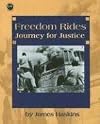
‘Freedom Rides: Journey for Justice’ is a compelling true story of social change and justice. Written by James Haskins, the book is full of original photos of Civil Rights activists around the United States. The author is a former English professor who wrote over one hundred books regarding Civil Rights and African Americans. While Mr. Haskins did not use many primary sources or scholarly presses to research this book, he is an African American man who was born in 1941 and grew up in show more ‘Jim Crow’ Alabama and even joined the Congress of Racial Equality (CORE) while attending Alabama State University in Montgomery Alabama. His first-hand knowledge and experiences of the events which he writes are invaluable to this work of nonfiction.
For those who do not know, the Freedom Riders were people from different walks of life, ethnicities, and ages who came together to protest the social injustices they saw and knew were immoral and in most cases, illegal. They tested the rights of African American interstate bus and train travelers to sit wherever they chose, next to whomever they chose, and to be served in segregated establishments along the interstate routes. These tests would prove to be more violent and disputed the farther south they ventured. Hundreds of Freedom Riders were beaten, jailed, and humiliated in the name of equal rights and dignity. Enforcing the rights of African Americans to sit where they chose on the bus, voting laws making it easier for African Americans to register to vote, or passing the Civil Rights Act in 1965 did not erase racism. That is one reason why books addressing subjects such as the Freedom Riders is so important for our young students.
The author does a fantastic job recreating the scene and providing enough backstory to draw the reader into the mindset of the Freedom Riders. My only criticism of the entire book is that the author filled approximately eight pages in a row giving names, dates, and incidents with such rapidity it is head-spinning. This would be too much information for younger children to absorb without stopping to unpack the data. But I believe this story should be heard by younger children so perhaps some of the information could have been broken up as he approached the chapters that dealt with those particular individuals or events.
This book is excellent for young readers who would benefit from learning about the historical injustices of the Jim Crow South. One Freedom Rider Diane Nash was quoted in chapter 10 saying “If people think that it was Martin Luther King’s movement . . . they are more likely to say ‘Gosh, I wish we had a Martin Luther King here today to lead us.’ If people knew how that movement [really] started, then the question they would ask themselves is, ‘What can I do?’ " (page 91) This is not a slight to Martin Luther King’s legacy but rather a call to arms for the average person who wants to fight social inequities or injustices but does not think they have the capacity or strength to fight. Indeed, this book is about hundreds of average African Americans who were fed up with the daily discrimination, humiliation, and marginalization they felt and did everything in their power to change not only their future but also generations to come. show less
For those who do not know, the Freedom Riders were people from different walks of life, ethnicities, and ages who came together to protest the social injustices they saw and knew were immoral and in most cases, illegal. They tested the rights of African American interstate bus and train travelers to sit wherever they chose, next to whomever they chose, and to be served in segregated establishments along the interstate routes. These tests would prove to be more violent and disputed the farther south they ventured. Hundreds of Freedom Riders were beaten, jailed, and humiliated in the name of equal rights and dignity. Enforcing the rights of African Americans to sit where they chose on the bus, voting laws making it easier for African Americans to register to vote, or passing the Civil Rights Act in 1965 did not erase racism. That is one reason why books addressing subjects such as the Freedom Riders is so important for our young students.
The author does a fantastic job recreating the scene and providing enough backstory to draw the reader into the mindset of the Freedom Riders. My only criticism of the entire book is that the author filled approximately eight pages in a row giving names, dates, and incidents with such rapidity it is head-spinning. This would be too much information for younger children to absorb without stopping to unpack the data. But I believe this story should be heard by younger children so perhaps some of the information could have been broken up as he approached the chapters that dealt with those particular individuals or events.
This book is excellent for young readers who would benefit from learning about the historical injustices of the Jim Crow South. One Freedom Rider Diane Nash was quoted in chapter 10 saying “If people think that it was Martin Luther King’s movement . . . they are more likely to say ‘Gosh, I wish we had a Martin Luther King here today to lead us.’ If people knew how that movement [really] started, then the question they would ask themselves is, ‘What can I do?’ " (page 91) This is not a slight to Martin Luther King’s legacy but rather a call to arms for the average person who wants to fight social inequities or injustices but does not think they have the capacity or strength to fight. Indeed, this book is about hundreds of average African Americans who were fed up with the daily discrimination, humiliation, and marginalization they felt and did everything in their power to change not only their future but also generations to come. show less
Lists
Youth: BLM (1)
Awards


You May Also Like


Associated Authors
Statistics
- Works
- 189
- Also by
- 6
- Members
- 8,758
- Popularity
- #2,732
- Rating
- 3.8
- Reviews
- 101
- ISBNs
- 444
- Languages
- 8
- Favorited
- 4