
Takehiko Inoue
Author of Vagabond, VIZBIG Edition Volume 1 (Books 1-3)
About the Author
Image credit: wikipedia
Series
Works by Takehiko Inoue
Vagabond (VIZBIG Edition) Complete Collection Manga Set (Vol 1-12) by by Takehiko Inoue (2018) 3 copies
Kung Fu Dunk 2 copies
vagabond vol 19 Ed. 2015 2 copies
Slam Dunk Kanzenban 21 1 copy
Slam Dunk deluxe - Tome 12 1 copy
Slam Dunk 1 copy
Vagabond 10 volumes 1 copy
Vagabond Volume 33 1 copy
[Slam Dunk] ; SLAM DUNK 10 1 copy
Slamdunk Volume 1 (Volume 1) 1 copy
Vagabond, Three in One 1 copy
Slam Dunk 08 1 copy
Vagabond, Vol. 43 1 copy
Vagabond, Vol.42 1 copy
Vagabond, Vol. 40 1 copy
[Slam Dunk] ; SLAM DUNK 17 1 copy
Tagged
Common Knowledge
- Canonical name
- 井上雄彥
- Birthdate
- 1967-01-12
- Gender
- male
- Awards and honors
- Kodansha Manga Award (General ∙ 2000)
Tezuka Award (1988)
Shogakukan Manga Award (1995)
Tezuka Osamu Cultural Prize (2002) - Nationality
- Japan
- Map Location
- Japan
Members
Reviews
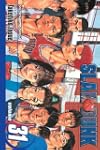
This is not just a review of Vol. 31, but a review of the entire series.
As I was driving to work tonight knowing I would finish this series I didn't believe I would rate the series 5 stars. I was trying to compare this series with other 5 star reads, and considering I had a rocky start with this series, I felt that this wold end up being a 4 star series in all: Vol. 31 changed everything.
As I was reading Vol. 31 I felt the same way I felt reading those final volumes of Haikyu! I was show more rooting for Shohoku, but I thought I knew how the story would end, and I was surprised. I was grinning ear to ear as I was speeding through those pages, admiring every single panel and really feeling like I was there watching those final seconds. It was that intense flare of emotions and feeling that sealed the deal. There is a reason this series is heralded in the sports genre. I cared about basketball in those final chapters. There was no reason not to give this a 5.
Thank you Takehiko Inoue
I am beyond glad Viz Media decided to reprint this series recently, if that hadn't happened I probably would never had read this series or sought it out after I took a break from getting volumes from my college ILL. Thank you Viz. show less
As I was driving to work tonight knowing I would finish this series I didn't believe I would rate the series 5 stars. I was trying to compare this series with other 5 star reads, and considering I had a rocky start with this series, I felt that this wold end up being a 4 star series in all: Vol. 31 changed everything.
As I was reading Vol. 31 I felt the same way I felt reading those final volumes of Haikyu! I was show more rooting for Shohoku, but I thought I knew how the story would end, and I was surprised. I was grinning ear to ear as I was speeding through those pages, admiring every single panel and really feeling like I was there watching those final seconds. It was that intense flare of emotions and feeling that sealed the deal. There is a reason this series is heralded in the sports genre. I cared about basketball in those final chapters. There was no reason not to give this a 5.
Thank you Takehiko Inoue
I am beyond glad Viz Media decided to reprint this series recently, if that hadn't happened I probably would never had read this series or sought it out after I took a break from getting volumes from my college ILL. Thank you Viz. show less
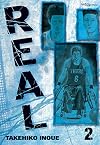
Although I wouldn't necessarily consider myself to be a sports fan, I have come to the realization that I really enjoy sports manga. Out of all of the sports manga that I've so far read, Takehiko Inoue's wheelchair basketball series Real is the one that stands out for me the most. (Actually, Real happens to be one of my favorite manga series in general.) But it's really more than just a sports manga. Yes, basketball is an important part of the series, but to an even greater extent Real is show more about challenges faced in life and how people deal with them. It's a mix of human drama, tragedy, and hope that earned Inoue a Japan Media Arts Award Excellence Prize in 2001. The second volume of Real was first published in Japan in 2002 while the English edition was released in 2008 by Viz Media under its Signature imprint. Real, Volume 1 did a fantastic job of introducing the series' main characters and establishing some of the themes that the manga begins to explore more deeply in the second volume and those that follow.
After his accident, Takahashi no longer has the use of his legs. Confined to a hospital bed and with very few visitors he has had to come to terms with his condition largely on his own. He had good grades and excelled at whatever he applied himself to, becoming the captain of his high school's basketball team with ease. No longer having the ability to walk is a devastating blow to Takahashi and how he is viewed by others and by himself. It won't be an easy process to compensate for what he has lost. It's been five years since Togawa lost one of his legs to bone cancer and that's something he continues to struggle with. He still has most of his mobility, but having a leg amputated brought his dream of becoming the fastest sprinter in Japan, if not the world, to an abrupt end. An extremely competitive athlete he has redirected his ambitions towards wheelchair basketball, now one of the few things in his life for which he has any enthusiasm. Nomiya has a strong love for basketball as well, but as a high school dropout he currently has no outlet for that passion.
A large portion of Real, Volume 2 is devoted to Togawa and part of his backstory. The series turns to his middle school days as he is discovering his love of running, struggling with his relationship with his father, and developing strong, lasting friendships. Immensely talented, it is crushing to know that Togawa will never achieve his dream even as everything seems to be going his way. Just as Takahashi is now being forced to admit his limitations, Togawa also had to deal with events in his life that were beyond his control. The interplay between their two stories in Real is handled extraordinarily well. The two young men have never met, their only direct connection at this point is that they both know Nomiya, but Inoue draws on the parallels between their experiences to great effect. Takahashi is at the beginning of his recovery while Togawa has made years of progress, but the challenges that they face are very similar. Their personalities and how they handle things are very different, though.
Parallels also exist between Togawa and Nomiya. They are both very focused and intense, taking any and all opportunities that they can to practice and improve their game. Even when Togawa, Nomiya, and Takahashi's stories don't directly intersect, they are all still very closely tied together. The second volume of Real is very much about beginnings and endings. After originally leaving his basketball team, Togawa has found new drive and inspiration that brings him back. Nomiya doesn't have the option of returning to his old team and can only watch from the sidelines as his former teammates play their last game. As for Takahashi, he can't even do that. His denial is slowly turning into agonizing despair as he comes closer to admitting to himself that his life will never be the same. Inoue captures all three of their struggles in a very realistic way. The story is emotionally intense without being melodramatic and the artwork is fantastic, making Real and incredibly effective series.
Experiments in Manga show less
After his accident, Takahashi no longer has the use of his legs. Confined to a hospital bed and with very few visitors he has had to come to terms with his condition largely on his own. He had good grades and excelled at whatever he applied himself to, becoming the captain of his high school's basketball team with ease. No longer having the ability to walk is a devastating blow to Takahashi and how he is viewed by others and by himself. It won't be an easy process to compensate for what he has lost. It's been five years since Togawa lost one of his legs to bone cancer and that's something he continues to struggle with. He still has most of his mobility, but having a leg amputated brought his dream of becoming the fastest sprinter in Japan, if not the world, to an abrupt end. An extremely competitive athlete he has redirected his ambitions towards wheelchair basketball, now one of the few things in his life for which he has any enthusiasm. Nomiya has a strong love for basketball as well, but as a high school dropout he currently has no outlet for that passion.
A large portion of Real, Volume 2 is devoted to Togawa and part of his backstory. The series turns to his middle school days as he is discovering his love of running, struggling with his relationship with his father, and developing strong, lasting friendships. Immensely talented, it is crushing to know that Togawa will never achieve his dream even as everything seems to be going his way. Just as Takahashi is now being forced to admit his limitations, Togawa also had to deal with events in his life that were beyond his control. The interplay between their two stories in Real is handled extraordinarily well. The two young men have never met, their only direct connection at this point is that they both know Nomiya, but Inoue draws on the parallels between their experiences to great effect. Takahashi is at the beginning of his recovery while Togawa has made years of progress, but the challenges that they face are very similar. Their personalities and how they handle things are very different, though.
Parallels also exist between Togawa and Nomiya. They are both very focused and intense, taking any and all opportunities that they can to practice and improve their game. Even when Togawa, Nomiya, and Takahashi's stories don't directly intersect, they are all still very closely tied together. The second volume of Real is very much about beginnings and endings. After originally leaving his basketball team, Togawa has found new drive and inspiration that brings him back. Nomiya doesn't have the option of returning to his old team and can only watch from the sidelines as his former teammates play their last game. As for Takahashi, he can't even do that. His denial is slowly turning into agonizing despair as he comes closer to admitting to himself that his life will never be the same. Inoue captures all three of their struggles in a very realistic way. The story is emotionally intense without being melodramatic and the artwork is fantastic, making Real and incredibly effective series.
Experiments in Manga show less

When I first began reading Takehiko Inoue's manga series Real it was simply because it was the only work of his that my local library had at the time. I was already familiar with and loved Inoue's fantastic artwork but I hadn't actually yet read any of his manga. The series that I really wanted to read was Vagabond, but it happened to be Real that was more readily available. Little did I know that Real would not only end up being my favorite series by Inoue, it would become one of my show more favorite manga period. I honestly believe that Real is one of the best comics currently being released in English. The first volume of Real was published in Japan in 2001, the same year that Inoue won a Japan Media Arts Award for the series. Viz Media released the English-language edition of Real, Volume 1 in 2008 under its Signature imprint.
Ever since he quit the Nishi High School basketball team, nothing seems to be going right for Tomomi Nomiya. His life is changed forever when he is involved in a motorcycle accident. Nomiya comes through it relatively unharmed, at least physically, but Natsumi Yamashita, the young woman who was riding with him, is no longer able to walk. While visiting her at the hospital Nomiya meets Kiyoharu Togawa, another young man who, like him, has a passion for basketball. He's incredibly talented, but with only one leg it's wheelchair basketball that has become his outlet. Thus begins a somewhat antagonistic friendship between Togawa and Nomiya. And then there is Hisanobu Takahashi, one of Nomiya's former classmates and the current captain of Nishi High's basketball team. He may have the skills on the court, but he has an extremely arrogant attitude and delights in making Nomiya and his friends miserable. But soon he'll have some serious challenges to face in his own life as well.
In general, Inoue's artwork in tends to be very realistic, with a particular focus on characters and their designs. This is certainly true for Real, and his style suits a story that emphasizes real-life issues as the source of its drama incredibly well. The characters' personalities and attitudes can easily be determined by their actions and how they are drawn. When Nomiya is first introduced, he seems to be nothing more than a delinquent. And to some extent he is a delinquent, frequently getting into fights and finding ways to scam rich kids out of their money. But he is also exceptionally kindhearted and accepting of others. Nomiya's facial expressions and body language range from pure anger to utter delight. Togawa, on the other hand, more often than not has a smirk or sneer on his face and barely manages to suppress his extreme irritation. He has absolutely no patience for people who can't take themselves or what they are doing seriously and it shows. At times Nomiya and Togawa's respective intensity can be both frightening and exhilarating.
At its heart Real is very much a manga about its characters and how they deal with the challenges and setbacks in their lives. Basketball is simply a part of that because the game is important to the characters as individuals. The first volume of Real does an excellent job of introducing the main players of the series--Nomiya, Togawa, and Takahashi. In one way or another, each one of them is searching for some direction in their lives. It is their passion for basketball that provides some of that needed purpose. Nomiya struggles a great deal with the guilt he feels over the incident that cost Natsumi the use of her legs; his love of basketball is the only thing that really remains from before the accident. Togawa holds onto a tremendous amount of anger that playing basketball helps to keep under control. As for Takahashi, his talent for basketball was one of the few things that secured his popularity. But even considering the important role that basketball plays in Real, it is not at all necessary to be a fan of the game to be able to appreciate the manga.
Experiments in Manga show less
Ever since he quit the Nishi High School basketball team, nothing seems to be going right for Tomomi Nomiya. His life is changed forever when he is involved in a motorcycle accident. Nomiya comes through it relatively unharmed, at least physically, but Natsumi Yamashita, the young woman who was riding with him, is no longer able to walk. While visiting her at the hospital Nomiya meets Kiyoharu Togawa, another young man who, like him, has a passion for basketball. He's incredibly talented, but with only one leg it's wheelchair basketball that has become his outlet. Thus begins a somewhat antagonistic friendship between Togawa and Nomiya. And then there is Hisanobu Takahashi, one of Nomiya's former classmates and the current captain of Nishi High's basketball team. He may have the skills on the court, but he has an extremely arrogant attitude and delights in making Nomiya and his friends miserable. But soon he'll have some serious challenges to face in his own life as well.
In general, Inoue's artwork in tends to be very realistic, with a particular focus on characters and their designs. This is certainly true for Real, and his style suits a story that emphasizes real-life issues as the source of its drama incredibly well. The characters' personalities and attitudes can easily be determined by their actions and how they are drawn. When Nomiya is first introduced, he seems to be nothing more than a delinquent. And to some extent he is a delinquent, frequently getting into fights and finding ways to scam rich kids out of their money. But he is also exceptionally kindhearted and accepting of others. Nomiya's facial expressions and body language range from pure anger to utter delight. Togawa, on the other hand, more often than not has a smirk or sneer on his face and barely manages to suppress his extreme irritation. He has absolutely no patience for people who can't take themselves or what they are doing seriously and it shows. At times Nomiya and Togawa's respective intensity can be both frightening and exhilarating.
At its heart Real is very much a manga about its characters and how they deal with the challenges and setbacks in their lives. Basketball is simply a part of that because the game is important to the characters as individuals. The first volume of Real does an excellent job of introducing the main players of the series--Nomiya, Togawa, and Takahashi. In one way or another, each one of them is searching for some direction in their lives. It is their passion for basketball that provides some of that needed purpose. Nomiya struggles a great deal with the guilt he feels over the incident that cost Natsumi the use of her legs; his love of basketball is the only thing that really remains from before the accident. Togawa holds onto a tremendous amount of anger that playing basketball helps to keep under control. As for Takahashi, his talent for basketball was one of the few things that secured his popularity. But even considering the important role that basketball plays in Real, it is not at all necessary to be a fan of the game to be able to appreciate the manga.
Experiments in Manga show less
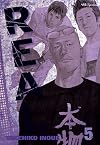
When I first started reading Takehiko Inoue's prize-winning manga series Real, I didn't expect to appreciate it as much as I do. Real has actually become one of my favorite series. I wasn't particularly interested in wheelchair basketball, one of the main subjects of Real, although that has since changed. Instead, I was initially drawn to the manga because it was created by Inoue, whose artwork I greatly admire. I also am very impressed by his storytelling skills, especially in Real, but show more also in his other manga available in English, Slam Dunk and Vagabond. As much as I enjoy those two series, in the end it's Real that I find to be the most compelling. It is a very powerful work. I've said it many times before, but it is still true--I honestly believe Real to be one of the best comics that is currently being released in English. The fifth volume of Real was originally collected in Japan in 2005 while the English-language edition, released under Viz Media's Signature imprint, was published in 2009.
Ever since his motorcycle accident, Nomiya's life has been falling apart. Although he has tried to earn his drivers' license, it has taken him quite some time since he is terrified to be on the road. Nomiya is even more terrified of facing Natsumi, the young woman who was in the accident with him. While Nomiya was barely injured, Natsumi has lost the ability to walk and must now use a wheelchair. Nomiya blames himself for the accident and Natsumi's current condition. The guilt has nearly brought his life to a standstill. He wants to do all that he can to move forward, but this means confronting his fears and confronting Natsumi. Unsurprisingly, she's not particularly interested in seeing Nomiya, either--she blames him for the accident, too. Her rehabilitation is going well, but Natsumi's life has been changed forever. Takahashi's rehabilitation has actually taken a turn for the better, too, after a visit from Nomiya that ends rather badly. It's been about six months since Takahashi's own accident which cost him the use of his legs, but he has recently shown enough improvement that he will soon be able to leave the hospital.
Whereas the previous volumes of Real thoroughly introduced the lead characters--Nomiya, Togawa, and Takahashi-- and explored their personal, internal struggles, the fifth volume addresses some of the more practical problems and challenges experienced by those who are disabled in an world and environment designed for the able-bodied. This can particularly be seen when Takahashi is considering returning to Nishi High to finish school. Not only is he not yet in a position where he can take of himself, the school itself isn't at all accessible to someone in a wheelchair and the needed accommodations are prohibitively expensive. These external issues and concerns are inexorably tied to how Takahashi and the others view themselves and and see themselves as people of worth. Takahashi in particular is obsessed with ranking people and assigning them value. He used to consider himself one of the elite, but now his self-worth has been severely compromised. It's understandable that this is something that he continues to struggle with, especially as he no longer feels that there is a place for him.
Takahashi isn't the only one suffering from a crisis of self-worth in the series. A major theme in Real deals with what it means to be a good person and a decent human being. Takahashi's attitude and efforts to be the best in whatever he does comes across as extremely arrogant, but people are beginning to see through his facade of perfection. Nomiya has made, and continues to make, plenty of mistakes in his life, but his honest desire to improve himself and the care and acceptance that he offers others show that he is a much better person than he recognizes. This search for self-worth isn't limited only to the series' leads, either. All of their friends and family members are struggling with it as well. In a particularly heart-wrenching development, Togawa's close friend Yama, who has always been vibrant and maintained an admirably positive outlook, is frightened of who is becoming now that his disease is overtaking his body and mind. Inoue's characterizations in Real are fantastic. The series is compelling because it is so easy for anyone to identify with the personal struggles being portrayed in the manga even if the characters' particular situations are unique.
Experiments in Manga show less
Ever since his motorcycle accident, Nomiya's life has been falling apart. Although he has tried to earn his drivers' license, it has taken him quite some time since he is terrified to be on the road. Nomiya is even more terrified of facing Natsumi, the young woman who was in the accident with him. While Nomiya was barely injured, Natsumi has lost the ability to walk and must now use a wheelchair. Nomiya blames himself for the accident and Natsumi's current condition. The guilt has nearly brought his life to a standstill. He wants to do all that he can to move forward, but this means confronting his fears and confronting Natsumi. Unsurprisingly, she's not particularly interested in seeing Nomiya, either--she blames him for the accident, too. Her rehabilitation is going well, but Natsumi's life has been changed forever. Takahashi's rehabilitation has actually taken a turn for the better, too, after a visit from Nomiya that ends rather badly. It's been about six months since Takahashi's own accident which cost him the use of his legs, but he has recently shown enough improvement that he will soon be able to leave the hospital.
Whereas the previous volumes of Real thoroughly introduced the lead characters--Nomiya, Togawa, and Takahashi-- and explored their personal, internal struggles, the fifth volume addresses some of the more practical problems and challenges experienced by those who are disabled in an world and environment designed for the able-bodied. This can particularly be seen when Takahashi is considering returning to Nishi High to finish school. Not only is he not yet in a position where he can take of himself, the school itself isn't at all accessible to someone in a wheelchair and the needed accommodations are prohibitively expensive. These external issues and concerns are inexorably tied to how Takahashi and the others view themselves and and see themselves as people of worth. Takahashi in particular is obsessed with ranking people and assigning them value. He used to consider himself one of the elite, but now his self-worth has been severely compromised. It's understandable that this is something that he continues to struggle with, especially as he no longer feels that there is a place for him.
Takahashi isn't the only one suffering from a crisis of self-worth in the series. A major theme in Real deals with what it means to be a good person and a decent human being. Takahashi's attitude and efforts to be the best in whatever he does comes across as extremely arrogant, but people are beginning to see through his facade of perfection. Nomiya has made, and continues to make, plenty of mistakes in his life, but his honest desire to improve himself and the care and acceptance that he offers others show that he is a much better person than he recognizes. This search for self-worth isn't limited only to the series' leads, either. All of their friends and family members are struggling with it as well. In a particularly heart-wrenching development, Togawa's close friend Yama, who has always been vibrant and maintained an admirably positive outlook, is frightened of who is becoming now that his disease is overtaking his body and mind. Inoue's characterizations in Real are fantastic. The series is compelling because it is so easy for anyone to identify with the personal struggles being portrayed in the manga even if the characters' particular situations are unique.
Experiments in Manga show less
Awards


You May Also Like


Associated Authors
Statistics
- Works
- 228
- Members
- 8,819
- Popularity
- #2,713
- Rating
- 4.3
- Reviews
- 75
- ISBNs
- 925
- Languages
- 10
- Favorited
- 12