
Mary Batten
Author of Hungry Plants
About the Author
Works by Mary Batten
Shark attack almanac 2 copies
FAN DE SCIENCE: FELINS 2 copies
Tagged
Common Knowledge
- Gender
- female
- Education
- Woman's College of the University of North Carolina, The New School for Social Research, Columbia University
- Occupations
- Writer for publishing & TV
- Organizations
- Authors Guild
Writers Guild of America - Awards and honors
- Fulbright Fellowship,
The Newswomen's Club of New York Front Page Award
Emmy Nominee - Short biography
- Mary Batten is an award-winning nature/science writer for television, film and publishing. Her many writing projects have taken her into tropical rainforests, astronomical observatories, scientific laboratories, and medical research centers. She was nominated for an Emmy for her scripting on the Children's Television Workshop's 3-2-1- CONTACT series, and she appeared on OPRAH for her adult book, Sexual Strategies How Females Choose Their Mates.
Her two most recent books are Life in Hot Water: Wildlife at the Bottom of the Ocean (Peachtree 2022; named Outstanding Science Trade Book for Students K-12 by the National Science Teaching Association) and Life in a Frozen World: Wildlife of Antarctica (Peachtree 2020). Both books are volumes in the series she created, “Life in the Extreme,” about animals and plants that have adapted to extreme environments. She is the author of more than 15 other Children's nature/science books, including Spit: What's Cool About Drool (Firefly Books, 2019): Baby Orca (Penguin Random House 2016), Aliens From Earth: When Animals and Plants Invade Other Ecosystems (Peachtree updated 2016; Conservation Book of the Year Award from Izaak Walton League of America; adopted by New York City Public Schools in support of the 4th grade science requirement for the study of ecosystems), Baby Wolf (Troll & Scholastic Book Club selections; Penguin 2015; Scholastic Reading Club 2016); Wild Cats (Scholastic Book Club selection; Random House 2004); Anthropologist: Scientist of the People -- Named Outstanding Science Trade Book for Children by the National Science Teachers Association and the Childrens Book Council (Houghton Mifflin 2001); Hungry Plants (Penguin Random House, 2000); and Sexual Strategies: How Females Choose Their Mates, (Tarcher/Putnam, 1994; reprinted iUniverse 2008; Reviewed in The New York Times).
Her magazine articles are published in a variety of publications, including Cosmopolitan, Ladies Home Journal, and National Geographic World. Her magazine article for Science Digest, “Sexual Choice: The Female's Newly Discovered Role,” won The Newswomen's Club of New York's Front Page Award for best feature story.
She has also written some 50 nature documentaries for television series, including the syndicated WILD WILD WORLD OF ANIMALS (Time-Life Films) and others for National Geographic and Disney Educational Films.
She was editor of The Cousteau Society's award-winning membership magazine, Calypso Log, for six years. - Nationality
- USA
- Birthplace
- Smithfield, Virginia, USA
- Associated Place (for map)
- Virginia, USA
Members
Reviews
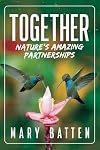
Together: Nature’s Amazing Partnerships, by Mary Batten, shows kids ten and up how mutually beneficial relationships help wild critters survive, from bees and orchids to hermit crabs and tiny sea anemones. There are many more mutually beneficial relationships than we realize in nature, because as Batten says, “In the history of life, cooperation has been more important than competition.” And she has the facts to show that.
Your favorite kids will find out how tiny mealybugs use ants show more like cowboys riding horses to whisk them away from danger – and why ants are willing to do that. The life-saving service that acacia trees get in return for feeding and housing ants. Why animals couldn’t exist until bacteria covered the earth with green slime. And how herder ants bribe tiny insects to feed them.
Why do huge grouper fish let tiny fish nibble their scales, eyes, fins, and gills? What do mites offer to ants in exchange for sucking their blood? Why do tropical forest birds protect their babies from parasites – by allowing other parasites into their nests? How do an alga, a fungus, and a yeast live together so effectively most people think they’re a single organism? How do caterpillars actually yell out loud for help from the ants that protect them from wasps – if they don’t have vocal cords? And why coral polyps must have algae living inside them to survive.
Sometimes insects and animals get cooperation willingly, sometimes deception is needed. Your kids will find out how a strange kind of orchid tricks wasps into pollinating it – by getting them to sting its flowers. Another orchid species gets pollinated by tricking male bees and wasps into trying to mate with its flowers. And the sly tricks several plants use when their nectar isn’t enough to lure a pollinator.
In the process, Batten reveals enchanting facts like why monarch butterfly caterpillars deliberately eat poisonous plants. The powerful and nasty way slave-taking ants in Northeastern USA conquer their subjects – without force or fighting. What came before flowers evolved. You can still see examples growing on certain types of trees. How larger primitive bacteria evolved by swallowing – but not digesting – smaller bacteria. Four potent types of poisons plants make to stop predators from eating them. Amazing ways langur monkeys and spotted deer warn each other about predators approaching. And ants that have naturally air conditioned nests 12 feet underground.
All this helps kids figure out “this grand dance of life,” how environmental systems work and why, for example, if a certain type of insect dies off, a particular type of tree will die out, too. I wish there had been books like this when I was a kid! show less
Your favorite kids will find out how tiny mealybugs use ants show more like cowboys riding horses to whisk them away from danger – and why ants are willing to do that. The life-saving service that acacia trees get in return for feeding and housing ants. Why animals couldn’t exist until bacteria covered the earth with green slime. And how herder ants bribe tiny insects to feed them.
Why do huge grouper fish let tiny fish nibble their scales, eyes, fins, and gills? What do mites offer to ants in exchange for sucking their blood? Why do tropical forest birds protect their babies from parasites – by allowing other parasites into their nests? How do an alga, a fungus, and a yeast live together so effectively most people think they’re a single organism? How do caterpillars actually yell out loud for help from the ants that protect them from wasps – if they don’t have vocal cords? And why coral polyps must have algae living inside them to survive.
Sometimes insects and animals get cooperation willingly, sometimes deception is needed. Your kids will find out how a strange kind of orchid tricks wasps into pollinating it – by getting them to sting its flowers. Another orchid species gets pollinated by tricking male bees and wasps into trying to mate with its flowers. And the sly tricks several plants use when their nectar isn’t enough to lure a pollinator.
In the process, Batten reveals enchanting facts like why monarch butterfly caterpillars deliberately eat poisonous plants. The powerful and nasty way slave-taking ants in Northeastern USA conquer their subjects – without force or fighting. What came before flowers evolved. You can still see examples growing on certain types of trees. How larger primitive bacteria evolved by swallowing – but not digesting – smaller bacteria. Four potent types of poisons plants make to stop predators from eating them. Amazing ways langur monkeys and spotted deer warn each other about predators approaching. And ants that have naturally air conditioned nests 12 feet underground.
All this helps kids figure out “this grand dance of life,” how environmental systems work and why, for example, if a certain type of insect dies off, a particular type of tree will die out, too. I wish there had been books like this when I was a kid! show less
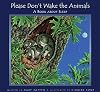
I found this book to be interesting in multiple ways. I really liked how the author included a lot of different animals in the story to give the readers more facts. I also liked how the story was formatted with each page being a different animal but there were sections about animals that slept during the day or slept at night, animals that hibernate, and of how animals sleep. The illustrations of this story were very detailed. They showed what the animals were doing. If the animal were show more sleeping standing up, such as a horse, the animal would be standing up. If the animal were sleeping during the day, the author would have the sky being sunny out so the readers could tell. The language of the story was also very informative. The readers are able to get a lot of information and facts each type of animal. For example, when the author talked about endangered mountain gorillas the author said “each gorilla makes a new nest in a different tree every night”. Most people or students would not know that fact about the endangered mountain gorillas. The overall big picture of this story is to inform readers about the different ways and times the different animals sleep. show less
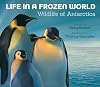
This exploration of the continent of Antarctica starts with a bare, frozen landscape of sea and ice and sun. It is, says Batten, "The coldest, windiest, driest place on Earth." But there's an amazing amount of life here, as readers will learn. Plunge into the ocean, inhabited by penguins, whales, and seals, and look in detail and discover the algae that thrives below the ice, including phytoplankton. The algae is eaten by krill, massive swarms that can adapt to the extreme temperatures. Then show more there are icefish, whales, penguins, and seals. More invertebrates can be found below the ocean, many with extreme lifespans to match their extreme habitat.
Although the continent has no human population, scientists explore and visit for short periods of time. Their experiments and research, including global warming, are covered over the next few pages along with an illustration of drilling for an ice core. The dangers of global warming are already showing, affecting both the creatures that live on this continent and the very continent itself, melting ancient ice shelves and causing rising sea levels that have far-reaching impacts on the rest of the world.
Back matter includes a map of Antarctica, additional facts and quotes, an author's note, glossary, and bibliography. It does not, I am pleased to say, imply that kids can save the planet by riding their bikes to school every day or using both sides of paper to draw on.
This nonfiction picture book is most likely to appeal to older readers. The photo-realistic art and lengthy chunks of text make it a poor read-aloud, but an excellent browsing book for kids who can either sit still and listen or would like to learn more about this mysterious continent. The art is stunning and pulls the reader into the strange world of a frozen, seemingly lifeless continent that is actually full of life and movement.
Verdict: A good title to update your nonfiction on Antarctica. While I'm cautious about buying books that reference global warming, as it's a rapidly changing science, this one is general enough that it will be relevant for several years at least.
ISBN: 9781682631515; Published November 2020 by Peachtree; F&G provided by publisher; Ordered for the library show less
Although the continent has no human population, scientists explore and visit for short periods of time. Their experiments and research, including global warming, are covered over the next few pages along with an illustration of drilling for an ice core. The dangers of global warming are already showing, affecting both the creatures that live on this continent and the very continent itself, melting ancient ice shelves and causing rising sea levels that have far-reaching impacts on the rest of the world.
Back matter includes a map of Antarctica, additional facts and quotes, an author's note, glossary, and bibliography. It does not, I am pleased to say, imply that kids can save the planet by riding their bikes to school every day or using both sides of paper to draw on.
This nonfiction picture book is most likely to appeal to older readers. The photo-realistic art and lengthy chunks of text make it a poor read-aloud, but an excellent browsing book for kids who can either sit still and listen or would like to learn more about this mysterious continent. The art is stunning and pulls the reader into the strange world of a frozen, seemingly lifeless continent that is actually full of life and movement.
Verdict: A good title to update your nonfiction on Antarctica. While I'm cautious about buying books that reference global warming, as it's a rapidly changing science, this one is general enough that it will be relevant for several years at least.
ISBN: 9781682631515; Published November 2020 by Peachtree; F&G provided by publisher; Ordered for the library show less
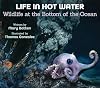
Mary Batten’s book, Life in Hot Water, introduces your favorite kids to a stunning world of wildlife at the bottom of the ocean and the fascinating story of its discovery and exploration.
For years, scientists had predicted the existence of vents spewing out hot water thousands of feet below the ocean’s surface. But they had no way to prove their theory, until they invented a device called a tow-yo, that sent a probe a mile-and-a-half down into the ocean – and found water hot enough to show more melt lead.
In easy-to-understand language, Batten introduces us to the huge, underwater mountain range that hosts these vents, and the amazing high-tech way scientists got to actually go visit the vents up close, in water so deep it’s totally dark.
The scientists found a unique ecosystem of worms, mussels, shrimp, and crabs and Batten explains how these creatures manage to live in water two-and-a-half times hotter than boiling. She writes about bizarre mineral tree-like forms, dozens of feet high, that grow continually, even though they are not living.
You and your kids will discover why these vents aren’t actually leaks from underwater volcanoes erupting, but how volcanoes cause them nonetheless. The valuable metals that spout from these vents. And how scientists “read” the temperature of a vent by the color of its smoke.
Batten also explains how bacteria turn stinky, smelly poisonous gas into food for animals living around hydrothermal vents, and why scientists were totally surprised by this.
How does a snail living around hot water vents grow a solid metal shell? How does a crab with no eyes raise its own food with its chest hair? Why don’t tubeworms need a mouth or gut to grow faster than almost any animal on earth? This book, beautifully illustrated by Thomas Gonzalez, answers all these questions and more.
It’s important for your favorite kids to know about the world of hot water vents for two reasons. They may be just as essential to regulating the earth’s environment as rainforests. And life on earth could have actually begun at hydrothermal vents. Life in Hot Water is the perfect introduction. And it’s a perfect tool to get kids hooked on science. show less
For years, scientists had predicted the existence of vents spewing out hot water thousands of feet below the ocean’s surface. But they had no way to prove their theory, until they invented a device called a tow-yo, that sent a probe a mile-and-a-half down into the ocean – and found water hot enough to show more melt lead.
In easy-to-understand language, Batten introduces us to the huge, underwater mountain range that hosts these vents, and the amazing high-tech way scientists got to actually go visit the vents up close, in water so deep it’s totally dark.
The scientists found a unique ecosystem of worms, mussels, shrimp, and crabs and Batten explains how these creatures manage to live in water two-and-a-half times hotter than boiling. She writes about bizarre mineral tree-like forms, dozens of feet high, that grow continually, even though they are not living.
You and your kids will discover why these vents aren’t actually leaks from underwater volcanoes erupting, but how volcanoes cause them nonetheless. The valuable metals that spout from these vents. And how scientists “read” the temperature of a vent by the color of its smoke.
Batten also explains how bacteria turn stinky, smelly poisonous gas into food for animals living around hydrothermal vents, and why scientists were totally surprised by this.
How does a snail living around hot water vents grow a solid metal shell? How does a crab with no eyes raise its own food with its chest hair? Why don’t tubeworms need a mouth or gut to grow faster than almost any animal on earth? This book, beautifully illustrated by Thomas Gonzalez, answers all these questions and more.
It’s important for your favorite kids to know about the world of hot water vents for two reasons. They may be just as essential to regulating the earth’s environment as rainforests. And life on earth could have actually begun at hydrothermal vents. Life in Hot Water is the perfect introduction. And it’s a perfect tool to get kids hooked on science. show less
Awards


You May Also Like


Associated Authors
Statistics
- Works
- 25
- Members
- 1,655
- Popularity
- #15,526
- Rating
- 4.0
- Reviews
- 29
- ISBNs
- 70
- Languages
- 1