
Jonathan Montaldo
Author of The Journals of Thomas Merton, Vol. 2, 1941-1952: Entering the Silence - Becoming a Monk & Writer
About the Author
Series
Works by Jonathan Montaldo
The Journals of Thomas Merton, Vol. 2, 1941-1952: Entering the Silence - Becoming a Monk & Writer (1996) — Editor — 330 copies, 6 reviews
Discovering the Hidden Ground of Love (Bridges to Contemplative Living With Thomas Merton Series) (2007) 35 copies
Merton & Hesychasm: The Prayer of the Heart & the Eastern Church (The Fons Vitae Thomas Merton series) (2003) — Editor — 31 copies, 1 review
Seeing That Paradise Begins Now (Bridges to Contemplative Living With Thomas Merton) (2008) 28 copies
Associated Works
A Year with Thomas Merton: Daily Meditations from His Journals (2004) — Editor — 245 copies, 4 reviews
Tagged
Common Knowledge
Members
Reviews
Entering the Silence: Becoming a Monk and a Writer (The Journals of Thomas Merton Book 2) by Thomas Merton
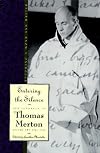
So hard to write a review of any Merton book. It eats into you. The second journal gives so much more insight into his formation. From the beginning to the end you can see the change in him. Always probing and asking the right questions. I can never forget a Merton book
Entering the Silence: Becoming a Monk and a Writer (The Journals of Thomas Merton, V. 2) by Thomas Merton
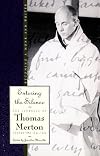
To love oneself perfectly, Merton writes in an entry near the end of this volume, is to disappear. For a writer, it is to disappear entirely into one's writing as God disappears entirely into the world--a disappearance that makes one fully, paradoxically, present. This is the record of a remarkable twentieth-century figure perfecting his love in the process, as the subtitle has it, of becoming a monk and writer. The book includes two fragments and a complete journal, only part of which was show more published during Merton's lifetime. The complete journal from December 1946 to July_ 1952, which describes the tension between writing and contemplation in which Merton lived at Gethsemani, is an exemplary piece of writing about writing, as well as an invitation to active contemplation. This is the second of seven volumes scheduled to appear over the next three years. It will enchant readers who are new to Merton as well as those who encountered him for the first time in the premonastic journals of volume one and those who have known him for a long time. It will leave new readers and old acquaintances anxious for the next encounter. Steve Schroeder show less
To love oneself perfectly, Merton writes in an entry near the end of this volume, is to disappear. For a writer, it is to disappear entirely into one's writing as God disappears entirely into the world-a disappearance that makes one fully, paradoxically, present. This is the record of a remarkable twentieth century figure perfecting his love in the process, as the subtitle has it, of becoming a monk and writer. The volume includes two fragments and a complete journal, only part of which was show more published during Merton's lifetime. In twelve pages, the second fragment-a journal memoir of Dom Frederick Dunne-renders Merton and his first abbot fully present and full of life. The other short fragment, what remains of Merton's novitiate journal, speaks to everyone who has asked (as Merton did), "How will I ever do this?" The complete journal from December 1946-July 1952, "The Whale and the Ivy," which describes the tension between writing and contemplation in which Merton lived at Gethsemani, is an exemplary piece of writing about writing as well as an invitation to active contemplation. This is the second of seven volumes scheduled to appear over the next three years. It will enchant readers who are new to Merton as well as those who encountered him for the first time in the premonastic journals of Volume One and those who have known him for a long time. It will leave new readers and old acquaintances anxious for the next encounter. show less
Entering the Silence: Becoming a Monk and a Writer (The Journals of Thomas Merton, V. 2) by Thomas Merton
there's such a lovely voyeuristic thrill about reading journals, even ones that are all nice and cleaned up and put together like this. i have an immense amount of respect, by the way, for the gethsemane monk who had the task of taking merton's handwritten journals and putting them into shape for publication; his handwriting was appalling! but the journals are fascinating to read! vocation does not always come easily and reading merton's struggles with it is...like hearing the dalai lama show more joke about being angry enough to kill flies. reassuring in a strange kind of way. show less
You May Also Like


Associated Authors
Statistics
- Works
- 12
- Also by
- 6
- Members
- 694
- Popularity
- #36,475
- Rating
- 4.1
- Reviews
- 7
- ISBNs
- 21