
Pascale Casanova (1959–2018)
Author of The World Republic of Letters
Works by Pascale Casanova
Associated Works
Tagged
Common Knowledge
- Birthdate
- 1959
- Date of death
- 2018-09-29
- Gender
- female
- Education
- École des hautes études en sciences sociales (doctorate)
Université François Rabelais de Tours - Occupations
- researcher
literary critic
Visiting Professor, Department of Romance Studies, Duke University, USA (2010-2011)
radio presenter, L'Atelier littéraire, Radio France Culture (1997-2010) - Awards and honors
- Grand prix de Société des gens de lettres (2000)
- Cause of death
- unspecified neurological disease
- Nationality
- France
- Birthplace
- Tours, France
- Places of residence
- Paris, France
Durham, North Carolina, USA - Place of death
- Paris, France
- Associated Place (for map)
- France
Members
Reviews
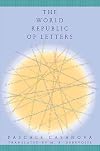
Whenever I read Casanova’s magnum opus, I am plagued by a series of questions, not least of which is: how can someone so well-read be so utterly ignorant? The first two chapters alone are teeming with assertions so outrageously wrong, and rhetorical manipulations so crude, that I am having a difficult time reconciling the positive reception of this book with thinkers like Edward Saïd (who is listed as a general editor of the series) and David Damrosch (who always seems to be a champion show more for an expansive definition of the “world” in world literature, rather than a narrow or reductive one). Ordinarily, I would counter a critic such as Casanova with Hitchens’ razor: “that which is asserted without evidence can be dismissed without argument,” but I am compelled to air my criticism, so here I go—
First published in 1999, The World Republic of Letters seeks to examine “the world literary field,” the capital of which she argues is Paris: “The particular case of Paris, the denationalized capital of the literary universe, must not make us forget that literary capital is national” (34). No wonder the French Ministry of Culture funded this project. Much like Foucault deems language to have been “rediscovered” in the nineteenth century, so too does Casanova deem the emergence of literature, for that is the only way this particular rhetorical move can be made—by making use of the same sort of motte-and-bailey logical fallacies that run rampant in Foucault’s works. There cannot be literature without nation, it seems. How unfortunate for premodern literature and oral literature, and the multiplicity of literary traditions that exist outside of the narrow parameters of the Anglo-American-European tradition and mythology of nationhood. For Casanova, the literary import of the Harlem Renaissance, the Beatniks, the monuments of Chicanx literature, the Greco-Arabic translation movement, the premodern networks of exchange that inform the rise of both vernacular literature in Europe and the European Enlightenment—none of these rate because they fall outside of her tightly focused assertion of Parisian centrality. I gather that one of the reasons Casanova enjoys prominence in the field of comparative literature is that she attempts to create a “sociology of literature,” borrowing primarily from the theories of her dissertation advisor, Pierre Bourdieu, but if this is the case, then she fails utterly in her attempt. This is an example of bad sociology; it does not describe the world as it is based on evidence. Instead, it cherry picks examples that suit the thesis and special pleads its way out of the veritable cornucopia of evidence that would render her assessment null and void.
If all roads of literature and literary capital within the world economy of letters lead to Paris, as Casanova asserts, what then are we to do with all the literatures and forms which pre-exist nineteenth century Paris? What are the rhetorical and critical moves she makes that allow her such a claim? And, ultimately, what are the historical, social, and political conditions of which this sort of argumentation is the consequence? An answer to these questions requires an excavation of a systematic dismemberment—cultural memories, networkings, and continuities that are suppressed, reinterpreted, or decontextualized by a critical tradition that is entrenched in the purposeful and rhetorical disappearing of history. Such a task befits the space afforded by a dissertation, not a review post, but here are a few outrageous examples:
Casanova writes, “As capital of France, Paris combined two sets of apparently antithetical properties, in a way bringing together all the historical conceptions of freedom. On the other hand, it symbolized the Revolution, the overthrow of the monarchy, the invention of the rights of man—an image that was to earn France its great reputation for tolerance towards foreigners and as a land of asylum for political refugees” (24, emphasis mine). Never mind the fact that the French Revolution was modeled after the American Revolution or that the Declaration of the Rights of Man and of the Citizen was in part modeled after Jefferson’s Declaration of Independence, the philosophy of John Locke, and the polemical, anti-monarchical pamphlets of John Milton—whose pen was responsible for the execution of the English monarch 147 years before the French. When was it, exactly, that France earned a “great reputation for tolerance towards foreigners and as a land of asylum”—was it during the conquest of Algeria when Pélissier’s men forced the entire Ouled Riyah tribe into a cave in Dahra and burned them alive in 1845? Was it during Vichy France, when tens of thousands of French Jews were deported to Nazi concentration camps? What of the fact that within a mere fourteen years of the French Revolution, France reverted to a monarchy under Napoleon, who crowned himself emperor.
When Casanova writes that Barcalona “during the years of Franco acquired a reputation for relative political tolerance” (25) and then uses Walter Benjamin (of all people) to show why Paris was the linchpin between literature and revolution, did she spare a thought to the fate that befell Benjamin and why? Benjamin sought refuge from the Nazis in Paris, but was obliged to flee to Francoist Spain once the occupation of France began. Shortly thereafter, Franco—a fascist, might we remember—rescinded all visas and intended to deport groups like the Jewish refugees back to France. Rather than returning to Paris, Benjamin died by suicide.
Casanova and I do not share the same definition of “political tolerance.”
TL;DR: To put Falstaff to rather glib use, Casanova’s whole argument is that “[the French] are not only witty in [themselves], but the cause that wit is in other men” [2 Henry 4, 2.1.9-11]. show less
First published in 1999, The World Republic of Letters seeks to examine “the world literary field,” the capital of which she argues is Paris: “The particular case of Paris, the denationalized capital of the literary universe, must not make us forget that literary capital is national” (34). No wonder the French Ministry of Culture funded this project. Much like Foucault deems language to have been “rediscovered” in the nineteenth century, so too does Casanova deem the emergence of literature, for that is the only way this particular rhetorical move can be made—by making use of the same sort of motte-and-bailey logical fallacies that run rampant in Foucault’s works. There cannot be literature without nation, it seems. How unfortunate for premodern literature and oral literature, and the multiplicity of literary traditions that exist outside of the narrow parameters of the Anglo-American-European tradition and mythology of nationhood. For Casanova, the literary import of the Harlem Renaissance, the Beatniks, the monuments of Chicanx literature, the Greco-Arabic translation movement, the premodern networks of exchange that inform the rise of both vernacular literature in Europe and the European Enlightenment—none of these rate because they fall outside of her tightly focused assertion of Parisian centrality. I gather that one of the reasons Casanova enjoys prominence in the field of comparative literature is that she attempts to create a “sociology of literature,” borrowing primarily from the theories of her dissertation advisor, Pierre Bourdieu, but if this is the case, then she fails utterly in her attempt. This is an example of bad sociology; it does not describe the world as it is based on evidence. Instead, it cherry picks examples that suit the thesis and special pleads its way out of the veritable cornucopia of evidence that would render her assessment null and void.
If all roads of literature and literary capital within the world economy of letters lead to Paris, as Casanova asserts, what then are we to do with all the literatures and forms which pre-exist nineteenth century Paris? What are the rhetorical and critical moves she makes that allow her such a claim? And, ultimately, what are the historical, social, and political conditions of which this sort of argumentation is the consequence? An answer to these questions requires an excavation of a systematic dismemberment—cultural memories, networkings, and continuities that are suppressed, reinterpreted, or decontextualized by a critical tradition that is entrenched in the purposeful and rhetorical disappearing of history. Such a task befits the space afforded by a dissertation, not a review post, but here are a few outrageous examples:
Casanova writes, “As capital of France, Paris combined two sets of apparently antithetical properties, in a way bringing together all the historical conceptions of freedom. On the other hand, it symbolized the Revolution, the overthrow of the monarchy, the invention of the rights of man—an image that was to earn France its great reputation for tolerance towards foreigners and as a land of asylum for political refugees” (24, emphasis mine). Never mind the fact that the French Revolution was modeled after the American Revolution or that the Declaration of the Rights of Man and of the Citizen was in part modeled after Jefferson’s Declaration of Independence, the philosophy of John Locke, and the polemical, anti-monarchical pamphlets of John Milton—whose pen was responsible for the execution of the English monarch 147 years before the French. When was it, exactly, that France earned a “great reputation for tolerance towards foreigners and as a land of asylum”—was it during the conquest of Algeria when Pélissier’s men forced the entire Ouled Riyah tribe into a cave in Dahra and burned them alive in 1845? Was it during Vichy France, when tens of thousands of French Jews were deported to Nazi concentration camps? What of the fact that within a mere fourteen years of the French Revolution, France reverted to a monarchy under Napoleon, who crowned himself emperor.
When Casanova writes that Barcalona “during the years of Franco acquired a reputation for relative political tolerance” (25) and then uses Walter Benjamin (of all people) to show why Paris was the linchpin between literature and revolution, did she spare a thought to the fate that befell Benjamin and why? Benjamin sought refuge from the Nazis in Paris, but was obliged to flee to Francoist Spain once the occupation of France began. Shortly thereafter, Franco—a fascist, might we remember—rescinded all visas and intended to deport groups like the Jewish refugees back to France. Rather than returning to Paris, Benjamin died by suicide.
Casanova and I do not share the same definition of “political tolerance.”
TL;DR: To put Falstaff to rather glib use, Casanova’s whole argument is that “[the French] are not only witty in [themselves], but the cause that wit is in other men” [2 Henry 4, 2.1.9-11]. show less
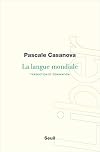
As languages or linguistics are one of my interests, even though I don't follow any studies on the subject, nor do I thoroughly look for articles or books, I do like some (general) language reading from time to time, be it academic or popular, as you can see here.
At the end of July, I made a quick trip to Paris, France, and it was only by accident that I came across a bookshop: L'Arbre du Voyageur (roughly translated: The Traveller's Tree). I only had a few minutes, but I had to go in there. show more The first shelf I saw, by accident, had something to do with languages, sociology, ... and the first book I picked was this one: 'La Langue mondiale - Traduction et domination' by Pascale Casanova. She was a professor and well-known literary critic. Was, as she passed away in September 2018.
----------
This small book was her last work, published by Éditions Seuil. It contains five chapters (rough translation of the titles by me), sandwiched between an introduction (Exordium) and an epilogue (Exitus):
1) The bilingualism Latin-French
2) When French had to be defended/protected
3) Translation as conquest
4) The Beautiful Infidels
5) Leopardi and the French Language
Mrs Casanova treats in a concise, yet pretty complete manner how Latin was previously the most prestigious and noble language in the world (or rather, Europe). It was applied in education, politics, religious affairs, writing, and so on. French, on the other hand, was the language for everyday use, spoken by the common people, and at that, pretty poor in vocabulary and grammar.
Little by little (especially in the 16th to 19th centuries; let's also not forget the founding the the Académie française in 1639, thanks to King Louis XIII and Cardinal Richelieu), French became richer and more varied in content, in style, and ultimately, a world language. As is common today, French took over words from Latin, translated texts from Latin to French (on the one hand, quite a "loose" translation, not to say "reinterpreted"; on the other hand, translations closer to the original texts). And so, Latin lost more and more of its power, though it took several centuries to accomplish that. As it took several decades for English to take over from French as dominant language. See for recent examples: business English and the fact that French (and other languages) have added many English words (with or without a little tweaking) to their own vocabulary.
Mrs Casanova also shows how a dominant language can really influence or even eradicate a dominated language. Even if people are bilingual (or speak at least two languages and can switch from one to the other) are also dominated and dominant. Another myth she debunks is: it's not because language x is the (most) dominant one, that it's also - on a larger scale - the most powerful one on an economic or military level.
Another point she addresses is the fact that language (and thus translation) can be used as a weapon to eradicate other languages, like countries fight other countries for dominance or resources. Several examples are presented to demonstrate this kind of undertaking.
Leopardi was an Italian writer, a fierce defender of his mother-tongue, but also appreciative of the French language. He fought for the distinction between the two, not e.g. French dominating Italian, since - as is written elsewhere in the book - Italian was also, at some point, considered higher on the hierarchical ladder than French, since Italian was more closely related to Latin. French also evolved from Latin, but this is another example of one language finding itself better, more worthy than the other.
Mrs Casanova based her discourse on several works, like:
* [b:La Deffence, & Illustration De La Langue Françoyse|8229193|La Deffence, & Illustration De La Langue Françoyse|Joachim Du Bellay|https://s.gr-assets.com/assets/nophoto/book/50x75-a91bf249278a81aabab721ef782c4a74.png|6844060] by [a:Joachim Du Bellay|126938|Joachim Du Bellay|https://images.gr-assets.com/authors/1303210434p2/126938.jpg]
* [b:Mimesis: The Representation of Reality in Western Literature|80795|Mimesis The Representation of Reality in Western Literature|Erich Auerbach|https://i.gr-assets.com/images/S/compressed.photo.goodreads.com/books/1388964005l/80795._SY75_.jpg|515821] by [a:Erich Auerbach|17777|Erich Auerbach|https://images.gr-assets.com/authors/1340722270p2/17777.jpg]
* [b:Translation in Systems: Descriptive and System-oriented Approaches Explained|4200604|Translation in Systems Descriptive and System-oriented Approaches Explained|Theo Hermans|https://i.gr-assets.com/images/S/compressed.photo.goodreads.com/books/1290965283l/4200604._SX50_.jpg|4247978] by [a:Theo Hermans|268164|Theo Hermans|https://s.gr-assets.com/assets/nophoto/user/u_50x66-632230dc9882b4352d753eedf9396530.png]
etc.
Her idea of language is one of equality, that all languages should be treated as equal, without one dominating (or be considered more prestigious, more classy, ... than) the other for whatever reason.
Translations are very common nowadays. Especially translations from English into another language (French, German, Dutch, ...), whereas not as much books get translated from the other languages into English. A bit of arrogance on the English side, which in this way considers itself more important than the others. Since English is spoken and written around the world, why bother translating works in foreign languages into English? But in this way, English remains stagnant, whereas other languages are enriched, sort of, through translations.
However, Mrs Casanova also showed how translations were (or are?) regulated in such a way, that it would be hard to distinguish the original from its translation: this could have happened by asking the translator to translate in such a way that it wouldn't look like a translation (thus adapting one's style to fit that of the source language); or, those who commanded a translation, would omit the translator's name on purpose (another example of how translations would be used as a weapon). What do you mean, respecting the translator and his/her work? Throughout the centuries, many times, it seems, translations were forged, tampered with, all for the "higher good" of the target language (French, in this case). But who knows what happened back when Latin copied from Greek?
Also, translations aren't always taken from the source language, but from a secondary language. For instance: from Chinese over German to English. This also means you may lose meaning and thus not correctly translate what was originally written.
----------
The writing style of Mrs Casanova is not that accessible; despite having improved my knowledge and comprehension of the French language the last four years, there were several times I had to plough through her sometimes heavy wording, especially with the several sub-clauses. It's an academic work, after all. The mentioning of older works and their authors was not that much of a problem to understand what she meant. Of course, if you're familiar with these works or authors, it's easier to follow her line of thought. Du Bellay, Erich Auerbach, Leopardi, etc. are all unknown to me. But I'm glad she mentioned those books as footnotes on the respective pages and not as a collection of notes at the end of this essay.
----------
To cut things short: Mrs Casanova's last work is, if I understood correctly, a plea for respect for all languages and their characteristics, their own voice, their own identity, despite the loan words, the copying, and so on. I found it very interesting to read how Latin (which took over the throne from Greek) dominated Europe, but then had to leave its place for French (although German and Italian also fought for dominant positions), which in turn had to step down in favour of English (currently a or the dominating language). Also interesting to read is how translations were dealt with so many centuries ago (reinterpret or stay close to the original?) and how these still impact today's politics, economy, writing and publishing, and more.
I might check out other such works (language history, translation history, ...) later to have a broader view of the subject.
In the meantime, this recent little book just came to mind: [b:Le français est à nous ! Petit manuel d’émancipation linguistique|45029724|Le français est à nous ! Petit manuel d’émancipation linguistique|Maria Candea|https://i.gr-assets.com/images/S/compressed.photo.goodreads.com/books/1555102882l/45029724._SX50_.jpg|69773888] by [a:Maria Candea|16390849|Maria Candea|https://s.gr-assets.com/assets/nophoto/user/u_50x66-632230dc9882b4352d753eedf9396530.png] and [a:Laélia Véron|19053416|Laélia Véron|https://s.gr-assets.com/assets/nophoto/user/u_50x66-632230dc9882b4352d753eedf9396530.png]. Something to check out in the near future?
Other reviews, which analyse/dissect the book better than me:
* La Main de Thot (magazine)
* Hypotheses.org (this one didn't like the essay)
* nonfiction.fr
* Quebecfrancais.org
* mediapart.fr show less
At the end of July, I made a quick trip to Paris, France, and it was only by accident that I came across a bookshop: L'Arbre du Voyageur (roughly translated: The Traveller's Tree). I only had a few minutes, but I had to go in there. show more The first shelf I saw, by accident, had something to do with languages, sociology, ... and the first book I picked was this one: 'La Langue mondiale - Traduction et domination' by Pascale Casanova. She was a professor and well-known literary critic. Was, as she passed away in September 2018.
----------
This small book was her last work, published by Éditions Seuil. It contains five chapters (rough translation of the titles by me), sandwiched between an introduction (Exordium) and an epilogue (Exitus):
1) The bilingualism Latin-French
2) When French had to be defended/protected
3) Translation as conquest
4) The Beautiful Infidels
5) Leopardi and the French Language
Mrs Casanova treats in a concise, yet pretty complete manner how Latin was previously the most prestigious and noble language in the world (or rather, Europe). It was applied in education, politics, religious affairs, writing, and so on. French, on the other hand, was the language for everyday use, spoken by the common people, and at that, pretty poor in vocabulary and grammar.
Little by little (especially in the 16th to 19th centuries; let's also not forget the founding the the Académie française in 1639, thanks to King Louis XIII and Cardinal Richelieu), French became richer and more varied in content, in style, and ultimately, a world language. As is common today, French took over words from Latin, translated texts from Latin to French (on the one hand, quite a "loose" translation, not to say "reinterpreted"; on the other hand, translations closer to the original texts). And so, Latin lost more and more of its power, though it took several centuries to accomplish that. As it took several decades for English to take over from French as dominant language. See for recent examples: business English and the fact that French (and other languages) have added many English words (with or without a little tweaking) to their own vocabulary.
Mrs Casanova also shows how a dominant language can really influence or even eradicate a dominated language. Even if people are bilingual (or speak at least two languages and can switch from one to the other) are also dominated and dominant. Another myth she debunks is: it's not because language x is the (most) dominant one, that it's also - on a larger scale - the most powerful one on an economic or military level.
Another point she addresses is the fact that language (and thus translation) can be used as a weapon to eradicate other languages, like countries fight other countries for dominance or resources. Several examples are presented to demonstrate this kind of undertaking.
Leopardi was an Italian writer, a fierce defender of his mother-tongue, but also appreciative of the French language. He fought for the distinction between the two, not e.g. French dominating Italian, since - as is written elsewhere in the book - Italian was also, at some point, considered higher on the hierarchical ladder than French, since Italian was more closely related to Latin. French also evolved from Latin, but this is another example of one language finding itself better, more worthy than the other.
Mrs Casanova based her discourse on several works, like:
* [b:La Deffence, & Illustration De La Langue Françoyse|8229193|La Deffence, & Illustration De La Langue Françoyse|Joachim Du Bellay|https://s.gr-assets.com/assets/nophoto/book/50x75-a91bf249278a81aabab721ef782c4a74.png|6844060] by [a:Joachim Du Bellay|126938|Joachim Du Bellay|https://images.gr-assets.com/authors/1303210434p2/126938.jpg]
* [b:Mimesis: The Representation of Reality in Western Literature|80795|Mimesis The Representation of Reality in Western Literature|Erich Auerbach|https://i.gr-assets.com/images/S/compressed.photo.goodreads.com/books/1388964005l/80795._SY75_.jpg|515821] by [a:Erich Auerbach|17777|Erich Auerbach|https://images.gr-assets.com/authors/1340722270p2/17777.jpg]
* [b:Translation in Systems: Descriptive and System-oriented Approaches Explained|4200604|Translation in Systems Descriptive and System-oriented Approaches Explained|Theo Hermans|https://i.gr-assets.com/images/S/compressed.photo.goodreads.com/books/1290965283l/4200604._SX50_.jpg|4247978] by [a:Theo Hermans|268164|Theo Hermans|https://s.gr-assets.com/assets/nophoto/user/u_50x66-632230dc9882b4352d753eedf9396530.png]
etc.
Her idea of language is one of equality, that all languages should be treated as equal, without one dominating (or be considered more prestigious, more classy, ... than) the other for whatever reason.
Translations are very common nowadays. Especially translations from English into another language (French, German, Dutch, ...), whereas not as much books get translated from the other languages into English. A bit of arrogance on the English side, which in this way considers itself more important than the others. Since English is spoken and written around the world, why bother translating works in foreign languages into English? But in this way, English remains stagnant, whereas other languages are enriched, sort of, through translations.
However, Mrs Casanova also showed how translations were (or are?) regulated in such a way, that it would be hard to distinguish the original from its translation: this could have happened by asking the translator to translate in such a way that it wouldn't look like a translation (thus adapting one's style to fit that of the source language); or, those who commanded a translation, would omit the translator's name on purpose (another example of how translations would be used as a weapon). What do you mean, respecting the translator and his/her work? Throughout the centuries, many times, it seems, translations were forged, tampered with, all for the "higher good" of the target language (French, in this case). But who knows what happened back when Latin copied from Greek?
Also, translations aren't always taken from the source language, but from a secondary language. For instance: from Chinese over German to English. This also means you may lose meaning and thus not correctly translate what was originally written.
----------
The writing style of Mrs Casanova is not that accessible; despite having improved my knowledge and comprehension of the French language the last four years, there were several times I had to plough through her sometimes heavy wording, especially with the several sub-clauses. It's an academic work, after all. The mentioning of older works and their authors was not that much of a problem to understand what she meant. Of course, if you're familiar with these works or authors, it's easier to follow her line of thought. Du Bellay, Erich Auerbach, Leopardi, etc. are all unknown to me. But I'm glad she mentioned those books as footnotes on the respective pages and not as a collection of notes at the end of this essay.
----------
To cut things short: Mrs Casanova's last work is, if I understood correctly, a plea for respect for all languages and their characteristics, their own voice, their own identity, despite the loan words, the copying, and so on. I found it very interesting to read how Latin (which took over the throne from Greek) dominated Europe, but then had to leave its place for French (although German and Italian also fought for dominant positions), which in turn had to step down in favour of English (currently a or the dominating language). Also interesting to read is how translations were dealt with so many centuries ago (reinterpret or stay close to the original?) and how these still impact today's politics, economy, writing and publishing, and more.
I might check out other such works (language history, translation history, ...) later to have a broader view of the subject.
In the meantime, this recent little book just came to mind: [b:Le français est à nous ! Petit manuel d’émancipation linguistique|45029724|Le français est à nous ! Petit manuel d’émancipation linguistique|Maria Candea|https://i.gr-assets.com/images/S/compressed.photo.goodreads.com/books/1555102882l/45029724._SX50_.jpg|69773888] by [a:Maria Candea|16390849|Maria Candea|https://s.gr-assets.com/assets/nophoto/user/u_50x66-632230dc9882b4352d753eedf9396530.png] and [a:Laélia Véron|19053416|Laélia Véron|https://s.gr-assets.com/assets/nophoto/user/u_50x66-632230dc9882b4352d753eedf9396530.png]. Something to check out in the near future?
Other reviews, which analyse/dissect the book better than me:
* La Main de Thot (magazine)
* Hypotheses.org (this one didn't like the essay)
* nonfiction.fr
* Quebecfrancais.org
* mediapart.fr show less

“The purpose of this book is to restore a point of view that has been obscured for the mot part by the ‘nationalization’ of literatures and literary histories, to rediscover a lost transnational dimension of literature that for two hundred years has been reduced to the political and linguistic boundaries of nations….[T]here exists a ‘literature-world,’ a literary universe relatively independent of the everyday world and its political divisions, whose boundaries and operational show more laws are not reducible to those of ordinary political space” because “[l]ittle by little…literature succeeded in freeing itself from the hold of the political and national authorities that originally it helped to establish and legitimize. The accumulation of specifically literary resources, which involved the invention and development of a set of aesthetic possibilities, of forms, narrative techniques, and formal solutions….--in short, the creation of a specific history (more or less distinct from national history, from which it could no longer be deduced)—allowed literary space gradually to achieve independence and determine its own laws of operation.” “[L]iterature found itself at last in a position to assert its own autonomy.”
This description of ”internationalization…signifies…the opposite of…the neutralizing term ‘globalization,’ which suggests that the world political and economic system can be conceived as the generalization of a single and universally applicable model. In the literary world…it is the competition among its members that defines and unifies the system while at the same time marking its limits….[A]ll writers attempt to enter the same race, and all of them struggle…to attain the same goal: literary legitimacy.” show less
This description of ”internationalization…signifies…the opposite of…the neutralizing term ‘globalization,’ which suggests that the world political and economic system can be conceived as the generalization of a single and universally applicable model. In the literary world…it is the competition among its members that defines and unifies the system while at the same time marking its limits….[A]ll writers attempt to enter the same race, and all of them struggle…to attain the same goal: literary legitimacy.” show less
Lists
Awards

You May Also Like


Associated Authors
Statistics
- Works
- 6
- Also by
- 1
- Members
- 256
- Popularity
- #89,546
- Rating
- 2.9
- Reviews
- 3
- ISBNs
- 20
- Languages
- 4