
Kristen Heitzmann
Author of Secrets
About the Author
Image credit: Used by permission of Baker Publishing Group, copyright © 2008. All rights to this material are reserved. Materials are not to be distributed to other web locations for retrieval, published(see © info.)
Series
Works by Kristen Heitzmann
Indomitable (Redford) 1 copy
Honor's Pride 1 copy
Ik wist het wel. 1 copy
Een klein geluk. 1 copy
De heer uit het zuiden. 1 copy
Life is an Attitude 1 copy
Tagged
Common Knowledge
- Gender
- female
- Nationality
- USA
- Places of residence
- Colorado, USA
- Associated Place (for map)
- Colorado, USA
Members
Reviews

What a profoundly odd book.
The mystery started out disturbing and engrossing, and the suspense well developed. I figured out the culprit and the reason early, but it was no less creepy for that. The hero is appealing and his recovery from alcoholism handled well, with the exception of his sponsor turning out to be a Native American who makes mystic pronouncements. Yikes, offensive cliché.
However, first I noticed that there is no cursing in this book. Which is fine - I don't require a show more certain amount of profanity per page - but how realistic is a police department in which no one ever swears?
And then, halfway through, the heroine picks up the helpline for which she volunteers, and suddenly the whole book is all God, all the time. Now, I've read and love Julia Spencer-Fleming; I've no problem with religious protagonists. But in Heitzmann's fictional Colorado town, there not only are apparently no atheists (except for the two baddies, go figure); there is no one who is not a very specific brand of born-again-style Christian. The intensity of the religion for every character (no one ever says, "Oh my God" without it literally being a prayer) makes them, as characters, start to fall kind of flat, because God has the same importance in all their lives and they are all coming at God from exactly the same angle. (The author's angle, I dare say. She begins her acknowledgments by thanking "Christ Jesus [her] savior". Also, her author bio notes she home-schooled all her kids, which I do not find unrelated to her assertion that her heroine's brilliance is proved by getting degrees on-line.)
The direction this book took, and the author's priorities, struck me as being a shame. Heitzmann has talent, and the scene-setting at the beginning is really strong. But the emphasis on religion takes over, at the expense of the story and the characters. Spencer-Fleming and Faye Kellerman write about characters who are extremely religious but live in the real world, and interact with people whose religious views or lack thereof are completely different. Heitzmann has created a town where everyone thinks that when there's a crisis, you pray in a specific way to a specific God, even if you are a mystical Native American, and prayer solves everything. It gets to the point where two people who have never even dated get married, because their feelings for each other are too intense and they need "Christ in the middle". (Also because I'm pretty sure Heitzmann couldn't condone premarital sex.) And by that point I realized Heitzmann had created her ideal world at the cost of making her characters completely uninteresting to anyone who wants more motivation from literary characters than a passion for Jesus. You have to give me more than that, not because I am an atheist but because I am a discerning reader.
The comparisons with Spencer-Fleming are perhaps unfair, but inevitable. The scene where people are gathering to pray for someone lost in the mountains made me say, out loud, "Y'know, in Millers Kill they would have actually gone out and looked for her. Just saying."
(Reading the other reviews, I see that this author is known for her "conservative Christian fiction", which I did not know when I got this book from Early Reviewers. Hence my surprise and dismay when the book took the turn it did. But "atheist" is right there in my username, so what can you expect.) show less
The mystery started out disturbing and engrossing, and the suspense well developed. I figured out the culprit and the reason early, but it was no less creepy for that. The hero is appealing and his recovery from alcoholism handled well, with the exception of his sponsor turning out to be a Native American who makes mystic pronouncements. Yikes, offensive cliché.
However, first I noticed that there is no cursing in this book. Which is fine - I don't require a show more certain amount of profanity per page - but how realistic is a police department in which no one ever swears?
And then, halfway through, the heroine picks up the helpline for which she volunteers, and suddenly the whole book is all God, all the time. Now, I've read and love Julia Spencer-Fleming; I've no problem with religious protagonists. But in Heitzmann's fictional Colorado town, there not only are apparently no atheists (except for the two baddies, go figure); there is no one who is not a very specific brand of born-again-style Christian. The intensity of the religion for every character (no one ever says, "Oh my God" without it literally being a prayer) makes them, as characters, start to fall kind of flat, because God has the same importance in all their lives and they are all coming at God from exactly the same angle. (The author's angle, I dare say. She begins her acknowledgments by thanking "Christ Jesus [her] savior". Also, her author bio notes she home-schooled all her kids, which I do not find unrelated to her assertion that her heroine's brilliance is proved by getting degrees on-line.)
The direction this book took, and the author's priorities, struck me as being a shame. Heitzmann has talent, and the scene-setting at the beginning is really strong. But the emphasis on religion takes over, at the expense of the story and the characters. Spencer-Fleming and Faye Kellerman write about characters who are extremely religious but live in the real world, and interact with people whose religious views or lack thereof are completely different. Heitzmann has created a town where everyone thinks that when there's a crisis, you pray in a specific way to a specific God, even if you are a mystical Native American, and prayer solves everything. It gets to the point where two people who have never even dated get married, because their feelings for each other are too intense and they need "Christ in the middle". (Also because I'm pretty sure Heitzmann couldn't condone premarital sex.) And by that point I realized Heitzmann had created her ideal world at the cost of making her characters completely uninteresting to anyone who wants more motivation from literary characters than a passion for Jesus. You have to give me more than that, not because I am an atheist but because I am a discerning reader.
The comparisons with Spencer-Fleming are perhaps unfair, but inevitable. The scene where people are gathering to pray for someone lost in the mountains made me say, out loud, "Y'know, in Millers Kill they would have actually gone out and looked for her. Just saying."
(Reading the other reviews, I see that this author is known for her "conservative Christian fiction", which I did not know when I got this book from Early Reviewers. Hence my surprise and dismay when the book took the turn it did. But "atheist" is right there in my username, so what can you expect.) show less
 This review was written for LibraryThing Early Reviewers.
My first Heitzmann read ever, I picked this book up because of the cover (and no shame in that: the cover did its job). I read the back blurb and thought, Hm, okay, maybe. I read the first two pages and bought the book.
In reality, Christians know life is gritty at times. Even those ready to "give an answer for the hope that is within" us sometimes struggle with those answers. Our fellows in fiction ought to struggle, too. Kristen Heitzmann understands this and writes this. Brilliantly. show more
Jade's moral dilemmas relating to her career are refreshingly real, and no quickie solution is offered. Her determination and vulnerability as she regains her memories are well-portrayed. Cameron is an even deeper character--hiding a broken heart behind gruff suspicion, terrified of the world's propensity to steal what he loves, and continuing to believe in God despite it all, just no longer willing to trust Him.
When summed up that way, neither of these characters sounds original, but they are. Jade's version of strength is willingness to trek into the Hawaiian wild by herself before asking a man who doesn't believe her for help. Cameron's version of heavenward fist-shaking is to pit his surfboard against the sea and beat it one wave at a time. What makes these characters work? A familiar core demonstrated by original quirks--quirks that at times actually drive the plot, rather than being submerged in it.
In addition, Heitzmann's prose is a step above, treating us to interesting similes and specific verbs. A pitiless editor could have slimmed the book down a bit, but on the whole, I loved the writing here. I also loved the vivid Hawaiian setting, and there was nothing more fun than Cameron breaking into pidgin.
Of course, expect the main characters to end up together. But Heitzmann's approach is far from syrupy, honest instead. The attraction between Jade and Cameron is rooted in their souls, not their bodies, yet this author acknowledges the physical desires of men and women. There are realistic reasons for them to be together but also realistic obstacles to keep them apart.
This book made me a Kristen Heitzmann fan and pushed me to find more Christian fiction written as well as hers. So glad that cover caught my eye. show less
In reality, Christians know life is gritty at times. Even those ready to "give an answer for the hope that is within" us sometimes struggle with those answers. Our fellows in fiction ought to struggle, too. Kristen Heitzmann understands this and writes this. Brilliantly. show more
Jade's moral dilemmas relating to her career are refreshingly real, and no quickie solution is offered. Her determination and vulnerability as she regains her memories are well-portrayed. Cameron is an even deeper character--hiding a broken heart behind gruff suspicion, terrified of the world's propensity to steal what he loves, and continuing to believe in God despite it all, just no longer willing to trust Him.
When summed up that way, neither of these characters sounds original, but they are. Jade's version of strength is willingness to trek into the Hawaiian wild by herself before asking a man who doesn't believe her for help. Cameron's version of heavenward fist-shaking is to pit his surfboard against the sea and beat it one wave at a time. What makes these characters work? A familiar core demonstrated by original quirks--quirks that at times actually drive the plot, rather than being submerged in it.
In addition, Heitzmann's prose is a step above, treating us to interesting similes and specific verbs. A pitiless editor could have slimmed the book down a bit, but on the whole, I loved the writing here. I also loved the vivid Hawaiian setting, and there was nothing more fun than Cameron breaking into pidgin.
Of course, expect the main characters to end up together. But Heitzmann's approach is far from syrupy, honest instead. The attraction between Jade and Cameron is rooted in their souls, not their bodies, yet this author acknowledges the physical desires of men and women. There are realistic reasons for them to be together but also realistic obstacles to keep them apart.
This book made me a Kristen Heitzmann fan and pushed me to find more Christian fiction written as well as hers. So glad that cover caught my eye. show less
I enjoyed this book in fact after the last sentence was read I had withdrawal pains. I wanted another book to tell me what happened to the characters next.
My only criticism is that this book seemed slow paced at the beginning so I am afraid some would quit on this book before the reader is hooked. Other than it was beautifully written. It was easy to smell and taste the bakery treats and to imagine what the handmade candles looked like.
The characters seemed real. There was the ruggedly show more handsome Chief of Police struggling with trying to stay sober and guarding the secrets about the former Chief of Police, his father. There was the redhead who denied her love for the chief and made candles while feeling shamed for something she did nine years ago. There is even a character with severe OCD who even reminded one of the characters in this book of the TV show Monk. There is even a coydog. I learned that coyotes could mate with dogs.
The character’s secrets in this story are very slowly revealed and the mystery of who is torturing poor innocent animals draws to a chilling end at the close of the book.
I will recommend this book to everyone who loves mysteries and love stories but warn them that the book takes off at a snails’ pace at the beginning. This is one book that it is well worth to stick it out to the end. show less
My only criticism is that this book seemed slow paced at the beginning so I am afraid some would quit on this book before the reader is hooked. Other than it was beautifully written. It was easy to smell and taste the bakery treats and to imagine what the handmade candles looked like.
The characters seemed real. There was the ruggedly show more handsome Chief of Police struggling with trying to stay sober and guarding the secrets about the former Chief of Police, his father. There was the redhead who denied her love for the chief and made candles while feeling shamed for something she did nine years ago. There is even a character with severe OCD who even reminded one of the characters in this book of the TV show Monk. There is even a coydog. I learned that coyotes could mate with dogs.
The character’s secrets in this story are very slowly revealed and the mystery of who is torturing poor innocent animals draws to a chilling end at the close of the book.
I will recommend this book to everyone who loves mysteries and love stories but warn them that the book takes off at a snails’ pace at the beginning. This is one book that it is well worth to stick it out to the end. show less
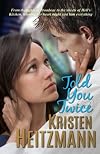
Grace Evangeline, successful romance novelist, has decided the next goal of her career. She wants her newest novel produced for the stage, and she wants Devin Bressard, also a playwright, to be the producer. In fact, she won't consider anyone else. When he pans her work to her face, she douses his (face, not work) with her glass of sweet tea, but she doesn't give up. She's going to prove him wrong not only about her novels, but also about the nature of art itself. Drama in real life does show more happen, and dramatic art fortifies the soul to face its own trials, and Grace is going to prove this to Devin if she has to stalk him to do it. Fortunately for characters and reader alike, Grace is a naive and inept stalker, and Devin quickly finds her out. When they are compelled to work together on a new project, their polarized points of view result in a battle of wits and wills and ignite a passion between them they never expected or wanted, but that just might begin healing they both need.
I entered this book with excitement because I've been a fan of Heitzmann for almost ten years and have read most of her novels. But I also knew this is classed as a romcom, and I avoid comedies (and this author is the only exception I can think of to my avoidance of romances). I expected to enjoy it but hoped the humor would work for me. Well, by the end of the first chapter, I felt the magic. I was grinning as I flipped pages, often laughing out loud, devouring the brilliant banter between Grace and Devin. The book is probably 70% dialogue, but it never feels like "too much talking." These are voices you can hear in your head and characters you want to have coffee with (even Devin, even if he calls my writing less than art). I was settled into the comic groove of the book and perfectly happy with it despite my usual genre preferences. However, there were hints: all is not as light as it seems. Devin's cynicism and Grace's resolution against it are more than comic vehicles. Life has happened to these two people--life has hurt them, and they have each adopted a defense that suits them.
And yes. Around the halfway mark, the passion between them creates consequences neither of them are prepared for. They don't know what to do, and since they're broken people, they do the wrong things. They grab their shields and huddle behind them, stumble away from each other at least as messed up as they were when they met.
Here's the beautiful thing, though: the story's only half done. By the end, what began as a battle of wits and wills becomes ... well, it's a romance, so I'm sure you can guess. But while certain pieces of the story are dictated by the genre, the journey that brings us there is overall a fresh one. I could have done with fewer tied bows at the end, and at worst, one could accuse the book of a tonal shift at the halfway point that some readers might not be on board with. But if you go in looking for clues to the human undercurrents in the hilarity, you will find them, and you'll anticipate discovering the pasts that made Devin and Grace who they are. This book takes a look at defense mechanisms and how they affect our perception of the world around us--people, events, and yes, art. Devin and Grace's quarrels about art's purpose in life are some of the shiniest gems of the book.
The dialogue sparks and sparkles and delves deep. The characters make me worry and cheer. I'm looking forward to meeting Grace and Devin again in the sequel TOLD YOU TWICE, as well as getting inside the head of secondary character Bo Corrigan. TOLD YOU SO proves Kristen Heitzmann can write anything and do it right. show less
I entered this book with excitement because I've been a fan of Heitzmann for almost ten years and have read most of her novels. But I also knew this is classed as a romcom, and I avoid comedies (and this author is the only exception I can think of to my avoidance of romances). I expected to enjoy it but hoped the humor would work for me. Well, by the end of the first chapter, I felt the magic. I was grinning as I flipped pages, often laughing out loud, devouring the brilliant banter between Grace and Devin. The book is probably 70% dialogue, but it never feels like "too much talking." These are voices you can hear in your head and characters you want to have coffee with (even Devin, even if he calls my writing less than art). I was settled into the comic groove of the book and perfectly happy with it despite my usual genre preferences. However, there were hints: all is not as light as it seems. Devin's cynicism and Grace's resolution against it are more than comic vehicles. Life has happened to these two people--life has hurt them, and they have each adopted a defense that suits them.
And yes. Around the halfway mark, the passion between them creates consequences neither of them are prepared for. They don't know what to do, and since they're broken people, they do the wrong things. They grab their shields and huddle behind them, stumble away from each other at least as messed up as they were when they met.
Here's the beautiful thing, though: the story's only half done. By the end, what began as a battle of wits and wills becomes ... well, it's a romance, so I'm sure you can guess. But while certain pieces of the story are dictated by the genre, the journey that brings us there is overall a fresh one. I could have done with fewer tied bows at the end, and at worst, one could accuse the book of a tonal shift at the halfway point that some readers might not be on board with. But if you go in looking for clues to the human undercurrents in the hilarity, you will find them, and you'll anticipate discovering the pasts that made Devin and Grace who they are. This book takes a look at defense mechanisms and how they affect our perception of the world around us--people, events, and yes, art. Devin and Grace's quarrels about art's purpose in life are some of the shiniest gems of the book.
The dialogue sparks and sparkles and delves deep. The characters make me worry and cheer. I'm looking forward to meeting Grace and Devin again in the sequel TOLD YOU TWICE, as well as getting inside the head of secondary character Bo Corrigan. TOLD YOU SO proves Kristen Heitzmann can write anything and do it right. show less
Awards


You May Also Like


Statistics
- Works
- 40
- Members
- 7,387
- Popularity
- #3,306
- Rating
- 3.9
- Reviews
- 168
- ISBNs
- 227
- Languages
- 3
- Favorited
- 13
