
Rodney Crowell
Author of Chinaberry Sidewalks
About the Author
Image credit: Photo by Alan Light, 1990 (Cropped/Wikimedia Commons & Flickr)
Works by Rodney Crowell
Keys to the Highway 5 copies
Rodney Crowell - Greatest Hits 4 copies
Soul Searchin' 3 copies
Rodney Crowell 2 copies
The Essential Rodney Crowell 2 copies
Diamonds & Dirt 2 copies
Airline Highway 1 copy
Making Memories Of Us 1 copy
The Translator 1 copy
Tarpaper Sky 1 copy
THE CHECKBOOK BIBLE: THE TEACHING OF HOBART E. FREEMAN AND FAITH ASSEMBLY (revised and expanded) (2012) 1 copy
The Outsider 1 copy
Street Language 1 copy
Houston Kid 1 copy
Earthbound and Proud of It 1 copy
NPR Interview 1 copy
Country Classics 1 copy
Super Hits 1 copy
Street language 1 copy
Associated Works
Tagged
Common Knowledge
- Birthdate
- 1950-08-07
- Gender
- male
- Nationality
- USA
- Birthplace
- Houston, Texas, USA
- Associated Place (for map)
- Texas, USA
Members
Reviews
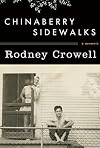
Rodney Crowell’s memoir, Chinaberry Sidewalks covers his early years. This is not a book about his rise to fame, but more of a loving tribute to his parents. Rodney was often in the middle of his father’s drunken rages against his mother, who in her turn, was a holy-roller who also had a fondness for beer and whipping Rodney. Yet his words are laced with humor, wryness and a loving fondness and the final pages, when he’s by the bedside at first his father and then his mother’s death show more there is a tender strength that often shows up in his musical lyrics.
Growing up in the 1950’s and 60‘s, his parents were scrabbling to make a living in East Austin. Rodney both idolized and abhorred his father. Together they had a love of music, and Rodney was taken to see Hank Williams Senior, Johnny Cash, Carl Perkins and Jerry Lee Lewis by him. But the dark undercurrent that was brought out by his father’s drinking was never far from Rodney’s thoughts. He also had to keep a close eye on his mother at all times as she was epileptic and Rodney had to be ready at a moments notice to administer to her when she had a seizure.
Rodney Crowell is a master lyricist and this ability shines through the pages of this book. Honest, humble, and humorous, he paints a picture of growing up poor, with these damaged parents, yet also is able to portray the love that his family ultimately shared and the value in this upbringing that shaped the man he is today. show less
Growing up in the 1950’s and 60‘s, his parents were scrabbling to make a living in East Austin. Rodney both idolized and abhorred his father. Together they had a love of music, and Rodney was taken to see Hank Williams Senior, Johnny Cash, Carl Perkins and Jerry Lee Lewis by him. But the dark undercurrent that was brought out by his father’s drinking was never far from Rodney’s thoughts. He also had to keep a close eye on his mother at all times as she was epileptic and Rodney had to be ready at a moments notice to administer to her when she had a seizure.
Rodney Crowell is a master lyricist and this ability shines through the pages of this book. Honest, humble, and humorous, he paints a picture of growing up poor, with these damaged parents, yet also is able to portray the love that his family ultimately shared and the value in this upbringing that shaped the man he is today. show less
"When we arrived unscathed, my father's overly careful about lining up the tires on the concrete driveway strips, barely visible under a half foot of water, and this seems peculiar given what our expedition's been like so far. With a hurricane blowing full-tilt all around us, sliding to a sideways halt would seem a more fitting conclusion to this wild ride. But then I'm not the one driving.
My mother gets out of the car, wades into the house, picks up a broom, and starts sweeping floodwater show more out the back door. Then she pops the refrigerator door open with a screwdriver-my father's solution to its broken handle—and grabs a can of lukewarm Jax, drains half of it in one glug, wipes her mouth with the back of her wrist, burps loudly and, pointing the can at my father, says, “J. W. Crowell, next time you lay a hand on me, you better make sure you kill me, 'cause if you don't I'll kill you. I don't care if I have to wait till you fall asleep to do it. How quickly my mother switches from Pentecostal purist to beer-guzzling shrew is one of life's deepest mysteries."
---
"My mother was born in June, the seventh of Solomon Taylor and Katie Lee Willoughby's eight children. Addie Cauzette arrived with the right side of her body partially paralyzed, the result-according to an old country doctor who didn't examine her until she was three of a stroke suffered in her mother's womb. So from before birth, a pattern was set by which polio, acute dyslexia, epilepsy, the sudden death of an infant son, and a subsequent case of whacked-out nerves would join the lengthy list of maladies assaulting young Cauzette well before her twentieth birth day. In the seventy-four years and nearly four months marking her time on what she called "this crooked old Earth," my mother rarely drew a healthy breath. Still, to say that life wasn't fair for this awkwardly glib yet deeply religious woman would fail to take into account her towering instinct for survival. Thanks to this primal urge to thrive, she would leave this world at peace with the knowledge that physical existence was something for which she was born ill equipped. And I honor my mother by saying that it wasn't for lack of effort that an accommodation between her sensitive soul and the poorly fitting body she wore was so very hard to come by."
---
"The previous fall and winter, my mother had experienced two failed pregnancies.
"I couldn't seem to carry a baby no more than fifteen minutes," she told me. "And your daddy swore up and down I was losin' 'em on purpose." But she did finally manage to complete a full-term pregnancy, and Tex Edward was born on January 27, 1944. He died thirty-seven hours later.
Staring into some vacant yet familiar dreamscape, where the sharp pain of thirteen miscarriages is softened by visions of a heavenly playground for lost children, my mother, sifting through fractured images that documented her baby's all too brief passage through this world, introduced me to my brother time and again. "Oh, he was beautiful, Rodney. He had a full head of curly black hair and the bluest eyes you ever seen. While I only got to hold him for a minute or two, I can still feel him to this day. They had me knocked out most of the time, but I could hear him cryin' off in the next room. They said I almost died, too, and for a long time I wished I had. They never brought him back and nobody told me nothin'"
---
Admiring our work, I remarked innocently to my mother, when she walked up to have a look, that I thought my row was prettier than Dabbo's.
"Is not," he said. Simultaneously, the hoe in his hand came down on the top of my head, splitting my scalp open.
All the sounds of a normal spring afternoon-chirpy chatter and the lazy traffic-silenced themselves, and Norvic Street suddenly seemed like a scene from that science-fiction movie The Day the Earth Stood Still.
My mother's eyes commanded me to remain upright and conscious until she got to me. I cast a glance in Dabbo's direction-an inquiry of sorts, to confirm if he'd actually just smashed me over the head with the sharp end of a garden hoe. And if so, why?
But his eyes were two television test patterns advertising the end of another broadcasting day; "The Star-Spangled Banner" had been played and the sign-off prayer delivered. No clues were forthcoming from my unpredictable little friend.
When my brain completed cross-referencing my reaction with Dabbo's and my mother's, it finally registered that the warm red sticky stuff on my left hand was my very own blood, and my scream could be heard in Beaumont. "He killed me with a brain concus sion! He killed me with a brain concussion! Dabbo killed me with a brain concussion!"
---
"Donnie Schott, whom we affectionately nicknamed "Shotzie" or, depending on the situation, "Shotz-Mo-Dilly-Ack," suffered from a violent strain of cerebral palsy. In the parlance of the times, he was a total spastic, Flailing arms, spidery legs, misshapen speech-Shotzie didn't so much talk as bray loudly—and the grandfather of all protruding chests drew attention away from his soulful blue eyes. Together with these afflictions, his close resemblance to a blond Elvis Presley, circa 1954, seemed a cruel joke. Life wasn't remotely fair for this sensitive soul.
His parents, whom I saw but once, and then from a distance, constructed small living quarters in the back of their garage, where their son, it seemed to his gridiron-crazed cohorts, lived in exile. Cot, sink, commode, desk, chair, and transistor radio gave it the feel of a jail cell. But for his inclusion in our continuing run of fun and games, it seemed that Donnie Schott lived a life void of human interaction."
---
"My parents were drained of their color for months. My mother lost twenty pounds she didn't have to spare, and my father went through cartons of Pall Malls like gumdrops. I could practically hear eggshells crunching whenever they walked into a room with me in it. The funny thing is, I felt calm inside, even oddly restored. Overdosing on barbiturates caused a shift in my perception. The pain of losing Annie was no less prevalent, but I knew it would pass. And, that it probably wouldn't be anytime soon, no longer seemed impossible to bear." show less
My mother gets out of the car, wades into the house, picks up a broom, and starts sweeping floodwater show more out the back door. Then she pops the refrigerator door open with a screwdriver-my father's solution to its broken handle—and grabs a can of lukewarm Jax, drains half of it in one glug, wipes her mouth with the back of her wrist, burps loudly and, pointing the can at my father, says, “J. W. Crowell, next time you lay a hand on me, you better make sure you kill me, 'cause if you don't I'll kill you. I don't care if I have to wait till you fall asleep to do it. How quickly my mother switches from Pentecostal purist to beer-guzzling shrew is one of life's deepest mysteries."
---
"My mother was born in June, the seventh of Solomon Taylor and Katie Lee Willoughby's eight children. Addie Cauzette arrived with the right side of her body partially paralyzed, the result-according to an old country doctor who didn't examine her until she was three of a stroke suffered in her mother's womb. So from before birth, a pattern was set by which polio, acute dyslexia, epilepsy, the sudden death of an infant son, and a subsequent case of whacked-out nerves would join the lengthy list of maladies assaulting young Cauzette well before her twentieth birth day. In the seventy-four years and nearly four months marking her time on what she called "this crooked old Earth," my mother rarely drew a healthy breath. Still, to say that life wasn't fair for this awkwardly glib yet deeply religious woman would fail to take into account her towering instinct for survival. Thanks to this primal urge to thrive, she would leave this world at peace with the knowledge that physical existence was something for which she was born ill equipped. And I honor my mother by saying that it wasn't for lack of effort that an accommodation between her sensitive soul and the poorly fitting body she wore was so very hard to come by."
---
"The previous fall and winter, my mother had experienced two failed pregnancies.
"I couldn't seem to carry a baby no more than fifteen minutes," she told me. "And your daddy swore up and down I was losin' 'em on purpose." But she did finally manage to complete a full-term pregnancy, and Tex Edward was born on January 27, 1944. He died thirty-seven hours later.
Staring into some vacant yet familiar dreamscape, where the sharp pain of thirteen miscarriages is softened by visions of a heavenly playground for lost children, my mother, sifting through fractured images that documented her baby's all too brief passage through this world, introduced me to my brother time and again. "Oh, he was beautiful, Rodney. He had a full head of curly black hair and the bluest eyes you ever seen. While I only got to hold him for a minute or two, I can still feel him to this day. They had me knocked out most of the time, but I could hear him cryin' off in the next room. They said I almost died, too, and for a long time I wished I had. They never brought him back and nobody told me nothin'"
---
Admiring our work, I remarked innocently to my mother, when she walked up to have a look, that I thought my row was prettier than Dabbo's.
"Is not," he said. Simultaneously, the hoe in his hand came down on the top of my head, splitting my scalp open.
All the sounds of a normal spring afternoon-chirpy chatter and the lazy traffic-silenced themselves, and Norvic Street suddenly seemed like a scene from that science-fiction movie The Day the Earth Stood Still.
My mother's eyes commanded me to remain upright and conscious until she got to me. I cast a glance in Dabbo's direction-an inquiry of sorts, to confirm if he'd actually just smashed me over the head with the sharp end of a garden hoe. And if so, why?
But his eyes were two television test patterns advertising the end of another broadcasting day; "The Star-Spangled Banner" had been played and the sign-off prayer delivered. No clues were forthcoming from my unpredictable little friend.
When my brain completed cross-referencing my reaction with Dabbo's and my mother's, it finally registered that the warm red sticky stuff on my left hand was my very own blood, and my scream could be heard in Beaumont. "He killed me with a brain concus sion! He killed me with a brain concussion! Dabbo killed me with a brain concussion!"
---
"Donnie Schott, whom we affectionately nicknamed "Shotzie" or, depending on the situation, "Shotz-Mo-Dilly-Ack," suffered from a violent strain of cerebral palsy. In the parlance of the times, he was a total spastic, Flailing arms, spidery legs, misshapen speech-Shotzie didn't so much talk as bray loudly—and the grandfather of all protruding chests drew attention away from his soulful blue eyes. Together with these afflictions, his close resemblance to a blond Elvis Presley, circa 1954, seemed a cruel joke. Life wasn't remotely fair for this sensitive soul.
His parents, whom I saw but once, and then from a distance, constructed small living quarters in the back of their garage, where their son, it seemed to his gridiron-crazed cohorts, lived in exile. Cot, sink, commode, desk, chair, and transistor radio gave it the feel of a jail cell. But for his inclusion in our continuing run of fun and games, it seemed that Donnie Schott lived a life void of human interaction."
---
"My parents were drained of their color for months. My mother lost twenty pounds she didn't have to spare, and my father went through cartons of Pall Malls like gumdrops. I could practically hear eggshells crunching whenever they walked into a room with me in it. The funny thing is, I felt calm inside, even oddly restored. Overdosing on barbiturates caused a shift in my perception. The pain of losing Annie was no less prevalent, but I knew it would pass. And, that it probably wouldn't be anytime soon, no longer seemed impossible to bear." show less
I have long admired Rodney Crowell. A country traditionalist (country shouldn't sound like pop music), he was heavily influenced by Townes Van Zandt (much like Steve Earle was). His sound has roots in Hank Williams, Johnny Cash (whose daughter he was married to for awhile), Jerry Lee Lewis, and Carl Perkins - all people I grew up listening to along with a lot of blues, rock and roll, and jazz. My family has always had eclectic musical tastes.
Crowell's memoir, Chinaberry Sidewalks reads as if show more you're sitting out on the porch with him on a Texas summer night, swatting mosquitoes and drinking beer. Crowell is a great storyteller and I found the tale of his parents and their stormy relationship, and his childhood growing up hardscrabble in Houston both familiar and fascinating. I'm ten years younger than he is, but well I remember the mosquito trucks, the encephalitis scares, the holy roller preachers, and running around the neighborhood getting into trouble. This book is worth a read for that alone.
There is a deeper message throughout this book (which is never preachy). That forgiveness is possible and that even the most complicated relationships can be redeemed. I learned some things from Mr. Crowell that I won't soon forget. show less
Crowell's memoir, Chinaberry Sidewalks reads as if show more you're sitting out on the porch with him on a Texas summer night, swatting mosquitoes and drinking beer. Crowell is a great storyteller and I found the tale of his parents and their stormy relationship, and his childhood growing up hardscrabble in Houston both familiar and fascinating. I'm ten years younger than he is, but well I remember the mosquito trucks, the encephalitis scares, the holy roller preachers, and running around the neighborhood getting into trouble. This book is worth a read for that alone.
There is a deeper message throughout this book (which is never preachy). That forgiveness is possible and that even the most complicated relationships can be redeemed. I learned some things from Mr. Crowell that I won't soon forget. show less

In Chinaberry Sidewalks: A Memoir, Rodney Crowell uses his remarkable storytelling skills to pay tribute to his parents, J.W. and Cauzette. Along the way, the book provides a good bit of insight into what shaped Rodney Crowell into the man he is today, but make no mistake about it, Chinaberry Sidewalks is primarily J.W. and Cauzette’s story. Rodney just happens to share much of it with them.
J.W. (from Kentucky) and Cauzette (from Buchanan, Tennessee) were married in Evansville, Indiana on show more September 6, 1942 because of the quickness and ease with which a marriage could be accomplished in that state. Eventually the couple would move to Houston, Texas, where in August 1950 Rodney would be born, as he puts it, between his mother’s “seventh and eighth miscarriages.” Cauzette had managed one earlier full-term pregnancy but Rodney’s brother survived for only 37 hours, and Rodney would prove to be an only child.
To hear Rodney tell it, there was seldom a dull moment at his house on Jacinto City’s (a Houston suburb) Norvic Street. Considering the volatile mix that is a hard-drinking, country-singer-wannabe father and a church-attending Pentecostal mother, along with the strong personalities both parents brought to the marriage, this is likely to have been the case. Rodney’s upbringing may have been loud, and it might have been a bit on the edge, but it was the perfect incubator for one of country music’s future stars.
J.W., who went so far as to make eleven-year-old Rodney his drummer in J.W. Crowell and the Rhythmaires, passed his love for country music (and its legends) on to his son. Cauzette, on the other hand, made sure that Rodney was exposed to another side of show business, including at least one preacher who gave one “the impression that he might burst into flames at any moment.” He was exposed to moving, emotional music in both cases, and Rodney learned from it all.
Chinaberry Sidewalks is filled with stories of growing up in 1950s Houston during those more innocent days when little boys still had the run of their neighborhood streets. Rodney and his friends, as did all boys in those days, formed their own little world, one in which they entertained themselves and of which their parents were only marginally aware. There are tales of near-misses involving bows and arrows, surviving hurricane parties hosted by drunken neighbors, rock-throwing brawls, fishing trips, powerful thunderstorms, and catching the big-name country stars when they came to town.
J.W. Crowell wanted to be Hank Williams, and he did live the life “ol’ Hank” sang about. He even took a barely two-year-old Rodney to see one of Hank’s shows just weeks before Hank would die at age 29. That the show made such an impact on Rodney is probably due more to J.W.’s retelling of the story than it is on Rodney’s actual memory of it, but there is no doubt that Rodney felt as if he were in the presence of a young god that fateful night. That Rodney would go on to have almost exactly the career J.W. wished so hard for himself is a bit sad, but that career still serves as a fitting tribute to the man he loved so much.
Rodney Crowell has done himself, his parents, and his old friends proud with Chinaberry Sidewalks, but potential readers should be aware that this is not a book about his musical career or his life with Rosanne Cash, daughter of John. Those aspects are barely touched upon; here’s hoping that Rodney is saving all of that for volume two.
Rated at: 4.0 show less
J.W. (from Kentucky) and Cauzette (from Buchanan, Tennessee) were married in Evansville, Indiana on show more September 6, 1942 because of the quickness and ease with which a marriage could be accomplished in that state. Eventually the couple would move to Houston, Texas, where in August 1950 Rodney would be born, as he puts it, between his mother’s “seventh and eighth miscarriages.” Cauzette had managed one earlier full-term pregnancy but Rodney’s brother survived for only 37 hours, and Rodney would prove to be an only child.
To hear Rodney tell it, there was seldom a dull moment at his house on Jacinto City’s (a Houston suburb) Norvic Street. Considering the volatile mix that is a hard-drinking, country-singer-wannabe father and a church-attending Pentecostal mother, along with the strong personalities both parents brought to the marriage, this is likely to have been the case. Rodney’s upbringing may have been loud, and it might have been a bit on the edge, but it was the perfect incubator for one of country music’s future stars.
J.W., who went so far as to make eleven-year-old Rodney his drummer in J.W. Crowell and the Rhythmaires, passed his love for country music (and its legends) on to his son. Cauzette, on the other hand, made sure that Rodney was exposed to another side of show business, including at least one preacher who gave one “the impression that he might burst into flames at any moment.” He was exposed to moving, emotional music in both cases, and Rodney learned from it all.
Chinaberry Sidewalks is filled with stories of growing up in 1950s Houston during those more innocent days when little boys still had the run of their neighborhood streets. Rodney and his friends, as did all boys in those days, formed their own little world, one in which they entertained themselves and of which their parents were only marginally aware. There are tales of near-misses involving bows and arrows, surviving hurricane parties hosted by drunken neighbors, rock-throwing brawls, fishing trips, powerful thunderstorms, and catching the big-name country stars when they came to town.
J.W. Crowell wanted to be Hank Williams, and he did live the life “ol’ Hank” sang about. He even took a barely two-year-old Rodney to see one of Hank’s shows just weeks before Hank would die at age 29. That the show made such an impact on Rodney is probably due more to J.W.’s retelling of the story than it is on Rodney’s actual memory of it, but there is no doubt that Rodney felt as if he were in the presence of a young god that fateful night. That Rodney would go on to have almost exactly the career J.W. wished so hard for himself is a bit sad, but that career still serves as a fitting tribute to the man he loved so much.
Rodney Crowell has done himself, his parents, and his old friends proud with Chinaberry Sidewalks, but potential readers should be aware that this is not a book about his musical career or his life with Rosanne Cash, daughter of John. Those aspects are barely touched upon; here’s hoping that Rodney is saving all of that for volume two.
Rated at: 4.0 show less
Awards


You May Also Like


Associated Authors
Statistics
- Works
- 52
- Also by
- 2
- Members
- 302
- Popularity
- #77,841
- Rating
- 3.9
- Reviews
- 12
- ISBNs
- 17