
Allen G. Debus (1926–2009)
Author of Man and Nature in the Renaissance
About the Author
Allen G. Debus is the Morris Fishbein Professor Emeritus of the History of Science and Medicine at the University of Chicago, where he taught for thirty-five years and was the founding director of The Morris Fishbein Center for the Study of the History of Science and Medicine
Series
Works by Allen G. Debus
The Chemical Philosophy: Paraclesian Science and Medicine in the Sixteenth and Seventeenth Centuries (1977) 34 copies, 2 reviews
The French Paracelsians: The Chemical Challenge to Medical and Scientific Tradition in Early Modern France (1991) 12 copies
Robert Fludd and His Philosophical Key (Primary sources from the scientific revolution) (1979) 9 copies
Science and education in the seventeenth century: The Webster-Ward debate, (History of science library, primary sources) (1970) 4 copies
Dinosaur Memories: Dino-trekking for Beasts of Thunder, Fantastic Saurians, 'Paleo-people,' 'Dinosaurabilia,' and other 'Prehistoria' (2002) 3 copies
The Chemical Promise: Experiment and Mysticism in the Chemical Philosophy, 1550-1800 - Selected Essays of Allen G. Debus (2006) 2 copies
Tagged
Common Knowledge
- Canonical name
- Debus, Allen G.
- Legal name
- Debus, Allen George
- Birthdate
- 1926-08-16
- Date of death
- 2009-03-06
- Gender
- male
- Education
- Northwestern University (BS|1947)
Indiana University (MA|1949)
Harvard University (Ph.D|1961) - Occupations
- science historian
professor - Organizations
- University of Chicago
Abbott Laboratories - Awards and honors
- George Sarton Medal (1994)
Bowdoin Prize (1957)
Bowdoin Prize (1958)
Dexter Award (1987)
Pfizer Award (1978)
Edward Kremers Award (1978) (show all 10)
Fellow, American Association of the Advancement of Science
Foreign Corresponding Member, Academy of Sciences, Lisbon
International Academy of the History of Science
International Academy of the History of Medicine - Short biography
- Allen G. Debus, (1926-2009) historian of science who served on the faculty of the University of Chicago Department of History from 1961 until his death in 2009. Trained in chemical engineering and history, Debus was best known for his historical work on chemistry and alchemy and their contribution to the scientific revolution. He was instrumental in founding the Morris Fishbein Center for the History of Science and Medicine at the University of Chicago.
- Cause of death
- cardiac arrest
- Nationality
- USA
- Birthplace
- Chicago, Illinois, USA
- Places of residence
- Deerfield, Illinois, USA
- Place of death
- Deerfield, Illinois, USA
- Associated Place (for map)
- Illinois, USA
Members
Reviews
Man and Nature in the Renaissance (Cambridge Studies in the History of Science) by Allen George Debus
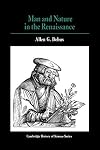
These days "magic" seems quite separate from the pursuit of science; Paracelsian iatrochemistry sounds about as scientific as the use of an ouija board. But to divorce these two different kinds practices - the art of magic, the power to conjure, to discern the occult "mathematical secrets of the universe" on the one hand and what we would consider rigorous, empirical observation on the other - is quite ahistorical and misunderstands the spirit of science in the Renaissance. Allen Debus, show more professor for many years at the University of Chicago and historian of early modern science, drives this point home repeatedly in each of the general area discussed in this book.
The topics covered are ones that you would expect to be found in a book that summarizes the history of major scientific developments from approximately 1400 to 1650 - the study of nature (especially flora and fauna), the increased understanding of human physiology, cosmology, and a brief precis explaining the development of the scientific method generally speaking.
Many of the Renaissance humanists, most notably Paracelsus, wholly rejected the scholasticism and Aristotelianism of previous generations and wished to infuse science and the study of nature with a renewed appreciation for mysticism and alchemy. While a religious understanding of the universe was utterly central to Paracelsian science, he simultaneously emphasized observation, which had been critically ignored by Aristotle and his studious promulgators. (His interest in chemistry, especially iatrochemistry, speaks to his interest in observation.) Aristotle's appreciation of science had been vitiated of all divine wisdom and knowledge by his paganism; Paracelsus wished to correct for this by suffusing science with neo-Platonic, Hermetic, and alchemical texts. He thought that the mathematical formalism of science resembled scholasticism, and he avoided it like the plague.
Empiricism and observation critically improved a number of scientific areas, not just alchemical medicine. In the fifteenth century, crude medieval woodcuts of plants based on Pliny's centuries-old descriptions dominated the scholarship of botany. The drawings of Swiss naturalist Conrad Gesner and Italian botanist Aldrovandi were much more accurate than previous ones, and therefore could greatly benefit both botanists and physicians alike.
In the area of medicine, matters had similarly stagnated. The practices of Galen predominated for a millennium after Galen's death because of their wide use and various translations. Debus discusses the historical developments contributed by those from Vesalius to William Harvey, the first person to accurately characterize blood flow in the human body.
This book is a wonderful introduction for two reasons: it covers the wide range of what were considered the sciences in the few centuries Debus is most concerned with without overwhelming the non-specialist reader, and he continually stresses the continuity between what we would today consider “magic” and empirical, rational, deductive reasoning, or what we would be more likely today to associate with science. He does this effectively in every chapter, and as someone who has a longstanding interest in the history of medieval and Renaissance science, it is refreshing to see an author who isn’t trying to retrospectively make modern science out of something supposedly written by Hermes Trismegistus. He lets the two stand side by side in whatever tension they might have, and deals with them as they are, not as he wants them to be. show less
The topics covered are ones that you would expect to be found in a book that summarizes the history of major scientific developments from approximately 1400 to 1650 - the study of nature (especially flora and fauna), the increased understanding of human physiology, cosmology, and a brief precis explaining the development of the scientific method generally speaking.
Many of the Renaissance humanists, most notably Paracelsus, wholly rejected the scholasticism and Aristotelianism of previous generations and wished to infuse science and the study of nature with a renewed appreciation for mysticism and alchemy. While a religious understanding of the universe was utterly central to Paracelsian science, he simultaneously emphasized observation, which had been critically ignored by Aristotle and his studious promulgators. (His interest in chemistry, especially iatrochemistry, speaks to his interest in observation.) Aristotle's appreciation of science had been vitiated of all divine wisdom and knowledge by his paganism; Paracelsus wished to correct for this by suffusing science with neo-Platonic, Hermetic, and alchemical texts. He thought that the mathematical formalism of science resembled scholasticism, and he avoided it like the plague.
Empiricism and observation critically improved a number of scientific areas, not just alchemical medicine. In the fifteenth century, crude medieval woodcuts of plants based on Pliny's centuries-old descriptions dominated the scholarship of botany. The drawings of Swiss naturalist Conrad Gesner and Italian botanist Aldrovandi were much more accurate than previous ones, and therefore could greatly benefit both botanists and physicians alike.
In the area of medicine, matters had similarly stagnated. The practices of Galen predominated for a millennium after Galen's death because of their wide use and various translations. Debus discusses the historical developments contributed by those from Vesalius to William Harvey, the first person to accurately characterize blood flow in the human body.
This book is a wonderful introduction for two reasons: it covers the wide range of what were considered the sciences in the few centuries Debus is most concerned with without overwhelming the non-specialist reader, and he continually stresses the continuity between what we would today consider “magic” and empirical, rational, deductive reasoning, or what we would be more likely today to associate with science. He does this effectively in every chapter, and as someone who has a longstanding interest in the history of medieval and Renaissance science, it is refreshing to see an author who isn’t trying to retrospectively make modern science out of something supposedly written by Hermes Trismegistus. He lets the two stand side by side in whatever tension they might have, and deals with them as they are, not as he wants them to be. show less
Man and Nature in the Renaissance (Cambridge Studies in the History of Science) by Allen George Debus
An excellent introduction to the development of science and medicine during the period from 1450 to 1650, including in depth discussions of how perceptions of magic and ancient science had important impacts on what we consider to be modern approaches. I will keep the book as a baisc reference about many important people and texts. Highly recommended.
The Chemical Philosophy: Paraclesian Science and Medicine in the Sixteenth and Seventeenth Centuries by Allen G. Debus
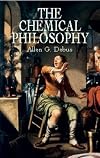
Excellent summary of Paracelsus' impact
Awards

You May Also Like


Associated Authors
Statistics
- Works
- 21
- Members
- 359
- Popularity
- #66,804
- Rating
- 3.9
- Reviews
- 6
- ISBNs
- 28
- Languages
- 3