
Carol Ekarius
Author of The Fleece & Fiber Sourcebook: More Than 200 Fibers, from Animal to Spun Yarn
About the Author
Carol Ekarius has been a fulltime livestock farmer for nearly a decade, in addition to writing for a variety of newspapers and magazines. She has been involved with the sustainable agriculture movement for many years, including membership on the board of directors of the Sustainable Farming show more Association of Minnesota and the board of the Minnesota Institute for Sustainable Agriculture. Ekarius and her husband, Ken Woodard, now live and farm in Colorado. show less
Image credit: via author's website
Works by Carol Ekarius
The Fleece & Fiber Sourcebook: More Than 200 Fibers, from Animal to Spun Yarn (2011) 545 copies, 9 reviews
How to Build Animal Housing: 60 Plans for Coops, Hutches, Barns, Sheds, Pens, Nestboxes, Feeders, Stanchions, and Much More (2004) 144 copies, 2 reviews
Small-Scale Livestock Farming: A Grass-Based Approach for Health, Sustainability, and Profit (1999) 127 copies
Storey's Illustrated Guide to Poultry Breeds: Chickens, Ducks, Geese, Turkeys, Emus, Guinea Fowl, Ostriches, Partridges, Peafowl, Pheasants, Quails, Swans (2007) 121 copies, 3 reviews
Storey's Illustrated Breed Guide to Sheep, Goats, Cattle and Pigs: 163 Breeds from Common to Rare (2008) 44 copies, 2 reviews
Tagged
Common Knowledge
- Birthdate
- 20th century
- Gender
- female
- Nationality
- USA
- Associated Place (for map)
- USA
Members
Reviews
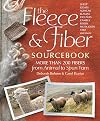
This book was given to me as a gift and I loved reading it! It is filled with beautiful photos of different species of wool-producing species, as well as their fleeces / fibers in raw, cleaned, spun, and knitted states. I am allergic to sheep's wool but I enjoyed reading about the different breeds of sheep so much that I almost ordered samples of several different fleeces just to see if perhaps my body would allow me to work with them. (I may still do that one day.) I loved that the show more camelids, goats, rabbits and other fiber animals were also included.
The stories of the different sheep breeds and other animals were fascinating and I especially loved reading about the at-risk and scarce species.
This seems to be a well-researched labor of love that must have taken so much time to compile. I'd recommend it for anyone interested in the fiber arts. show less
The stories of the different sheep breeds and other animals were fascinating and I especially loved reading about the at-risk and scarce species.
This seems to be a well-researched labor of love that must have taken so much time to compile. I'd recommend it for anyone interested in the fiber arts. show less
Not enough revision
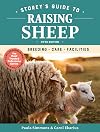
The author attempts to provide a thorough introduction to raising sheep, but this is the 5th edition of a book from 2000 and, in my opinion, there has not been enough deletion of old material. Instead, new information has been grafted onto existing structures.
One example is the short essay on Mendel's genetics. Modern attempts to replicate Mendel's work suggest that Mendel probably didn't do the experiments attributed to him, instead constructed his theories from a show more lifetime of scientific work. Thus the Mendel story will be discredited by scientifically educated readers.
Another place where revision should have been considered is the list of breeds, which I found to be lengthy and jumbled. It largely omits some of the breeds of sheep favored by new consumers with middle eastern family backgrounds. These ancient Asian breeds are preferred because their meat is lean and not greasy when cooked. The meat is mild even from adult animals. The lamb is sublime.
With the book's current focus on breeds derived from European stock, comes the assumption that most sheep behave in similar ways. European and Asian sheep behave quite differently from each other, especially considering flocking behavior and grazing patterns. These differences mean a great deal when considering fencing, pasturing, predation dangers, dog choices, and protection animal training.
In some places the authors mention some very good professional organizations that provide in depth information for the reader to explore. The references would have been enough, really, but the authors waste space by then adding shallow information of little value.
The discussion of vertical integration and large vs small scale farming is under-informed, as is the discussion of the nutritional value of meat.
It several places it seems to me that the insertion of genetic jargon into the text will put off the average reader.
I believe that you will find better information from university sources online, your state's sheep association, and local shepherds than from this book.
I received a review copy of "Storey's Guide to Raising Sheep, 5th Edition: Breeding, Care, Facilities" by Paula Simmons and Carol Ekarius (Storey) through NetGalley.com. show less
The author attempts to provide a thorough introduction to raising sheep, but this is the 5th edition of a book from 2000 and, in my opinion, there has not been enough deletion of old material. Instead, new information has been grafted onto existing structures.
One example is the short essay on Mendel's genetics. Modern attempts to replicate Mendel's work suggest that Mendel probably didn't do the experiments attributed to him, instead constructed his theories from a show more lifetime of scientific work. Thus the Mendel story will be discredited by scientifically educated readers.
Another place where revision should have been considered is the list of breeds, which I found to be lengthy and jumbled. It largely omits some of the breeds of sheep favored by new consumers with middle eastern family backgrounds. These ancient Asian breeds are preferred because their meat is lean and not greasy when cooked. The meat is mild even from adult animals. The lamb is sublime.
With the book's current focus on breeds derived from European stock, comes the assumption that most sheep behave in similar ways. European and Asian sheep behave quite differently from each other, especially considering flocking behavior and grazing patterns. These differences mean a great deal when considering fencing, pasturing, predation dangers, dog choices, and protection animal training.
In some places the authors mention some very good professional organizations that provide in depth information for the reader to explore. The references would have been enough, really, but the authors waste space by then adding shallow information of little value.
The discussion of vertical integration and large vs small scale farming is under-informed, as is the discussion of the nutritional value of meat.
It several places it seems to me that the insertion of genetic jargon into the text will put off the average reader.
I believe that you will find better information from university sources online, your state's sheep association, and local shepherds than from this book.
I received a review copy of "Storey's Guide to Raising Sheep, 5th Edition: Breeding, Care, Facilities" by Paula Simmons and Carol Ekarius (Storey) through NetGalley.com. show less
Though I call myself a spinner – I’m not, really. I spin once every year or so on my little spindle, usually 3 or 4 ounces, and call it a day. I just have too many hobbies to really settle on spinning, though I promise myself regularly that I will, someday, spin for real.
When I saw this book on netgalley though I knew I had to request a review copy, because as a designer… I need to know my fibers! I think I know a fair amount about fibers, their properties, the good the bad & the ugly, show more about the basics… the difference between merino, or peruvian, BFL wools… but I definitely don’t know them all and I definitely don’t know all 100 sheep breeds.
The book begins with a great article on wool allergies. You can tell this is a pet peeve for the authors, and it’s a pet peeve for me, too. It drives me crazy when people say that they are allergic to wool… because really, in most cares, you aren’t… you might be sensitive to the little hairs, the lanolin or the the chemicals or the grass in the raw fiber may irritate you, but the fiber itself? Highly unlikely. I wish more people talked about this & educated the general public, because really… how do you think the poor sheep feel?
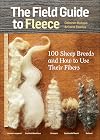
And next, of course, the 100 sheep breeds. Each one is laid out, you’ve got photos of the sheep & photos of the fiber, and the properties of the wool Think textbook / reference book – it’s not really one you are going to sit and read in an afternoon on the beach, but one you are going to study. There’s even a sentence or two about dying for each individual fiber.
My only negative with the book, which honestly can’t be helped, is the fact that each fiber is discussed very, very briefly – each one gets just 2 pages, and most of one page is the photo of the sheep. You can’t spend ten pages on 100 different sheep breeds & still publish an affordable book and average person probably doesn’t want that much information, either, so trust me, I get it. I just am greedy & want to know it all, but that just means I can research more on certain breeds elsewhere, if I so desire. This is meant as a handy reference book, and it is. show less
When I saw this book on netgalley though I knew I had to request a review copy, because as a designer… I need to know my fibers! I think I know a fair amount about fibers, their properties, the good the bad & the ugly, show more about the basics… the difference between merino, or peruvian, BFL wools… but I definitely don’t know them all and I definitely don’t know all 100 sheep breeds.
The book begins with a great article on wool allergies. You can tell this is a pet peeve for the authors, and it’s a pet peeve for me, too. It drives me crazy when people say that they are allergic to wool… because really, in most cares, you aren’t… you might be sensitive to the little hairs, the lanolin or the the chemicals or the grass in the raw fiber may irritate you, but the fiber itself? Highly unlikely. I wish more people talked about this & educated the general public, because really… how do you think the poor sheep feel?
And next, of course, the 100 sheep breeds. Each one is laid out, you’ve got photos of the sheep & photos of the fiber, and the properties of the wool Think textbook / reference book – it’s not really one you are going to sit and read in an afternoon on the beach, but one you are going to study. There’s even a sentence or two about dying for each individual fiber.
My only negative with the book, which honestly can’t be helped, is the fact that each fiber is discussed very, very briefly – each one gets just 2 pages, and most of one page is the photo of the sheep. You can’t spend ten pages on 100 different sheep breeds & still publish an affordable book and average person probably doesn’t want that much information, either, so trust me, I get it. I just am greedy & want to know it all, but that just means I can research more on certain breeds elsewhere, if I so desire. This is meant as a handy reference book, and it is. show less
In Raising Sheep, this neophyte has a valuable resource to help me begin a small flock with a measure of confidence that makes up for my lack of experience with this type of livestock. Pretty much all aspects of managing a flock of sheep are covered in a thorough, but accessible way. After having read it straight through, I know that I will be consulting it often the farther I sink myself into this hobby and as new challenges arise. One suggested improvement would be to update the show more photographs to colour illustrations, especially in the chapter on breeds of sheep. This is one of the few areas where other books that cover raising sheep may surpass the Storey's Guide contribution on the subject. Otherwise I have not yet seen a better resource. show less
Lists
Awards

You May Also Like


Associated Authors
Statistics
- Works
- 12
- Members
- 1,498
- Popularity
- #17,148
- Rating
- 4.4
- Reviews
- 23
- ISBNs
- 28