
George Marshall (5) (1891–1975)
Author of How the West Was Won [1962 film]
For other authors named George Marshall, see the disambiguation page.
About the Author
Image credit: George Marshall (5)
Works by George Marshall
Bob Hope Tribute Collection: Monsieur Beaucaire [1946] / Where There's Life [1946] (2002) — Director — 10 copies
The Searchers / Wild Bunch / How the West Was Won (Triple Feature Video) (2014) — Director — 10 copies
James Stewart: The Western Collection: Destry Rides Again / Winchester 73 / Bend of the River / The Far Country / Night Passage / The Rare Breed (2008) — Director — 10 copies
Film Noir Collection: 9 Films — Director — 6 copies
The Dean Martin and Jerry Lewis Collection — Director — 5 copies
Bing Crosby: The Silver Screen Collection (Going My Way, Holiday Inn, Rhythm on the Range, Birth of the Blues, Road to Morocco, Waikiki Wedding 18 more!) (2014) — Director — 5 copies
Westerns Spotlight Collection: High Plains Drifter / Destry Rides Again / Winchecster '73 (2012) — Director — 4 copies
Till the Clouds Roll By / Pot o' Gold / His Girl Friday (Triple Feature Video) (2007) — Director — 3 copies
The Happy Thieves [1961 film] — Director — 2 copies
Western Showdown Collection: 7 Films — Director — 2 copies
Off Limits 2 copies
Western Classics II — Director — 1 copy
Love Laughs at Andy Hardy [and] Pot o' Gold — Director — 1 copy
Eight on the Lam [1967 film] — Director — 1 copy
365 Nights in Hollywood 1 copy
When The Daltons Rode [DVD] 1 copy
Icons: James Stewart 4 Film Collection — Director — 1 copy
Pot o' Gold [and] Till the Clouds Roll By (Double Feature Video) — Director — 1 copy
Broadway's Best 4 Movie Pack 1 copy
The Tony Curtis Double Feature: Houdini / Those Daring Young Men in Their Jaunty Jalopies (Video) — Director — 1 copy
Papa's Delicate Condition [1963 film] — Director — 1 copy
Helpmates / Towed in the Hole / Busy Bodies — Director — 1 copy
Associated Works
Bob Hope MGM Movie Legends Collection (Alias Jesse James/Boy, Did I Get the Wrong Number/The Facts of Life/I'll Take Sweden/The Princess and the Pirate/The Road to Hong… (2007) — Director — 4 copies
The James Stewart Hollywood Legend Collection (Vertigo / Rear Window / Harvey / Winchester '73 / Destry Rides Again) (2004) — Director — 3 copies
Tagged
Common Knowledge
- Canonical name
- Marshall, George
- Legal name
- Marshall, George E.
- Birthdate
- 1891-12-29
- Date of death
- 1975-02-17
- Gender
- male
- Occupations
- film director
- Nationality
- USA
- Birthplace
- Chicago, Illinois, USA
- Place of death
- Los Angeles, California, USA
- Associated Place (for map)
- USA
Members
Reviews
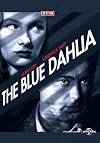
"Every guy's seen you before, somewhere." -- Johnny to Joyce
The Blue Dahlia is one the finest noir films made during the 1940's as everything is absolutely perfect in the third of four films Alan Ladd and Veronica Lake would make together. Raymond Chandler wrote the original screenplay and George Marshall turned in his finest directing job in this screen classic. This film has the perfect blend of grit and gloss, romance and female treachery, and while the outlook of its anti-hero isn't show more quite as jaded as it would have been had Howard Hawks or Billy Wilder filmed this, it still packs a punch.
Lt. Morrison (Ladd) returns from WWII with his two buddies, only to find his wife Helen (Doris Dowling) has been unfaithful; in your face unfaithful, and responsible for his son's death while he was away. He confronts her at a party and blows out in a storm, unaware that someone kills her with his own gun only hours later. Joyce Harwood (Lake) meets him for the first time when she offers him a ride in the rain and an attraction between the two begins.
This film is everything others of its kind during the 1940's tried to be, but often failed to be; either in execution or atmosphere. The noir elements of the story are blended expertly with romantic touches sprinkled throughout, creating a masterpiece of the genre. The scene where Johnny and Joyce cross paths a second time in a restaurant overlooking the sea is a particular standout, the romantic view brought back into dark focus when he overhears a bulletin on the radio alerting him that he is being sought by the police for the murder of his wife.
Like Johnny, Joyce is also running from something, and trying to help him takes her right back to The Blue Dahlia nightclub. Johnny's loyal war buddies are on hand to help him, but the shell-shocked Buss (William Bendix) can't quite remember what he did the night Johnny's wife was murdered. The list of suspects begins to grow, and includes a slimy hotel detective and the guy Joyce is all tangled up with; he just happens to be, of course, the owner of The Blue Dahlia. Lake's Joyce is softer than some noir heroines but still holds back information, so she’s just a shade less than being on the up and up.
This may be the most entertaining 100 minutes you'll ever spend watching a film in this genre, and it’s almost certain to become a favorite by the time the end credits roll. Alan Ladd and Veronica Lake were one of the great screen couples, and one of the most popular during the 1940's. Johnny alludes to Joyce being the girl we all dream about near the end of the film when he keeps her from driving away. Ladd and Lake were a dream come true for Paramount, and for moviegoers. A fabulous film not to be missed. show less
The Blue Dahlia is one the finest noir films made during the 1940's as everything is absolutely perfect in the third of four films Alan Ladd and Veronica Lake would make together. Raymond Chandler wrote the original screenplay and George Marshall turned in his finest directing job in this screen classic. This film has the perfect blend of grit and gloss, romance and female treachery, and while the outlook of its anti-hero isn't show more quite as jaded as it would have been had Howard Hawks or Billy Wilder filmed this, it still packs a punch.
Lt. Morrison (Ladd) returns from WWII with his two buddies, only to find his wife Helen (Doris Dowling) has been unfaithful; in your face unfaithful, and responsible for his son's death while he was away. He confronts her at a party and blows out in a storm, unaware that someone kills her with his own gun only hours later. Joyce Harwood (Lake) meets him for the first time when she offers him a ride in the rain and an attraction between the two begins.
This film is everything others of its kind during the 1940's tried to be, but often failed to be; either in execution or atmosphere. The noir elements of the story are blended expertly with romantic touches sprinkled throughout, creating a masterpiece of the genre. The scene where Johnny and Joyce cross paths a second time in a restaurant overlooking the sea is a particular standout, the romantic view brought back into dark focus when he overhears a bulletin on the radio alerting him that he is being sought by the police for the murder of his wife.
Like Johnny, Joyce is also running from something, and trying to help him takes her right back to The Blue Dahlia nightclub. Johnny's loyal war buddies are on hand to help him, but the shell-shocked Buss (William Bendix) can't quite remember what he did the night Johnny's wife was murdered. The list of suspects begins to grow, and includes a slimy hotel detective and the guy Joyce is all tangled up with; he just happens to be, of course, the owner of The Blue Dahlia. Lake's Joyce is softer than some noir heroines but still holds back information, so she’s just a shade less than being on the up and up.
This may be the most entertaining 100 minutes you'll ever spend watching a film in this genre, and it’s almost certain to become a favorite by the time the end credits roll. Alan Ladd and Veronica Lake were one of the great screen couples, and one of the most popular during the 1940's. Johnny alludes to Joyce being the girl we all dream about near the end of the film when he keeps her from driving away. Ladd and Lake were a dream come true for Paramount, and for moviegoers. A fabulous film not to be missed. show less
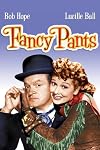
From its awful title to its excruciating musical interludes, this film is well past its sell-by date. Hope is an idiot American actor on the stage in London impersonating an English butler for an Earl trying to romance Lucille Ball, but soon the action shifts to New Mexico, where Ball's mother has hired Hope to civilize Ball and her rustic father. Unfortunately, the town is under the impression that Hope is not a butler but an Earl. And Ball's suitor, the wooden Bruce Cabot, isn't above show more killing him. This could make for a good farce, but it is all just so awkwardly done and disjointed by those musical numbers that it has only a few fleeting moments of fun, mostly involving Ball. Throw in racist stereotypes--American Indians and a Chinese cook, and you'll be cringing more than you laugh. The color cinematography is gorgeous, however, and the sets are nice. show less
It seems cruel to give such a low rating to a film that is so pleasant. The cast is certainly great, especially Charles Winninger, and there are some funny moments. But if there is going to be this much music in a film, it has to be better than this!

A man's wife is murdered after they have a fight.
2.5/4 (Okay)
It's a reasonably okay mystery, but it has too many characters, nothing to distinguish it, and Veronica Lake is barely in it.
(Jul. 2021)
2.5/4 (Okay)
It's a reasonably okay mystery, but it has too many characters, nothing to distinguish it, and Veronica Lake is barely in it.
(Jul. 2021)
Awards


You May Also Like


Associated Authors
Statistics
- Works
- 66
- Also by
- 4
- Members
- 737
- Popularity
- #34,455
- Rating
- 3.5
- Reviews
- 16
- ISBNs
- 85
- Languages
- 3
