
Wade Cooper (1)
Author of Polar Animals (Scholastic Reader, Level 1)
For other authors named Wade Cooper, see the disambiguation page.
Works by Wade Cooper
Tagged
Common Knowledge
There is no Common Knowledge data for this author yet. You can help.
Members
Reviews
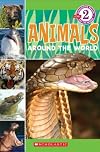
As far as Children's books are concerned this one was pretty good. It is a Level Two book and it is consistent with what it promises to deliver on it's cover. It begins with a note to the parents. This is what I look for in most early reading books. If a parent hands this book to a child without reading this first note, then the parent is doing a child a disservice. Parents should be involved at this level, with children's readings. The forward to the parents set the expectations of what is show more inside and helps the parents help the child stay on target...focused with what they are reading. Kudo points for this.
The Text is a good clear font and it is mixed well with pictures that give the beginning reader hints as to what they words may say. As opposed to early level books, this book has full sentences so that the beginning reader can begin and end thought processes. This is a good thing. Of course, all the cool animals are covered. Bears, Scorpions, Snakes, Tigers, etc. Children dig reading about animals such as these.
But the thing I liked most about this book is the quiz at the end. If the parent is involved with the child's reading, they will be able to gauge one of the most important aspects of the child's reading; comprehension. I have seen so many kids handed books and they look like they are reading it, but when asked what it was about, or can you tell me the main plot of the story they give you the deer in the headlights look. By providing this small simple quiz at the end, the parent can tell, not only if the child read the book, but if the child actually understood what he or she was reading.
This book is worth a look see for the beginning reader. show less
The Text is a good clear font and it is mixed well with pictures that give the beginning reader hints as to what they words may say. As opposed to early level books, this book has full sentences so that the beginning reader can begin and end thought processes. This is a good thing. Of course, all the cool animals are covered. Bears, Scorpions, Snakes, Tigers, etc. Children dig reading about animals such as these.
But the thing I liked most about this book is the quiz at the end. If the parent is involved with the child's reading, they will be able to gauge one of the most important aspects of the child's reading; comprehension. I have seen so many kids handed books and they look like they are reading it, but when asked what it was about, or can you tell me the main plot of the story they give you the deer in the headlights look. By providing this small simple quiz at the end, the parent can tell, not only if the child read the book, but if the child actually understood what he or she was reading.
This book is worth a look see for the beginning reader. show less
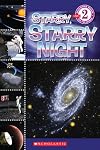
In my opinion this is a good book. I think it is good because the language throughout is clear. It has short, to the point sentences such as, "The sun is one star in the Milky Way. It is a ball of burning gas. It gives us heat and energy on earth." The words are easy to understand as well because it explains many of them throughout. Another reason I like the book is because of the pictures presented on each page. Whenever a page talks about a certain topic there is a picture of it on the show more page. When it talks about the planets closest to the sun, for example, there are pictures of Mercury, Venus, Earth, and Mars. A final reason I enjoyed the book is the accuracy of information. The book had a lot of information about Space in a simple way. The book even had "Did you know?" blurbs throughout to give the reader a little more information about the topic on the page. The big idea in this book is to teach about the basic concepts of outer space in a simple way that children can understand. show less
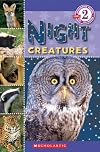
A brief summary:
In a poetic style, this book introduces the reader to a variety of night creatures, including owls, foxes, badgers, and bats. Each page has a riddle-like description of the animal along with "Did you know?" fact and a photo of the animal. The end of the book contains a quiz that has questions on the various night creatures such as, "What do owls eat?" and "What do moths use their antenna for?" The book also contains a dictionary and a page of key words that are used show more throughout the book.
My personal reaction:
I think this book is a good early reader as it uses simple rhyming patterns and pictures to help the reader learn new information and vocabulary on nocturnal creatures. I like how each description is like a riddle. The rhyme and structure of each riddle helps students learn new words by being able to identify word sound patterns and by being able to read and repeat individual sentences of the riddle for understanding.
A couple of uses:
- I would use the rhyming riddle structure of this book to teach kids how to make their own riddles about animals. This book is about nocturnal creatures, but I think it would be fun to apply this idea to other types of creatures, such as underwater creatures or dessert creatures. Each student could pick a creature from the specified category and then work on illustrating and writing their own riddle.
- I could use this as a mentor text for showing students how to use the pictures of an informational book to uncover more information about the subject. For example, I could have students look at the pictures and ask themselves questions such as, "What would it feel like to touch?" and "What sound does it make?"
Genre:
informational
Media:
Digital photos show less
In a poetic style, this book introduces the reader to a variety of night creatures, including owls, foxes, badgers, and bats. Each page has a riddle-like description of the animal along with "Did you know?" fact and a photo of the animal. The end of the book contains a quiz that has questions on the various night creatures such as, "What do owls eat?" and "What do moths use their antenna for?" The book also contains a dictionary and a page of key words that are used show more throughout the book.
My personal reaction:
I think this book is a good early reader as it uses simple rhyming patterns and pictures to help the reader learn new information and vocabulary on nocturnal creatures. I like how each description is like a riddle. The rhyme and structure of each riddle helps students learn new words by being able to identify word sound patterns and by being able to read and repeat individual sentences of the riddle for understanding.
A couple of uses:
- I would use the rhyming riddle structure of this book to teach kids how to make their own riddles about animals. This book is about nocturnal creatures, but I think it would be fun to apply this idea to other types of creatures, such as underwater creatures or dessert creatures. Each student could pick a creature from the specified category and then work on illustrating and writing their own riddle.
- I could use this as a mentor text for showing students how to use the pictures of an informational book to uncover more information about the subject. For example, I could have students look at the pictures and ask themselves questions such as, "What would it feel like to touch?" and "What sound does it make?"
Genre:
informational
Media:
Digital photos show less
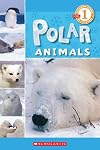
I loved how this book showcased several of the animals from the polar regions. The author chose an interesting fact or two about several of the animals and presented it in kid friendly language. This is a great non fiction piece for emergent readers. It appeals to their level, but keeps it interesting.
Awards

You May Also Like


Associated Authors
Statistics
- Works
- 7
- Members
- 2,994
- Popularity
- #8,521
- Rating
- 3.9
- Reviews
- 11
- ISBNs
- 32