
Allan Fowler
Author of Frogs and Toads and Tadpoles, Too (Rookie Read-About Science: Animals)
About the Author
Allan Fowler is the author of children's books. Some of his titles include the Rookie Read-About Science books Can You See the Wind?, Sun's Family of Planets (Rookie Read-About Science, Upside-Down Sloth, and We Love Fruit. (Bowker Author Biography)
Series
Works by Allan Fowler
All the Colors of the Rainbow (Rookie Read-About Science: Physical Science) (1998) 291 copies, 3 reviews
Inside an Ant Colony (Rookie Read-About Science: Animal Adaptations and Behavior) (1998) 264 copies, 4 reviews
What's the Weather Today? (Rookie Read-About Science: Weather and Seasons) (1991) 246 copies, 1 review
Icebergs, Ice Caps, and Glaciers (Rookie Read-About Science: Earth Science) (1997) 158 copies, 1 review
It's a Fruit, It's a Vegetable, It's a Pumpkin (Rookie Read-About Science: Plants and Fungi) (1995) 141 copies
The Top and Bottom of the World (Rookie Read-About Science: Habitats and Ecosystems) (1997) 111 copies
Arms and Legs and Other Limbs (Rookie Read-About Science: Animal Adaptations and Behavior) (1999) 45 copies, 2 reviews
Arctic Tundra: Land With No Trees (Rookie Read-About Science: Habitats and Ecosystems) (1996) 33 copies
Beginning iOS AR Game Development: Developing Augmented Reality Apps with Unity and C# (2018) 3 copies
Learn unity 2017 for iOS game development : create amazing 3D games for iphone and ipad (2017) 2 copies
Africa (Rookie Read-About Geography) 2 copies
Lo Que Sientes Al Tocar/Feeling Things (Rookie Read-About Science) (Spanish Edition) (1992) 2 copies
Living in the Artcit 1 copy
LIVING IN A RAIN FOREST 1 copy
LIVING IN A DESERT 1 copy
LIVING NEAR A RIVER 1 copy
LIVING IN THE MOUNTAINS 1 copy
LIVING NEAR THE SEA 1 copy
HORSES HORSES HORSES 1 copy
LIFE IN A OND 1 copy
Spider Are Not Insects 1 copy
Cual Es Tu Flor Favorita? - What's Your Favorite Flower?/Big Book (Rookie Read-About Science (Paperback Spanish)) (1993) 1 copy
Las Tortugas So Se Apuran/Turtles Take Their Time (Rookie Read-About Science (Paperback Spanish)) (Spanish Edition) (1993) 1 copy
How Do you Know it's Fall? 1 copy
La Vie dans l'Étang 1 copy
Tagged
Common Knowledge
- Gender
- male
Members
Reviews
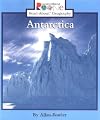
This book seems extremely useful to young learners. I enjoyed reading it because of how clear and concise the information is. Things are very broken down, clear, and repetitive. These three things are essential for young learners to remember the information. Some information is worded differently or repeated for better clarification. "During the Summer, the sun stays out almost all day in Antarctica. It does not get very dark outside at night." The photography is also very stunning in this show more picture book it draws the reader in and gives good insight on what Antarctica looks like. The purpose of this book is to really convey knowledge on the subject of Antarctica onto curious readers. show less
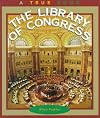
This is one of the better children's books I've seen about the Library of Congress. This book mentions the history, as well as various collections (including non-print, AV, and art). It also talks about preservation of the print materials, and the Gutenberg Bible on display there.

What makes a butterfly a butterfly? Learn about their life cycles and more in this slim book.
Direct language makes this title easy to follow, even for young readers. However, it still contains a lot of information to help you walk away having learned something new.
The cover looks rather dated but the inside illustrations of full-color photographs were fine and all the information was correct.
Direct language makes this title easy to follow, even for young readers. However, it still contains a lot of information to help you walk away having learned something new.
The cover looks rather dated but the inside illustrations of full-color photographs were fine and all the information was correct.

This Rookie Read-About Science discovery book for young readers explains why the moon changes shape during the month. Photographs accompany the simple text and a “Words You Know” glossary is included to enhance word recognition. This science book is perfect for young scientists, space enthusiasts, and readers who want to know more about the night sky.
Highly recommended.
Highly recommended.
Lists
Awards

You May Also Like


Statistics
- Works
- 166
- Members
- 15,986
- Popularity
- #1,417
- Rating
- 3.7
- Reviews
- 69
- ISBNs
- 594
- Languages
- 4
- Favorited
- 1