

Carmen Bredeson
Author of The Moon (Rookie Read-About Science)
About the Author
Carmen Bredeson, a former high school English teacher, has a master's degree in instructional technology. She has written more than eighty books for young people.
Image credit: via Enslow Publishing
Series
Works by Carmen Bredeson
After the Last Dog Died: The True-Life, Hair-Raising Adventure of Douglas Mawson's 1912 Antarctic Expedition (2003) 40 copies, 2 reviews
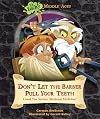
Don't Let the Barber Pull Your Teeth: Could You Survive Medieval Medicine? (Ye Yucky Middle Ages) (2012) 11 copies, 2 reviews
The Chocolate Chip Cookie Queen: Ruth Wakefield and Her Yummy Invention (Inventors at Work!) (2014) 9 copies, 1 review
Scuba Man: Jacques Cousteau and His Amazing Underwater Invention (Inventors at Work!) (2014) 6 copies
Can you find these bids? 1 copy
Nave espacial 1 copy
Tagged
Common Knowledge
- Other names
- Thibodeau, Carmen (birth)
- Birthdate
- 1944-11-03
- Gender
- female
- Education
- Texas A & M University
Southern Illinois University - Occupations
- teacher
- Organizations
- Society of Children's Book Writers and Illustrators
Texas Library Association
Texas Archaeological Society
Austin Writers League - Birthplace
- Norfolk, Virginia, USA
- Associated Place (for map)
- Virginia, USA
Members
Reviews
Don't Let the Barber Pull Your Teeth: Could You Survive Medieval Medicine? (Ye Yucky Middle Ages) by Carmen Bredeson
Grades 4-6
Students who enjoy a high degree of yuck will love this series. Life in the Middle Ages was a dirty business, and this title doesn't pull any punches when it comes to describing poop in the streets, filthy water, leprosy, leeches, and plagues. As kids get plenty of the "EWWWW" factor, they'll be picking up a surprising amount of information about why diseases were so rampant, which treatments worked and which made patients worse, and how the plague actually helped peasants demand show more better conditions. And of course, learning about the barber's role as doctor and amputator (from the book: the red and white striped poles we see today are a carryover from barber surgeons advertising their work by wrapping bloody rags around a pole). Who knew? show less
Students who enjoy a high degree of yuck will love this series. Life in the Middle Ages was a dirty business, and this title doesn't pull any punches when it comes to describing poop in the streets, filthy water, leprosy, leeches, and plagues. As kids get plenty of the "EWWWW" factor, they'll be picking up a surprising amount of information about why diseases were so rampant, which treatments worked and which made patients worse, and how the plague actually helped peasants demand show more better conditions. And of course, learning about the barber's role as doctor and amputator (from the book: the red and white striped poles we see today are a carryover from barber surgeons advertising their work by wrapping bloody rags around a pole). Who knew? show less
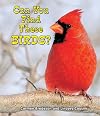
Regardless of where one lives in the country, it's probable that at least several of these beautifully photographed birds will look familiar - House Sparrow, Robin, Cardinal and Crow are just a few of the nine featured birds. A photograph of each bird is on the left side, with a simple, one page "chapter," on the facing page,
"Barn Swallow
These birds zip through the air.
They catch bugs while they fly.
Barn swallows have long tails.
Their tails look like the letter V."
That's it! Short and show more simple - all that a young one needs to know.
Each concludes with "Read More," "Web Sites," "Index," as well as the book's Guided Reading Level and word count.
I don't think these are the perfect books for sharing with a large group, but I would definitely have wanted them at home when my children were small. At approximately 7"x 6", these simple nonfiction books are perfect for little hands and invite backyard and neighborhood discovery.
This series should inspire budding naturalists (and their parents!) to get outside and discover.
(http://shelf-employed.blogspot.com) show less
"Barn Swallow
These birds zip through the air.
They catch bugs while they fly.
Barn swallows have long tails.
Their tails look like the letter V."
That's it! Short and show more simple - all that a young one needs to know.
Each concludes with "Read More," "Web Sites," "Index," as well as the book's Guided Reading Level and word count.
I don't think these are the perfect books for sharing with a large group, but I would definitely have wanted them at home when my children were small. At approximately 7"x 6", these simple nonfiction books are perfect for little hands and invite backyard and neighborhood discovery.
This series should inspire budding naturalists (and their parents!) to get outside and discover.
(http://shelf-employed.blogspot.com) show less
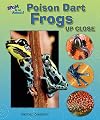
Poison Dart Frogs are one of my favorite animals. This is a great introduction to the world of Poison Dart Frogs. With brief text, just enough to get the point across and colorful up-close pictures that draw readers eyes in and promote interest in this amazing animal.
Where the frogs live, how they are poisonous, how they get around and how they reproduce are established. This book will be sure to stimulate interest in learning more about Poison Dart frogs.
This book was provided for free in show more return for an honest review. show less
Where the frogs live, how they are poisonous, how they get around and how they reproduce are established. This book will be sure to stimulate interest in learning more about Poison Dart frogs.
This book was provided for free in show more return for an honest review. show less
After the Last Dog Died : The True-Life, Hair-Raising Adventure of Douglas Mawson's 1912 Antarctic Expedition by Carmen Bredeson
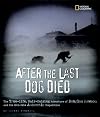
This book was really interesting. I think that this is a great book for older children to read, especially if they want to learn more about explorers or the Antartica expeditions. This is a great book to use for research reports, especially for children just starting out researching topics. This book was really intense, a book definitely directed towards older audiences, even adults. The story started with a brief history of Douglas Mawson's life, then focused on his near-fatal expedition. show more The story was truly amazing. show less
Awards


You May Also Like


Associated Authors
Statistics
- Works
- 107
- Members
- 2,848
- Popularity
- #9,011
- Rating
- 3.8
- Reviews
- 22
- ISBNs
- 304
- Languages
- 2