
Rachel Qitsualik-Tinsley
Author of The Raven and the Loon
About the Author
Works by Rachel Qitsualik-Tinsley
Associated Works
Tagged
Common Knowledge
- Gender
- female
Members
Reviews

Author Rachel Qitsualik-Tinsley presents four stories taken from traditional Inuit lore in this picture-book collection, each featuring a monstrous adversary of some kind. In Amautalik, a terrible child-kidnapping ogress is defeated by the angakkuq (shaman) grandmother of her latest victim. In Akhla, the great hero Umaun, also known as Kiviuq, defeats a terrible bear-like creature, and then defeats the creature's wife, when she pursues him. In Nanurluk, a foolhardy hunter named Nakasungnak show more succeeds in slaying one of the far-north's giant bears - many times the size of a polar bear, the Nanurluit could be the size of a hill - only to be slain by gigantic meat-eating bugs. Finally, in Mahaha, a newly-wed woman is murdered by an evil, giggling creature that tickles people to death, and her bereaved husband must set out to avenge her loss.
Originally published in 2011, and then reprinted this past year (2018), The Shadows that Rush Past: A Collection of Frightening Inuit Folktales more than lives up to its sub-title, pairing a selection of truly terrifying tales with deliciously creepy artwork. Inuit lore seems replete with scary stories, perhaps reflecting the harshness of the natural environment of the far north, and this title adds to the body of lore available to English speakers. The second story here, Akhla, has also been told, in slightly different form, in Qaunaq Mikkigak's The Legend of the Fog, which was also published by Inhabit Media. I was interested to learn that the folk-hero Kiviuq, whose adventures I have read in such titles as Kiviuq and the Mermaids, is also known as Umaun. This is a collection that I would recommend, both to young folklore lovers, and to young readers who enjoy scary stories in general. show less
Originally published in 2011, and then reprinted this past year (2018), The Shadows that Rush Past: A Collection of Frightening Inuit Folktales more than lives up to its sub-title, pairing a selection of truly terrifying tales with deliciously creepy artwork. Inuit lore seems replete with scary stories, perhaps reflecting the harshness of the natural environment of the far north, and this title adds to the body of lore available to English speakers. The second story here, Akhla, has also been told, in slightly different form, in Qaunaq Mikkigak's The Legend of the Fog, which was also published by Inhabit Media. I was interested to learn that the folk-hero Kiviuq, whose adventures I have read in such titles as Kiviuq and the Mermaids, is also known as Umaun. This is a collection that I would recommend, both to young folklore lovers, and to young readers who enjoy scary stories in general. show less

A young Inuit boy named Huuq must search for his true nature and being in this marvelous work of fantasy from Sean and Rachel Qitsualik-Tinsley. Never having fit into his Inhabitant camp, always on the outside, always conscious of his differences, Huuq finds himself transformed into a monster - a creature with a bear arm, a wolverine head, and caribou legs - after he and his dog Qipik, fleeing from some bullies, break open a mysterious egg they find in the middle of a circle of standing show more stones. Now truly exiled from his home and family, Huuq must seek for answers. What was the tiny creature that, having hatched from the egg, was swallowed by Qipik? What or who is Qipik, and where do her loyalties lie? Can Huuq reverse the transformation he has undergone, and regain his human form? Most of all: who and what is Huuq, that this could have happened to him? As he struggles through the bitterly cold northern landscape, our young hero encounters many surprising beings of folklore and mythology, eventually learning that he isn't simply on a quest to restore himself, but also to save his home camp from a terrible evil...
Having greatly enjoyed all of the many picture-books I have read from Inhabit Media, an Inuit-owned publisher based in Nunavut, and specializing in Inuit-themed titles, I was excited to pick up Why the Monster, which is a novel for older children, and the longest, most involved tale I have yet read from this excellent publisher's catalogue. I am so very, very glad that I did, as I think it is an outstandingly beautiful, thoughtful, and moving work, one which I will be pondering for some time to come. There is such a richness here, so much to consider on every page, that I had no sooner finished the book, than I was thinking of rereading it. I certainly reread more than one passage, as I made my way through the story. Although I am not sure I completely understood all of the cosmological underpinnings of the tale - the authors' brief afterword does give some fascinating insights into Inuit beliefs about reality, and the nature of the human soul - what I did grasp often made me stop to consider. The best books make the reader think in a new way, or along new lines, and this is certainly a title that did just that! The story itself was exciting, and I was eager to find out what happened next. Some of the figures and beings encountered - the Deep Mother (clearly the goddess Sedna ), the Many Players (the Northern Lights, said to be the Inuits' ancestors) - were already familiar to me, and I enjoyed the way the authors worked them into their story. The idea of the soul's journey being tripartite, reflecting the Land, Sea and Sky, was new to me, but also terribly compelling. So many belief systems have a tripartite understanding of metaphysical ideas! The authors themselves reflect, in that far-too-brief afterword, about the commonalities among world beliefs, when it comes to these things.
Entertaining but also thought-provoking, Why the Monster was a compelling and immensely enjoyable read, one I would strongly recommend, both to readers looking for fantasy fiction with an Inuit cultural setting, and to those who enjoy more philosophical fiction in general. Although I am currently on a book-buying moratorium, I will definitely be making an exception for this one! show less
Having greatly enjoyed all of the many picture-books I have read from Inhabit Media, an Inuit-owned publisher based in Nunavut, and specializing in Inuit-themed titles, I was excited to pick up Why the Monster, which is a novel for older children, and the longest, most involved tale I have yet read from this excellent publisher's catalogue. I am so very, very glad that I did, as I think it is an outstandingly beautiful, thoughtful, and moving work, one which I will be pondering for some time to come. There is such a richness here, so much to consider on every page, that I had no sooner finished the book, than I was thinking of rereading it. I certainly reread more than one passage, as I made my way through the story. Although I am not sure I completely understood all of the cosmological underpinnings of the tale - the authors' brief afterword does give some fascinating insights into Inuit beliefs about reality, and the nature of the human soul - what I did grasp often made me stop to consider. The best books make the reader think in a new way, or along new lines, and this is certainly a title that did just that! The story itself was exciting, and I was eager to find out what happened next. Some of the figures and beings encountered - the Deep Mother (clearly
Entertaining but also thought-provoking, Why the Monster was a compelling and immensely enjoyable read, one I would strongly recommend, both to readers looking for fantasy fiction with an Inuit cultural setting, and to those who enjoy more philosophical fiction in general. Although I am currently on a book-buying moratorium, I will definitely be making an exception for this one! show less
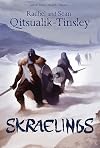
Inuit author Rachel Qitsualik-Tinsley and her husband Sean Qitsualik-Tinsley craft a riveting chapter book exploring the culture clash between the native Arctic peoples and the invading Norse Vikings more than a thousand years ago. As Vikings left first Norway, then Iceland and then Greenland to locate in Northern Canada, they encountered the Tuniit people that they called Skraelings on Baffin Island. (The now-extinct Tuniit are more commonly called the Dorset people today.)
The story begins show more with nomadic hunter Kannujaq, a member of the dogsledding Inuit (the Arctic people once popularly known as “Eskimos”). Kannujaq encounters a village of Tuniit, people who, to Kannujaq and his relatives, exist only as mythical, sedentary “almost people.” Indeed, Kannujaq says that “his imagination had pictured them with fangs and claws.” But he discovers they are much like himself, if darker, shorter, and stockier, with a language similar enough to be understood. Eventually, Kannujaq and the Tuniit make common cause against the marauding Siaraili (what the Tuniits call the tall, bearded Vikings).
Adult readers will enjoy this account of a little-known era of North American history. The Qitsualik-Tinsleys manage to pack enough historical details about Northern Canada in the Middle Ages and enough suspense into Skraelings, despite its mere 120 pages, to intrigue not just its intended audience of middle-grade readers but their parents and grandparents, as well. What better gift for a child than an adventure story you can read — and enjoy — together.
In the interest of full disclosure, I received this book from NetGalley and Inhabit Media in exchange for an honest review. show less
The story begins show more with nomadic hunter Kannujaq, a member of the dogsledding Inuit (the Arctic people once popularly known as “Eskimos”). Kannujaq encounters a village of Tuniit, people who, to Kannujaq and his relatives, exist only as mythical, sedentary “almost people.” Indeed, Kannujaq says that “his imagination had pictured them with fangs and claws.” But he discovers they are much like himself, if darker, shorter, and stockier, with a language similar enough to be understood. Eventually, Kannujaq and the Tuniit make common cause against the marauding Siaraili (what the Tuniits call the tall, bearded Vikings).
Adult readers will enjoy this account of a little-known era of North American history. The Qitsualik-Tinsleys manage to pack enough historical details about Northern Canada in the Middle Ages and enough suspense into Skraelings, despite its mere 120 pages, to intrigue not just its intended audience of middle-grade readers but their parents and grandparents, as well. What better gift for a child than an adventure story you can read — and enjoy — together.
In the interest of full disclosure, I received this book from NetGalley and Inhabit Media in exchange for an honest review. show less
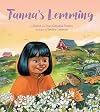
In “Tanna’s Lemming,” a collaboration between authors Rachel and Sean Quitsualik-Tinsley and illustrator Tamara Campeau, young readers journey through the enchanting Arctic as the seasons unfold. The authors’ words craft vivid images, inviting readers to immerse themselves in the story’s scenes.
At its core, the tale imparts a simple yet profound lesson: every life holds importance. Tanna, a young girl living in the Arctic, embarks on a heartfelt journey when she rescues a lemming show more from researchers, choosing to care for it as a companion. As seasons unfold, the once-small lemming grows, and Tanna grapples with the inevitable moment of bidding farewell.
The storytelling beautifully navigates Tanna’s emotional journey—her struggle with separation and the poignant realization that what she desires might differ from the lemming’s needs. The depth lies in Tanna’s evolving understanding, emphasizing the unique connection between the girl and the lemming.
Complementing the heartfelt tale are illustrations by Tamara Campeau, striking a delicate balance between simplicity and evocativeness. These visuals, like windows to the Arctic’s changing backdrop, enhance the reader’s experience. Campeau’s artistic touch, neither too elaborate nor too simple, creates a visual feast that harmonizes seamlessly with the story’s emotional nuances. show less
At its core, the tale imparts a simple yet profound lesson: every life holds importance. Tanna, a young girl living in the Arctic, embarks on a heartfelt journey when she rescues a lemming show more from researchers, choosing to care for it as a companion. As seasons unfold, the once-small lemming grows, and Tanna grapples with the inevitable moment of bidding farewell.
The storytelling beautifully navigates Tanna’s emotional journey—her struggle with separation and the poignant realization that what she desires might differ from the lemming’s needs. The depth lies in Tanna’s evolving understanding, emphasizing the unique connection between the girl and the lemming.
Complementing the heartfelt tale are illustrations by Tamara Campeau, striking a delicate balance between simplicity and evocativeness. These visuals, like windows to the Arctic’s changing backdrop, enhance the reader’s experience. Campeau’s artistic touch, neither too elaborate nor too simple, creates a visual feast that harmonizes seamlessly with the story’s emotional nuances. show less
Lists
Awards


You May Also Like


Associated Authors
Statistics
- Works
- 16
- Also by
- 7
- Members
- 273
- Popularity
- #84,853
- Rating
- 3.9
- Reviews
- 15
- ISBNs
- 49
- Languages
- 1
- Favorited
- 1