
Rosalie Ham
Author of The Dressmaker
About the Author
Rosalie Ham is an Australian author, stage and radio play writer. She was born on August 11, 1955 in Jerilderie, New South Wales. She is best known for her first novel, The Dressmaker, which has been adapted into a film with Kate Winslet in the lead role. In addition, Ham has also written short show more stories for various Australian publications, including Meanjin, The Age, and The Bulletin. Her other works include Summer at Mount Hope, There Should Be Dancing, and The Year of the Farmer. (Bowker Author Biography) show less
Series
Works by Rosalie Ham
Associated Works
Tagged
Common Knowledge
- Birthdate
- 1955-01-13
- Gender
- female
- Education
- Deakin University
RMIT Melbourne - Nationality
- Australia
- Places of residence
- Melbourne, Victoria, Australia
- Associated Place (for map)
- Victoria, Australia
Members
Reviews
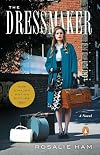
I saw the film first, and loved it, so I opted to read the book. I quite enjoyed the book overall, loving the combination of satire/humour, tragedy and drama, as well as the textile details, which can be confusing to anyone not familiar with the process, but add a particular style and layer to the story that makes it fun for those who love working with textiles (When the Sergeant can't read the knitting pattern as presented, I hadn't even realized that it wasn't clear instructions!). I loved show more how the story showed the outcasts being sympathetic to each other, and connecting as friends. For me, this book is iconic for some of the vocabulary choices it employed, and I would highly recommend it to anyone looking for a dramedy read. The only reason this book is not five stars is because of the ending - which I actually prefer in the movie, because I felt that the sergeant did not deserve to have all his outfits burnt up like that. In the movie he is arrested for being a cross-dresser, and Tilly is distraught, in the book, despite them being good friends, she burns all his things along with the rest of the town on her way out, which I found off-putting enough to make me overall prefer the film show less
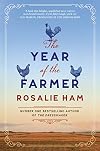
Mitch’s life has been hell. His crops are failing and his sheep are hungry but he has decided that life is going to turn around and this is going to be his year.
First the rain comes then the love of his life, Neralie, returns home after 5 years in Sydney and it looks like he may get the year he envisaged. The only problem is the rain has come too early and may ruin his crop and he is now married; to the town’s nemesis.
The Year of the Farmer is a cleverly written satire, a dark show more tragicomedy, that will have you laughing out loud at the overly exaggerated characters all placed neatly in their respective boxes and performing perfectly on cue.
The small town is under threat from the drought and the water authority is doing everything it can to make life more difficult (on the pretense of helping them) for the farmers whilst making a little money on the side for themselves; that retirement fund. But the biggest threat will come from one of their own! A furious wife hell bent on fitting in but letting her hurt fuel her need for revenge.
I loved this story! There are a multitude of characters introduced one straight after the other which I found hard to sort out but as the story progresses everyone fits into their place.
The story brings to light the plight of the farmers and the devastating effect of the drought and the nonsensical stipulations and regulations set by the water authorities.
Ham shows the deep connection that the farmers have with their land and how they have intense feelings of letting their ancestors down when they lose their farm that has been handed down through the generations.
They were a town that stuck together when hearts were broken but even more so when their farms and livelihoods were at stake.
‘Then suddenly, in groups of two or three, the councillors, irrigators, riparians and townies left the pub and went, united, into the black star-speckled night, the smooth barrels of their loaded guns frosted silver by the moonlight’
I felt quite sorry for Mandy, Mitch’s wife, her only aim in life was to be someone, to fit in, but the whole town despised her and where Mitch’s moments of infidelity were encouraged hers were frowned upon. I’d be very interested to know what other readers thought of Mandy and her actions.
In today’s life where we expect everything, including our reads, to be fast paced and instantly gratifying this slow paced and slightly quirky novel may not appeal to everyone.
Content: for those that are sensitive to animal deaths; animals die in this story.
*I received a copy from the publisher to read and review show less
First the rain comes then the love of his life, Neralie, returns home after 5 years in Sydney and it looks like he may get the year he envisaged. The only problem is the rain has come too early and may ruin his crop and he is now married; to the town’s nemesis.
The Year of the Farmer is a cleverly written satire, a dark show more tragicomedy, that will have you laughing out loud at the overly exaggerated characters all placed neatly in their respective boxes and performing perfectly on cue.
The small town is under threat from the drought and the water authority is doing everything it can to make life more difficult (on the pretense of helping them) for the farmers whilst making a little money on the side for themselves; that retirement fund. But the biggest threat will come from one of their own! A furious wife hell bent on fitting in but letting her hurt fuel her need for revenge.
I loved this story! There are a multitude of characters introduced one straight after the other which I found hard to sort out but as the story progresses everyone fits into their place.
The story brings to light the plight of the farmers and the devastating effect of the drought and the nonsensical stipulations and regulations set by the water authorities.
Ham shows the deep connection that the farmers have with their land and how they have intense feelings of letting their ancestors down when they lose their farm that has been handed down through the generations.
They were a town that stuck together when hearts were broken but even more so when their farms and livelihoods were at stake.
‘Then suddenly, in groups of two or three, the councillors, irrigators, riparians and townies left the pub and went, united, into the black star-speckled night, the smooth barrels of their loaded guns frosted silver by the moonlight’
I felt quite sorry for Mandy, Mitch’s wife, her only aim in life was to be someone, to fit in, but the whole town despised her and where Mitch’s moments of infidelity were encouraged hers were frowned upon. I’d be very interested to know what other readers thought of Mandy and her actions.
In today’s life where we expect everything, including our reads, to be fast paced and instantly gratifying this slow paced and slightly quirky novel may not appeal to everyone.
Content: for those that are sensitive to animal deaths; animals die in this story.
*I received a copy from the publisher to read and review show less

There are two kinds of story in which a woman goes home to the small town:
1) The small town is a bucolic idyll, and its inhabitants' manifold kindnesses will heal Our Heroine's emotional wounds even as she brings their superstitious ways up to date with modern realities.
2) The small town is a cesspit of domestic abuse and sex pests, she was absolutely right to leave the first time, what is she doing back here? Get out, take your mentally ill mother with you, whatever, just Get. Out.
This is show more the second kind, and at a certain point I just couldn't bear to listen to all the nastiness anymore, not even to relieve the boredom of giving my kitchen the deepest clean of its life. show less
1) The small town is a bucolic idyll, and its inhabitants' manifold kindnesses will heal Our Heroine's emotional wounds even as she brings their superstitious ways up to date with modern realities.
2) The small town is a cesspit of domestic abuse and sex pests, she was absolutely right to leave the first time, what is she doing back here? Get out, take your mentally ill mother with you, whatever, just Get. Out.
This is show more the second kind, and at a certain point I just couldn't bear to listen to all the nastiness anymore, not even to relieve the boredom of giving my kitchen the deepest clean of its life. show less
Molly by Rosalie Ham
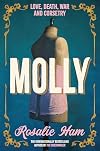
My first book for 2025 is by one of Australian best-loved authors — Rosalie Ham, who brought us The Dressmaker in 2000, which was made into a stunning film in 2015 where the real star of the show was the costume designer Marion Boyce who made the dresses for the film. Ham went on to write a sequel, The Dressmaker's Secret in 2020, and now we have the prequel — Molly.
With the dark humour, richly detailed settings and vividly drawn characters we've come to expect from Rosalie Ham, this show more prequel to the international bestseller The Dressmaker is an unforgettable story of hopes lost, love found - and corsets loosened.
Ham's Gothic blend of feisty females, satire and historical detail was just what I wanted after a run of Serious Books. By the end of the novel Molly is the mother of Tilly Dunnage who in the next book goes on to be the dressmaker who returns to the fictional town of Dungatar to wreak her revenge. Like the rest of the books in the series, Molly's themes showcase malice, vanity, hypocrisy and bigotry but — as was historically accurate for the pre WW1 era in which it is set — Molly also explores the wasted talent of working class people, condemned to lives of poverty and disadvantage.
In Molly, Ham shows that small mindedness isn't confined to small towns. A dedicated activist for women's rights, Molly is the target of an obnoxious conservative called Mrs Sidebottom and also of Mr Addler, her boss at the corsetry factory who makes her life a misery. A lowlife called Evan Pettyman is there to represent the way even mediocre men can survive and prosper, but the wealthy have a mean streak too, as we can see in the character of Alethea Pocknall who offers false hope when she inherits her father's factory.
It is the wealthy who give Molly (and the author) a chance to flaunt haute couture. Talking about this novel with a friend yesterday, it was nostalgic memories of our mothers wearing 1950s fashion that made us love The Dressmaker because we could imagine the dresses that were described in lush detail. But while, yes, feminists can rejoice in Molly's quest to redesign ladies undergarments to allow freedom of movement, the (rather long) descriptions of corsetry never quite worked for me because I could not really imagine their designs or appearance. When I think of corsets, I think of the film of Gone with The Wind and Mammy lacing Scarlett O'Hara into a gruesome concoction, and how women ever managed to dance wearing them I do not know. My generation of feminists but also my mother would not have dreamed of wearing any such thing or variation of it. Feminists of the seventies and women who had serious work to do in WW2 are/were not interested in the idea of shaping our bodies to suit a male gaze, not at all.
But although I failed #Fashion101 I was interested in the dresses that transform their wearers due to the shaping that Molly's creations allow.
Stuck in a factory where she is bullied daily by Mr Addler, Molly dreams of a career in design. She wants to liberate women and herself, and from her physical confrontations with others at the demonstrations she attends, she knows that freedom of movement is critical.
To read the rest of my review please visit https://anzlitlovers.com/2025/01/02/molly-the-dressmaker-0-5-2024-by-rosalie-ham... show less
With the dark humour, richly detailed settings and vividly drawn characters we've come to expect from Rosalie Ham, this show more prequel to the international bestseller The Dressmaker is an unforgettable story of hopes lost, love found - and corsets loosened.
Ham's Gothic blend of feisty females, satire and historical detail was just what I wanted after a run of Serious Books. By the end of the novel Molly is the mother of Tilly Dunnage who in the next book goes on to be the dressmaker who returns to the fictional town of Dungatar to wreak her revenge. Like the rest of the books in the series, Molly's themes showcase malice, vanity, hypocrisy and bigotry but — as was historically accurate for the pre WW1 era in which it is set — Molly also explores the wasted talent of working class people, condemned to lives of poverty and disadvantage.
In Molly, Ham shows that small mindedness isn't confined to small towns. A dedicated activist for women's rights, Molly is the target of an obnoxious conservative called Mrs Sidebottom and also of Mr Addler, her boss at the corsetry factory who makes her life a misery. A lowlife called Evan Pettyman is there to represent the way even mediocre men can survive and prosper, but the wealthy have a mean streak too, as we can see in the character of Alethea Pocknall who offers false hope when she inherits her father's factory.
It is the wealthy who give Molly (and the author) a chance to flaunt haute couture. Talking about this novel with a friend yesterday, it was nostalgic memories of our mothers wearing 1950s fashion that made us love The Dressmaker because we could imagine the dresses that were described in lush detail. But while, yes, feminists can rejoice in Molly's quest to redesign ladies undergarments to allow freedom of movement, the (rather long) descriptions of corsetry never quite worked for me because I could not really imagine their designs or appearance. When I think of corsets, I think of the film of Gone with The Wind and Mammy lacing Scarlett O'Hara into a gruesome concoction, and how women ever managed to dance wearing them I do not know. My generation of feminists but also my mother would not have dreamed of wearing any such thing or variation of it. Feminists of the seventies and women who had serious work to do in WW2 are/were not interested in the idea of shaping our bodies to suit a male gaze, not at all.
But although I failed #Fashion101 I was interested in the dresses that transform their wearers due to the shaping that Molly's creations allow.
Stuck in a factory where she is bullied daily by Mr Addler, Molly dreams of a career in design. She wants to liberate women and herself, and from her physical confrontations with others at the demonstrations she attends, she knows that freedom of movement is critical.
To read the rest of my review please visit https://anzlitlovers.com/2025/01/02/molly-the-dressmaker-0-5-2024-by-rosalie-ham... show less
Lists
You May Also Like


Associated Authors
Statistics
- Works
- 11
- Also by
- 1
- Members
- 1,188
- Popularity
- #21,642
- Rating
- 3.5
- Reviews
- 52
- ISBNs
- 90
- Languages
- 6