
Hannah Kent
Author of Burial Rites
About the Author
Hannah Kent was born in 1985 in Adelaide, Australia. She is the co-founder and publishing director of Australian literary journal Kill Your Darlings. She won the inaugural Writing Australia Unpublished Manuscript Award (2011). Burial Rites is her first novel. It won numerous awards including the show more ABIA Literary Fiction Book of the Year, the Indie Awards Debut Fiction Book of the Year and the Victorian Premier's People's Choice Award. Her second novel, The Good People, is being adapted into a film. She will be writing the screenplay. (Bowker Author Biography) show less
Image credit: Hannah Kent / The Australian
Works by Hannah Kent
Burian Rites 1 copy
Associated Works
Tagged
Common Knowledge
- Birthdate
- 1985
- Gender
- female
- Education
- Flinders University (PhD - Creative Writing)
- Occupations
- editor
novelist - Short biography
- Hannah Kent was born in Adelaide in 1985. As a teenager she travelled to Iceland on a Rotary Exchange, where she first heard the story of Agnes Magnúsdóttir.
Hannah is the co-founder and publishing director of Australian literary journal Kill Your Darlings, and is completing her PhD at Flinders University. In 2011 she won the inaugural Writing Australia Unpublished Manuscript Award. - Nationality
- Australia
- Birthplace
- Adelaide, South Australia, Australia
- Associated Place (for map)
- South Australia, Australia
Members
Reviews

This book made me thankful I was born in the US in the latter half of the twentieth century. Yeah, it’s one of those. Full of grinding poverty, disease, filth, vermin, hard physical labor, wicked weather and death. Not that we have learned to give death the slip or manage the weather, but they don’t control our everyday lives like it was for the people of Iceland in the 1820s. For those folks, wooden panels for your dirt walls were luxury. Having teeth was a luxury. More than one dress. show more Food. I read this book electronically, but if I’d read it as a physical copy, it was so atmospheric I would have expected dirt to fall out of it.
Agnes is to be pitied, but isn’t full of self-pity. She knows she’s been railroaded to some degree (and just how much is hidden from the reader until almost the end, and who can trust the source anyway?), but she doesn’t rail and cry and only once does she try to change her destiny. Her destiny, along with one of her co-conspirators, is with the axe. Because that’s an established fact (Agnes will and did die, the character is based on the real Agnes Magnusdottir), you’d expect this book to be a total downer, but it isn’t.
It starts off that way, with everyone hating, condemning and repudiating every minute of her existence because of her part in the deaths of two men. Not only their deaths, but an attempt to cover those deaths by fire. She is treated brutally, far more brutally than you’d ever see today and probably worse than her two accomplices. She is bruised, beaten and starved. Malnutrition has caused her to stop menstruating, a fact she considers to mean she is no longer a woman. She is literally crusted over with dirt, blood, piss and shit when she’s delivered to the farm at Kornsa. She turns the bathwater to sludge and the stench of her burning clothes drives everyone from the croft. Instead of bathing in the water, at first, Agnes tries to drink it, plunging her whole head into the bucket. This moves the heart of the most steely Margret, in whose home she is billeted until her execution.
From there, it’s basically a story of Agnes’s life; flashbacks to her past and vignettes from her present. It was rewarding to see her become a person to those she is forced upon; Margret, Jon, Steina & Lauga. Steina is first to recognize Agnes and tries to draw her out about her past. She’s not too successful and draws the ire of both her mother and sister. Especially Lauga, who being the youngest still sees the world largely in black and white, and while her mother, sister and local priest and even her father start to see Agnes’s humanity, Lauga steadfastly refuses and continues to be horrified that they actually have to feed her and let her stay indoors.
Interspersed with the fictional parts of the story are what appear to be transcriptions of actual court documents, official letters and other records of the murder, the trial and the subsequent housing and execution of the prisoners. Some of the attitudes are so harsh that it seems our own criminal justice system is laughably soft. Even Sigga’s reduced sentence at first seems like a mercy, but is anything but.
The characters seemed realistic and balanced to me. No one is an over-the-top villain, hero or victim and while some attitudes and behaviors made me angry, they were of the place and time. Like blaming women for their rapes. Expecting men to understand and deal with women better than women because they are men. The general deference to men as knowing and being better than women. The whacky religious fervor. Ugh. Back to being glad for being born when and where I was.
The language is starkly beautiful in spots and I highlighted a few passages that struck me -
(Early in Agnes & Margret’s relationship, Margret muses on Agnes’s nature)
“This woman is not a saga woman. She’s a landless workmaid raised on a porridge of moss and poverty.”
“Winter comes like a punch in the dark.”
“Illugastadir. Of all the names, one is a mistake. One is a nightmare. The stair you miss in the darkness.”
“As they say...Blind is a man without a book.”
Agnes is remembering how her relationship with Natan changed -
“It was only later that our tongues produced landslides, that we became caught in the cracks between what we said and what we meant, until we could not find each other, did not trust the words in our own mouths.”
I’m not surprised this has been shortlisted for the Bailey’s Orange Prize this year. It’s a well-crafted novel that will stick with me and one I’ll probably read again someday. show less
Agnes is to be pitied, but isn’t full of self-pity. She knows she’s been railroaded to some degree (and just how much is hidden from the reader until almost the end, and who can trust the source anyway?), but she doesn’t rail and cry and only once does she try to change her destiny. Her destiny, along with one of her co-conspirators, is with the axe. Because that’s an established fact (Agnes will and did die, the character is based on the real Agnes Magnusdottir), you’d expect this book to be a total downer, but it isn’t.
It starts off that way, with everyone hating, condemning and repudiating every minute of her existence because of her part in the deaths of two men. Not only their deaths, but an attempt to cover those deaths by fire. She is treated brutally, far more brutally than you’d ever see today and probably worse than her two accomplices. She is bruised, beaten and starved. Malnutrition has caused her to stop menstruating, a fact she considers to mean she is no longer a woman. She is literally crusted over with dirt, blood, piss and shit when she’s delivered to the farm at Kornsa. She turns the bathwater to sludge and the stench of her burning clothes drives everyone from the croft. Instead of bathing in the water, at first, Agnes tries to drink it, plunging her whole head into the bucket. This moves the heart of the most steely Margret, in whose home she is billeted until her execution.
From there, it’s basically a story of Agnes’s life; flashbacks to her past and vignettes from her present. It was rewarding to see her become a person to those she is forced upon; Margret, Jon, Steina & Lauga. Steina is first to recognize Agnes and tries to draw her out about her past. She’s not too successful and draws the ire of both her mother and sister. Especially Lauga, who being the youngest still sees the world largely in black and white, and while her mother, sister and local priest and even her father start to see Agnes’s humanity, Lauga steadfastly refuses and continues to be horrified that they actually have to feed her and let her stay indoors.
Interspersed with the fictional parts of the story are what appear to be transcriptions of actual court documents, official letters and other records of the murder, the trial and the subsequent housing and execution of the prisoners. Some of the attitudes are so harsh that it seems our own criminal justice system is laughably soft. Even Sigga’s reduced sentence at first seems like a mercy, but is anything but.
The characters seemed realistic and balanced to me. No one is an over-the-top villain, hero or victim and while some attitudes and behaviors made me angry, they were of the place and time. Like blaming women for their rapes. Expecting men to understand and deal with women better than women because they are men. The general deference to men as knowing and being better than women. The whacky religious fervor. Ugh. Back to being glad for being born when and where I was.
The language is starkly beautiful in spots and I highlighted a few passages that struck me -
(Early in Agnes & Margret’s relationship, Margret muses on Agnes’s nature)
“This woman is not a saga woman. She’s a landless workmaid raised on a porridge of moss and poverty.”
“Winter comes like a punch in the dark.”
“Illugastadir. Of all the names, one is a mistake. One is a nightmare. The stair you miss in the darkness.”
“As they say...Blind is a man without a book.”
Agnes is remembering how her relationship with Natan changed -
“It was only later that our tongues produced landslides, that we became caught in the cracks between what we said and what we meant, until we could not find each other, did not trust the words in our own mouths.”
I’m not surprised this has been shortlisted for the Bailey’s Orange Prize this year. It’s a well-crafted novel that will stick with me and one I’ll probably read again someday. show less
Always Home, Always Homesick: An inspirational memoir of a life-changing year in brutally beautiful Iceland by Hannah Kent
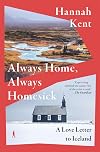
I was a little dubious about this one - a memoir of events leading up to the writing of a successful novel?? I had very much enjoyed Burial Rites, but wasn't convinced that I needed to read a book about its origins. But several positive recommendatios later, I gave it a go. It's a blast!
the writer can write! Beautifully!! I was drawn in by the content. I found myself laughing out loud at times; and often reading sentences and whole paragraphs to my long suffering partner!
Part autobiography, show more part description of life in small town Iceland. The whole thing is a gem. show less
the writer can write! Beautifully!! I was drawn in by the content. I found myself laughing out loud at times; and often reading sentences and whole paragraphs to my long suffering partner!
Part autobiography, show more part description of life in small town Iceland. The whole thing is a gem. show less
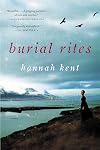
Burial Rites surprised me. I went in expecting a grim historical novel, but what Kent delivers is something far heavier — a cold, controlled excavation of a woman’s last months, written with an emotional precision that never allows you an easy out. The book’s power doesn’t come from melodrama. It comes from restraint, from the quiet horror of a community where gossip is moral law, and from the claustrophobic daily life of a household forced to live with someone they’ve already been show more told to fear.
Kent’s writing is beautiful, sometimes too beautiful. She loves to describe things — landscapes, gestures, emotional beats — and there are moments when it feels like she is describing for the sake of describing. As a reader, you occasionally want to say, “Yes, I get it, you’ve already shown me this.” There’s a stretch around pages 240–263 where the story slows to almost a crawl. You feel the wheel spinning, the mood tightening. For me, it was a slog to get through — but it pays off, because the emotional weight of the ending relies on that tightening coil.
The characters are what make the novel unforgettable.
Burial Rites is beautifully written, emotionally punishing, occasionally overwritten, and absolutely worth reading. It’s the story of a woman the world decided to erase — told in a tone so stark and unsentimental that you feel the erasure happening even as you read. It hurt, and I loved it. show less
Kent’s writing is beautiful, sometimes too beautiful. She loves to describe things — landscapes, gestures, emotional beats — and there are moments when it feels like she is describing for the sake of describing. As a reader, you occasionally want to say, “Yes, I get it, you’ve already shown me this.” There’s a stretch around pages 240–263 where the story slows to almost a crawl. You feel the wheel spinning, the mood tightening. For me, it was a slog to get through — but it pays off, because the emotional weight of the ending relies on that tightening coil.
The characters are what make the novel unforgettable.
Burial Rites is beautifully written, emotionally punishing, occasionally overwritten, and absolutely worth reading. It’s the story of a woman the world decided to erase — told in a tone so stark and unsentimental that you feel the erasure happening even as you read. It hurt, and I loved it. show less
This was Kent's debut novel and it was superb! It is the story of Agnes Magnusdottir, a 30 year old woman in Iceland that was put to death for a gruesome murder. The first lines of the book set the tone, and they are chilling: "They said I must die. They said that I stole the breath from men, and now they must steal mine. I imagine, then, that we are all candle flames, greasy-bright, fluttering in the darkness and the howl of the wind, and in the stillness of the room I hear footsteps, awful show more coming footsteps, coming to blow me out and send my life up away from me in a gray wreath of smoke." The book, although a novel, was based on a true story. Definitely a winner! show less
Lists
Netgalley Reads (4)
First Novels (1)
Female Author (1)
World Books (1)
Tour of Ireland (1)
Women's Stories (1)
Allie's Wishlist (1)
Sense of place (1)
Book Club 2017 (1)
Indie Next Picks (1)
Book Club 2020 (1)
Awards


You May Also Like


Associated Authors
Statistics
- Works
- 6
- Also by
- 1
- Members
- 5,577
- Popularity
- #4,451
- Rating
- 4.0
- Reviews
- 381
- ISBNs
- 127
- Languages
- 13
- Favorited
- 7
