
Edwin Barnhart
Author of Ancient Civilizations of North America
About the Author
Works by Edwin Barnhart
Ancient Civilizations of North America, Lecture 2: The First Human Migrations to the Americas 4 copies, 1 review
Maya to Aztec: Ancient Mesoamerica Revealed, Lecture 8: The Popol Vuh - Creation and Hero Twins 1 copy
Ancient Civilizations of North America, Lecture 1: The Unknown Story of Ancient North America 1 copy
Tagged
Common Knowledge
- Birthdate
- 1968-10-29
- Gender
- male
- Nationality
- USA
- Associated Place (for map)
- USA
Members
Reviews
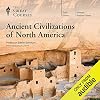
Many of us grow up with the impression that there were no significant Native American civilizations north of Mexico prior to European colonization. That's not correct. Much of what we usually think we know about North America prior to European contact is in fact a result of European contact. Europeans brought Eurasian diseases even when they weren't violent and destructive on their own--as they so often were. Die-offs due to diseases the inhabitants had no prior exposure to and hence no show more resistance to, destructively violent raids and burning of cities and towns, changes created due to the horses and the pigs Europeans brought--all caused major changes, and in multiple ways wiped out much of what was here before, usually with few good records.
Barnhart is a very good lecturer, lively, interesting, informative. He has a self-deprecating humor about areas where he disagrees with his colleagues, and is respectful when talking about others' ideas that he is not wholly convinced of. This is an absolutely engrossing tour of pre-European North America, from what we've been able to learn of the earliest arrivals, to the nations and ways of life that existed when Europeans reached the various parts of North America. Farmers, astronomers, urban planners, engineers, all created great works only some of which survive even as ruins today.
I'd have loved to see more in-depth discussion of the bio-engineering of maize (corn) out of far less useful plants, or of the Iroquois Confederation, its formation, growth, and influence on the design of the US Constitution, but this is not that book. This is a tour, a survey, an introduction, and it's a fascinating one. The points on which you want to go chase down more information may be different from mine, but you will have them.
Highly recommended.
I bought this audiobook. show less
Barnhart is a very good lecturer, lively, interesting, informative. He has a self-deprecating humor about areas where he disagrees with his colleagues, and is respectful when talking about others' ideas that he is not wholly convinced of. This is an absolutely engrossing tour of pre-European North America, from what we've been able to learn of the earliest arrivals, to the nations and ways of life that existed when Europeans reached the various parts of North America. Farmers, astronomers, urban planners, engineers, all created great works only some of which survive even as ruins today.
I'd have loved to see more in-depth discussion of the bio-engineering of maize (corn) out of far less useful plants, or of the Iroquois Confederation, its formation, growth, and influence on the design of the US Constitution, but this is not that book. This is a tour, a survey, an introduction, and it's a fascinating one. The points on which you want to go chase down more information may be different from mine, but you will have them.
Highly recommended.
I bought this audiobook. show less
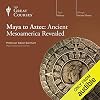
My wife and I were heading to Tulum and I was hoping to learn more about the Maya. This was just perfect. I was entranced. I now have tremendous respect for the Mayan people and their culture. We had a Mayan driver take us to several Mayan ruins in the area and I think this really helped me appreciate what I was seeing. I think I was surprised by how much we do know about the last 3000 years in the Americas. There are many wonderful lectures. I particularly enjoyed the lectures on Tulum and show more Cortez, as well as those on Mayan astronomy, mathematics and art. This really needs to become a more serious component of American education. This is one of my top 5 books in the last 10 years. show less

Lots of great information, though it might more aptly be titled "Lost Worlds of Peru, Primarily." Very few mentions of cultures outside of Peru. I was left wondering about the peoples who lived in what is now Argentina, Paraguay, etc. Speaking as someone whose sum total knowledge of pre-Columbian South American civilizations began and ended with the Inca, I was was blown away by the length and breadth of the region's rich history, how much we have learned, and how much remains to be discovered.
I really enjoyed listening to this lecture series about the ancient indigenous peoples of North America. While it mostly covers the US, there are some mentions of Canadian peoples too. I especially appreciated that the lecturer stated up front the ways which he (and the field of archeology in general) is working with and honoring requests of the modern Indigenous and First Nations peoples who are modern descendants of the ancient peoples they are studying.
Lists
You May Also Like


Statistics
- Works
- 20
- Members
- 307
- Popularity
- #76,699
- Rating
- 4.2
- Reviews
- 14
- ISBNs
- 22