
Anatole Litvak (1902–1974)
Author of Anastasia [1956 film]
About the Author
Image credit: wikimedia.org
Series
Works by Anatole Litvak
Why We Fight: The Battle of Britain / The Battle of Russia / The Battle of China — Director — 12 copies, 4 reviews
The Bette Davis Collection, Vol. 3: The Old Maid; All This, and Heaven Too; The Great Lie; In This Our Life; Watch on the Rhine; Deception (2008) — Director — 7 copies
The Combat Classics Collection (The War Lover / Hellcats of the Navy / Anzio / The Night of the Generals) (2013) — Director — 5 copies
Ingrid Bergman Collection (Autumn Sonata, Anastasia, Gaslight, Casablanca, For Whom The Bell Tolls, Arch Of Triumph) (2012) — Director — 2 copies
Heroes of War Collection - Frontline Combat (Halls of Montezuma, Decision Before Dawn, D-Day the Sixth of June, Guadalcanal Diary) (2013) — Director — 2 copies
Sorry, wrong number 1 copy
La Nuit Des Generaux 1 copy
Tovarich [1937 film] — Director — 1 copy
Anastasia [and] The Inn of Sixth Happiness (Double Feature Video) — Director — 1 copy
20th Century Fox Best Actress Collection (Anastasia/The Three Faces of Eve/Norma Rae/Boys Don't Cry/Walk the Line) — Director — 1 copy
This Above All / Second Honeymoon — Director — 1 copy
Associated Works
20th Century Fox Studio Classics Collection: Volume 7 (Anastasia / Gentleman's Agreement / The Ox-Bow Incident / The Snake Pit) (2010) — Director — 5 copies
Tagged
Common Knowledge
- Birthdate
- 1902-05-10
- Date of death
- 1974-12-15
- Gender
- male
- Occupations
- film director
film producer - Short biography
- Anatole Litvak was born Mikhail Anatol Litvak to a Jewish family in Kiev (present-day Kyiv, Ukraine), then part of the Russian Empire. When he was five years old, the family moved to St. Petersburg. There he began acting at age 13 at an experimental theater and later became a theater manager. He studied philosophy at university. In 1923, Litvak went to work for Nordkino Studios, where he was assistant director for nine silent films. Two years later, he moved to Berlin for more artistic opportunities. Litvak's first film as director was the musical Dolly Gets Ahead (Dolly Macht Karriere, 1930), followed by other films in Germany and France. He went to England to direct the British romantic comedy Sleeping Car (1933). Following the Nazi regime's rise to power in 1933, Litvak moved to Paris, which became his favorite locale for making films. In 1936, he directed Mayerling with Charles Boyer and Danielle Darrieux as tragic lovers, which earned him an international reputation. The success of this film brought Litvak invitations from Hollywood. There he quickly became one of the leading directors by the late 1930s, making such films as The Woman I Love (1937), starring Miriam Hopkins, his future wife. He worked for Warner Brothers from 1937 to 1941, directing the anti-Nazi drama Confessions of a Nazi Spy (1939) among others before leaving for Twentieth Century-Fox. There he made only one picture, This Above All (1942), before joining the U.S. Army's Special Service Division during World War II. He worked with Frank Capra, co-directing the "Why We Fight" series of documentaries, including The Battle of Russia (1943). After the war, Litvak returned to Hollywood and directed the film noir classic Sorry, Wrong Number (1948), and The Snake Pit (1948), a classic psychological drama that earned him an Academy Award nomination for Best Director. It was followed by the war thriller Decision Before Dawn (1951), which received a nomination for Best Picture. Litvak, who had returned to live in France in 1949, achieved a nearly documentary-like verisimilitude in film with his use of authentic German locations, included bombed-out ruins. Most of his subsequent films were European productions, including The Deep Blue Sea (1955), based on a play by Terence Rattigan; Anastasia (1956); Goodbye Again (1961); The Night of the Generals (1967); and The Lady in the Car with Glasses and a Gun (1970), the last film in his 45-year career.
- Nationality
- Ukraine
USA (naturalized 1940) - Birthplace
- Kiev, Ukraine
- Places of residence
- Hollywood, California, USA
Paris, France
Berlin, Germany
St. Petersburg, Russia - Place of death
- Neuilly-sur-Seine, France
- Burial location
- Cimetière du Père-Lachaise, Paris, France
Members
Reviews
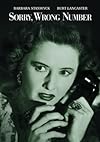
Lucille Fletcher’s gripping story of a bed-bound woman who overhears her own murder being plotted when her phone connection was crossed, made for one of the most exciting edge-of-your-seat thrillers ever produced for radio. Originally airing on Suspense with Agnes Moorehead in the lead role, and later Barbara Stanwyck, it would be broadcast an unprecedented seven times due to its incredible popularity. It was a forgone conclusion it would make it to film, and when it did, those who had show more doubted the claustrophobia of the radio version would translate well to the visual medium were treated to something nearly as good as what they’d heard over the airwaves while the lights were turned low.
Hal Wallis would produce more than one excellent noir melodrama with Barbara Stanwyck in the lead, and Sorry, Wrong Number was one of their finest collaborations. Stanwyck gives a very brave performance for a star of her caliber, allowing the audience to see a selfish and controlling woman hard to like through most of this film. It created sympathy for Burt Lancaster as her husband, Henry, who may have been bullied too far. In those nail-biting final moments, however, when Stanwyck is stripped and vulnerable, we see that it was insecurity that fueled her behavior, changing our opinion of the bed-ridden woman, and creating panic in our hearts as someone makes their way up the stairs…
Through phone calls, flashbacks and inventiveness on director Livak’s part, everything prior to the phone call unfolds until the viewer is hanging on the next scene, wondering if this is all headed where they think it is — unless, of course, you’ve heard it on radio. But the backstory is done well, helping to flesh out how it got to this point. Ann Richards is wonderful in creating sympathy for the girl Henry probably belonged with but was weak enough to lose. She still cares for him, and when her attorney husband seems to be focused on something big involving him, she has to find out if Henry is in any danger.
It is moody and atmospheric as she tails men to the beach. Mysterious signals precede the arrival by sea she knows can mean nothing good for Henry. Her desperate to warn someone is nearly as nail-biting as the ending. William Conrad, whose own career had ties to radio, portraying Matt Dillon in Gunsmoke for years, is first-rate as Morano. Someone has a change of heart, but it may be too late…
Stanwyck is magnificent in the final moments, just as both she and Moorehead were on radio. Interestingly, Stanwyck would appear in an episode of Jack Benny’s radio show in which he and the gang went to see this film, and afterward had a dream about it. Stanwyck had some great lines, and the spoof proved to be one of the most hilarious Jack Benny shows he ever did.
Beautifully photographed by Sol Polito, and framed by a suspenseful Franz Waxman score, director Antole Litvak gives this lonely and atmospheric thriller the wider scope required for the film medium through the use of flashbacks and shots of the harbor and bridge outside Leona's bedroom window. It is done so well the viewer never gets the sense this was once a radio play confined entirely to an invalid’s bedroom. Having Tangerine playing on the car radio as Leona seduces Henry away from Sally is also a nice atmospheric touch, as it was playing softly down the street in a famous scene from Stanwyck’s Double Indemnity as well. Harold Vermilyea is excellent as Henry’s amiable pal who realizes before Henry does that they are in over their heads. Wendell Corey, who would star with Stanwyck in another great Hal Wallis production, The File on Thelma Jordan, offers some good scenes as the doctor who clues Lancaster in on Leona’s condition.
This is film full of suspense and atmospheric touches, with a tremendous performance from Barbara Stanwyck. Another must-see film classic. show less
Hal Wallis would produce more than one excellent noir melodrama with Barbara Stanwyck in the lead, and Sorry, Wrong Number was one of their finest collaborations. Stanwyck gives a very brave performance for a star of her caliber, allowing the audience to see a selfish and controlling woman hard to like through most of this film. It created sympathy for Burt Lancaster as her husband, Henry, who may have been bullied too far. In those nail-biting final moments, however, when Stanwyck is stripped and vulnerable, we see that it was insecurity that fueled her behavior, changing our opinion of the bed-ridden woman, and creating panic in our hearts as someone makes their way up the stairs…
Through phone calls, flashbacks and inventiveness on director Livak’s part, everything prior to the phone call unfolds until the viewer is hanging on the next scene, wondering if this is all headed where they think it is — unless, of course, you’ve heard it on radio. But the backstory is done well, helping to flesh out how it got to this point. Ann Richards is wonderful in creating sympathy for the girl Henry probably belonged with but was weak enough to lose. She still cares for him, and when her attorney husband seems to be focused on something big involving him, she has to find out if Henry is in any danger.
It is moody and atmospheric as she tails men to the beach. Mysterious signals precede the arrival by sea she knows can mean nothing good for Henry. Her desperate to warn someone is nearly as nail-biting as the ending. William Conrad, whose own career had ties to radio, portraying Matt Dillon in Gunsmoke for years, is first-rate as Morano. Someone has a change of heart, but it may be too late…
Stanwyck is magnificent in the final moments, just as both she and Moorehead were on radio. Interestingly, Stanwyck would appear in an episode of Jack Benny’s radio show in which he and the gang went to see this film, and afterward had a dream about it. Stanwyck had some great lines, and the spoof proved to be one of the most hilarious Jack Benny shows he ever did.
Beautifully photographed by Sol Polito, and framed by a suspenseful Franz Waxman score, director Antole Litvak gives this lonely and atmospheric thriller the wider scope required for the film medium through the use of flashbacks and shots of the harbor and bridge outside Leona's bedroom window. It is done so well the viewer never gets the sense this was once a radio play confined entirely to an invalid’s bedroom. Having Tangerine playing on the car radio as Leona seduces Henry away from Sally is also a nice atmospheric touch, as it was playing softly down the street in a famous scene from Stanwyck’s Double Indemnity as well. Harold Vermilyea is excellent as Henry’s amiable pal who realizes before Henry does that they are in over their heads. Wendell Corey, who would star with Stanwyck in another great Hal Wallis production, The File on Thelma Jordan, offers some good scenes as the doctor who clues Lancaster in on Leona’s condition.
This is film full of suspense and atmospheric touches, with a tremendous performance from Barbara Stanwyck. Another must-see film classic. show less

Virginia Cunningham finds herself in a state insane asylum...and can't remember how she got there. In flashback, her husband Robert relates their courtship, marriage, and her developing symptoms. The asylum staff are not demonized, but fear, ignorance and regimentation keep Virginia in a state of misery, as pipesmoking Dr. Mark Kik struggles through wheels within wheels to find the root of her problem. Then a relapse plunges Virginia back into the harrowing 'Snake Pit'.

A penetrating and real feeling story. Lots of authentic detail and excellent acting. I particularly liked the performance of Oskar Werner.

A doctor becomes a criminal to study them.
Okay. I feel like this could have been a classic if a director capable of suspense had made it.
Okay. I feel like this could have been a classic if a director capable of suspense had made it.
Awards


You May Also Like


Associated Authors
Statistics
- Works
- 48
- Also by
- 4
- Members
- 483
- Popularity
- #51,117
- Rating
- 3.6
- Reviews
- 44
- ISBNs
- 67
- Languages
- 3