

Danzy Senna
Author of Caucasia
About the Author
Danzy Senna hold the Jenks Chair of Contemporary American Letters at the College of the Holy Cross in Worcester, Massachusetts.
Image credit: Eye on Books
Works by Danzy Senna
Associated Works
My Search for Warren Harding (1983) — Foreword, some editions; Introduction, some editions — 196 copies, 5 reviews
Half and Half: Writers on Growing Up Biracial and Bicultural (1998) — Contributor — 153 copies, 1 review
Shaking the Tree: A Collection of Fiction and Memoir by Black Women (2003) — Contributor — 54 copies
Tagged
Common Knowledge
- Canonical name
- Senna, Danzy
- Birthdate
- 1970-09-13
- Gender
- female
- Education
- Stanford University (BA)
University of California, Irvine (MFA, creative writing) - Occupations
- novelist
essayist
professor - Organizations
- University of Southern California
College of the Holy Cross (Jenks Chair of Contemporary American/Letters) - Awards and honors
- Whiting Writers' Award (2002)
John Dos Passos Prize (2016) - Agent
- Amanda Urban (ICM)
- Relationships
- Howe, Fanny (mother)
Senna, Carl (father)
Everett, Percival (spouse) - Nationality
- USA
- Birthplace
- Boston, Massachusetts, USA
- Places of residence
- Los Angeles, California, USA
- Associated Place (for map)
- USA
Members
Reviews
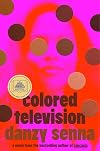
This is an uncomfortable review for a white person to write, because the narrative involves situations that could not be within their experience. So we are outside looking in, and what we are shown indicates how the default value of all things white make leading a pleasing life for Black people in America unlikely. Jane and her husband Lenny describe themselves as mulattos and see themselves as a separate race, with a different reality from darker skinned Black people and from whites. Jane show more has just spent years working on a big ass novel encompassing mulatto history in the US, starting from the melungeons (white/Black/native) in the South and following their histories to the present. She submits it to her editors, who find it unsaleable due to the epic scale, which almost defeats her spirit (why wouldn't they have suggested turning it into a series?). Lenny, an artist, has not had much success with his work either, and they live on borrowed time in a luxurious home where they are house-sitting for a school friend of Jane's. She is thrilled to have her children in good schools in the LA neighborhood they call "Multicultural Mayberry". She wants the nice house and the nice life in there, but Lenny wants to move to Japan, where he will be showing his art and where he thinks their lives will be easier. When her publishing house rejects her novel as too complex and too scattered, Jane arranges a meeting with Hampton, a Black TV producer who seems enthusiastic about a series focusing on the difficulties of mulatto life. He scolds her for not coming up with anything creative for him to use and dumps her, after not paying her a cent. In despair, she offers up her novel to Hampton as proof that she's talented, and he absconds with it and uses it to create, guess what, his most successful TV series, with no credit or payment to Jane. The ending seems almost tacked on to make the reader feel like all of Jane and Lenny's struggles were worthwhile, because maybe it would just be too miserable to leave them where they started. It's an achievement that the author creates a complete world, realistic in its setbacks and a bit too pat in its success, although perhaps it's racist to think that they would not be able to make it after all. show less

She'd never understood so profoundly how much being a novelist was at odds with domestic life, with sanity. But now she saw it clearly. To be a novelist was to be a dreadful parent. To be a novelist was to be a monstrous marriage partner. That kind of writing had no beginning and no end. It just crept around the house, infecting every element of family life. You couldn't live with it, you couldn't live without it.
Jane married for love, but an assistant writing professor whose chances at show more tenure and security rely on her completing her second novel, a book she's been working on for close to a decade and now, on sabbatical and living in a friend's fancy house, this is her last opportunity. Her husband is supportive of her writing but as he is an artist, she's the one who is supporting their family. Their kids need stability and she dreams of a craftsman house in a multicultural neighborhood, while he dreams of moving the family to Japan. They still love each other, but the strain is showing. When Jane's novel, an enormous, sweeping book about mulattos throughout American history, a mix of history and fiction, is rejected, she's sent into a tailspin, which leads her to trying to get a gig writing for television, an attempt that will strain her marriage yet further, but maybe save her dreams of home-ownership and financial security.
This novel is both sharp-edged and easy to read, a combination that sometimes softens the very points Senna is making. There's a complexity behind the Hollywood show runner excitement, about belonging and identity and how to raise kids in the world as it is. Jane is a great protagonist, she's confident and sure of her talent, but also prone to worry and to feeling like she's failing. No one gets off lightly, and no one is short-changed. Senna makes even the tertiary characters feel real. There are neither easy solutions nor easy targets in this book I will be thinking about for awhile. show less
Jane married for love, but an assistant writing professor whose chances at show more tenure and security rely on her completing her second novel, a book she's been working on for close to a decade and now, on sabbatical and living in a friend's fancy house, this is her last opportunity. Her husband is supportive of her writing but as he is an artist, she's the one who is supporting their family. Their kids need stability and she dreams of a craftsman house in a multicultural neighborhood, while he dreams of moving the family to Japan. They still love each other, but the strain is showing. When Jane's novel, an enormous, sweeping book about mulattos throughout American history, a mix of history and fiction, is rejected, she's sent into a tailspin, which leads her to trying to get a gig writing for television, an attempt that will strain her marriage yet further, but maybe save her dreams of home-ownership and financial security.
This novel is both sharp-edged and easy to read, a combination that sometimes softens the very points Senna is making. There's a complexity behind the Hollywood show runner excitement, about belonging and identity and how to raise kids in the world as it is. Jane is a great protagonist, she's confident and sure of her talent, but also prone to worry and to feeling like she's failing. No one gets off lightly, and no one is short-changed. Senna makes even the tertiary characters feel real. There are neither easy solutions nor easy targets in this book I will be thinking about for awhile. show less

Author Danzy Senna said in an interview:
“I’m fascinated by how much we’re influenced by the images that are fed to us. Our dreams and identities and fantasies are so, so susceptible.”
The phenomenon of mimesis that Senna explores in this book basically means, “I want what you have.” It has been amplified by TikTok and Instagram and its plethora of “influencers.” And as essayist Amitav Ghosh writes, “Social media has given a new strength and urgency to the desires that it show more generates.” Furthermore, these generated desires are frequently centered on commodities and services that cost money - money that many in society cannot afford. The resulting chasm between socially-generated cravings and the ability to satisfy them can have profound consequences.
This provocative novel adroitly captures some of those consequences, particularly in terms of the protagonist's ability to be herself and to find satisfaction in life.
Jane, who is in her mid-40s, resides in the greater Los Angeles area along with her husband Lenny, daughter Ruby, 8, and neurodivergent son Finn, 6. Their lives are defined and limited in part by many of the common problems besetting the middle strata of Americans. These range from doing work that provides you a living wage rather than work you like, to the availability (or not) of affordable housing, to having access to special needs programs in schools. The vagaries of inheritance, luck, and chance certainly affect one’s fortunes as well. But above all for Jane and her family, there is the matter of race. In America, race is everything, still.
A person of color can’t simply be another person who walks into the room, the way whites are. You are, instead, constantly categorized, and judged. As Elijah Anderson, the Sterling Professor of Sociology and of Black Studies at Yale University, writes in his book Black in White Space: The Enduring Impact of Color in Everyday Life:
“White people typically avoid Black space, but Black people are required to navigate the white space as a condition of their existence. When an unfamiliar Black person enters the ‘white space,’ often the people there immediately try to make sense of him or her — to determine ‘who that is,’ or to figure out the nature of the person’s business and whether they need to be concerned. Stereotypes can rule perceptions, creating a situation that can estrange the Black person.”
You are simultaneously invisible and glaringly visible. As long as you have any racial ambiguity in your appearance, you will be subject to innumerable microagressions and systemic barriers to advancement as you navigate the perilous road of racial stratification. And if you get a job someone else wanted? No matter if your race is “mixed”; you will now find there is no more ambiguity from others about what race you are.
Jane was writing a novel that would highlight the legacy of mixed-race individuals in America, making clear how they had been treated in American consciousness throughout the ages. She had been working on it for over eight years. It had turned into a history of mulatto people in fictional form, with five interwoven story lines from different historical moments. Even with over 400 pages so far, she was panicked over having left anything out.
If she published, she believed they could earn enough money to move into their own home, preferably in “Multicultural Mayberry,” a trendy mixed suburban area of LA. She secretly longed to experience full-blown stereotypical upper-middle-class stability. She fixated on being able to outfit her kids in the Swedish-inspired children's clothing from the Hanna Andersson catalog, like the rich mommies in the park used.
[Analogously, her daughter Ruby wanted an expensive American Girl doll with all of its costly accoutrements, inaccessible in fact to many actual American girls of all colors because of the high cost. The dolls and their accessories were status symbols, and whether your parents could afford all that could form the basis for social ranking among peers. Ruby's yearning for acquisition and status mirrored her mother's.]
Lenny was a painter whose paintings didn’t sell, so they barely supported themselves with Jane’s income as a non-tenured writing instructor. They had a place to live only because they served as house-sitters for wealthier friends, moving from place to place as the opportunity arose.
(They especially loved their most recent house-sitting gig at the nice home of Brett, Jane’s friend from grad school. “Inside, the kitchen was so stocked with gadgets and fancy Scandinavian pans and gleaming counters, it almost made Jane want to cook.”)
Lenny desired to move to Japan, where his paintings were valued. He was even corresponding with the Japanese embassy requesting asylum from American racism.
Jane wasn’t really interested in Lenny’s priorities. She was self-absorbed, manipulative and egotistical, and a fraud. She adopted a fake persona, which meant she had to lie to everyone around her, including Lenny. Most of the characters in the book are more likable, especially Jane and Lenny’s precocious kids, who had adorable personalities that Jane mainly viewed as problematic in some way.
Jane managed to get on a project working on a sitcom script in Hollywood, where ironically, fake identities were almost de rigueur. But inevitably, Jane’s lies, insecurities, and ambitions almost destroyed even the little her family had. Acceptance and humility offered the key to survival, if only Jane was up to it.
Discussion: While I hated the main character, the novel is so full of incisive and witty observations on race, class, gender, relationships, and human frailty, it’s hard not to appreciate the book. It even manages to sneak in some excellent history on mixed races in America, although readers may have to google quite a bit to get all the references.
Senna gives readers so much to think about. Highly recommended for book clubs. show less
“I’m fascinated by how much we’re influenced by the images that are fed to us. Our dreams and identities and fantasies are so, so susceptible.”
The phenomenon of mimesis that Senna explores in this book basically means, “I want what you have.” It has been amplified by TikTok and Instagram and its plethora of “influencers.” And as essayist Amitav Ghosh writes, “Social media has given a new strength and urgency to the desires that it show more generates.” Furthermore, these generated desires are frequently centered on commodities and services that cost money - money that many in society cannot afford. The resulting chasm between socially-generated cravings and the ability to satisfy them can have profound consequences.
This provocative novel adroitly captures some of those consequences, particularly in terms of the protagonist's ability to be herself and to find satisfaction in life.
Jane, who is in her mid-40s, resides in the greater Los Angeles area along with her husband Lenny, daughter Ruby, 8, and neurodivergent son Finn, 6. Their lives are defined and limited in part by many of the common problems besetting the middle strata of Americans. These range from doing work that provides you a living wage rather than work you like, to the availability (or not) of affordable housing, to having access to special needs programs in schools. The vagaries of inheritance, luck, and chance certainly affect one’s fortunes as well. But above all for Jane and her family, there is the matter of race. In America, race is everything, still.
A person of color can’t simply be another person who walks into the room, the way whites are. You are, instead, constantly categorized, and judged. As Elijah Anderson, the Sterling Professor of Sociology and of Black Studies at Yale University, writes in his book Black in White Space: The Enduring Impact of Color in Everyday Life:
“White people typically avoid Black space, but Black people are required to navigate the white space as a condition of their existence. When an unfamiliar Black person enters the ‘white space,’ often the people there immediately try to make sense of him or her — to determine ‘who that is,’ or to figure out the nature of the person’s business and whether they need to be concerned. Stereotypes can rule perceptions, creating a situation that can estrange the Black person.”
You are simultaneously invisible and glaringly visible. As long as you have any racial ambiguity in your appearance, you will be subject to innumerable microagressions and systemic barriers to advancement as you navigate the perilous road of racial stratification. And if you get a job someone else wanted? No matter if your race is “mixed”; you will now find there is no more ambiguity from others about what race you are.
Jane was writing a novel that would highlight the legacy of mixed-race individuals in America, making clear how they had been treated in American consciousness throughout the ages. She had been working on it for over eight years. It had turned into a history of mulatto people in fictional form, with five interwoven story lines from different historical moments. Even with over 400 pages so far, she was panicked over having left anything out.
If she published, she believed they could earn enough money to move into their own home, preferably in “Multicultural Mayberry,” a trendy mixed suburban area of LA. She secretly longed to experience full-blown stereotypical upper-middle-class stability. She fixated on being able to outfit her kids in the Swedish-inspired children's clothing from the Hanna Andersson catalog, like the rich mommies in the park used.
[Analogously, her daughter Ruby wanted an expensive American Girl doll with all of its costly accoutrements, inaccessible in fact to many actual American girls of all colors because of the high cost. The dolls and their accessories were status symbols, and whether your parents could afford all that could form the basis for social ranking among peers. Ruby's yearning for acquisition and status mirrored her mother's.]
Lenny was a painter whose paintings didn’t sell, so they barely supported themselves with Jane’s income as a non-tenured writing instructor. They had a place to live only because they served as house-sitters for wealthier friends, moving from place to place as the opportunity arose.
(They especially loved their most recent house-sitting gig at the nice home of Brett, Jane’s friend from grad school. “Inside, the kitchen was so stocked with gadgets and fancy Scandinavian pans and gleaming counters, it almost made Jane want to cook.”)
Lenny desired to move to Japan, where his paintings were valued. He was even corresponding with the Japanese embassy requesting asylum from American racism.
Jane wasn’t really interested in Lenny’s priorities. She was self-absorbed, manipulative and egotistical, and a fraud. She adopted a fake persona, which meant she had to lie to everyone around her, including Lenny. Most of the characters in the book are more likable, especially Jane and Lenny’s precocious kids, who had adorable personalities that Jane mainly viewed as problematic in some way.
Jane managed to get on a project working on a sitcom script in Hollywood, where ironically, fake identities were almost de rigueur. But inevitably, Jane’s lies, insecurities, and ambitions almost destroyed even the little her family had. Acceptance and humility offered the key to survival, if only Jane was up to it.
Discussion: While I hated the main character, the novel is so full of incisive and witty observations on race, class, gender, relationships, and human frailty, it’s hard not to appreciate the book. It even manages to sneak in some excellent history on mixed races in America, although readers may have to google quite a bit to get all the references.
Senna gives readers so much to think about. Highly recommended for book clubs. show less
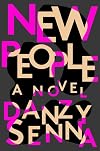
This novel made me think. I’ve been white all my life, never really thought about it, certainly didn’t ever wonder if I or my friends and family were doing whiteness right. I think, aside from the KKK, Nazis and other such groups, we white folk just take our whiteness for granted (it may be different in the south). Maria is what she terms as a one dropper, just barely, barely has African American heritage. She and her boyfriend and his sister are the objects of a documentary called show more “New People” about mixed race younger people. To my mind she’s a pretty unlikeable character because she is completely self centered. She obsesses about race and rightness and uses race to beat people over the head, and she is loyal to no one but herself. She was adopted by a single black woman when she was 6 months old and was whiter than her mother wanted, but still Grace, her mother, seemed to give her all the love and guidance she needed. How did she end up this way? This book could be used to get people of different races talking with each other mainly because it points up our blind spots. I’ll be thinking about it for a while. show less
Lists
Racial identity (1)
Awards


You May Also Like


Associated Authors
Statistics
- Works
- 6
- Also by
- 8
- Members
- 2,228
- Popularity
- #11,507
- Rating
- 3.7
- Reviews
- 78
- ISBNs
- 63
- Languages
- 4
- Favorited
- 5