
Carl Medearis
Author of Muslims, Christians, and Jesus: Gaining Understanding and Building Relationships
About the Author
Carl Medearis is an author a speaker and on international expect in Arab-American and Muslim-Christian relational promoting peacemaking and cultural, political and relation dialogue for reconcitiation. He and his wife, chris have three children and live in Colorado.
Image credit: Used by permission of Baker Publishing Group, copyright © 2008. All rights to this material are reserved. Materials are not to be distributed to other web locations for retrieval, published(see © info.)
Works by Carl Medearis
Muslims, Christians, and Jesus: Gaining Understanding and Building Relationships (2008) 296 copies, 1 review
Tea with Hezbollah: Sitting at the Enemies Table Our Journey Through the Middle East (2010) 175 copies, 13 reviews
Muslims, Christians, and Jesus Participant's Guide: Gaining Understanding and Building Relationships (2011) 13 copies
Tagged
Common Knowledge
Members
Reviews
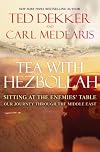
I'm very much a believer that if people really want peaceful relations, whether in the large or small arenas of their lives, they will STOP for a bit and try to understand the other's point of view. It sounds so simple, but it appears to be one of the most difficult things to do. Emotions, especially those brought on by strong religious beliefs, are often too strong for people to (literally) think through. In this book, the authors attempted to really look and listen to the people of the show more other side in the Muslim/Christian, Palestinian/Israeli, Arab/non-Arab conflicts. The authors are Christian, and Dekker's co-author claims to have heard a voice years ago saying "When you grow up you will love Arabs". They spent two years lining up interviews with some of the top Middle Eastern Islamic scholars and powers-that-be to ask them their opinions on the Golden Rule ("love thy neighbor as thyself") and to consider the story of the Good Samaritan in the context of the Middle East today. The authors traveled to Egypt, Saudi Arabia, Beirut, Baalbek, southern Lebanon, Syria, Jerusalem, and the West Bank, and they met with ideologues and political, educational and religious leaders.
The authors endangered their lives several times over as they made their way in and out of countries either at war or with a bias against Americans. However, they did have powerful contacts who made the trip possible and safe, and they claim to have conducted extensive interviews with each VIP, as well as with various "regular" people. Sounds great, but here's the problem: most of the data they collected is not included. Instead, the book is written as a travelogue, with only very brief sections presenting verbatim questions and answers from the interviews. And unfortunately, the questions they chose to include are mostly rather silly. For instance: "What is your favorite joke", "What makes you laugh?", "What makes you cry?, "What is your favorite TV show?". Only then are some of the meatier questions asked: "What is the greatest misunderstanding between our countries?", "What are your thoughts on the Golden Rule?", "If there was one iconic teaching or event on which you hang your ministry, what would it be?" Now these are important questions, but they are given little space, and I can only hope that the authors are planning another book to present lengthy portions of the interviews. Interspersed with the travelogue and the interviews is the story of a young American woman who discovered that her mother had been in a Lebanese refugee camp and had survived a massacre. This young woman went in search of her mother's family and of the birth father she found was a mass murderer. While in Beirut, she was viciously attacked, then rescued by a Druse family who risked their lives to keep her safe. The authors use this story to illustrate the Good Samaritan principle.
I really wanted to like this book, but it left me irritated. Dekker seems to think women rule Saudi Arabia (behind closed doors, of course. Oy, haven't we heard that rationalization before?). Of course, the women he met, most of whom hate the dress code and other restrictions of Sharia, are all wealthy and live in palaces. The books' tone is giddy, which doesn't jibe with the author's constant lament of how fearful he was of each new situation on the trip. In the end I felt I'd wasted my time and the authors had wasted a great opportunity. show less
The authors endangered their lives several times over as they made their way in and out of countries either at war or with a bias against Americans. However, they did have powerful contacts who made the trip possible and safe, and they claim to have conducted extensive interviews with each VIP, as well as with various "regular" people. Sounds great, but here's the problem: most of the data they collected is not included. Instead, the book is written as a travelogue, with only very brief sections presenting verbatim questions and answers from the interviews. And unfortunately, the questions they chose to include are mostly rather silly. For instance: "What is your favorite joke", "What makes you laugh?", "What makes you cry?, "What is your favorite TV show?". Only then are some of the meatier questions asked: "What is the greatest misunderstanding between our countries?", "What are your thoughts on the Golden Rule?", "If there was one iconic teaching or event on which you hang your ministry, what would it be?" Now these are important questions, but they are given little space, and I can only hope that the authors are planning another book to present lengthy portions of the interviews. Interspersed with the travelogue and the interviews is the story of a young American woman who discovered that her mother had been in a Lebanese refugee camp and had survived a massacre. This young woman went in search of her mother's family and of the birth father she found was a mass murderer. While in Beirut, she was viciously attacked, then rescued by a Druse family who risked their lives to keep her safe. The authors use this story to illustrate the Good Samaritan principle.
I really wanted to like this book, but it left me irritated. Dekker seems to think women rule Saudi Arabia (behind closed doors, of course. Oy, haven't we heard that rationalization before?). Of course, the women he met, most of whom hate the dress code and other restrictions of Sharia, are all wealthy and live in palaces. The books' tone is giddy, which doesn't jibe with the author's constant lament of how fearful he was of each new situation on the trip. In the end I felt I'd wasted my time and the authors had wasted a great opportunity. show less
The premise of the book is based on the parable of the good Samaritan (Luke 10) in which Jesus taught to love your neighbor as yourself and the verse (Matthew 5:44) to love your enemies. Ted Dekker and Carl Medearis journeyed to the Middle East to the sit down with both Muslim leaders and ordinary Muslims to find out what they thought about this specific teaching of Jesus.
Tea With Hezbollah starts out very strong. Ted Dekker’s writing is a pleasure to read with his clever dialog and his show more reaction to Carl Medearis’ idea to travel to one of the most dangerous parts of the world. There is some history of the area and descriptions of the sights and smells as they travel from the least dangerous to the most dangerous locations to meet with individuals. They asked them simple questions:
• What is the greatest misunderstanding Americans have of Arabs?
• And Arabs’ greatest misunderstanding of Americans?
• What makes you cry?
• What makes you laugh?
• What kind of car do you drive?
• Do you believe we should love our enemies as Jesus teaches?
I thought that some of the questions asked were superficial and tedious for what could have been an important dialog. They frequently ask the Muslims to tell a joke. The humor did not translate well. Actually, not at all. Once the important questions were asked about Jesus’ teaching, there was little or no follow-up to dig deeper into the minds of our enemies.
There were several instances of comments made about Jesus and Christians by the authors that were very disparaging. As an excerpt for this:
“We are both Christian. We both cringe at being called Christian, because in both of our worlds, Christians are the bad guys who either slaughter civilians or destroy civilization in the name of God.”
There was a side story about a woman named Nicole that was interjected throughout the book which may have been interesting if it had not been chopped up almost as space filler.
I thought the book was good – but not great. show less
Tea With Hezbollah starts out very strong. Ted Dekker’s writing is a pleasure to read with his clever dialog and his show more reaction to Carl Medearis’ idea to travel to one of the most dangerous parts of the world. There is some history of the area and descriptions of the sights and smells as they travel from the least dangerous to the most dangerous locations to meet with individuals. They asked them simple questions:
• What is the greatest misunderstanding Americans have of Arabs?
• And Arabs’ greatest misunderstanding of Americans?
• What makes you cry?
• What makes you laugh?
• What kind of car do you drive?
• Do you believe we should love our enemies as Jesus teaches?
I thought that some of the questions asked were superficial and tedious for what could have been an important dialog. They frequently ask the Muslims to tell a joke. The humor did not translate well. Actually, not at all. Once the important questions were asked about Jesus’ teaching, there was little or no follow-up to dig deeper into the minds of our enemies.
There were several instances of comments made about Jesus and Christians by the authors that were very disparaging. As an excerpt for this:
“We are both Christian. We both cringe at being called Christian, because in both of our worlds, Christians are the bad guys who either slaughter civilians or destroy civilization in the name of God.”
There was a side story about a woman named Nicole that was interjected throughout the book which may have been interesting if it had not been chopped up almost as space filler.
I thought the book was good – but not great. show less
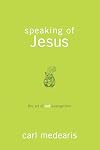
There are a lot of books out there right now that are trying to separate Jesus from right-wing politics (because, in America, the two are almost always linked). Medearis approaches it from a fresh angle, talking about his time in Beruit and how people there thought Westernization and Christianity were the same thing, and how Jesus totally got lost in the mix. And I loved it — definitely one of the best books I’ve read on this subject in a while.
So, basically, he tells Christians to shut show more up—especially around people who are skeptical of Christianity. To stop trying to convince people they are right. To stop using the Christianese language that so many do not understand. To stop telling people they are wrong and going to hell. To stop judging. To stop trying to defend Christianity over the years. To just talk about Jesus, because he is enough. Oh, and to be nice. Too many Christians aren’t nice. And who wants to follow a guy whose other followers are mean? No one.
This book was extremely accessible, and I think a wide audience would get a lot out of this book. It’s funny and his analogies aren’t tired and overused. It may serve as the kick in the pants that many Christians need!
Read my full review here: http://letseatgrandpa.com/2011/09/30/book-review-84-speaking-of-jesus-by-carl-me... show less
So, basically, he tells Christians to shut show more up—especially around people who are skeptical of Christianity. To stop trying to convince people they are right. To stop using the Christianese language that so many do not understand. To stop telling people they are wrong and going to hell. To stop judging. To stop trying to defend Christianity over the years. To just talk about Jesus, because he is enough. Oh, and to be nice. Too many Christians aren’t nice. And who wants to follow a guy whose other followers are mean? No one.
This book was extremely accessible, and I think a wide audience would get a lot out of this book. It’s funny and his analogies aren’t tired and overused. It may serve as the kick in the pants that many Christians need!
Read my full review here: http://letseatgrandpa.com/2011/09/30/book-review-84-speaking-of-jesus-by-carl-me... show less
Tea with Hezbollah : sitting at the enemies' table, our journey through the Middle East by Ted Dekker
While a good travelogue, I did expect a bit more from Dekker. He tended to repeat himself a lot and really didn't gain a lot of insight from his interviewees. Also, his recounting of some of the history of the region was off the mark; his explanation of theological differences and blatant dismissal of such differences was unfortunate. The saving grace of this book was that it did help give context to the parable of the Good Samaritan, especially the story of Nicole interwoven throughout the show more main narrative. I would recommend this as a decent read, but only after noting the above observations. show less
You May Also Like


Associated Authors
Statistics
- Works
- 11
- Members
- 855
- Popularity
- #29,931
- Rating
- 3.8
- Reviews
- 20
- ISBNs
- 29