
Nabeel Qureshi (1983–2017)
Author of Seeking Allah, Finding Jesus: A Devout Muslim Encounters Christianity
About the Author
Nabeel Qureshi is a speaker with Ravi Zacharias International Ministries. He holds an MD from Eastern Virginia Medical School, an MA in Christian apologetics from Biola University, and an MA in religion from Duke University. He is currently pursuing a PhD in New Testament at Oxford University.
Works by Nabeel Qureshi
Seeking Allah, Finding Jesus: A Devout Muslim Encounters Christianity (2014) 1,667 copies, 31 reviews
No God but One: Allah or Jesus?: A Former Muslim Investigates the Evidence for Islam and Christianity (2016) 650 copies, 6 reviews
Seeking Allah, Finding Jesus Video Study: A Former Muslim Shares the Evidence that Led Him from Islam to Christianity (2016) 11 copies
Tagged
Common Knowledge
- Canonical name
- Qureshi, Nabeel
- Legal name
- Qureshi, Nabeel Asif
- Other names
- 納比.庫雷希
- Birthdate
- 1983-04-13
- Date of death
- 2017-09-16
- Gender
- male
- Education
- Eastern Virginia Medical School (MD)
Duke University (MA)
University of Oxford (M.Phil)
Biola University (MA)
Old Dominion University (BA) - Occupations
- apologist
- Organizations
- Ravi Zacharias International Ministries
- Relationships
- Qureshi, Michelle (spouse)
- Short biography
- Nabeel Asif Qureshi (April 13, 1983 – September 16, 2017) was a Pakistani-American Christian apologist, author, speaker, and convert from the Ahmadiyya movement. In many Islamic countries the Ahmadis have been defined as heretics and non-Muslim and, subjected to attacks and often systematic oppression. He was a speaker with Ravi Zacharias International Ministries (RZIM) from 2013 until 2016 and the author of three books, Seeking Allah, Finding Jesus: A Devout Muslim Encounters Christianity (Zondervan, February 2014), Answering Jihad: A Better Way Forward (Zondervan, March 2016), and No God But One—Allah or Jesus (Zondervan, August 2016).
- Cause of death
- stomach cancer
- Nationality
- USA
- Birthplace
- San Diego, California, USA
- Place of death
- Houston, Texas, USA
- Associated Place (for map)
- USA
Members
Reviews
No God but One: Allah or Jesus?: A Former Muslim Investigates the Evidence for Islam and Christianity by Nabeel Qureshi
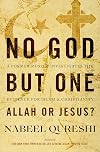
The strength of this book lies in its unique perspective. Very few books comparing Islam and Christianity are written by people who have been committed to both camps. If there are others, I’m not aware of any that are as well written as this one. It’s a wonderfully accessible read with the complex being made very simple.
Qureshi, an ardent Muslim before becoming an ardent Christian knows what he’s talking about no matter which perspective he’s coming from. And it shows. This is a man show more who has done his homework and done it well.
Working through all the major themes, Qureshi compares the Bible and the Qur’an, Mohammed and Jesus, theology and history, etc. and, importantly, why believers have the perspectives they do. More importantly, he also does an excellent job of taking apart the various arguments Muslims use both against Christianity and for Islam.
This is crucial and is what makes this a must read book for any Christian who has the slightest contact with any Muslim. In discussing Islam with Muslims, you can be forgiven for thinking they have a watertight case. A read of books like Qureshi’s and you wonder how any of them have a leg to stand on. Islam has many questions to answer and, increasingly, the traditional arguments are holding less and less water.
Take, for example, the historicity of Mohammed or the compilation of the Qur’an, or the claim that it has never been altered in any way. Each of these have serious problems and each of the arguments in their favour are becoming increasingly difficult to defend. Even Muslim scholars who dare stick their head above the parapet are admitting this.
The future looks fascinating for Islamic scholarship, particularly if it is allowed to be subjected to the same barrage of criticism that Jesus and the Bible have received in the last 200 years. For political reasons though, the field is currently very small and its a brave man (like Al Fadi, for example) who dares speak the truth in love.
If there’s one criticism of the book it’s that it’s not very well organised. That’s the fault of the editor, though. Many of the chapters have the same titles (Assessing the Response, for example) which means that if you want to look up footnotes, you’re confronted with not knowing which chapter you’re looking for.
As a result of the editing issues, the book has a bit of a piecemeal feel about it with lots of short sections. This is however also a strenght in that you can jump around and read sections that interest you rather than going from start to finish.
All in all, this is an excellent book, and it would be good to see an Islamic response that was as cogently argued. show less
Qureshi, an ardent Muslim before becoming an ardent Christian knows what he’s talking about no matter which perspective he’s coming from. And it shows. This is a man show more who has done his homework and done it well.
Working through all the major themes, Qureshi compares the Bible and the Qur’an, Mohammed and Jesus, theology and history, etc. and, importantly, why believers have the perspectives they do. More importantly, he also does an excellent job of taking apart the various arguments Muslims use both against Christianity and for Islam.
This is crucial and is what makes this a must read book for any Christian who has the slightest contact with any Muslim. In discussing Islam with Muslims, you can be forgiven for thinking they have a watertight case. A read of books like Qureshi’s and you wonder how any of them have a leg to stand on. Islam has many questions to answer and, increasingly, the traditional arguments are holding less and less water.
Take, for example, the historicity of Mohammed or the compilation of the Qur’an, or the claim that it has never been altered in any way. Each of these have serious problems and each of the arguments in their favour are becoming increasingly difficult to defend. Even Muslim scholars who dare stick their head above the parapet are admitting this.
The future looks fascinating for Islamic scholarship, particularly if it is allowed to be subjected to the same barrage of criticism that Jesus and the Bible have received in the last 200 years. For political reasons though, the field is currently very small and its a brave man (like Al Fadi, for example) who dares speak the truth in love.
If there’s one criticism of the book it’s that it’s not very well organised. That’s the fault of the editor, though. Many of the chapters have the same titles (Assessing the Response, for example) which means that if you want to look up footnotes, you’re confronted with not knowing which chapter you’re looking for.
As a result of the editing issues, the book has a bit of a piecemeal feel about it with lots of short sections. This is however also a strenght in that you can jump around and read sections that interest you rather than going from start to finish.
All in all, this is an excellent book, and it would be good to see an Islamic response that was as cogently argued. show less
I absolutely loved this book! It is both a biographical account of Qureshi’s personal journey to accepting Jesus Christ as Savior, and a presentation of historical evidence and intellectual arguments for the truth of Christianity. It is certainly a fascinating and compelling journey well worth reading!
It also gave me more insight into Islam and Muslims than any other reading I have done. I have learned about the basic beliefs and practices of the religion in a classroom, but this is the show more first real glimpse I have had of how actual Muslim people and families live their lives in the Western world. I must admit, there are several things I admire about their religious culture: for one, the way their entire daily routine is centered around worshipping God; and for another, how they train their children, practically from birth, to understand and defend their faith in-depth. I think Christians would do well to follow their example in those respects, so that we wouldn’t take for granted that God is the center of our lives and deserves praise in all things, and so the next generation would be better equipped to discuss and defend their beliefs with anyone who asks.
Qureshi paints a vivid picture of his life, faith, and family, his path to accepting Jesus as Lord and the consequences of that decision, the historical and logical arguments for changing his beliefs and the personal encounters he had with the personal God. I would recommend this book to anyone! show less
It also gave me more insight into Islam and Muslims than any other reading I have done. I have learned about the basic beliefs and practices of the religion in a classroom, but this is the show more first real glimpse I have had of how actual Muslim people and families live their lives in the Western world. I must admit, there are several things I admire about their religious culture: for one, the way their entire daily routine is centered around worshipping God; and for another, how they train their children, practically from birth, to understand and defend their faith in-depth. I think Christians would do well to follow their example in those respects, so that we wouldn’t take for granted that God is the center of our lives and deserves praise in all things, and so the next generation would be better equipped to discuss and defend their beliefs with anyone who asks.
Qureshi paints a vivid picture of his life, faith, and family, his path to accepting Jesus as Lord and the consequences of that decision, the historical and logical arguments for changing his beliefs and the personal encounters he had with the personal God. I would recommend this book to anyone! show less
Qureshi, the son of Pakistani immigrants to America and a Muslim from birth, narrates the story of and reason for his conversion to Christianity in this work of apologetics. Even though I don’t agree with all of his points, this is a very well-written book, and I appreciate Qureshi’s tone of charity and love toward Muslims even as he comes to disagree with central tenets of Islamic doctrine.
Qureshi’s book presents many of the major apologist arguments against Islamic belief: the text show more criticism of the Qur’an, the historicity of the crucifixion and resurrection, the violence of Muhammad as the leader of early Islam. But what makes Qureshi’s book different from a typical book or theology or philosophy is that he interweaves these arguments throughout a memoir of his deconversion from Islam and conversion to Christianity. The main instigator of his conversion was his college friendship with Christian apologist David Wood. Wood and Qureshi were not only best friends, but also fellow members of their college debate team. As they grew closer practicing for debate tournaments together, they engaged in their own years-long debates over the rationality of belief in Islam versus Christianity.
These debates culminate in the end of the book in Qureshi’s accepting Christ. But for most of the book, Qureshi is a Muslim – and his best friend is a Christian. For Qureshi, their friendship was precisely what allowed them to debate their deeply-held personal beliefs. Their conversations arose from being in the same classes, going to the same debate tournaments, and being best friends. Throughout it is clear to me that Wood cares about Qureshi as a person, not just as a person to be converted. I really liked how their friendship enabled difficult conversations to take place.
And Qureshi delivers on his promise. Unlike some deconversion narratives, his does not depict his previous religion and its adherents as depraved, violent, or monolithic. Instead he stresses the diversity of Muslims (57), emphasizes that Islam is not as rigid as some think (69), mentions that Islam has a “highly developed notion of morality” (110), and honestly assesses that “if by Islam we mean the beliefs of Muslims, then Islam can be a religion of peace or a religion of terror, depending on how it is taught” (115). Qureshi doesn’t paint all Muslims with the same brush or attack their religion in unfair ways. He is charitable.
Qureshi was not a convicted life-long Christian who read a few books on Islam and decided that it was incorrect, but a Muslim from birth who loved his faith. Throughout the book he makes it clear that it very painful for him to come to the conclusion that the central Islamic tenets he was taught growing up were not rationally defensible. Muslims for him were not some far-away group of people, but his parents, whom he loves so much that he dedicated this book to them. Even though many Muslims would disagree with his conclusions, and I don’t agree with all of them either, to me he speaks more authentically because of his personal journey. show less
Qureshi’s book presents many of the major apologist arguments against Islamic belief: the text show more criticism of the Qur’an, the historicity of the crucifixion and resurrection, the violence of Muhammad as the leader of early Islam. But what makes Qureshi’s book different from a typical book or theology or philosophy is that he interweaves these arguments throughout a memoir of his deconversion from Islam and conversion to Christianity. The main instigator of his conversion was his college friendship with Christian apologist David Wood. Wood and Qureshi were not only best friends, but also fellow members of their college debate team. As they grew closer practicing for debate tournaments together, they engaged in their own years-long debates over the rationality of belief in Islam versus Christianity.
These debates culminate in the end of the book in Qureshi’s accepting Christ. But for most of the book, Qureshi is a Muslim – and his best friend is a Christian. For Qureshi, their friendship was precisely what allowed them to debate their deeply-held personal beliefs. Their conversations arose from being in the same classes, going to the same debate tournaments, and being best friends. Throughout it is clear to me that Wood cares about Qureshi as a person, not just as a person to be converted. I really liked how their friendship enabled difficult conversations to take place.
And Qureshi delivers on his promise. Unlike some deconversion narratives, his does not depict his previous religion and its adherents as depraved, violent, or monolithic. Instead he stresses the diversity of Muslims (57), emphasizes that Islam is not as rigid as some think (69), mentions that Islam has a “highly developed notion of morality” (110), and honestly assesses that “if by Islam we mean the beliefs of Muslims, then Islam can be a religion of peace or a religion of terror, depending on how it is taught” (115). Qureshi doesn’t paint all Muslims with the same brush or attack their religion in unfair ways. He is charitable.
Qureshi was not a convicted life-long Christian who read a few books on Islam and decided that it was incorrect, but a Muslim from birth who loved his faith. Throughout the book he makes it clear that it very painful for him to come to the conclusion that the central Islamic tenets he was taught growing up were not rationally defensible. Muslims for him were not some far-away group of people, but his parents, whom he loves so much that he dedicated this book to them. Even though many Muslims would disagree with his conclusions, and I don’t agree with all of them either, to me he speaks more authentically because of his personal journey. show less
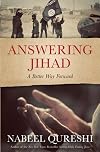
This book provides a deeper understanding of Islam, and is set up in an easy to follow question-and-answer format. It's informative and thought provoking, and I found myself highlighting and engaging with the text throughout. I was expecting a dry, pedantic read, but I encountered a book that was apparently written with a broad audience in mind, a book that covers not only the history and teachings of Islam but also what that means for us today as we try to make sense of and move forward in show more a climate that is often rife with ignorance, fear, and misunderstanding.
Reading this book has given me a functional understanding of the religious and historical foundations of radical Islam. For groups like ISIS and Boko Haram, jihad is often a violent physical struggle for a much higher spiritual purpose, which is why actions deemed evil by the West are, to their way of thinking, actually divine. We are talking about two very different world views that will probably never be able to peaceably coexist in the long term because they are so incredibly disparate. To radicals, nothing less than strict adherence to sharia law is permissible, and there can be no peace outside of worldwide submission to "pure," fundamental Islam, an Islam that goes back to the religion's roots and is free from any outside influence.
However, three points stand out clearly from the beginning of Answering Jihad: the author understands that not all Muslims believe or practice the same, just as not all Jews or Christians practice the same within their faiths; the author feels that any religion should be defined by the characteristics that set its initial adherents apart from nonbelievers, so an understanding of the history and foundations of Islam are vital; and the author strongly believes that one must love Muslims, even if and while criticizing Islamic teachings. Qureshi isn't calling for war; he's calling for understanding, compassion, and love.
For some Muslims, Islam is a religion of peace, whereas for others, a religion of violence. According to the author, neither the Quran nor the teachings and traditions of Mohammed ever define Islam as a religion of peace, and, in fact, they prove otherwise. Qureshi states that some Muslim scholars actually consider proclamations that Islam is a religion of peace to be an "effort by the West to emasculate Islam." Clearly, peace is in the eye of the beholder.
This is an important book, well written and thoroughly researched, and though it provides some difficult truths, it is a book that must be read by anyone who hopes to understand why radical Muslims believe and behave as they do; it is, in fact, because of the truths presented herein that this book deserves to read, considered, and carefully digested. show less
Reading this book has given me a functional understanding of the religious and historical foundations of radical Islam. For groups like ISIS and Boko Haram, jihad is often a violent physical struggle for a much higher spiritual purpose, which is why actions deemed evil by the West are, to their way of thinking, actually divine. We are talking about two very different world views that will probably never be able to peaceably coexist in the long term because they are so incredibly disparate. To radicals, nothing less than strict adherence to sharia law is permissible, and there can be no peace outside of worldwide submission to "pure," fundamental Islam, an Islam that goes back to the religion's roots and is free from any outside influence.
However, three points stand out clearly from the beginning of Answering Jihad: the author understands that not all Muslims believe or practice the same, just as not all Jews or Christians practice the same within their faiths; the author feels that any religion should be defined by the characteristics that set its initial adherents apart from nonbelievers, so an understanding of the history and foundations of Islam are vital; and the author strongly believes that one must love Muslims, even if and while criticizing Islamic teachings. Qureshi isn't calling for war; he's calling for understanding, compassion, and love.
For some Muslims, Islam is a religion of peace, whereas for others, a religion of violence. According to the author, neither the Quran nor the teachings and traditions of Mohammed ever define Islam as a religion of peace, and, in fact, they prove otherwise. Qureshi states that some Muslim scholars actually consider proclamations that Islam is a religion of peace to be an "effort by the West to emasculate Islam." Clearly, peace is in the eye of the beholder.
This is an important book, well written and thoroughly researched, and though it provides some difficult truths, it is a book that must be read by anyone who hopes to understand why radical Muslims believe and behave as they do; it is, in fact, because of the truths presented herein that this book deserves to read, considered, and carefully digested. show less
Lists
Awards

You May Also Like


Associated Authors
Statistics
- Works
- 13
- Members
- 3,133
- Popularity
- #8,148
- Rating
- 4.5
- Reviews
- 52
- ISBNs
- 52
- Languages
- 6