
Sylvère Lotringer (1938–2021)
Author of Foucault Live: Interviews, 1961-84
About the Author
Image credit: Semiotext(e)
Works by Sylvère Lotringer
Burroughs live : the collected interviews of William S. Burroughs, 1960-1997 (2001) — Editor — 90 copies, 1 review
David Wojnarowicz: A Definitive History of Five or Six Years on the Lower East Side (2006) 48 copies, 1 review
Semiotexte Volume II, No. 3, 1977 Anti-Oedipus From Psychoanalysis to Schizopolitics (1977) 2 copies
The Miserables 2 copies
Ich habe mit Antonin Artaud über Gott gesprochen: Ein Gespräch zwischen Sylvère Lotringer und dem Nervenarzt Dr. Jacques Latrémolière (2001) 2 copies
J'étais plus américain que les Américains: Sylvère Lotringer en conversation avec Donatien Grau (French Edition) (2021) 1 copy
I Was More American than the Americans: Sylvère Lotringer in Conversation with Donatien Grau (2021) 1 copy
Associated Works
Theories and Documents of Contemporary Art: A Sourcebook of Artists' Writings (1995) — Contributor — 417 copies, 1 review
Venus in Furs and Selected Letters of Leopold Von Sacher-Masoch (1870) — Foreword, some editions — 140 copies, 1 review
Don't Hide the Madness: William S. Burroughs in Conversation with Allen Ginsberg (2018) — Contributor — 49 copies, 13 reviews
Tagged
Common Knowledge
- Canonical name
- Lotringer, Sylvère
- Birthdate
- 1938-10-15
- Date of death
- 2021-11-08
- Gender
- male
- Education
- Sorbonne (BA & MA | Comparative literature)
École Pratique des Hautes Études (PhD | Sociology of literature) - Occupations
- literary critic
cultural theorist
professor
writer
magazine publisher - Organizations
- Semiotext(e)
Columbia University - Awards and honors
- Ordre des Arts et des Lettres (Officier, 2016)
- Relationships
- Kraus, Chris (former spouse)
- Cause of death
- heart failure
- Nationality
- France
- Birthplace
- Paris, France
- Place of death
- Ensenada, Baja California, Mexico
- Associated Place (for map)
- France
Members
Reviews
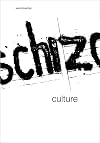
Never-before-published lectures, Q&As, and squabbles from the conference that introduced French theory into America, with a facsimile of the journal issue that emerged from it.
I think “schizo-culture” here is being used rather in a special sense. Not referring to clinical schizophrenia, but to the fact that the culture is divided up into all sorts of classes and groups, etc., and that some of the old lines are breaking down. And that this is a healthy sign.
—William Burroughs, from show more Schizo-Culture
The legendary 1975 “Schizo-Culture” conference, conceived by the early Semiotext(e) collective, began as an attempt to introduce the then-unknown radical philosophies of post-'68 France to the American avant-garde. The event featured a series of seminal papers, from Deleuze's first presentation of the concept of the “rhizome” to Foucault's introduction of his History of Sexuality project. The conference was equally important on a political level, and brought together a diverse group of activists, thinkers, patients, and ex-cons in order to address the challenge of penal and psychiatric institutions. The combination proved to be explosive, but amid the fighting and confusion “Schizo-Culture” revealed deep ruptures in left politics, French thought, and American culture.
The “Schizo-Culture” issue of the Semiotext(e) journal came three years later. Designed by a group of artists and filmmakers including Kathryn Bigelow and Denise Green, it documented the chaotic creativity of an emerging downtown New York scene, and offered interviews with artists, theorists, writers, and No Wave and pre-punk musicians together with new texts from Deleuze, Foucault, R. D. Laing, and other conference participants.
This slip-cased edition includes The Book: 1978, a facsimile reproduction of the original Schizo-Culture publication; and The Event: 1975, a previously unpublished and comprehensive record of the conference that set it all off. It assembles many previously unpublished texts, including a detailed selection of interviews reconstructing the events, and features Félix Guattari, William Burroughs, Kathy Acker, Michel Foucault, Sylvère Lotringer, Guy Hocquenghem, Gilles Deleuze, John Rajchman, Robert Wilson, Joel Kovel, Jack Smith, Jean-François Lyotard, Ti-Grace Atkinson, François Peraldi, and John Cage. show less
I think “schizo-culture” here is being used rather in a special sense. Not referring to clinical schizophrenia, but to the fact that the culture is divided up into all sorts of classes and groups, etc., and that some of the old lines are breaking down. And that this is a healthy sign.
—William Burroughs, from show more Schizo-Culture
The legendary 1975 “Schizo-Culture” conference, conceived by the early Semiotext(e) collective, began as an attempt to introduce the then-unknown radical philosophies of post-'68 France to the American avant-garde. The event featured a series of seminal papers, from Deleuze's first presentation of the concept of the “rhizome” to Foucault's introduction of his History of Sexuality project. The conference was equally important on a political level, and brought together a diverse group of activists, thinkers, patients, and ex-cons in order to address the challenge of penal and psychiatric institutions. The combination proved to be explosive, but amid the fighting and confusion “Schizo-Culture” revealed deep ruptures in left politics, French thought, and American culture.
The “Schizo-Culture” issue of the Semiotext(e) journal came three years later. Designed by a group of artists and filmmakers including Kathryn Bigelow and Denise Green, it documented the chaotic creativity of an emerging downtown New York scene, and offered interviews with artists, theorists, writers, and No Wave and pre-punk musicians together with new texts from Deleuze, Foucault, R. D. Laing, and other conference participants.
This slip-cased edition includes The Book: 1978, a facsimile reproduction of the original Schizo-Culture publication; and The Event: 1975, a previously unpublished and comprehensive record of the conference that set it all off. It assembles many previously unpublished texts, including a detailed selection of interviews reconstructing the events, and features Félix Guattari, William Burroughs, Kathy Acker, Michel Foucault, Sylvère Lotringer, Guy Hocquenghem, Gilles Deleuze, John Rajchman, Robert Wilson, Joel Kovel, Jack Smith, Jean-François Lyotard, Ti-Grace Atkinson, François Peraldi, and John Cage. show less
David Wojnarowicz -A Definitive History of Five or Six Years on the Lower East Side by Sylvère Lotringer

Artist David Wojnarowicz on his work, his aspirations, his personal history, his political views; Wojnarowicz in dialogue with Sylvere Lotringer, along with personal accounts from friends and fellow artists collected after Wojnarowicz's death. In February 1991, the artist David Wojnarowicz (1954-1992) and the philosopher Sylvere Lotringer met in a borrowed East Village apartment to conduct a long-awaited dialogue on Wojnarowicz's work. Wojnarowicz was then at the peak of his notoriety as the show more fiercest antagonist of morals crusader Senator Jesse Helms-a notoriety that Wojnarowicz alternately embraced and rejected. Already suffering the last stages of AIDS, David saw his dialogue with Lotringer as a chance to set the record straight on his aspirations, his personal history, and his political views. The two arranged to have this three-hour dialogue video-recorded by a mutual friend, the artist Marion Scemama. Lotringer held on to the tape for a long time. After Wojnarowicz's death the following year, he found the transcript enormously moving, yet somehow incomplete. David was trying, often with heartbreaking eloquence, to define not just his career but its position in time. The subject was huge, and transcended the actual dialogue. Lotringer then spent the next several years gathering additional commentary on Wojnarowicz's life and work from those who knew him best-the friends with whom he collaborated. Lotringer solicited personal testimony from Wojnarowicz's friends and other artists, including Mike Bildo, Steve Brown, Julia Scher, Richard Kern, Carlo McCormick, Ben Neill, Kiki Smith, Nan Goldin, Marguerite van Cook, and others. What emerges from these masterfully-conducted interviews is a surprising insight into something art history knows, but systematically hides: the collaborative nature of the work of any "great artist." All these respondents had, at one time, made performances, movies, sculptures, photographs, and other collaborative works with Wojnarowicz. In this sense, Wojnarowicz appears not only as a great originator, but as a great synthesizer. show less

An even-handed and many-faced look into Artaud's treatment by psychiatry. The interviews are fascinating and all contradict one another as one would expect. A great quick read for fans of Artaud.
this was Absolutely Fine.... more of a book you skim read. some really great stuff in here (eileen myles! assata shakur! foucault! that final interview!) but a lot of it was kind of impossible for me to get into... maybe what i need is more of a thorough engagement with some of these writers before i jump into an anthology type reader and maybe that's a me problem... but i wasn't fully satisfied with this
You May Also Like


Associated Authors
Statistics
- Works
- 38
- Also by
- 8
- Members
- 1,099
- Popularity
- #23,376
- Rating
- 4.0
- Reviews
- 8
- ISBNs
- 40
- Languages
- 3