
Ken Krimstein
Author of The Three Escapes of Hannah Arendt
About the Author
Image credit: Uncredited image found at DePaul University website
Works by Ken Krimstein
Einstein in Kafkaland: How Albert Fell Down the Rabbit Hole and Came Up With the Universe (2024) 62 copies, 5 reviews
Associated Works
Everyone's a Critic: The Ultimate Cartoon Book by the World's Greatest Cartoonists (2020) — Contributor — 13 copies, 1 review
Tagged
Common Knowledge
- Birthdate
- 1958-05-24
- Gender
- male
Members
Reviews
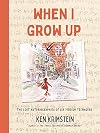
This remarkable graphic novel tells the almost lost stories of six Jewish teenagers from Vilnius, Poland, in 1939, who were competing in a writing contest. Their manuscripts were part of an ethnographic study, with a prize of 150 zlotys ($1000 in current US dollars) for the best discourse on the writer's chosen topic, which included family and religious life, the war, friends, family, political organizations, and occupations. As war broke out and Jews were removed from Polish life, the show more manuscripts were hidden away, along with many others from the YIVO (a school without walls) collection, and these six stories were found in pristine condition in the organ pipes of a derelict cathedral, having been rescued not only from the Nazis, but also from Stalin's troops. The author, a graphic artist, has brilliantly illustrated each story, by two girls and four boys who seem older than their years. They have the same difficulties known universally to all teenagers: recalcitrant parents, unfaithful boyfriends and girlfriends, disillusionment with teachers and schools, mean girls, political rivalries, and unfulfilled yearnings - all made more poignant by the reader's knowledge that all the writers are doomed (there is one gratifying survival). The illustrations, in orange and charcoal black, bring vivid, striking drama to the sometimes mundane writings. This collection would make an excellent anthologized series for stage or television. Note: the footnotes are way too tiny to be legible. show less
When I Grow Up: The Lost Autobiographies of Six Yiddish Teenagers by Ken Krimstein is a difficult book, for me, to review. Do I talk about the six stories? The artwork? Or, what makes the work so powerful, the contrast between the optimism and future-looking nature of these young people's stories and the knowledge of what likely happened to most of them and their families?
The autobiographies are wonderful glimpses of a specific place and period in time. Looked at simply as that, they are show more valuable as historical documents and are enjoyable for readers in the sense that we can feel the exuberance and optimism of youth. It is in the harsh juxtaposition of those youthful feelings with what happened next in all of their lives that the reader can feel gut-punched. So much lost, both on personal levels and for the world. These intelligent young people for the most part didn't survive the next five years (I am speaking of the entire recovered collection, not just the six presented here). How can one come away from this collection without a heavy heart?
I don't want to overstate the dark aspect, the shadow that hangs over it. The artwork is very good and presents the stories with humor and compassion. And the recovery and, hopefully, presentation of more of these autobiographies can only do more good than bad. But good isn't always painless. Sharing the human loss, putting human faces to the numbers, keeps the Holocaust from becoming some abstract chapter in history. Real lives, real futures were cut short or profoundly altered and we need to remember both for their sake and for our future sake, we have to remember what can happen when hatred and prejudice becomes institutionalized and government sanctioned.
I highly recommend this to readers of history, the Holocaust, and cultural history.
Reviewed from a copy made available by the publisher via NetGalley. show less
The autobiographies are wonderful glimpses of a specific place and period in time. Looked at simply as that, they are show more valuable as historical documents and are enjoyable for readers in the sense that we can feel the exuberance and optimism of youth. It is in the harsh juxtaposition of those youthful feelings with what happened next in all of their lives that the reader can feel gut-punched. So much lost, both on personal levels and for the world. These intelligent young people for the most part didn't survive the next five years (I am speaking of the entire recovered collection, not just the six presented here). How can one come away from this collection without a heavy heart?
I don't want to overstate the dark aspect, the shadow that hangs over it. The artwork is very good and presents the stories with humor and compassion. And the recovery and, hopefully, presentation of more of these autobiographies can only do more good than bad. But good isn't always painless. Sharing the human loss, putting human faces to the numbers, keeps the Holocaust from becoming some abstract chapter in history. Real lives, real futures were cut short or profoundly altered and we need to remember both for their sake and for our future sake, we have to remember what can happen when hatred and prejudice becomes institutionalized and government sanctioned.
I highly recommend this to readers of history, the Holocaust, and cultural history.
Reviewed from a copy made available by the publisher via NetGalley. show less
Einstein in Kafkaland: How Albert Fell Down the Rabbit Hole and Came Up with the Universe by Ken Krimstein
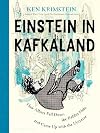
I never knew that Albert Einstein and Franz Kafka were both in Prague from April 1911 to July 1912. That much is true, and they ran in the same social circles. But did they know each other? Award-winning New Yorker cartoonist Ken Krimstein not only imagines their meeting, but he details their friendship and the incidents that led one to declare that he had the key to “solving gravity” and the other to publishing the short story “The Judgement,” which would launch his literary show more career.
At the time Einstein was not a household name, but a mere cash-strapped patent clerk who’d just landed a much-desired university teaching job, while Kafka was still an unknown dour insurance executive who’d published nothing. Krimstein brings their imagined relationship alive in this wonderful graphic novel — one narrated by the skeleton on Prague’s Astronomical Clock, built in 1410. Einstein in Kafkaland is full of magical realism (including the White Rabbit from Alice in Wonderland), but that just adds to a novel that is Krimstein’s Gedankenexperiment (thought experiment). Highly, highly recommended.
In the interest of full disclosure, I received this book from NetGalley and Bloomsbury Publishing in exchange for an honest review. show less
At the time Einstein was not a household name, but a mere cash-strapped patent clerk who’d just landed a much-desired university teaching job, while Kafka was still an unknown dour insurance executive who’d published nothing. Krimstein brings their imagined relationship alive in this wonderful graphic novel — one narrated by the skeleton on Prague’s Astronomical Clock, built in 1410. Einstein in Kafkaland is full of magical realism (including the White Rabbit from Alice in Wonderland), but that just adds to a novel that is Krimstein’s Gedankenexperiment (thought experiment). Highly, highly recommended.
In the interest of full disclosure, I received this book from NetGalley and Bloomsbury Publishing in exchange for an honest review. show less
Einstein in Kafkaland: How Albert Fell Down the Rabbit Hole and Came Up With the Universe by Ken Krimstein
Well, this is the closest yet I've come to liking a book by Ken Krimstein. This book and his previous two have all made various "best of the year" lists for graphic novels, so I keep checking them out, but I just don't really connect with his style.
First, I have trust issues with Krimstein. His previous books were presented as nonfiction biographies, but I questioned his perspective on the material and his adherence to facts. At least this book is presented as historical fiction -- narrated show more by an animated skeleton and featuring cameos of various characters from Alice in Wonderland -- so he can B.S. all he wants and I don't have to fret over it.
I like the idea of trying to connect Einstein to Kafka, but apparently there isn't much to it, as Krimstein isn't able to make many connections between the two other than one tea party, a brief conversation, and general geographic proximity. He instead pads the book out with a lot of Alice in Wonderland references, from which I infer he thinks Kafka and Lewis Carroll are interchangeable due to their use of absurdity. While I appreciated the parts of the story that had Einstein reconciling his Theory of Relativity with gravity, the fantasy elements proved distracting at best and annoying a bit too often. And Kafka gets short shrift, with the story doing little to explain his jump from insurance man to author.
(Best of 2024 Project: I'm reading all the graphic novels that made it onto one or more of these lists:
• Washington Post 10 Best Graphic Novels of 2024
• Publishers Weekly 2024 Graphic Novel Critics Poll
• NPR's Books We Love 2024: Favorite Comics and Graphic Novels
This book made the PW list.)
FOR REFERENCE:
Contents:
• Author's Note: This Much Is True
• Overture
• Chapter I. Down the Rabbit Hole - April 1, 1911
• Chapter II. The Pool of Tears
• Chapter III. Meet Max Abraham
• Chapter IV. "The People Are So Happy Here!"
• Chapter V. Prelude to Berta Fanta's Mad Tea Party - May 24, 1911
• Chapter VI. Heeeeeeeere's Mileva!!!
• Chapter VII. Berta Fanta's Mad Tea (After)Party - May 24, 1911
• Chapter VIII. Let's Bend Light
• Chapter IX. The Crime of the Century - August 21, 1911
• Chapter X. Albert & Paul's Lost Weekend - February 23rd, 1912
• Chapter XI. The Duel of Pens
• Chapter XII. A Knock at the Door
• Chapter XIII. wtf
• Chapter XIV. Einstein's Unified Theory of E̶v̶e̶r̶y̶t̶h̶i̶n̶g̶ It All - July 25, 1912
• Coda: The Gravitating Mass of Kafkaland
• Acknowledgements
• Further Reading, Listening, Viewing . . .
• Notes
• What the Hell Was Going On? A Timeline show less
First, I have trust issues with Krimstein. His previous books were presented as nonfiction biographies, but I questioned his perspective on the material and his adherence to facts. At least this book is presented as historical fiction -- narrated show more by an animated skeleton and featuring cameos of various characters from Alice in Wonderland -- so he can B.S. all he wants and I don't have to fret over it.
I like the idea of trying to connect Einstein to Kafka, but apparently there isn't much to it, as Krimstein isn't able to make many connections between the two other than one tea party, a brief conversation, and general geographic proximity. He instead pads the book out with a lot of Alice in Wonderland references, from which I infer he thinks Kafka and Lewis Carroll are interchangeable due to their use of absurdity. While I appreciated the parts of the story that had Einstein reconciling his Theory of Relativity with gravity, the fantasy elements proved distracting at best and annoying a bit too often. And Kafka gets short shrift, with the story doing little to explain his jump from insurance man to author.
(Best of 2024 Project: I'm reading all the graphic novels that made it onto one or more of these lists:
• Washington Post 10 Best Graphic Novels of 2024
• Publishers Weekly 2024 Graphic Novel Critics Poll
• NPR's Books We Love 2024: Favorite Comics and Graphic Novels
This book made the PW list.)
FOR REFERENCE:
Contents:
• Author's Note: This Much Is True
• Overture
• Chapter I. Down the Rabbit Hole - April 1, 1911
• Chapter II. The Pool of Tears
• Chapter III. Meet Max Abraham
• Chapter IV. "The People Are So Happy Here!"
• Chapter V. Prelude to Berta Fanta's Mad Tea Party - May 24, 1911
• Chapter VI. Heeeeeeeere's Mileva!!!
• Chapter VII. Berta Fanta's Mad Tea (After)Party - May 24, 1911
• Chapter VIII. Let's Bend Light
• Chapter IX. The Crime of the Century - August 21, 1911
• Chapter X. Albert & Paul's Lost Weekend - February 23rd, 1912
• Chapter XI. The Duel of Pens
• Chapter XII. A Knock at the Door
• Chapter XIII. wtf
• Chapter XIV. Einstein's Unified Theory of E̶v̶e̶r̶y̶t̶h̶i̶n̶g̶ It All - July 25, 1912
• Coda: The Gravitating Mass of Kafkaland
• Acknowledgements
• Further Reading, Listening, Viewing . . .
• Notes
• What the Hell Was Going On? A Timeline show less
Lists
Awards


You May Also Like


Associated Authors
Statistics
- Works
- 5
- Also by
- 1
- Members
- 367
- Popularity
- #65,578
- Rating
- 3.8
- Reviews
- 17
- ISBNs
- 14
- Languages
- 4