
Francis Beckett
Author of Marching to the Fault Line
About the Author
Works by Francis Beckett
Associated Works
Tagged
Common Knowledge
- Birthdate
- 1945-05-12
- Gender
- male
- Education
- Beaumont College
Keele University - Occupations
- journalist
Contemporary historian - Nationality
- UK
- Birthplace
- Chenies
- Associated Place (for map)
- Chenies
Members
Reviews
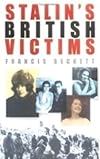
This book tells the story of four young, idealistic women in the 1930s, who, coming from socialist or communist backgrounds, and believing that communism was the future, went to live in the Soviet Union. All in various ways became disillusioned and fell foul of Stalin's terror - Rose Cohen was shot a few months after the arrest of her Russian husband Max Petrovsky, Rosa Rust, daughter of a prominent British Communist who was editor of the Communist newspaper The Daily Worker, was sent to a show more slave labour camp in Kazakhstan, while Pearl Rimel and Freda Utley escaped with their very young children, while their husbands disappeared into the gulag or were shot. It's a reminder that Stalin's repressions didn't only happen to Russians and East Europeans, but that some Britons (and Americans) also suffered. It's also a stark and sobering illustration of how originally noble and sincerely held ideals of social justice and peace can be perverted by self-delusion and a series of moral compromises that lead to death and misery, polluting and distorting human relationships down through the generations. show less

Following on from reading [b:1913: The Eve of War|18877635|1913 The Eve of War|Paul Ham|https://images.gr-assets.com/books/1385045788s/18877635.jpg|26878961] by Paul Ham earlier this year, I tried another ‘history of a year’ with this book. The genre by its nature is predisposed to more event driven history rather than exploring sweeping themes, and runs the risk of descending into nostalgia. It is very popular with publishers, however! One could be uncharitable and accuse the authors of show more simply producing a book of a year because it occurred 60 years ago. In this case however that would be churlish. Francis Beckett and Tony Russell do manage to make a fairly convincing argument that if it is possible to have a watershed year, in terms of Britain’s postwar history 1956 qualifies.
The book is not a deeply researched book which will be acclaimed in the academy, however it is well written in a journalistic style. The authors aren’t afraid to add a personal tone, informing us in the first paragraph that “we were very young at the time”. The sources range from the usual newspapers and magazines to some very insightful reminiscences prompted by a request in Third Age Matters magazine (edited by Beckett). While serious historians are usually cautious with recollections so long after the events, it's impossible not to enjoy recollections such as Tom Jones’ National Service in Cyprus, where the officers would get legless about midday. 1956 can succumb to the temptation to descend into memories of music and lists of films but it does tackle some bigger issues and attempt to present a plausible thesis. The book is at its strongest when it is tackling politics. Beckett has written an admiring biography of Clement Attlee, and nails his colours to the mast in describing how “Most elections are decided by fear; the 1945 election may have been the only one in the twentieth century to be decided by hope.” Anthony Eden had “acquired a reputation for dither, weakness and micro-management.”
Foreign affairs play their part, however in a British context. The Suez Crisis unsurprisingly looms large, dancing into view periodically. Beckett and Russell rightly portray its importance as a watershed moment in the decline of British influence, commenting on how Britain’s dependence on the United States and the maintenance of the ‘special relationship’ is one of the principal legacies of the year. The book neatly juxtaposes the crisis with the Hungarian uprising, and its crushing by the USSR. Whilst the fact that Britain was unable to respond to the crisis due to her own simultaneous adventures is well covered, what was also interesting was the impact on communism in the UK. A quarter of the membership left the Communist Party of Great Britain - “To leave the CPGB was more than just to change your political allegiance; it was to abandon your faith and your friends”. The coverage of this unraveling is the best I have read.
Politics, popular culture, the compulsory discussion of the likes of Look Back in Anger - its all here. This quote from Dennis Potter’s play Lipstick on your Collar sums it all up nicely:
The book is not a deeply researched book which will be acclaimed in the academy, however it is well written in a journalistic style. The authors aren’t afraid to add a personal tone, informing us in the first paragraph that “we were very young at the time”. The sources range from the usual newspapers and magazines to some very insightful reminiscences prompted by a request in Third Age Matters magazine (edited by Beckett). While serious historians are usually cautious with recollections so long after the events, it's impossible not to enjoy recollections such as Tom Jones’ National Service in Cyprus, where the officers would get legless about midday. 1956 can succumb to the temptation to descend into memories of music and lists of films but it does tackle some bigger issues and attempt to present a plausible thesis. The book is at its strongest when it is tackling politics. Beckett has written an admiring biography of Clement Attlee, and nails his colours to the mast in describing how “Most elections are decided by fear; the 1945 election may have been the only one in the twentieth century to be decided by hope.” Anthony Eden had “acquired a reputation for dither, weakness and micro-management.”
Foreign affairs play their part, however in a British context. The Suez Crisis unsurprisingly looms large, dancing into view periodically. Beckett and Russell rightly portray its importance as a watershed moment in the decline of British influence, commenting on how Britain’s dependence on the United States and the maintenance of the ‘special relationship’ is one of the principal legacies of the year. The book neatly juxtaposes the crisis with the Hungarian uprising, and its crushing by the USSR. Whilst the fact that Britain was unable to respond to the crisis due to her own simultaneous adventures is well covered, what was also interesting was the impact on communism in the UK. A quarter of the membership left the Communist Party of Great Britain - “To leave the CPGB was more than just to change your political allegiance; it was to abandon your faith and your friends”. The coverage of this unraveling is the best I have read.
Politics, popular culture, the compulsory discussion of the likes of Look Back in Anger - its all here. This quote from Dennis Potter’s play Lipstick on your Collar sums it all up nicely:
The sort [of songs] where moon don’t rhyme with June, and you’re not up to your backside in bloody buttercups. Songs that aren’t about your mum and dad. A bit rough, a beat that busts up the old way, the old stodge, the empire and knowing your place and excuse me and the dressing up and doing what you’re told.show less
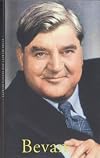
This is an excellent book reduced to a good one by the overt partisanship of its authors. The Becketts are clearly socialists, and there is nothing wrong with that: I would consider myself to be one too. The problem arises when the narrative is interrupted to allow a monologue of the authors' views.
This is a pity because, although this is a small biography, 148 pages, it is excellently laid out with side panels giving details of the protagonists as they enter the story. Each page has a small show more note advising the reader as to the main item covered therein, making the book an ideal source document. When I need to refer to a specific issue within Nye's life, it is simplicity itself to find the relevant paragraphs.
The book is knowledgeably written and I certainly learned a considerable amount about Bevan and the Labour Party in those crucial years around the Second World War. Bevan was, of course, a giant amongst the politicians of his, or indeed, any other age. Not content with introducing the National Health Service - the single greatest political act in British history - Bevan also built housing for the people at an affordable rent. I learned from this book that Bevan was not content to build quick, cheap houses but insisted that the properties were of a standard so that the poor did not feel second class citizens. Naturally, as soon as a Conservative Government took over, the building of council houses could not be stopped without risking political annihilation, but the quality could, and was, rapidly reduced.
I would happily recommend this book despite my earlier misgivings. show less
This is a pity because, although this is a small biography, 148 pages, it is excellently laid out with side panels giving details of the protagonists as they enter the story. Each page has a small show more note advising the reader as to the main item covered therein, making the book an ideal source document. When I need to refer to a specific issue within Nye's life, it is simplicity itself to find the relevant paragraphs.
The book is knowledgeably written and I certainly learned a considerable amount about Bevan and the Labour Party in those crucial years around the Second World War. Bevan was, of course, a giant amongst the politicians of his, or indeed, any other age. Not content with introducing the National Health Service - the single greatest political act in British history - Bevan also built housing for the people at an affordable rent. I learned from this book that Bevan was not content to build quick, cheap houses but insisted that the properties were of a standard so that the poor did not feel second class citizens. Naturally, as soon as a Conservative Government took over, the building of council houses could not be stopped without risking political annihilation, but the quality could, and was, rapidly reduced.
I would happily recommend this book despite my earlier misgivings. show less
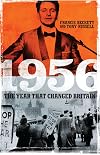
Plus a bit more star. This was a 60th birthday present and it's interesting to look back and see what my parents must have been going through that year. My parents were communists and my dad had gone to Spain to fight with the International Brigade so the Communist Stalin revelations must have touched them deeply. I already knew about Hungary but hadn't realised that the Suez debacle was happening at the same time.
I liked the way the book ranged back and forward to place 1956 in context and show more the music and theater covered was interesting but unmemorable. show less
I liked the way the book ranged back and forward to place 1956 in context and show more the music and theater covered was interesting but unmemorable. show less
Lists
Awards

You May Also Like


Associated Authors
Statistics
- Works
- 26
- Also by
- 3
- Members
- 248
- Popularity
- #92,013
- Rating
- 3.7
- Reviews
- 6
- ISBNs
- 56