
Sylvia Louise Engdahl
Author of Enchantress from the Stars
About the Author
Disambiguation Notice:
Sylvia Engdahl also edits non-fiction books such as Euthanasia, Medical Rights and many others which appear on this page.
Series
Works by Sylvia Louise Engdahl
The Planet-Girded Suns: The History of Human Thought About Extrasolar Worlds (1974) 28 copies, 2 reviews
The Atomic Bombings of Hiroshima and Nagasaki (Perspectives on Modern World History) (2011) 11 copies
Amendments XVIII and XXI: Prohibition and Repeal (Constitutional Amendments Beyond the Bill of Rights) (2009) 7 copies
Amendment XXVI: Lowering the Voting Age (Constitutional Amendments Beyond the Bill of Rights) (2009) 5 copies
Amendment XIV: Equal Protection (Constitutional Amendments Beyond the Bill of Rights) (2009) 4 copies
Amendment XXV Presidential Disability and Succession (Constitutional Amendments: Beyond the Bill of Rights) (2010) 2 copies
enchantress from the star 1 copy
Blogs 1 copy
The Planet-Girded Suns 1 copy
Tagged
Common Knowledge
- Legal name
- Engdahl, Sylvia Louise
- Birthdate
- 1933-11-24
- Gender
- female
- Education
- University of California, Santa Barbara (BA, 1955)
Portland State University (graduate work|anthropology, 1978-1980) - Occupations
- freelance editor
computer programmer
elementary school teacher
copy editor
computer systems specialist - Organizations
- Science Fiction and Fantasy Writers of America (SFWA)
Lifeboat Foundation
National Space Society - Relationships
- Butler, Mildred Allen (mother)
- Nationality
- USA
- Birthplace
- Los Angeles, California, USA
- Places of residence
- Eugene, Oregon, USA
Portland, Oregon, USA
Los Angeles, California, USA - Disambiguation notice
- Sylvia Engdahl also edits non-fiction books such as Euthanasia, Medical Rights and many others which appear on this page.
- Associated Place (for map)
- Oregon, USA
Members
Discussions
Found: find book title/author in Name that Book (July 2024)
Found: Sci-Fi book Space Race preventing Nuclear War in Name that Book (June 2024)
Found: Fantasy Book from Middle School Years in Name that Book (July 2021)
YA Sci Fi in Name that Book (June 2013)
YA, Multiple POV, very old (pre 1980's?) Two males, one female... help! in Name that Book (March 2013)
Reviews

I first read this book when I was in the sixth grade, and it changed my life. Not only was this the first science fiction story I'd ever read, it was my introduction to the idea that where you come from shapes how you see and interpret the world.
The story is presented as an intersection of fairy tale and sci-fi adventure, with the medieval residents of the planet Andrecia interpreting the high tech tools of an advanced civilization as a "dragon".
Elana, the story's heroine, is a somewhat show more rash but deeply principled young woman who accepts the consequences for all her actions and who faces the conflicts between heart and duty with a clear vision. The two other two p.o.v. characters share her idealistic qualities, each expressing them through the lense of his own unique background. show less
The story is presented as an intersection of fairy tale and sci-fi adventure, with the medieval residents of the planet Andrecia interpreting the high tech tools of an advanced civilization as a "dragon".
Elana, the story's heroine, is a somewhat show more rash but deeply principled young woman who accepts the consequences for all her actions and who faces the conflicts between heart and duty with a clear vision. The two other two p.o.v. characters share her idealistic qualities, each expressing them through the lense of his own unique background. show less
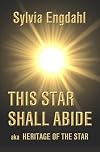
This Star Shall Abide by Sylvia Engdahl
Noren was a heretic. He defied the High Law and had no faith in the Prophecy’s fulfillment. But was defiance enough, or could some way be found to make it come true?
The back cover blurb is certainly intriguing.
This Star Shall Abide was first published in 1972, and is the opening book of a trilogy. It is dystopian fiction with a major difference.
When it was first appeared on the shelves, the School Library Journal issued the following show more comment:
“Superior future fiction concerning the fate of an idealistic misfit, Noren, who rebels against his highly repressive society…. Although there is little overt action, the attention of mature sci-fi readers will be held by the skillful writing and excellent plot and character development.”
In a nutshell, This Star Shall Abide is the story of an intelligent teenager named Noren, who feels compelled to rebel against the repressive society in which he has grown up, and by degrees comes to declare openly that he believes the central tenet of the people’s religion (the future appearance the Mother Star) and an accompanying prophecy to be deliberately fabricated by the Scholar (or High Priest) Class to keep everyone else under their control.
In 1973, it won the Christopher Award, bestowed for “affirmation of the highest values of the human spirit.”
There are aspects of this book which some readers have objected to. An example is that the society in which Noren lives is clearly sexist, which some may feel is not in accord with modern standards for Young Adult fiction. On her website, though, the author explains that this is just a part of the repressive nature of a society which has reverted to primitive conditions after the loss of all high technology. Certain readers have also misunderstood the values held by the author, imagining that she is somehow in favor of autocratic regimes. However, concluding that anything a writer describes in his or her work must be something that they support or advocate seems exceedingly odd to me. On the contrary, the very opposite is quite often true.
Specific themes which were present in Enchantress from the Stars and The Far Side of Evil appear again in this novel. Examples are, how important should the pursuit of truth be to the individual, to what extent and in what situations do ultimate ends justify the taking of drastic and even unfair action, and whether symbolism can be considered a valid method for expressing truths indirectly. Also, the idea that expansion into space is essential to the survival of humanity is once more alluded to. (Note: In Engdahl’s books ‘humanity’ does not necessarily refer to people originating from the planet Earth, but to any humanoid species.)
After reading three of her books, I must confess that I am already thinking of Sylvia Engdahl as one my favorite authors.
Below are some quotes from book which epitomize the general tone and flavor:
“I don’t want my faith restored,” he said heatedly. “I want to know the truth. The truth is the most important thing there is, Talyra. Don’t you care about finding it?” “I already know what’s true,” she maintained vehemently.
“That’s blasphemous; I won’t listen.” “No, I don’t suppose you will. I can see how fraud has greater appeal than truth from your standpoint.”
That was the difference between himself and the others: he cared about the truth, and they did not.
We can’t be forced to do or to believe anything against our will.
...he was sorry for all of them, sorry because they truly did not understand the thing they were lacking. They could not see that there was more to life than working, eating, and making love.
“I respect it too much to believe anything merely because some book or some person tells me I should. I want to really know! Maybe you’d rather accept stories that make you feel comfortable about the way things are, but I care more for truth than for comfort.”
He would undoubtedly be hurt in the City; in the end he would be killed; but as long as he kept on caring, nothing could touch the freedom of his inner thoughts.
“It’s not enough just to learn what there isn’t; we need to know what there is. . .”
They will never change me, Noren promised himself grimly. No matter what they do or what they threaten, I will not deny the truth; I will not become like that man; I will not recant!
“Knowledge is worthless apart from truth. It’s the truth I really value, but if I recanted, I’d be lying. Truth belongs to everybody; to recant would be to accept your right to keep it from the other villagers.”
"Truth, Noren, can be quite terrible. Not everyone can face it."
“If we don’t give people symbols for the truths we cannot express openly,” he explained, “in time they’ll fall prey to superstition."
“Societies, like people, cannot be controlled without destroying their ability to grow and develop.”
“Truth is truth, and it’s more important than what people think of me.” show less
Noren was a heretic. He defied the High Law and had no faith in the Prophecy’s fulfillment. But was defiance enough, or could some way be found to make it come true?
The back cover blurb is certainly intriguing.
This Star Shall Abide was first published in 1972, and is the opening book of a trilogy. It is dystopian fiction with a major difference.
When it was first appeared on the shelves, the School Library Journal issued the following show more comment:
“Superior future fiction concerning the fate of an idealistic misfit, Noren, who rebels against his highly repressive society…. Although there is little overt action, the attention of mature sci-fi readers will be held by the skillful writing and excellent plot and character development.”
In a nutshell, This Star Shall Abide is the story of an intelligent teenager named Noren, who feels compelled to rebel against the repressive society in which he has grown up, and by degrees comes to declare openly that he believes the central tenet of the people’s religion (the future appearance the Mother Star) and an accompanying prophecy to be deliberately fabricated by the Scholar (or High Priest) Class to keep everyone else under their control.
In 1973, it won the Christopher Award, bestowed for “affirmation of the highest values of the human spirit.”
There are aspects of this book which some readers have objected to. An example is that the society in which Noren lives is clearly sexist, which some may feel is not in accord with modern standards for Young Adult fiction. On her website, though, the author explains that this is just a part of the repressive nature of a society which has reverted to primitive conditions after the loss of all high technology. Certain readers have also misunderstood the values held by the author, imagining that she is somehow in favor of autocratic regimes. However, concluding that anything a writer describes in his or her work must be something that they support or advocate seems exceedingly odd to me. On the contrary, the very opposite is quite often true.
Specific themes which were present in Enchantress from the Stars and The Far Side of Evil appear again in this novel. Examples are, how important should the pursuit of truth be to the individual, to what extent and in what situations do ultimate ends justify the taking of drastic and even unfair action, and whether symbolism can be considered a valid method for expressing truths indirectly. Also, the idea that expansion into space is essential to the survival of humanity is once more alluded to. (Note: In Engdahl’s books ‘humanity’ does not necessarily refer to people originating from the planet Earth, but to any humanoid species.)
After reading three of her books, I must confess that I am already thinking of Sylvia Engdahl as one my favorite authors.
Below are some quotes from book which epitomize the general tone and flavor:
“I don’t want my faith restored,” he said heatedly. “I want to know the truth. The truth is the most important thing there is, Talyra. Don’t you care about finding it?” “I already know what’s true,” she maintained vehemently.
“That’s blasphemous; I won’t listen.” “No, I don’t suppose you will. I can see how fraud has greater appeal than truth from your standpoint.”
That was the difference between himself and the others: he cared about the truth, and they did not.
We can’t be forced to do or to believe anything against our will.
...he was sorry for all of them, sorry because they truly did not understand the thing they were lacking. They could not see that there was more to life than working, eating, and making love.
“I respect it too much to believe anything merely because some book or some person tells me I should. I want to really know! Maybe you’d rather accept stories that make you feel comfortable about the way things are, but I care more for truth than for comfort.”
He would undoubtedly be hurt in the City; in the end he would be killed; but as long as he kept on caring, nothing could touch the freedom of his inner thoughts.
“It’s not enough just to learn what there isn’t; we need to know what there is. . .”
They will never change me, Noren promised himself grimly. No matter what they do or what they threaten, I will not deny the truth; I will not become like that man; I will not recant!
“Knowledge is worthless apart from truth. It’s the truth I really value, but if I recanted, I’d be lying. Truth belongs to everybody; to recant would be to accept your right to keep it from the other villagers.”
"Truth, Noren, can be quite terrible. Not everyone can face it."
“If we don’t give people symbols for the truths we cannot express openly,” he explained, “in time they’ll fall prey to superstition."
“Societies, like people, cannot be controlled without destroying their ability to grow and develop.”
“Truth is truth, and it’s more important than what people think of me.” show less
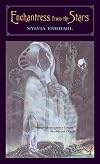
Enchantress to the Stars first appeared in 1970, won a Newbury Honor in 1971, and is today still considered to be a shining jewel in the crown of juvenile science fiction--so it's odd that I'd never heard of this book until just last year. Me, a child of the late-seventies/early-eighties who devoured any book in our public library with a blue spaceship sticker on the spine. Me, an author in the field of speculative fiction for children, who continues to read as many genre books as time will show more allow. Me, who apparently still has a whole lot of classic literature left to discover.
Arthur C. Clarke famously observed that any sufficiently developed technology is indistinguishable from magic. EftS is a graphic example of this principle in action. To the medieval natives on Planet Andrecia, spacesuited scouts from the expanding interstellar Empire are demons and their groundmoving equipment is a dragon to be slain. But to the science-minded Imperials, the New Age psychic abilities of the Federationites (Federationalists? Federationians?) are equally beyond their understanding. In fact, the mere disclosure of the Federation's existence would permanently impair the development of the entire Empire, which means that the benevolent and highly ethical Federation agents are obliged to die rather than divulge their secrets.
This makes their society the ultimate high-tech conspiracy theory!
Engdahl uses three points of view to present the intersection of three planetary cultures--a clever device marred slightly by the framing explanation that one character, Elana of the Federation, is enhancing her own narrative with imagined accounts of the events from two other points of view in a book-length missive to a younger relative. As a reader I constantly found myself jarred out of the story with questions like: How does she know that? Why would she think that? And is this something she'd really be telling to someone other than the judges at her upcoming mission inquest?
But if the frame is ignored--perhaps with the use of "Start reading here" and "Stop reading here" tape flags--the three intertwining story strands represent the best traditions of epic fantasy, space cowboy heroics, and sentimental coming-of-age romance. Okay, so maybe I'm not the world's biggest fan of coming-of-age romance, but even I can appreciate a well-done interplanetary love triangle gone wrong. In this case, it goes something like this…
INTERIOR - STONE HUT FURNISHED IN SPARSE MEDIEVAL STYLE
Elana and Georyn stand gazing deeply into each other's eyes.
ELANA: Oh, Georyn!
GEORYN: Oh, Lady of the Enchanted Realms, I have placed you upon such a pedestal in my mind that no mere mortal of flesh and bone, such as myself, could ever dare to deem himself worthy of your notice, let alone your interest, and each word you speak thrills me with a million unspoken desires, such that I can hardly maintain any semblance of control--however I know that I must because it would be improper to even think such thoughts in your pristine presence and if you were to but suspect me of such blasphemy there would surely be no reason for you to continue the charade of pretending to care for me at all.
ELANA (giggles): Oh, Georyn!
EVREK (peering in through a window): How strange that Elana seems to enjoy spending so much time with that Youngling. I might be jealous if not for the security of being Elana's fiancee and having a psychic bond that allows us to share our deepest thoughts and emotions on a level that immature cultures could never imagine.
ELANA (with a deep sigh): Oh, Georyn!
review theater>
EftS was first published soon after the original "Star Trek" series went off the air, at the height of the Space Race, just as mankind was still putting its first bootprints on the Moon. The book reflects the optimism and sense of wonder of its time, when it seemed inevitable that humans would march forward across the Solar System and out into the Galaxy. In the fashion of 50's and 60's sci-fi, the universe of EftS is crammed with inhabitable worlds with each planet inexplicably featuring Earthlike plants, Earthlike animals, and people who look and act just like us but maybe a tiny bit different. It made me wonder if, perhaps, some hidden force even above the Federation were seeding the planets with humanoid life, which of course there was and it's called an author.
Otherwise, the story has stood the test of time and continues to provide ethical thought-food on the natural course of societal development, the power of belief, and the value of allowing aboriginal cultures to find their own paths. It's also notable that the most intelligent and intuitive character in the story by far is a member of the least developed society, and that the Andrecians and Imperials are both on their way to someday becoming the equals of the Federation, whose only advantage over the others is that "they got there first."
Bottom line: Readers 9 and up will appreciate the blending of familiar fantasy and science fiction tropes, and might widen their own worlds in the process. Older readers who have somehow missed this book should make an effort to go back and look for it. show less
Arthur C. Clarke famously observed that any sufficiently developed technology is indistinguishable from magic. EftS is a graphic example of this principle in action. To the medieval natives on Planet Andrecia, spacesuited scouts from the expanding interstellar Empire are demons and their groundmoving equipment is a dragon to be slain. But to the science-minded Imperials, the New Age psychic abilities of the Federationites (Federationalists? Federationians?) are equally beyond their understanding. In fact, the mere disclosure of the Federation's existence would permanently impair the development of the entire Empire, which means that the benevolent and highly ethical Federation agents are obliged to die rather than divulge their secrets.
This makes their society the ultimate high-tech conspiracy theory!
Engdahl uses three points of view to present the intersection of three planetary cultures--a clever device marred slightly by the framing explanation that one character, Elana of the Federation, is enhancing her own narrative with imagined accounts of the events from two other points of view in a book-length missive to a younger relative. As a reader I constantly found myself jarred out of the story with questions like: How does she know that? Why would she think that? And is this something she'd really be telling to someone other than the judges at her upcoming mission inquest?
But if the frame is ignored--perhaps with the use of "Start reading here" and "Stop reading here" tape flags--the three intertwining story strands represent the best traditions of epic fantasy, space cowboy heroics, and sentimental coming-of-age romance. Okay, so maybe I'm not the world's biggest fan of coming-of-age romance, but even I can appreciate a well-done interplanetary love triangle gone wrong. In this case, it goes something like this…
INTERIOR - STONE HUT FURNISHED IN SPARSE MEDIEVAL STYLE
Elana and Georyn stand gazing deeply into each other's eyes.
ELANA: Oh, Georyn!
GEORYN: Oh, Lady of the Enchanted Realms, I have placed you upon such a pedestal in my mind that no mere mortal of flesh and bone, such as myself, could ever dare to deem himself worthy of your notice, let alone your interest, and each word you speak thrills me with a million unspoken desires, such that I can hardly maintain any semblance of control--however I know that I must because it would be improper to even think such thoughts in your pristine presence and if you were to but suspect me of such blasphemy there would surely be no reason for you to continue the charade of pretending to care for me at all.
ELANA (giggles): Oh, Georyn!
EVREK (peering in through a window): How strange that Elana seems to enjoy spending so much time with that Youngling. I might be jealous if not for the security of being Elana's fiancee and having a psychic bond that allows us to share our deepest thoughts and emotions on a level that immature cultures could never imagine.
ELANA (with a deep sigh): Oh, Georyn!
review theater>
EftS was first published soon after the original "Star Trek" series went off the air, at the height of the Space Race, just as mankind was still putting its first bootprints on the Moon. The book reflects the optimism and sense of wonder of its time, when it seemed inevitable that humans would march forward across the Solar System and out into the Galaxy. In the fashion of 50's and 60's sci-fi, the universe of EftS is crammed with inhabitable worlds with each planet inexplicably featuring Earthlike plants, Earthlike animals, and people who look and act just like us but maybe a tiny bit different. It made me wonder if, perhaps, some hidden force even above the Federation were seeding the planets with humanoid life, which of course there was and it's called an author.
Otherwise, the story has stood the test of time and continues to provide ethical thought-food on the natural course of societal development, the power of belief, and the value of allowing aboriginal cultures to find their own paths. It's also notable that the most intelligent and intuitive character in the story by far is a member of the least developed society, and that the Andrecians and Imperials are both on their way to someday becoming the equals of the Federation, whose only advantage over the others is that "they got there first."
Bottom line: Readers 9 and up will appreciate the blending of familiar fantasy and science fiction tropes, and might widen their own worlds in the process. Older readers who have somehow missed this book should make an effort to go back and look for it. show less
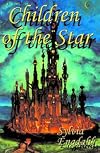
I picked up this book months ago at a free library. I didn't think much of it at first, it seemed kind of predictable.
However as I read more I was interested to know what was going to happen and how the characters would develop.
It became less predictable, too, as the story progressed. And interesting look into religion and it's uses alongside science.
However as I read more I was interested to know what was going to happen and how the characters would develop.
It became less predictable, too, as the story progressed. And interesting look into religion and it's uses alongside science.
Lists
Sonlight Books (1)
Newbery Adjacent (1)
Awards


You May Also Like


Associated Authors
Statistics
- Works
- 85
- Members
- 2,781
- Popularity
- #9,235
- Rating
- 4.0
- Reviews
- 56
- ISBNs
- 182
- Languages
- 3
- Favorited
- 10

