
Maarten H. Rijkens
Author of I always get my sin
About the Author
Series
Works by Maarten H. Rijkens
Tagged
Common Knowledge
- Canonical name
- Rijkens, Maarten H.
- Birthdate
- 1946
- Gender
- male
- Nationality
- Netherlands
- Birthplace
- Amsterdam, Netherlands
- Map Location
- Netherlands
Members
Reviews

In 2005, retired Heineken executive Maarten Rijkens had a Dutch bestseller with I always get my sin, a collection of more and less funny examples of the strange things that can happen when prominent Dutch politicians and business leaders think they are speaking good English. The Dutch are very competent linguists, on the whole, and they put most other nations to shame, but there are always booby-traps waiting for the unwary when you are speaking a second language. This was especially show more hazardous for the pre-internet generations, who might well reach a prominent position in society without ever spending much time practicing English with actual native speakers. Nowadays there is so much more exposure to spoken and written English that that sort of thing never (hardly ever…) happens any more.
This little book is a follow-up, in which Rijkens collaborates with a couple of professional linguists to compile advice to Dutch business people for avoiding the kind of linguistic accidents he chronicled in the first book. There is a list of ‘false friends’ — the words in English that look and/or sound very like familiar Dutch words but mean something quite different. An important resource for the apocryphal stud-farm proprietor who is said to have told Princess Margaret “I fok horses” when he meant “breed”. Also important is a long list of Dutch idiomatic expressions that don’t translate one-to-one into English — “there comes the monkey out of the sleeve,” “he’s a strange duck in the bite,” and so on. Even when there is a direct correspondence, it pays to be careful — a Dutch commissioner in the EU once famously warned against “throwing the baby out with the bad-water.”
To conclude, there’s a section of rather patronising advice on dealing with foreigners from places like East Asia and England where they are notoriously polite and the Dutch habit of straight talking and taking everything literally can lead to misunderstandings. “That’s an interesting idea” doesn’t necessarily mean that your subtle foreign counterpart is intrigued by it, any more than “we must have lunch” is going to result in a concrete invitation. I find it hard to imagine that any Dutch business person would need to be told that kind of thing.
Fun, and maybe a useful reference for some, but probably the sort of book you spend half an hour flicking through and never pick up again. show less
This little book is a follow-up, in which Rijkens collaborates with a couple of professional linguists to compile advice to Dutch business people for avoiding the kind of linguistic accidents he chronicled in the first book. There is a list of ‘false friends’ — the words in English that look and/or sound very like familiar Dutch words but mean something quite different. An important resource for the apocryphal stud-farm proprietor who is said to have told Princess Margaret “I fok horses” when he meant “breed”. Also important is a long list of Dutch idiomatic expressions that don’t translate one-to-one into English — “there comes the monkey out of the sleeve,” “he’s a strange duck in the bite,” and so on. Even when there is a direct correspondence, it pays to be careful — a Dutch commissioner in the EU once famously warned against “throwing the baby out with the bad-water.”
To conclude, there’s a section of rather patronising advice on dealing with foreigners from places like East Asia and England where they are notoriously polite and the Dutch habit of straight talking and taking everything literally can lead to misunderstandings. “That’s an interesting idea” doesn’t necessarily mean that your subtle foreign counterpart is intrigued by it, any more than “we must have lunch” is going to result in a concrete invitation. I find it hard to imagine that any Dutch business person would need to be told that kind of thing.
Fun, and maybe a useful reference for some, but probably the sort of book you spend half an hour flicking through and never pick up again. show less
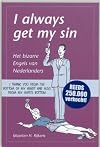
It is a small book filled with sentences people (may) have said. And it is true that Dutch people often believe they use proper English, while it's actually just painful to listen to; even though I realize my own English is far from perfect.
I did find it a bit disappointing that some seemed quite unrealistic, would somebody really use that word? And a lot is about work related talk. I probably shouldn't, but I read this all the way in about a quarter of an hour. I think it has more charm if show more you only read a few lines at a time.
And sometimes a hint on how to really say things would be very useful.
I almost forgot to tell I liked the poem that is included best about the book. It sometimes really is confusing how to pronounce a word correctly! show less
I did find it a bit disappointing that some seemed quite unrealistic, would somebody really use that word? And a lot is about work related talk. I probably shouldn't, but I read this all the way in about a quarter of an hour. I think it has more charm if show more you only read a few lines at a time.
And sometimes a hint on how to really say things would be very useful.
I almost forgot to tell I liked the poem that is included best about the book. It sometimes really is confusing how to pronounce a word correctly! show less
Met I always got my sin had ik iets meer affiniteit. Mijn kennis van het Engels is goed genoeg om de grap overal te snappen. Hier een voorbeeld waar ik erg om moest lachen:
I DON’T WANT TO SHOOT MY HERBS (Ik wil m’n kruid niet verschieten).
Andere zinnen vielen meer in de categorie zinnen die ik zou kunnen zeggen bij wijze van grap:
THIS IS WET FINGER WORK (Dit is nattevingerwerk).
Het gedicht achterin over uitspraak vond ik erg leuk (en moeilijk, bij rijmde het niet automatisch). Ook is de show more opsomming achterin over misverstanden leuk (en waarschijnlijk ook nuttig). show less
I DON’T WANT TO SHOOT MY HERBS (Ik wil m’n kruid niet verschieten).
Andere zinnen vielen meer in de categorie zinnen die ik zou kunnen zeggen bij wijze van grap:
THIS IS WET FINGER WORK (Dit is nattevingerwerk).
Het gedicht achterin over uitspraak vond ik erg leuk (en moeilijk, bij rijmde het niet automatisch). Ook is de show more opsomming achterin over misverstanden leuk (en waarschijnlijk ook nuttig). show less

Het vervolg op het vermakelijke boekje I always get my sin met bizar Engels, blunders en missers die alleen Nederlanders maken bij het proberen een woordje Engels mee te spreken biedt naast leedvermaak ook tips om beter voor de dag te komen. Rijkens heeft hoofdstukken besteed aan valse vrienden: woorden die hetzelfde klinken, maar iets anders betekenen, letterlijk vertaald figuurlijk Nederlands en Nederlandse zinnen van Engelse woorden. Verder Engelse fantasiewoorden, bijna goed, maar toch show more goed fout vertaald Nederlands en tenslotte culturele misverstanden tussen Nederlanders en met name Aziatische wereldburgers. Daarmee zit de auteur een eind in de richting van Native English for Nederlanders en Speaking of India . De moeite die ik met de talloze voorbeelden heb, is dat ze zich niet makkelijk lenen als naslag. De grootste les is dan: pak veiligheidshalve eerst een woordenboek of fris je grammatica op, voordat je je bezondigt aan Denglish of Dunglish. show less
You May Also Like


Statistics
- Works
- 2
- Members
- 256
- Popularity
- #89,546
- Rating
- 3.3
- Reviews
- 8
- ISBNs
- 6