
Sara Mesa
Author of Un amor
About the Author
Works by Sara Mesa
The Family 2 copies
Associated Works
Tagged
Common Knowledge
- Birthdate
- 1976
- Gender
- female
- Nationality
- Spain
- Birthplace
- Madrid, Spain
- Associated Place (for map)
- Madrid, Spain
Members
Reviews
Real Rating: 4.25* of five
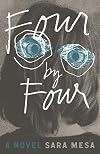
The Publisher Says: Set entirely at Wybrany College—a school where the wealthy keep their kids safe from the chaos erupting in the cities—Four by Four is a novel of insinuation and gossip, in which the truth about Wybrany’s “program” is always palpable, but never explicit. The mysteries populating the novel open with the disappearance of one of the “special,” scholarship students. As the first part unfolds, it becomes clear that all is not well in show more Wybrany, and that something more sordid lurks beneath the surface.
In the second part—a self-indulgent, wry diary written by an impostor who has infiltrated the school as a substitute teacher—the eerie sense of what’s happening in this space removed from society, becomes more acute and potentially sinister.
An exploration of the relationship between the powerful and powerless—and the repetition of these patterns—Mesa’s "sophisticated nightmare" calls to mind great works of gothic literature (think Shirley Jackson) and social thrillers to create a unique, unsettling view of freedom and how a fear of the outside world can create monsters.
I RECEIVED A DRC FROM THE PUBLISHER VIA EDELWEISS+. THANK YOU.
My Review: There's enough animal cruelty in here for me to warn the sensitive to cross the story off their radar for good. It was a very close-run thing for me to finish the book, in fact.
What moved me forward was the nature of the story. It's a closed society, a hierarchy run on the tacit rules of conduct that never get enumerated and therefore are that much harder to fight against, to resist inside and out. The "colich" (as everyone refers to it) was established to keep the children within safe from...honestly, at this point, I can't help myself: from what, given that what happens in the "colich" is so utterly unspeakably awful...the Outside, the terrors of the unknown-but-known. (Like all "security states" the unknown being protected from must be known to someone or else how would one know it was worse than the security state?) Sexual assaults, class enmities, all the sins of the world are routine within the "colich" and the outside world's worse? Hm.
Anyway, Mesa's tight and tiny little microcosm of all authoritarian states is limned in hot acid on living flesh, her story unfolds as a fever dream had by a starving political prisoner might with all its abuses and horrors. Her singular talent for controlling the reader's attention...leaving the basic reality of the world outside the "colich" unexplored, undescribed, but making the contrast to the well-fed and privileged comforts of staff and students plain...creates the slightly seasick sense of knowing someone is being abused, but not quite knowing how. Still less realizing that it is also happening to you. Author Mesa's narrative, then, is finely balanced between the states of revulsion and empathy, between understanding and comprehending viscerally, always shifting the reader's attention away when clarity threatens to lift that so-necessary fog.
A lot like life in the current world, then.
What makes this a four-star read, not a five-star one, is the nature of the animal cruelty (it's the reason not solely the fact that's so upsetting to me) and the strange, third-act summing-up bit written by a teacher who's no longer at the "colich" but which was presumably written while there and is now, suddenly, here in our face. The framing device wasn't as effective as it seemed to want to be in this case, and rather fractured the eerie, claustrophobic darkness that's prevailed in the novel until now.
As a reading experience, it's definitely one I can recommend to you. As an extended metaphor for the nature of wealth-measured success in Society, I can even urge it on you. As Spanish Gothic, it excels. As a gestalt, it falls only slightly—but perceptibly—short. show less
The Publisher Says: Set entirely at Wybrany College—a school where the wealthy keep their kids safe from the chaos erupting in the cities—Four by Four is a novel of insinuation and gossip, in which the truth about Wybrany’s “program” is always palpable, but never explicit. The mysteries populating the novel open with the disappearance of one of the “special,” scholarship students. As the first part unfolds, it becomes clear that all is not well in show more Wybrany, and that something more sordid lurks beneath the surface.
In the second part—a self-indulgent, wry diary written by an impostor who has infiltrated the school as a substitute teacher—the eerie sense of what’s happening in this space removed from society, becomes more acute and potentially sinister.
An exploration of the relationship between the powerful and powerless—and the repetition of these patterns—Mesa’s "sophisticated nightmare" calls to mind great works of gothic literature (think Shirley Jackson) and social thrillers to create a unique, unsettling view of freedom and how a fear of the outside world can create monsters.
I RECEIVED A DRC FROM THE PUBLISHER VIA EDELWEISS+. THANK YOU.
My Review: There's enough animal cruelty in here for me to warn the sensitive to cross the story off their radar for good. It was a very close-run thing for me to finish the book, in fact.
What moved me forward was the nature of the story. It's a closed society, a hierarchy run on the tacit rules of conduct that never get enumerated and therefore are that much harder to fight against, to resist inside and out. The "colich" (as everyone refers to it) was established to keep the children within safe from...honestly, at this point, I can't help myself: from what, given that what happens in the "colich" is so utterly unspeakably awful...the Outside, the terrors of the unknown-but-known. (Like all "security states" the unknown being protected from must be known to someone or else how would one know it was worse than the security state?) Sexual assaults, class enmities, all the sins of the world are routine within the "colich" and the outside world's worse? Hm.
Anyway, Mesa's tight and tiny little microcosm of all authoritarian states is limned in hot acid on living flesh, her story unfolds as a fever dream had by a starving political prisoner might with all its abuses and horrors. Her singular talent for controlling the reader's attention...leaving the basic reality of the world outside the "colich" unexplored, undescribed, but making the contrast to the well-fed and privileged comforts of staff and students plain...creates the slightly seasick sense of knowing someone is being abused, but not quite knowing how. Still less realizing that it is also happening to you. Author Mesa's narrative, then, is finely balanced between the states of revulsion and empathy, between understanding and comprehending viscerally, always shifting the reader's attention away when clarity threatens to lift that so-necessary fog.
A lot like life in the current world, then.
What makes this a four-star read, not a five-star one, is the nature of the animal cruelty (it's the reason not solely the fact that's so upsetting to me) and the strange, third-act summing-up bit written by a teacher who's no longer at the "colich" but which was presumably written while there and is now, suddenly, here in our face. The framing device wasn't as effective as it seemed to want to be in this case, and rather fractured the eerie, claustrophobic darkness that's prevailed in the novel until now.
As a reading experience, it's definitely one I can recommend to you. As an extended metaphor for the nature of wealth-measured success in Society, I can even urge it on you. As Spanish Gothic, it excels. As a gestalt, it falls only slightly—but perceptibly—short. show less
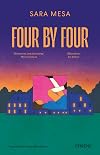
Engrossing but confusing. Wybrany College is, as others have said, set up as an oasis of sanctuary away from the perils of the world. What those perils are, we are never explicitely told, but the implication is that civil society is breaking down, and that everyone in the "colich" is lucky to be there. Or are they? There are two groups of students - the children of the rich and powerful and the "specials", usually the children of the non-teaching staff of the college. In first part of the show more novel, the focus is on two students; Celia, a "special" but one who noone seems to know how arrived at the school and Ignacio, bullied, gay and hindered by a limp. Celia attempts to "escape" but is thwarted and "captured" and gradually led into a world of unspecificed sexual abuse, by unspecified people, but led by the Advisor. Eventually, she disappears.
Ignacio is befriended, protected and sexually exploited by Hector, a boy who has arrived at the school in unusual circumstances. He is also befriended by The Headmaster, who enjoys having Ignacio read to him.... and perhaps other things
In the second part of the book, a failed writer, masquerading as Isidro Bedragare, a substitute teacher, arrives at the school. Confusingly, key staff members have changed but we don't know how or why. Isidro (as we will call him, because we never learn his real name), is replacing Garcia Medrano, allegedly taken ill, but as he soon realises, actually deceased. An atmosphere of barely suppressed violence hangs over the school, and if once there was a focus on pedagogy, that seems to have slipped. Isidro is a terrible teacher, an obvious fraud; no one seems to care. Marieta, the Councillor, clearly knows the meaning of none of the educational jargon she spouts. None of the teachers actually seems to teach anything, the "Colich" is now little more than a haven from the collapsing outside world. But that haven is imploding, under the weight of its own corruption, as violence, to animals and people, becomes more overt, and the exploitation of at least some "specials" becomes more obvious
And in the 3rd part, we read documents written by the dead Garcia Medrano. Do these represent the truth? A version of the truth? Fevered hallucinations driven by guilt? Its not clear
This is an engrossing and engaging book, but don't expect clear answers to the many questions it poses. show less
Ignacio is befriended, protected and sexually exploited by Hector, a boy who has arrived at the school in unusual circumstances. He is also befriended by The Headmaster, who enjoys having Ignacio read to him.... and perhaps other things
In the second part of the book, a failed writer, masquerading as Isidro Bedragare, a substitute teacher, arrives at the school. Confusingly, key staff members have changed but we don't know how or why. Isidro (as we will call him, because we never learn his real name), is replacing Garcia Medrano, allegedly taken ill, but as he soon realises, actually deceased. An atmosphere of barely suppressed violence hangs over the school, and if once there was a focus on pedagogy, that seems to have slipped. Isidro is a terrible teacher, an obvious fraud; no one seems to care. Marieta, the Councillor, clearly knows the meaning of none of the educational jargon she spouts. None of the teachers actually seems to teach anything, the "Colich" is now little more than a haven from the collapsing outside world. But that haven is imploding, under the weight of its own corruption, as violence, to animals and people, becomes more overt, and the exploitation of at least some "specials" becomes more obvious
And in the 3rd part, we read documents written by the dead Garcia Medrano. Do these represent the truth? A version of the truth? Fevered hallucinations driven by guilt? Its not clear
This is an engrossing and engaging book, but don't expect clear answers to the many questions it poses. show less
Rating: 4.5* of five
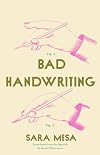
The Publisher Says: From the author of the highly acclaimed Four by Four and Among the Hedges comes a collection of unsettling, captivating stories.
The eleven stories in this collection approach themes of childhood and adolescence, guilt and redemption, power and freedom. There are children who resist authority and experience the process of growing up with shock, and loneliness; alienated young girls whose rebellion lies under the surface—subterranean, furious and show more impotent; people who are tormented—or not—by regret and doubt, addicted to feelings of culpability; men who take advantage of women and adults who exercise power over children with a disturbing degree of control; kids abandoned by their parents; the suicide of the elderly and the young; lives that hide crimes—both real and imagined. Eschewing cosmopolitanism in favor of the micro-world of her characters, Mesa depicts a reality that is messy and disturbing, on even the smallest scale of an individual life, a single family.
I RECEIVED A DRC FROM THE PUBLISHER VIA EDELWEISS+. THANK YOU.
My Review: Sara Mesa's collection does something exciting to me: It presents a woman's unexpurgated thoughts on her role, her world's extent, and why it is (not could or should be) that way. The women in question aren't always adults, or the PoV characters. They are always, though, the heart of the tale told.
Where men should know to go, they are clueless, or narcissistic, enough not to. All the stories together make a dark and compelling vision of our cruel world. Little hope is offered here that there is light at the end of the tunnel, even that of an oncoming freight train's headlight.
In accordance with the Prophecy, the use of the Bryce Method hereinafter applies.
The Screech Owl might refer to the bird, or the unkind and minatory older woman in charge of this forest picnic:
Nothing good comes of wondering and wandering when your real purpose is escape. From so very much, it turns out; the screech owl least of all. Darkly suggestive of bitter secrets and unspoken unhappiness, redolent of the matriarchal control by guilt and shame, a very, very sad and betrayed start to the collection. 4*
Mármol finds us in the memories of a writer whose class is jolted by the suicide of the freckle-faced titular character at the sad age of fourteen. She recalls for us the way she felt before the event, the childish concerns and hatreds that consume all schoolkids in that passage of life; her older sister bonding with her over a particularly weird and awful teacher; the way she held her pencil, apparently so odd and unpleasant to others that they recall it decades later. Nothing much about the boy himself, unsurprisingly, since this isn't his story only one of the life that goes on after tragedy. The writer narrating the story is formed by the event and her observations set in stone because of it. Reads differently in the age of ever-increasing rate of youth suicide than it would've when written. 3.5*
Just a Few Millimeters limns some uneasy cultural attitudes towards disability as a young teacher copes awkwardly with a severely disabled teenaged boy with all his thoughts and feelings but who is trapped in his head. She is in his room to administer a school exam, as he communicates (like Hawking) via tiny eye movements.
Told in a headlong rush of listening in on her private thoughts, the story hurts in its voyeuristic honesty of prejudice, of Othering, of silent but vocalized rejection. The cruelty we all possess, express inside our heads, and so reject community, communication, simple communing with The Other. Hard subject, but when did that stop Mesa from tackling it? 4.5*
"Creamy Milk and Crunchy Chocolate" explores the shadow side of accepting responsibility for one's actions: Guilt. Not "I did this thing that hurt you, I'm sorry" guilt; the kind that, in its intensity, recenters the causer of harm, focuses all the attention on the committer of the harm thus re-robbing the harmed of centrality in their life. In other words, toxic narcissism wrapped in saintly clothes.
A man and woman come together in a guilt-issues therapy group. Their self-centeredness keeps on reinforcing their narcissism. They continue to cope, not by reaching for healing, rather with extravagant sex accompanied by religiosity and toxic outward focus to avoid the learning guilt, remorse, and regret can offer.
Subtle language point: The title of the story is in English in the original Spanish text. It carries an extra weight that way, that the quotes around it in translation approximates. 5 stars, a story that lives with me
Stonewords takes place in the past of "The Screech Owl" above. The origin story, so to speak, of the unhappiness and bitter resentment in that tale of horrors committed with "Love" in the mouth of a woman for whom it is only a word, devoid of any interiority.
A childhood, then adolescence, lived with a harpy whose grudges and jealousy masquerade as concern for her reputation (though not her feelings), leaves the narrator used to insults, belittlement, cruelty she labels "stonewords." She describes them in the same terms one would rain: as sliding down her arms, her legs, unsurprising and ordinary. The day comes to her, as it does to all of us, that all the exciting fumbling around has an end, a purpose, that does not follow rules.
Accidentally matured, she explains to her aunt the sight that brought this loss of innocence to her. The line she (which she?) never understood is finally crossed, and...offscreen, as it were...the full weight of all the stonewords lands on her (which her?). 4.25*
Nothing New foretells the death of the old, useless, addicted men who supported a system now in its rigor mortis and wrapping tightly around the few remaining pleasures of life: hatred, booze, and pointless cruelty, all horribly addictive.
The grandson recounting, sort of, the story of the old man's last hours on Earth, wasn't there wasn't even interested in it except as a story told to an anonymous audience. A bleak picture of an end that will come to so many. I hope it comes exactly this way to the old bastards in charge in 2025. 4*
White People portrays the unconsidered use of power associated with gender, as well as skin color. A young woman turns down an invitation to see her parents at Christmas so she can visit her sister, While she is there, her sister decides not to have an abortion or put her unborn baby up for adoption in spite of the pressure to do so after she is sent to prison for murder. Unmemorable, if nicely written. 3.5*
Papa is Made of Rubber tells us of three young brothers, one an infant, struggling to survive in an apartment that their parents have, for unknown reasons, abandoned. Mesa has writes about children in crisis, or simply in hard-to-fathom difficulty, and it is a strength of hers. It is a moving, unnerving piece of storytelling, but there's a missing heart of meaning. 4*
What is Going On with Us is the ugly aftermath of rape. It's told in Sara Mesa's most usual stream-of-consciousness prose.
Nothing graphic happens. I wish it had. I'd feel less...dirty...compromised...maybe revulsion for the act is cathartic. I've been this woman, and this is exactly what it felt like, still feels like, and can never be expunged from any part of you. 5*
Cattle Tyrants Short and sharp. Vivid vignette of being assaulted, being brutalized, just because They can. It's in the aftermath the tragedy unfolds. A bit like "The Screech Owl," it's more about what They will think than about what happened to you. 4*
Mustelids...those weird little critters that combine mammalian fur, reptilian sinuosity, and add a hefty dash of playful destructiveness...are her favorite animals. He's left trying to put that into the puzzle he has some pieces to, though not the ones he supposes he does. The corner piece is her published collection of violent, dark stories; then his picture's blown into new configurations as she explains how otters and incest coexist in her head, before "falling asleep" on his shoulder as they go back to their home city.
He will never know if she listened to any of the interesting facts he shared. He waits for her while she creates all kinds of embarrassing fuss and ruction looking for her left-behind otter plushie.
Clueless to the end. 4* show less
The Publisher Says: From the author of the highly acclaimed Four by Four and Among the Hedges comes a collection of unsettling, captivating stories.
The eleven stories in this collection approach themes of childhood and adolescence, guilt and redemption, power and freedom. There are children who resist authority and experience the process of growing up with shock, and loneliness; alienated young girls whose rebellion lies under the surface—subterranean, furious and show more impotent; people who are tormented—or not—by regret and doubt, addicted to feelings of culpability; men who take advantage of women and adults who exercise power over children with a disturbing degree of control; kids abandoned by their parents; the suicide of the elderly and the young; lives that hide crimes—both real and imagined. Eschewing cosmopolitanism in favor of the micro-world of her characters, Mesa depicts a reality that is messy and disturbing, on even the smallest scale of an individual life, a single family.
I RECEIVED A DRC FROM THE PUBLISHER VIA EDELWEISS+. THANK YOU.
My Review: Sara Mesa's collection does something exciting to me: It presents a woman's unexpurgated thoughts on her role, her world's extent, and why it is (not could or should be) that way. The women in question aren't always adults, or the PoV characters. They are always, though, the heart of the tale told.
Where men should know to go, they are clueless, or narcissistic, enough not to. All the stories together make a dark and compelling vision of our cruel world. Little hope is offered here that there is light at the end of the tunnel, even that of an oncoming freight train's headlight.
In accordance with the Prophecy, the use of the Bryce Method hereinafter applies.
The Screech Owl might refer to the bird, or the unkind and minatory older woman in charge of this forest picnic:
The snap of the pine needles breaking beneath her feet grew quieter as she drew near, strangled by the voice of the aunt, a voice from the depths of an earthen jar, deep, strong, stony. ... The aunt always knew exactly what had to be done and the proper steps to do it. ...allowing no one to disturb her ritual. She performed it deliberately, unhurried, as if time itself was obliged to mold to her pace.
Nothing good comes of wondering and wandering when your real purpose is escape. From so very much, it turns out; the screech owl least of all. Darkly suggestive of bitter secrets and unspoken unhappiness, redolent of the matriarchal control by guilt and shame, a very, very sad and betrayed start to the collection. 4*
Mármol finds us in the memories of a writer whose class is jolted by the suicide of the freckle-faced titular character at the sad age of fourteen. She recalls for us the way she felt before the event, the childish concerns and hatreds that consume all schoolkids in that passage of life; her older sister bonding with her over a particularly weird and awful teacher; the way she held her pencil, apparently so odd and unpleasant to others that they recall it decades later. Nothing much about the boy himself, unsurprisingly, since this isn't his story only one of the life that goes on after tragedy. The writer narrating the story is formed by the event and her observations set in stone because of it. Reads differently in the age of ever-increasing rate of youth suicide than it would've when written. 3.5*
Just a Few Millimeters limns some uneasy cultural attitudes towards disability as a young teacher copes awkwardly with a severely disabled teenaged boy with all his thoughts and feelings but who is trapped in his head. She is in his room to administer a school exam, as he communicates (like Hawking) via tiny eye movements.
Told in a headlong rush of listening in on her private thoughts, the story hurts in its voyeuristic honesty of prejudice, of Othering, of silent but vocalized rejection. The cruelty we all possess, express inside our heads, and so reject community, communication, simple communing with The Other. Hard subject, but when did that stop Mesa from tackling it? 4.5*
"Creamy Milk and Crunchy Chocolate" explores the shadow side of accepting responsibility for one's actions: Guilt. Not "I did this thing that hurt you, I'm sorry" guilt; the kind that, in its intensity, recenters the causer of harm, focuses all the attention on the committer of the harm thus re-robbing the harmed of centrality in their life. In other words, toxic narcissism wrapped in saintly clothes.
A man and woman come together in a guilt-issues therapy group. Their self-centeredness keeps on reinforcing their narcissism. They continue to cope, not by reaching for healing, rather with extravagant sex accompanied by religiosity and toxic outward focus to avoid the learning guilt, remorse, and regret can offer.
Subtle language point: The title of the story is in English in the original Spanish text. It carries an extra weight that way, that the quotes around it in translation approximates. 5 stars, a story that lives with me
Stonewords takes place in the past of "The Screech Owl" above. The origin story, so to speak, of the unhappiness and bitter resentment in that tale of horrors committed with "Love" in the mouth of a woman for whom it is only a word, devoid of any interiority.
A childhood, then adolescence, lived with a harpy whose grudges and jealousy masquerade as concern for her reputation (though not her feelings), leaves the narrator used to insults, belittlement, cruelty she labels "stonewords." She describes them in the same terms one would rain: as sliding down her arms, her legs, unsurprising and ordinary. The day comes to her, as it does to all of us, that all the exciting fumbling around has an end, a purpose, that does not follow rules.
Accidentally matured, she explains to her aunt the sight that brought this loss of innocence to her. The line she (which she?) never understood is finally crossed, and...offscreen, as it were...the full weight of all the stonewords lands on her (which her?). 4.25*
Nothing New foretells the death of the old, useless, addicted men who supported a system now in its rigor mortis and wrapping tightly around the few remaining pleasures of life: hatred, booze, and pointless cruelty, all horribly addictive.
The grandson recounting, sort of, the story of the old man's last hours on Earth, wasn't there wasn't even interested in it except as a story told to an anonymous audience. A bleak picture of an end that will come to so many. I hope it comes exactly this way to the old bastards in charge in 2025. 4*
White People portrays the unconsidered use of power associated with gender, as well as skin color. A young woman turns down an invitation to see her parents at Christmas so she can visit her sister, While she is there, her sister decides not to have an abortion or put her unborn baby up for adoption in spite of the pressure to do so after she is sent to prison for murder. Unmemorable, if nicely written. 3.5*
Papa is Made of Rubber tells us of three young brothers, one an infant, struggling to survive in an apartment that their parents have, for unknown reasons, abandoned. Mesa has writes about children in crisis, or simply in hard-to-fathom difficulty, and it is a strength of hers. It is a moving, unnerving piece of storytelling, but there's a missing heart of meaning. 4*
What is Going On with Us is the ugly aftermath of rape. It's told in Sara Mesa's most usual stream-of-consciousness prose.
Nothing graphic happens. I wish it had. I'd feel less...dirty...compromised...maybe revulsion for the act is cathartic. I've been this woman, and this is exactly what it felt like, still feels like, and can never be expunged from any part of you. 5*
Cattle Tyrants Short and sharp. Vivid vignette of being assaulted, being brutalized, just because They can. It's in the aftermath the tragedy unfolds. A bit like "The Screech Owl," it's more about what They will think than about what happened to you. 4*
Mustelids...those weird little critters that combine mammalian fur, reptilian sinuosity, and add a hefty dash of playful destructiveness...are her favorite animals. He's left trying to put that into the puzzle he has some pieces to, though not the ones he supposes he does. The corner piece is her published collection of violent, dark stories; then his picture's blown into new configurations as she explains how otters and incest coexist in her head, before "falling asleep" on his shoulder as they go back to their home city.
He will never know if she listened to any of the interesting facts he shared. He waits for her while she creates all kinds of embarrassing fuss and ruction looking for her left-behind otter plushie.
Clueless to the end. 4* show less
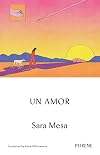
In Sara Mesa’s engrossing and deliciously enigmatic novel Un Amor, Nat has left her life in the city and rented a house in rural La Escapa. Here, in a tiny village many miles from the nearest large town, she embarks upon a translation project. But there are many things weighing on Nat’s mind. She left her previous job under a cloud and has not yet reached an understanding of how she could have allowed an episode of reckless poor judgment derail her life and career. Nat is unattached, a show more woman alone, and it’s not long before she begins to see that this circumstance adds another to the list of challenges she is facing. Soon after moving in, for companionship, she adopts a dog, which she names Sieso. Disappointingly, the animal is nervous, unpredictable and distant. But she decides to keep him, despite Sieso not being well suited for the purpose she’d intended. For Nat, life in La Escapa does not proceed smoothly. Her landlord, a creepy misogynist with an ax to grind, dismisses her complaints about the leaky roof and tells her she can fix the leaks herself or catch the drips in pots and pans. He doesn’t care. But the landlord’s negligence proves fateful. One of Nat’s neighbours, Andreas, a handyman of sorts, known locally as “The German,” sees what she’s putting up with and offers to fix the roof if Nat, in turn, provides a service for him. Mesa maintains heightened tension throughout the book, which is narrated in the third person from Nat’s guarded perspective. Her interactions with her neighbours are, without exception and for a variety of reasons, fraught, and the uncurrent of menace that pervades the story results from Nat’s sceptical nature, tragic lack of confidence, and tendency to question everyone’s motives, including her own. We spend the entirety of Un Amor observing La Escapa and its residents from Nat’s point of view, and it is not a happy place to be. Nat takes nothing at face value. Her mind is always dissecting, always seeking answers. She is painfully aware of her outsider status. It makes her uncomfortable, being on the outside looking in. And yet at virtually every turn her actions raise hackles and guarantee that she will never be accepted into the community. For a while the amor of the book’s title provides Nat with a refuge, a physical distraction away from her churning thoughts. But in the end, it turns corrosive and causes disappointment and heartache. The rural world that Mesa conjures is placid on the surface, but her masterstroke is gradually revealing it to be a mysterious and unwelcoming place seething with distrust, resentment and hostility. In Un Amor Sara Mesa fearlessly plumbs the depths of human passion and depravity. Disturbing and filled with contradiction, Un Amor is never an easy novel. But it is also never less than fascinating. show less
Lists
Awards


You May Also Like


Associated Authors
Statistics
- Works
- 25
- Also by
- 1
- Members
- 810
- Popularity
- #31,509
- Rating
- 3.6
- Reviews
- 42
- ISBNs
- 66
- Languages
- 7
