

Bob McLeod
Author of SuperHero ABC
About the Author
Image credit: McLoad at the 2012 New York Comic Con
Series
Works by Bob McLeod
Dracula 1979: Black Genesis 1 copy
SuperHero A B C 1 copy
Superman vol. 5 1 copy
Rough Stuff #11 — Editor — 1 copy
Rough Stuff #9 — Editor — 1 copy
Rough Stuff 10 — Editor — 1 copy
Rough Stuff 8 — Editor — 1 copy
Rough Stuff 7 — Editor — 1 copy
Rough Stuff 6 — Editor — 1 copy
Rough Stuff 5 — Editor — 1 copy
Rough Stuff 2 — Editor — 1 copy
Rough Stuff 1 — Editor — 1 copy
The Secret Society of Super Villains (1976-1978) #12 — Inker — 1 copy
Associated Works
Batman: A Death in the Family [with A Lonely Place of Dying] (2011) — Illustrator — 513 copies, 5 reviews
Wonder Woman by George Pérez Omnibus (2015) — Inker (20-22, Annual 1 "Into the World Go Forth") — 86 copies, 3 reviews
Marvel Treasury Edition #28, Featuring Superman and Spider-Man (1981) — Illustrator — 40 copies, 2 reviews
Marvel Masterworks, Volume 141: Black Panther Volume 1 [Jungle Action #6-24] (2010) — Illustrator — 32 copies, 2 reviews
Howard the Duck, Vol. 6 #1 — Cover artist, some editions — 2 copies
Crazy Magazine #83 — Illustrator — 1 copy
Tagged
Common Knowledge
- Canonical name
- McLeod, Bob
- Birthdate
- 1951-08-09
- Gender
- male
- Nationality
- USA
- Birthplace
- Tampa, Florida, USA
- Associated Place (for map)
- Florida, USA
Members
Reviews

Chris Claremont and Bob McLeod’s The New Mutants introduces five young mutants who are only just learning to use their powers. Professor Xavier, along with Moira MacTaggert, work to identify these children and offer them a place where they can learn to use their powers. Rahne Sinclair (later called “Wolfsbane”) find MacTaggert after fleeing persecution from Reverend Craig. Xi’an Coy (who will later go by “Karma”) already works to master her psychic power with Xavier. Marsh show more Roberto da Costa’s powers activate when a racist attacks him at a soccer game (he later goes by “Sunspot” in the ongoing series). Danielle Moonstar (later using the alias “Psyche” and then “Mirage”) swears revenge when the Hellfire Club kills her grandfather, Black Eagle. Samuel Guthrie (alias “Cannonball”) ends up working for the Hellfire Club in order to provide for his family after his father dies of black lung from working in the Kentucky coal mines. They must learn to work together to defend themselves against Donald Pierce, who seeks control of the Hellfire Club and to use the mutants as weapons or, if he cannot control them, to eliminate the threat they may pose.
The story picks up after the events of X-Men no. 161, in which the Brood kidnapped the X-Men, with Xavier reticent to take in new students and put more young mutants at risk for his dream of peaceful coexistence. After seeing the characters work together, he realizes that he must be willing to risk everything for their benefit and for the good they can do. When he makes his decision, McLeod depicts Xavier looking at photographs of the two previous X-Men teams – one with Angel, Iceman, Beast, Marvel Girl, and Cyclops; the other with Cyclops, Wolverine, Storm, Nightcrawler, Colossus, and Kitty Pryde – thereby setting this team up as the inheritor of the original X-Men mission prior to the more space operatic themes.
As the fourth Marvel Graphic Novel, this breaks with the preceding three – The Death of Captain Marvel was relatively self-contained; Elric: The Dreaming City adapted Michael Moorcock’s novella by the same name; and Jim Starlin’s Dreadstar launched a series that Marvel published under its Epic Comics imprint – by serving as a double-sized introduction to a long-running (over 100 issues) series with close connections to other Marvel books. While Claremont also wrote the next Marvel Graphic Novel, X-Men: God Loves, Man Kills, its canonical status was only decided in 2003. Fans of the New Mutants series will find the basic introductions here, though the Marvel Graphic Novel format means the story is relatively self-contained. show less
The story picks up after the events of X-Men no. 161, in which the Brood kidnapped the X-Men, with Xavier reticent to take in new students and put more young mutants at risk for his dream of peaceful coexistence. After seeing the characters work together, he realizes that he must be willing to risk everything for their benefit and for the good they can do. When he makes his decision, McLeod depicts Xavier looking at photographs of the two previous X-Men teams – one with Angel, Iceman, Beast, Marvel Girl, and Cyclops; the other with Cyclops, Wolverine, Storm, Nightcrawler, Colossus, and Kitty Pryde – thereby setting this team up as the inheritor of the original X-Men mission prior to the more space operatic themes.
As the fourth Marvel Graphic Novel, this breaks with the preceding three – The Death of Captain Marvel was relatively self-contained; Elric: The Dreaming City adapted Michael Moorcock’s novella by the same name; and Jim Starlin’s Dreadstar launched a series that Marvel published under its Epic Comics imprint – by serving as a double-sized introduction to a long-running (over 100 issues) series with close connections to other Marvel books. While Claremont also wrote the next Marvel Graphic Novel, X-Men: God Loves, Man Kills, its canonical status was only decided in 2003. Fans of the New Mutants series will find the basic introductions here, though the Marvel Graphic Novel format means the story is relatively self-contained. show less
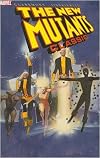
Ohhh, that Sienkiewicz art. I think he may be my all-time favourite comics artist.
Anyway, this is from Claremont's "pre-senile" period, where characters do compulsively repeat things like "Good thing ah'm invulnerable when ah'm blastin'" and "I am Cheyenne!" on every page, but it hasn't yet metastasized to the point of pushing out plot and characterization and all the stuff that made us love Sam and Dani and crew (compare to, say, the "X-Treme X-Men" era). The New Mutants, with possibly some show more help from the New Warriors, taught me about being a teenager, and thus have played a role in my life similar to Archie comics in Heidi's. I'm glad these comics were part of that process: they're beautiful and imaginative and surprising and surprisingly adult, in the best way. There's a force in them that's moral but never moralistic--Dani vs. the Demon Bear, Cloak and Dagger coming back to relieve 'Berto and Rahne of their curse, and just always being there for your friends, you know?
And then there's that incredible wonderworld conjured by the art. I hadn't seen all of these before, but the ones I had are still indelibly burned into my memory from 1989. show less
Anyway, this is from Claremont's "pre-senile" period, where characters do compulsively repeat things like "Good thing ah'm invulnerable when ah'm blastin'" and "I am Cheyenne!" on every page, but it hasn't yet metastasized to the point of pushing out plot and characterization and all the stuff that made us love Sam and Dani and crew (compare to, say, the "X-Treme X-Men" era). The New Mutants, with possibly some show more help from the New Warriors, taught me about being a teenager, and thus have played a role in my life similar to Archie comics in Heidi's. I'm glad these comics were part of that process: they're beautiful and imaginative and surprising and surprisingly adult, in the best way. There's a force in them that's moral but never moralistic--Dani vs. the Demon Bear, Cloak and Dagger coming back to relieve 'Berto and Rahne of their curse, and just always being there for your friends, you know?
And then there's that incredible wonderworld conjured by the art. I hadn't seen all of these before, but the ones I had are still indelibly burned into my memory from 1989. show less

Whether you're looking for an alphabet book or a super-hero one, Bob McLeod's Superhero ABC will fit the bill. From Astro-Man ("always alert for an alien attack") to the Zinger (who "zanily zigzags through the zero zone"), the figures profiled here all do super-heroic things, battling crime and protecting the innocent, all while exemplifying their corresponding letter...
Author/artist Bob McLeod, who has worked for both Marvel and DC comics depicting various famous and beloved characters, show more makes his children's books debut with Superhero ABC. Although not the keenest superhero fan myself, I found this an engaging picture-book, and suspect that young children will as well. There isn't really a story, per se, but rather an array of fascinating character depictions (arranged alphabetically, of course), paired with bright, colorful artwork. Recommended to anyone looking for entertaining alphabet books, as well as to youngsters with a superhero obsession. show less
Author/artist Bob McLeod, who has worked for both Marvel and DC comics depicting various famous and beloved characters, show more makes his children's books debut with Superhero ABC. Although not the keenest superhero fan myself, I found this an engaging picture-book, and suspect that young children will as well. There isn't really a story, per se, but rather an array of fascinating character depictions (arranged alphabetically, of course), paired with bright, colorful artwork. Recommended to anyone looking for entertaining alphabet books, as well as to youngsters with a superhero obsession. show less
I had to give this one 4 stars - Bill Sienkiewicz's artwork here is just amazing and Claremont's writing is at its peak especially with Magik succumbing to her dark sorcery. The Demon Bear storyline is fantastic - the Cloak & Dagger one is not bad. Also introduced Lila Cheney, the interdimensional teleporting rock star. Her seduction of Cannonball is just pure Claremont depravity.
Lists
Awards


You May Also Like


Associated Authors
Statistics
- Works
- 34
- Also by
- 50
- Members
- 1,173
- Popularity
- #21,938
- Rating
- 3.8
- Reviews
- 39
- ISBNs
- 27
- Languages
- 2
- Favorited
- 1