
Ben Ratliff
Author of Coltrane: The Story of a Sound
About the Author
Image credit: via Macmillan
Works by Ben Ratliff
The New York Times Essential Library: Jazz: A Critic's Guide to the 100 Most Important Recordings (2002) 99 copies, 1 review
The jazz ear 1 copy
Associated Works
Unseen: Unpublished Black History from the New York Times Photo Archives (2017) — Contributor — 149 copies, 1 review
Tagged
Common Knowledge
Members
Reviews
Come si ascolta il jazz: conversazioni con Wayne Shorter, Pat Metheny, Sonny Rollins, Ornette Coleman, Joshua Redman, Branford Marsalis e altri by Ben Ratliff
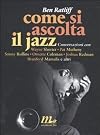
Ottimo libro di interviste (a proposito: perché non tradurre il titolo originale "the jazz ear - conversations over music"? quello scelto lo fa sembrare un manuale...). L'approccio non è particolarmente innovativo (far scegliere al musicista qualcosa da ascoltare e commentare) ma leggere le parole dei musicisti sulla musica altrui è sempre utile e qui il tutto è davvero ben fatto da Ratliff, a partire dalla scelta dei personaggi fino alle curiosità che emergono, passando per le tante show more note squisitamente musicali (che, va detto, non sono molto accessibili a chi sappia nulla o poco di teoria e pratica musicale). show less
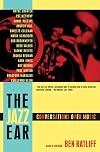
This is a fabulous collection of interviews with a variety of jazz musicians, including Wayne Shorter, Branford Marsalis, Guillermo Klein, Dianne Reeves and Ornette Coleman. But this is not a series of transcripts. Ben Ratliff captures subtle inflections of character in these conversations centered around a shared listening experience. Ratliff sits down with each musician to listen to music of others, and in so doing, reveals how these artists react to and dialogue with their musical show more influences. Sometimes the "set list" from one of these visits creates an intriguing link between the interviewees (such as Joshua Redman's experience with listening to Sonny Rollins, who is interviewed in the third chapter). In addition to the observations made by the musicians, Ratliff's ability to unobtrusively insert himself as both commentator and investigator makes this a superior reading experience to most "meet-the-artist" type books.
What I appreciated most was the variety included in these listening sessions. Sacred Harp, Kyrgyz music, Frank Sinatra, Rachmaninoff, Wagner...all of it is fair game for these musicians, who unapologetically cross the lines of categorization to search for organicism and authenticity as both performers and listeners. The questions of how perfomers/composers listen is one that is underexplored, and I would hope to see more of this type of study incorporated into a discussion of compositional and improvisational aesthetics. show less
What I appreciated most was the variety included in these listening sessions. Sacred Harp, Kyrgyz music, Frank Sinatra, Rachmaninoff, Wagner...all of it is fair game for these musicians, who unapologetically cross the lines of categorization to search for organicism and authenticity as both performers and listeners. The questions of how perfomers/composers listen is one that is underexplored, and I would hope to see more of this type of study incorporated into a discussion of compositional and improvisational aesthetics. show less
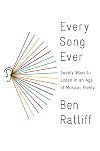
What an exasperating annoying book! Don't get me wrong. Ratliff knows pretty much everything there is to know about music. And apparently he spends all day and night listening to it because there is nothing--and I mean that literally-that he seems to have not listened to. A typical paragraph might mention Beethoven, death metal, and gangster rap. And it is that kind of know-it-all attitude, a smugness, that shines through almost every paragraph of this collection of essays about various show more aspects of music, such as virtuosity or loudness. In each case, Ratliff rambles through a mind-boggling series of examples of what he is talking about and tries to make some sort of a point. What type of point is difficult to say in some cases, because his style of writing is so overdone, so full of obscure words and even vaguer ideas (maybe not to him) that it makes you want to throw the book up against the wall. Nevertheless, you will probably persist, because amidst all the BS, there is the opportunity to discover some gems, such as Faure's Piano Quintets, or Mark E. Smith and the Fall, or the incredible guitarist Paco de Lucia. You will probably choose, however, not to listen to the interminable Dopesmoker by Sleep. Perhaps we should be grateful to Ratliff for doing it for us?
This book's biggest failing is to live up to its title. There is an incredible cornucopia of great stuff on streaming services, YouTube, and other places. Ratliff doesn't provide any reasonable help to an intelligent listener in knowing where to start or how to prioritize. Instead, he does a lifetime, frequently incomprehensible brain dump. Someone should have taken an editor's pen--or maybe an ax to this one. show less
This book's biggest failing is to live up to its title. There is an incredible cornucopia of great stuff on streaming services, YouTube, and other places. Ratliff doesn't provide any reasonable help to an intelligent listener in knowing where to start or how to prioritize. Instead, he does a lifetime, frequently incomprehensible brain dump. Someone should have taken an editor's pen--or maybe an ax to this one. show less
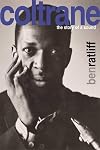
Ben Ratliff is the chief jazz critic for the New York Times and his highly anticipated biography of the legendary saxophonist and composer John Coltrane is a sightly uneven mix of musical and social history. Ratliff's stated goal in this book is to not focus as much on standard biography, but to chart the evolution of Coltrane's music. It's a short work, broken into two roughly 100 page segments, the first being a just-the-facts-ma'am recounting of the evolution of his music, and then the show more second part the story of how the music he created has influenced others. Part One starts with Coltrane performing in a Navy band in the wake of World War II and follows the evolution of his music from sitting in with rhythm and blues bands in Philadelphia to performing in the bands of Dizzy Gillespie, Johnny Hodges, and finally his big break, joining the Miles Davis Quintet. He touches briefly on the albums Coltrane made for the Prestige label and his apprenticeship with Thelonious Monk. Ratliff discusses Coltrane's Atlantic Records recordings in terms on the musical theories that he was using at the time, that is writing very complex and busy compositions and then contrasts that with the records he made for Impulse records, where the music was much more open and finally embracing of free jazz. Part two of the book looks at the enormous impact that Coltrane's music had on the musicians, critics and fans that followed him. Interviews with contemporaries like the Charles Tolliver and Charles Moore (particularly the quote from an incendiary letter Moore wrote in the wake of a controversial review of Coltrane by the trumpeter Don Ellis) are important in humanizing the story and keeping it from drifting into purely dry analysis. The book ends by charting Coltrane's influence amongst younger jazz players, who are a generation or two removed from direct influence. An interview with the saxophonist Marcus Strickland is particularly revealing, showing how Coltrane's music is viewed in today's jazz environment. Ratliff is pretty successful in fulfilling his stated goal in charting the evolution of Coltrane's sound and the influence it had on those who followed him. He does break away from purely musical discussion at some points to mention Coltrane's drug use and Civil Rights issues. It's not the Coltrane biography to start with, as it requires a familiarity with his music and his basic story. Musicians may get the most out of Ratliff's musical analysis, but even the non-musician listener will find some of the quotes and interviews of interest. show less
Lists
Awards


You May Also Like


Associated Authors
Statistics
- Works
- 7
- Also by
- 2
- Members
- 675
- Popularity
- #37,410
- Rating
- 3.8
- Reviews
- 14
- ISBNs
- 22
- Languages
- 3