
Victoria Purman
Author of The Land Girls
About the Author
Series
Works by Victoria Purman
Tagged
Common Knowledge
- Gender
- female
- Occupations
- journalist
speechwriter
political adviser
media adviser
private sector communications consultant
editor (show all 7)
author - Nationality
- Australia
- Birthplace
- Adelaide, South Australia, Australia
- Associated Place (for map)
- South Australia, Australia
Members
Reviews
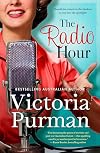
The Radio Hour is an engaging historical fiction novel from bestselling author Victoria Purman who has found her niche within the genre by focusing on women’s personal and professional lives in mid 20th century Australia.
Set in Sydney, we are introduced to Martha Berry, a fifty year old spinster who has worked as a floating secretary for ABC Radio for decades. It’s 1956 and with the launch of television in Australia imminent, the broadcaster is determined to hold onto their listeners by show more repeating the success of their long-running popular drama serial, Blue Hills*. They’ve hired young up-and-comer Quentin Quinn to make a success of his proposed new serial, As the Sun Sets, and assigned Martha as his secretary. It quickly becomes evident that Quinn, despite his ego, is completely out of his depth, and Miss Berry (not Mrs Barry!) has no choice but to take matters into her own hands.
Gender inequality and discrimination are two of the major themes Purman explores in The Radio Hour. Women, especially those in public service, were subject to a ‘marriage bar’ until 1966, and required to give up their jobs when they married. Professional workplaces were generally a bastion of misogyny and harassment and women had no right to protection or recourse. Women were usually poorly paid with little prospect of promotion, and their contributions were routinely overlooked, or appropriated.
Martha risks everything when she begins to ghost write the series, she’s worried, justly, that should her secret be discovered she will lose her job, with which she supports her widowed mother and herself. It’s eminently satisfying as the program meets with success under Martha’s direction, but infuriating as Quinn takes credit for all her hard work.
Purman also touches on a number of other issues affecting women during this era including the lack of educational opportunities, the challenges of ageing, and attitudes to women’s health. She also references the effects of post war changes to Australian society, including the arrival of new immigrants. Every element of the setting, including the culture and operation of the ABC, feels like a genuine reflection of the times.
Add in the authentic characters and well-crafted story, The Radio Hour is an entertaining, interesting and inspiring read.
*FYI: Blue Hills was a real radio program that ran for 27 years (5975 episodes) on the ABC between 1949 and 1976, written and produced, rather extraordinarily for the times by a woman, Gwen Meredith. show less
Set in Sydney, we are introduced to Martha Berry, a fifty year old spinster who has worked as a floating secretary for ABC Radio for decades. It’s 1956 and with the launch of television in Australia imminent, the broadcaster is determined to hold onto their listeners by show more repeating the success of their long-running popular drama serial, Blue Hills*. They’ve hired young up-and-comer Quentin Quinn to make a success of his proposed new serial, As the Sun Sets, and assigned Martha as his secretary. It quickly becomes evident that Quinn, despite his ego, is completely out of his depth, and Miss Berry (not Mrs Barry!) has no choice but to take matters into her own hands.
Gender inequality and discrimination are two of the major themes Purman explores in The Radio Hour. Women, especially those in public service, were subject to a ‘marriage bar’ until 1966, and required to give up their jobs when they married. Professional workplaces were generally a bastion of misogyny and harassment and women had no right to protection or recourse. Women were usually poorly paid with little prospect of promotion, and their contributions were routinely overlooked, or appropriated.
Martha risks everything when she begins to ghost write the series, she’s worried, justly, that should her secret be discovered she will lose her job, with which she supports her widowed mother and herself. It’s eminently satisfying as the program meets with success under Martha’s direction, but infuriating as Quinn takes credit for all her hard work.
Purman also touches on a number of other issues affecting women during this era including the lack of educational opportunities, the challenges of ageing, and attitudes to women’s health. She also references the effects of post war changes to Australian society, including the arrival of new immigrants. Every element of the setting, including the culture and operation of the ABC, feels like a genuine reflection of the times.
Add in the authentic characters and well-crafted story, The Radio Hour is an entertaining, interesting and inspiring read.
*FYI: Blue Hills was a real radio program that ran for 27 years (5975 episodes) on the ABC between 1949 and 1976, written and produced, rather extraordinarily for the times by a woman, Gwen Meredith. show less

I was charmed by Victoria Purman’s debut, Nobody But Him, the first in her Boys of Summer trilogy set in a small fictional town on the coastline of South Australia’s Fleurieu Peninsula, and totally adored this second installment, titled Someone Like You.
Those familiar with the first book will remember the frisson of attraction between the best friends of Julia and Ry, Lizzie Blake and Dan McSwaine. Picking up just a short time after Ry and Julia found their happy ending in Someone Like show more You, we learn that Dan, having been involved in a horrific car accident, has become a virtual recluse in Middle Point, struggling with the trauma of his experience. Desperate to provoke Dan into some sort of action, Ry and Julia send Lizzie to his door, ostensibly to deliver dinner from the pub Ry owns and Lizzie manages, but hoping that seeing Lizzie will reignite his interest in the world outside his door. Lizzie, who hasn’t laid eyes on Dan since the accident, is shocked to find Dan resembling the Wild Man Of Borneo more closely than the charismatic GQ model she remembers. When he slams the door in her face, Lizzie is willing to respect his desire to be left alone but it isn’t in her to give up that easily and Dan needs her help.
Purman creates appealing characters with credible motives for their attitudes and behaviour and I really liked the way in which Lizzie and Dan grow and change in Someone Like You. The romance that develops between the pair builds on their initial attraction in Nobody But Him, but evolves slowly as they struggle with their own problems. While Dan deals with the physical and emotional repercussions of his accident, Lizzie’s issues are less obvious, revealed gradually by the author over the course of the novel.
Though the relationship is beset by the usual obstacles plaguing the romance genre, the push and pull builds the romantic tension without turning it into a farce. It’s important to me that I believe in the reasons for conflict between the couple, and their chemistry, and Purman achieves this beautifully.
Ry and Julia were more than cameo characters in this novel and it was lovely to see them blissfully happy with one another. I look forward to catching up with Dan and Lizzie in the third book which I’m guessing will focus on Lizzie’s brother, Joe, and perhaps Dan’s ex, Anna.
I was glad for the opportunity to revisit the beautiful coast of Adelaide and enjoyed losing myself in the romance, drama, humor and heat of Someone Like You. A delightful read, so far this is my favourite romance novel of the year. show less
Those familiar with the first book will remember the frisson of attraction between the best friends of Julia and Ry, Lizzie Blake and Dan McSwaine. Picking up just a short time after Ry and Julia found their happy ending in Someone Like show more You, we learn that Dan, having been involved in a horrific car accident, has become a virtual recluse in Middle Point, struggling with the trauma of his experience. Desperate to provoke Dan into some sort of action, Ry and Julia send Lizzie to his door, ostensibly to deliver dinner from the pub Ry owns and Lizzie manages, but hoping that seeing Lizzie will reignite his interest in the world outside his door. Lizzie, who hasn’t laid eyes on Dan since the accident, is shocked to find Dan resembling the Wild Man Of Borneo more closely than the charismatic GQ model she remembers. When he slams the door in her face, Lizzie is willing to respect his desire to be left alone but it isn’t in her to give up that easily and Dan needs her help.
Purman creates appealing characters with credible motives for their attitudes and behaviour and I really liked the way in which Lizzie and Dan grow and change in Someone Like You. The romance that develops between the pair builds on their initial attraction in Nobody But Him, but evolves slowly as they struggle with their own problems. While Dan deals with the physical and emotional repercussions of his accident, Lizzie’s issues are less obvious, revealed gradually by the author over the course of the novel.
Though the relationship is beset by the usual obstacles plaguing the romance genre, the push and pull builds the romantic tension without turning it into a farce. It’s important to me that I believe in the reasons for conflict between the couple, and their chemistry, and Purman achieves this beautifully.
Ry and Julia were more than cameo characters in this novel and it was lovely to see them blissfully happy with one another. I look forward to catching up with Dan and Lizzie in the third book which I’m guessing will focus on Lizzie’s brother, Joe, and perhaps Dan’s ex, Anna.
I was glad for the opportunity to revisit the beautiful coast of Adelaide and enjoyed losing myself in the romance, drama, humor and heat of Someone Like You. A delightful read, so far this is my favourite romance novel of the year. show less
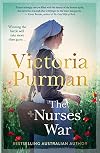
"The Nurses' War" was based on real experiences and for me was historical fiction at its best. It was engaging. compelling, heartwarming, heartbreaking and informative.
The story focuses on Australian nurses Gora, Gertie, Lenora and Fiona who, in 1915, enlisted to help set up a hospital for injured Australian diggers at the beautiful country estate, Harefield House, London. Jessie and her mother, local villagers, also help while waiting for the first casualties to arrive. Later Jessie becomes show more a hospital volunteer, giving gentle, tender care to all those in need.
At first, Cora sees everything as an adventure but nothing has prepared her for what she and the other nurses are about to face. As the days turn into months and the months into years, they become battle-weary from the constant demands placed upon them and from the horrific wounds they have to deal with daily. However, despite their exhaustion, despair, frustration and lack of sleep, the girls fight for the men in their care with dedication, kindness and courage, often forsaking their own needs.
"The Nurses' War" was an amazing story of bravery, sacrifice, friendship and hope. It made me cry and rage at the physical and psychological carnage that the war inflicted on both the soldiers and those who tended in their recovery. The author didn't hide from the brutalities of war or the horrific injuries inflicted upon the soldiers. However, the stark realities of war were interspersed with humour and good old Aussie larrikinism from the soldiers.
While the nurses weren't perfect, they were real and authentic, compassionate and professional, working under terrible conditions knowing that if they did their job well they would be sending their patients back to the Front. I was with Cora and her colleagues every step of their journey sharing their joys, frustrations and sorrow. A wonderful read and highly recommended. show less
The story focuses on Australian nurses Gora, Gertie, Lenora and Fiona who, in 1915, enlisted to help set up a hospital for injured Australian diggers at the beautiful country estate, Harefield House, London. Jessie and her mother, local villagers, also help while waiting for the first casualties to arrive. Later Jessie becomes show more a hospital volunteer, giving gentle, tender care to all those in need.
At first, Cora sees everything as an adventure but nothing has prepared her for what she and the other nurses are about to face. As the days turn into months and the months into years, they become battle-weary from the constant demands placed upon them and from the horrific wounds they have to deal with daily. However, despite their exhaustion, despair, frustration and lack of sleep, the girls fight for the men in their care with dedication, kindness and courage, often forsaking their own needs.
"The Nurses' War" was an amazing story of bravery, sacrifice, friendship and hope. It made me cry and rage at the physical and psychological carnage that the war inflicted on both the soldiers and those who tended in their recovery. The author didn't hide from the brutalities of war or the horrific injuries inflicted upon the soldiers. However, the stark realities of war were interspersed with humour and good old Aussie larrikinism from the soldiers.
While the nurses weren't perfect, they were real and authentic, compassionate and professional, working under terrible conditions knowing that if they did their job well they would be sending their patients back to the Front. I was with Cora and her colleagues every step of their journey sharing their joys, frustrations and sorrow. A wonderful read and highly recommended. show less
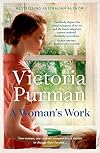
A rich portrait of motherhood, societal expectations and self determination set in post WWII Australia, A Woman’s Work is an engaging novel from best selling author Victoria Purman.
Launched in 1933, offering feature articles on lifestyle, home decoration, cooking, fashion and beauty, parenthood, health and wellbeing, and current affairs as well as serialised stories, advice columns, and various competitions, by the 1950’s the Australian Women’s Weekly was the nation’s most popular show more household magazine. In A Woman’s Work, a competition run by the periodical searching for original recipes sparks unexpected but welcome change for Purman’s two main characters.
War widow Ivy Quinn is not much of a cook, dinner for her and her twelve year old son, Raymond, is usually no more complicated than eggs and baked beans on toast after her long days as a receptionist in a doctor’s surgery. The generous prize money offered by the Women’s Weekly competition provides an incentive for Ivy to improve her skills in the kitchen, and leads to a surprising new relationship.
Cooking meals for her family is simply another draining daily chore for exhausted wife and mother of five, Kathleen O’Grady. She appreciates that her husband, a mechanic, works hard to support them, but she increasingly resents his indifference to her own needs. Though initially reluctant to enter the Women’s Weekly competition, Kathleen discovers the task could be a gateway to reclaiming her forgotten hopes and dreams.
A Woman’s Work compassionately explores the constrained social expectations of women, and men, in mid 20th century Australia. It’s a realistic reminder as to how recently traditional gender roles were strictly enforced, and how little agency mothers in particular had over their lives.
Having raised my own large family I strongly empathised with Kathleen and her mixed feelings of love, resentment, and guilt as she struggles with the personal sacrifices she feels pressured to make to be perceived as the ‘ideal’ wife and mother. Ivy’s concerns about how she is seen as a working single mother, and her worries about her son’s masculinity, are saddening. Both characters are well realised and their journey’s are heartening.
Purman also touches on a number of provocative issues in A Woman’s Work including rape, domestic violence, homosexuality, contraception, and abortion. Though change has been wrought over time, the legacy of shame and fear still lingers today.
The era and setting of A Woman’s Work is deftly recreated. Recipes of the time drawn from actual entries to the competition preface several chapters. I did a little reading about the history of the Australian Women’s Weekly magazine (which is now a monthly periodical) and found it interesting, particularly with regards to how individual editors over time influenced the content of the magazine and therefore contributed to society’s attitudes about the role of women.
An engaging historical novel, I enjoyed reading A Woman’s Work and I am left thankful for the strides we have made since. show less
Launched in 1933, offering feature articles on lifestyle, home decoration, cooking, fashion and beauty, parenthood, health and wellbeing, and current affairs as well as serialised stories, advice columns, and various competitions, by the 1950’s the Australian Women’s Weekly was the nation’s most popular show more household magazine. In A Woman’s Work, a competition run by the periodical searching for original recipes sparks unexpected but welcome change for Purman’s two main characters.
War widow Ivy Quinn is not much of a cook, dinner for her and her twelve year old son, Raymond, is usually no more complicated than eggs and baked beans on toast after her long days as a receptionist in a doctor’s surgery. The generous prize money offered by the Women’s Weekly competition provides an incentive for Ivy to improve her skills in the kitchen, and leads to a surprising new relationship.
Cooking meals for her family is simply another draining daily chore for exhausted wife and mother of five, Kathleen O’Grady. She appreciates that her husband, a mechanic, works hard to support them, but she increasingly resents his indifference to her own needs. Though initially reluctant to enter the Women’s Weekly competition, Kathleen discovers the task could be a gateway to reclaiming her forgotten hopes and dreams.
A Woman’s Work compassionately explores the constrained social expectations of women, and men, in mid 20th century Australia. It’s a realistic reminder as to how recently traditional gender roles were strictly enforced, and how little agency mothers in particular had over their lives.
Having raised my own large family I strongly empathised with Kathleen and her mixed feelings of love, resentment, and guilt as she struggles with the personal sacrifices she feels pressured to make to be perceived as the ‘ideal’ wife and mother. Ivy’s concerns about how she is seen as a working single mother, and her worries about her son’s masculinity, are saddening. Both characters are well realised and their journey’s are heartening.
Purman also touches on a number of provocative issues in A Woman’s Work including rape, domestic violence, homosexuality, contraception, and abortion. Though change has been wrought over time, the legacy of shame and fear still lingers today.
The era and setting of A Woman’s Work is deftly recreated. Recipes of the time drawn from actual entries to the competition preface several chapters. I did a little reading about the history of the Australian Women’s Weekly magazine (which is now a monthly periodical) and found it interesting, particularly with regards to how individual editors over time influenced the content of the magazine and therefore contributed to society’s attitudes about the role of women.
An engaging historical novel, I enjoyed reading A Woman’s Work and I am left thankful for the strides we have made since. show less
You May Also Like


Associated Authors
Statistics
- Works
- 25
- Members
- 439
- Popularity
- #55,771
- Rating
- 4.1
- Reviews
- 63
- ISBNs
- 110
