
Stephen Currie
Author of The Salem Witch Trials (History of the World)
Series
Works by Stephen Currie
We Have Marched Together: The Working Children's Crusade (People's History) (1997) 12 copies, 1 review
Miracles, Saints, and Pagan Superstition: The Medieval Mind (Lucent Library of Historical Eras) (2006) 8 copies
A Peculiar Institution: Slavery in the Plantation South (Lucent Library of Black History) (2005) 7 copies
Digital Literacy: What Is It and Why Does It Matter? (Developing Digital and Media Literacy Skills) (2023) 3 copies
Medieval Crusades (World History) 2 copies
Missions in Space 1 copy
Tagged
Common Knowledge
There is no Common Knowledge data for this author yet. You can help.
Members
Reviews
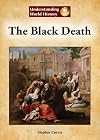
This book talks all about the Black Death, or the Black Plague, and what really happened during the time period. As the book tells it, the plague probably originated in central Asia in 1330, moving to other countries. The author, Stephen Currie also tells the reader signs of the bubonic plague, like the swelling areas on the body. Currie explains what conditions led to the Black Death, like wild rats being in constant close contact with humans. The microorganism that causes the plague is show more called Yersinia pestis (Y. pestis), after Swiss scientist Alexandre Yersin, and originated-- most likely-- in cat-sized rodents, then moving to feral rats, then humans from the fleas. The book tells us of how awfully the plague affected people, and uses historians' thought on the situation, like John Aberth, "Imagine that, tomorrow or the next day, every other person you see around you may be dead..." How horrible it must have been for those that lived it.
I give this book four stars, only because I wish it went into more detail on the disease itself. See, I enjoy reading books on diseases, and I have already read a few books on the plague. The book was great other than that, with many quotes from historians and Europeans of the time alike, giving the reader a rounded view of the situation. The most interesting part of the book is how it has little extra information boxes in the book, when appropriate. These give information like what the European pessimists thought was the cause of the plague. This book goes all over the plague, and actually goes into great detail about how it affected people and what people did to stop it. show less
I give this book four stars, only because I wish it went into more detail on the disease itself. See, I enjoy reading books on diseases, and I have already read a few books on the plague. The book was great other than that, with many quotes from historians and Europeans of the time alike, giving the reader a rounded view of the situation. The most interesting part of the book is how it has little extra information boxes in the book, when appropriate. These give information like what the European pessimists thought was the cause of the plague. This book goes all over the plague, and actually goes into great detail about how it affected people and what people did to stop it. show less

This book describes child labor in Kensington, Philadelphia during the early 20th century. It tells of Mother Jones's efforts to end child labor and of her organized march from Philadelphia to New York. Currie does an excellent job of including facts and quotes from sources, and he even admits that some of the facts contradict themselves. The book includes numerous black and white photos. Teachers can use these photos to have students infer what is going on in the picture. English teachers show more can have students look at newspaper articles about the march and then have students create their own newspaper article. Math teachers can use this book to look at what the average family made and how much money they really needed to survive. They can also have students compare that budget to families in today's society. History teachers can use this as a source to teach students about the Great Depression and about why we have child labor laws in place now. Currie uses a clear style of writing that is easy for the reader to understand. It follows a chronological order starting around the year of 1903. The black and white photos also enhance the book by allowing the reader to see what life actually looked like back then. It also includes a table of contents, a bibliography, and an index. This is an excellent source for a teacher or a librarian to use. show less
Awards


You May Also Like


Associated Authors
Statistics
- Works
- 97
- Members
- 572
- Popularity
- #43,782
- Rating
- 3.8
- Reviews
- 7
- ISBNs
- 148
- Languages
- 2