
Marc Aronson
Author of Sugar Changed the World: A Story of Magic, Spice, Slavery, Freedom, and Science
About the Author
Marc Aronson edits and publishes young adult fiction for Candlewick Press. He lives with his wife and son in Maplewood, New Jersey
Image credit: By Kevin Jarrett - https://www.flickr.com/photos/kjarrett/2739319273, CC BY 2.0, https://commons.wikimedia.org/w/index.php?curid=47687091
Works by Marc Aronson
Sugar Changed the World: A Story of Magic, Spice, Slavery, Freedom, and Science (2010) 508 copies, 45 reviews
Trapped: How the World Rescued 33 Miners from 2,000 Feet Below the Chilean Desert (2011) 268 copies, 13 reviews
The World Made New: Why the Age of Exploration Happened and How It Changed the World (2007) 201 copies, 13 reviews
War Is...: Soldiers, Survivors and Storytellers Talk about War (2008) — Editor — 145 copies, 8 reviews
Eyes of the World: Robert Capa, Gerda Taro, and the Invention of Modern Photojournalism (2017) 113 copies, 5 reviews
1968: Today's Authors Explore a Year of Rebellion, Revolution, and Change (2018) 67 copies, 11 reviews
1789: Twelve Authors Explore a Year of Rebellion, Revolution, and Change (2020) — Editor — 59 copies, 14 reviews
The Griffin and the Dinosaur: How Adrienne Mayor Discovered a Fascinating Link Between Myth and Science (2014) 58 copies, 5 reviews
World Made New, The: Why the Age of Exploration Happened and How It Changed the World (National Geographic Timelines) 24 copies, 1 review
Witch Hunt 1 copy
Associated Works
Ain't Nothing but a Man: My Quest to Find the Real John Henry (2007) — Author, some editions — 204 copies, 17 reviews
Poisoned Water: How the Citizens of Flint, Michigan, Fought for Their Lives and Warned the Nation (2020) — Author — 74 copies, 5 reviews
Tagged
Common Knowledge
- Legal name
- Aronson, Marc Henry
- Birthdate
- 1951-10-19
- Gender
- male
- Education
- New York University (Ph.D, American History)
- Occupations
- editor
public speaker
publisher
historian - Relationships
- Budhos, Marina (wife)
- Short biography
- Marc Aronson earned his doctorate in American HIstory at NYU and has made his career as an award-winning editor and author. He teaches in the MLIS program and Rutgers University and frequently speaks in schools around the country. [adapted from The Skull in the Rock (2012)]
- Nationality
- USA
- Places of residence
- Maplewood, New Jersey, USA
- Associated Place (for map)
- New Jersey, USA
Members
Reviews
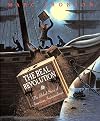
I have to admit that at first, I didn’t know what The Real Revolution: The Global Story of American Independence was trying to accomplish with its drawn out narrative of the exploits of Robert Clive in India. I kept checking the front cover to make certain someone had not swapped the jackets on the book. Then, it dawned on me that what I was seeing was, for the first time, (to borrow from Paul Harvey) “The REST of the story!”
This survey of the birth and growth of the revolutionary idea show more of Independence tells the tale of not only the story of the beginnings of the American Revolution but also the story of the development of the ideas behind it. It is organized into sub chapters that adequately support the main idea and give enough depth to add to the overall narrative’s weight but do not weigh down the reader with unnecessary details or overly complex diction.
Marc Aronson has a PhD. From NYU in American History (Schuster, 2018). But, he doesn’t read like one. This book is positively captivating. Without using hyperbole, or trappings of American exceptionalism, Aronson carves out a whole new narrative that shifts the scope of the American Revolution from one of a narrow vision that started with the END of the French and Indian War in Boston Harbor to a broad global perspective that actually began with the British East India Company several decades earlier. By following the lives and exploits of Robert Clive of Great Britain in India, James Wolfe of Great Britain in the French and Indian War and George Washington of Virginia from his formative years as a military commander under Wolfe we begin to see how the REAL revolution began to form in the minds of a new people an American people. “What was the change in the minds of the people John Adams called the real Revolution? What was this child that had grown in the speeches of New England lawyers, in the resolutions of Virginia planters, in the hatchets and tar buckets of Boston mobs, in the rifles and skins of backcountry hunters, in the sayings and experiments of Benjamin Franklin, in the markets of New York and Philadelphia, in the words of Tom Paine? It was a feeling of ownership—what I build is mine; it was a sense of right—what I think is for me to decide; it was a sense of opportunity to do good and to live righteously. Once a person experienced this feeling of autonomy, he or she knew that nothing was more precious.” (Aronson, 2005)
This book spans the time of the 7 Years War (also known as the French and Indian War to the time of Cesar Chavez. For it takes up that idea of independence, that revolutionary spark and follows that ember as it drifts on the wind of change and chronicling where it lands and catches fire in the minds of those willing to bear forth the torch.
The style is a clear, compelling and flowing narrative that while using colorful and metaphorical language and simile does not give way to hyperbole and supposition. I looked for, and saw no bias but no lack of passion. For, in this book the passion was not for a political ideology but for a human ideal . The ideal in this case being independence.
The book crisscrosses across time and space in leaving and rejoining our historical figures as they all move toward their parts in furthering this idea of revolutionary independence.
The illustrations, engravings and artwork are beautiful and only serve to accent the brilliant narrative. Nothing in this book seems out of place or superfluous. The index stands up to the “can I find it” test getting 3 out of 4 of my random choices, the end notes are superb and the bibliography is well written.
I will definitely require this book in my classes dealing with American History as well as be purchasing this book for my own collection. The Dean of Students, upon reading this book insisted it be added to Country Day’s collection. I would use it to illustrate the global context in which the American Revolution took place. It illustrates how the overarching ideals of individual liberty as paramount spread and took root from country to country. My only critique is that the end feels as if Aronson either was up against a page limit or a deadline and hurried through. show less
This survey of the birth and growth of the revolutionary idea show more of Independence tells the tale of not only the story of the beginnings of the American Revolution but also the story of the development of the ideas behind it. It is organized into sub chapters that adequately support the main idea and give enough depth to add to the overall narrative’s weight but do not weigh down the reader with unnecessary details or overly complex diction.
Marc Aronson has a PhD. From NYU in American History (Schuster, 2018). But, he doesn’t read like one. This book is positively captivating. Without using hyperbole, or trappings of American exceptionalism, Aronson carves out a whole new narrative that shifts the scope of the American Revolution from one of a narrow vision that started with the END of the French and Indian War in Boston Harbor to a broad global perspective that actually began with the British East India Company several decades earlier. By following the lives and exploits of Robert Clive of Great Britain in India, James Wolfe of Great Britain in the French and Indian War and George Washington of Virginia from his formative years as a military commander under Wolfe we begin to see how the REAL revolution began to form in the minds of a new people an American people. “What was the change in the minds of the people John Adams called the real Revolution? What was this child that had grown in the speeches of New England lawyers, in the resolutions of Virginia planters, in the hatchets and tar buckets of Boston mobs, in the rifles and skins of backcountry hunters, in the sayings and experiments of Benjamin Franklin, in the markets of New York and Philadelphia, in the words of Tom Paine? It was a feeling of ownership—what I build is mine; it was a sense of right—what I think is for me to decide; it was a sense of opportunity to do good and to live righteously. Once a person experienced this feeling of autonomy, he or she knew that nothing was more precious.” (Aronson, 2005)
This book spans the time of the 7 Years War (also known as the French and Indian War to the time of Cesar Chavez. For it takes up that idea of independence, that revolutionary spark and follows that ember as it drifts on the wind of change and chronicling where it lands and catches fire in the minds of those willing to bear forth the torch.
The style is a clear, compelling and flowing narrative that while using colorful and metaphorical language and simile does not give way to hyperbole and supposition. I looked for, and saw no bias but no lack of passion. For, in this book the passion was not for a political ideology but for a human ideal . The ideal in this case being independence.
The book crisscrosses across time and space in leaving and rejoining our historical figures as they all move toward their parts in furthering this idea of revolutionary independence.
The illustrations, engravings and artwork are beautiful and only serve to accent the brilliant narrative. Nothing in this book seems out of place or superfluous. The index stands up to the “can I find it” test getting 3 out of 4 of my random choices, the end notes are superb and the bibliography is well written.
I will definitely require this book in my classes dealing with American History as well as be purchasing this book for my own collection. The Dean of Students, upon reading this book insisted it be added to Country Day’s collection. I would use it to illustrate the global context in which the American Revolution took place. It illustrates how the overarching ideals of individual liberty as paramount spread and took root from country to country. My only critique is that the end feels as if Aronson either was up against a page limit or a deadline and hurried through. show less
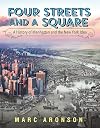
Aronson’s delightful Four a streets and a Square is a paean to the richness that has been, and is, New York City - mainly Manhattan. Given the history, it’s a dip into all the city is, but what dip it is! I especially appreciated how Aronson shows how the interplay between groups - ethnic, racial, sexuality - defined the city, and modeled the nation as a whole.
 This review was written for LibraryThing Early Reviewers.
The Griffin and the Dinosaur: How Adrienne Mayor Discovered a Fascinating Link Between Myth and Science by Marc Aronson
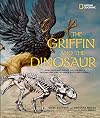
I was disappointed. There was a lot about the book to recommend it to me: a really excellent cover illustration showing a griffin and a Protoceratops skeleton, an author, Marc Aronson, whose work I have previously enjoyed, a subject, the relation of ancient myths to fossils that would certainly interest me.
But too much of it is an Adrienne Mayor biography, and it tries to make drama out of very little real adventure. Mayor was born in 1946, and hit the big time with her first speculations show more about the ancient Greeks and their fossil hunting ways in 2000 with her first book, published when she was 54. So, like Laura Ingalls Wilder, Mayor is a late literary bloomer. This book was published in 2014, when Mayor was as the height of her literary popularity and had just published a book about Amazons.
What is there to dislike about the book? It is just very forced. It is misleading. And it, like so many other books, wants to convince me that I'm a chronological snob.
"We were all too ready to believe that only people like us - modern people with computers and smartphones - could possibly have made good sense of the world around them. People of antiquity, our ancestors, must have been irrational, superstitious, blind to the evidence around them."
There is no reason to believe that smartphones help people make good sense of the world around them. And, given that moderns can be quite irrational, why should ancient people have been less irrational. "blind to the evidence around them"? Evidence for what, exactly? And not all people who lived long ago are my ancestors; only the ones I'm descended from. This is sloppy, conventional, writing.
It also represents the Greeks of 370 BC as a unified bunch in the following sentence: "Megalopolis" means "Giant City" and that was the name the ancient Greeks gave to a city they built in about 370 BC." "The ancient Greeks" did not gather to build this city; it was constructed during a combination slave revolt and invasion by some alliance of slaves and a Theban led army in an effort to undermine the power of Sparta in its home territories. There should be a better way to simplify without entirely misleading.
Finally the book seems to use this argument: you were a chronological bigot, but I have persuaded you out of your bigotry. Therefore everything that the ancients believed must have been true, i.e., those Protoceratops fossils were really the bodies of griffins. That is not a good argument; I am unconvinced. show less
But too much of it is an Adrienne Mayor biography, and it tries to make drama out of very little real adventure. Mayor was born in 1946, and hit the big time with her first speculations show more about the ancient Greeks and their fossil hunting ways in 2000 with her first book, published when she was 54. So, like Laura Ingalls Wilder, Mayor is a late literary bloomer. This book was published in 2014, when Mayor was as the height of her literary popularity and had just published a book about Amazons.
What is there to dislike about the book? It is just very forced. It is misleading. And it, like so many other books, wants to convince me that I'm a chronological snob.
"We were all too ready to believe that only people like us - modern people with computers and smartphones - could possibly have made good sense of the world around them. People of antiquity, our ancestors, must have been irrational, superstitious, blind to the evidence around them."
There is no reason to believe that smartphones help people make good sense of the world around them. And, given that moderns can be quite irrational, why should ancient people have been less irrational. "blind to the evidence around them"? Evidence for what, exactly? And not all people who lived long ago are my ancestors; only the ones I'm descended from. This is sloppy, conventional, writing.
It also represents the Greeks of 370 BC as a unified bunch in the following sentence: "Megalopolis" means "Giant City" and that was the name the ancient Greeks gave to a city they built in about 370 BC." "The ancient Greeks" did not gather to build this city; it was constructed during a combination slave revolt and invasion by some alliance of slaves and a Theban led army in an effort to undermine the power of Sparta in its home territories. There should be a better way to simplify without entirely misleading.
Finally the book seems to use this argument: you were a chronological bigot, but I have persuaded you out of your bigotry. Therefore everything that the ancients believed must have been true, i.e., those Protoceratops fossils were really the bodies of griffins. That is not a good argument; I am unconvinced. show less
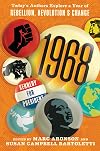
“1968: Today’s Authors Explore a Year of Rebellion, Revolution, & Change,” edited by noted young adult nonfiction writers Marc Aronson and Susan Campbell Bartoletti, is an eye-opening and intriguing look at the different events that took place during that tumultuous year. While I’ve often thought of the 1960’s in general as a tumultuous time, I hadn’t previously considered that many of the world-changing events associated with the decade, such as the assassination of Martin show more Luther King, Jr. and the Prague Spring, took place in 1968. The authors do an excellent job drawing upon this rich history and making it come alive to today’s younger readers, who may or may not have a lot of background knowledge of the time period.
A particularly effective aspect of the book is that each author offers a different perspective and slant to the subject being described. Some opt to write first-person narratives about their stories from 1968, ranging from Laban Carrick Hill’s story of her family being on the wrong side of history when it came to issues surrounding race to Elizabeth Partridge’s recurring reports throughout the book on her reactions to the nightly news reports. Others, such as David Lubar, write about historical moments from a less personal standpoint while keeping the story compelling. These different approaches allow readers to get a wide-ranging view of the year and give the authors the opportunity to write about overlapping topics. Rather than being redundant, having more than one chapter on related topics provides a more balanced and varied view of the issue. For instance, a “Nightly News” segment as well as two other pieces focus on the Mexico City Olympics, and each offer a different viewpoint, with Partridge’s news report giving her thoughts on the matter, Omar Figueras describing the brutal actions of the Mexican government against protestors leading up to the Olympics, and Jim Murphy writing about the iconic protest by the American sprinters Tommie Smith and John Carlos.
“1968: Today’s Authors Explore a Year of Rebellion, Revolution, & Change” is an engaging, gripping, and enlightening book. While 1968 might seem like a long time ago to today’s young adults, there is much for them to learn and enjoy by reading this. Not only will it give them insight into a seminal year in American history, it will also show them how the events of that year continue to affect us today. Moreover, it illustrates the cyclical nature of history, since many of the topics, including the rights of athletes to peacefully protest at sporting events, the issue of human rights violations by the government, and the need for young people to take to the streets to demand change, are happening now. On one hand, it is disheartening to recognize that, in the 50 years that have passed since 1968, many things remain the same. On the other hand, it is encouraging to realize that we survived 1968 and that, this time, we might actually learn from our history and not repeat it in the future. show less
A particularly effective aspect of the book is that each author offers a different perspective and slant to the subject being described. Some opt to write first-person narratives about their stories from 1968, ranging from Laban Carrick Hill’s story of her family being on the wrong side of history when it came to issues surrounding race to Elizabeth Partridge’s recurring reports throughout the book on her reactions to the nightly news reports. Others, such as David Lubar, write about historical moments from a less personal standpoint while keeping the story compelling. These different approaches allow readers to get a wide-ranging view of the year and give the authors the opportunity to write about overlapping topics. Rather than being redundant, having more than one chapter on related topics provides a more balanced and varied view of the issue. For instance, a “Nightly News” segment as well as two other pieces focus on the Mexico City Olympics, and each offer a different viewpoint, with Partridge’s news report giving her thoughts on the matter, Omar Figueras describing the brutal actions of the Mexican government against protestors leading up to the Olympics, and Jim Murphy writing about the iconic protest by the American sprinters Tommie Smith and John Carlos.
“1968: Today’s Authors Explore a Year of Rebellion, Revolution, & Change” is an engaging, gripping, and enlightening book. While 1968 might seem like a long time ago to today’s young adults, there is much for them to learn and enjoy by reading this. Not only will it give them insight into a seminal year in American history, it will also show them how the events of that year continue to affect us today. Moreover, it illustrates the cyclical nature of history, since many of the topics, including the rights of athletes to peacefully protest at sporting events, the issue of human rights violations by the government, and the need for young people to take to the streets to demand change, are happening now. On one hand, it is disheartening to recognize that, in the 50 years that have passed since 1968, many things remain the same. On the other hand, it is encouraging to realize that we survived 1968 and that, this time, we might actually learn from our history and not repeat it in the future. show less
This review was written for LibraryThing Early Reviewers.Lists
Awards


You May Also Like


Associated Authors
Statistics
- Works
- 32
- Also by
- 5
- Members
- 3,693
- Popularity
- #6,860
- Rating
- 3.8
- Reviews
- 256
- ISBNs
- 119
- Favorited
- 1

