
Eric Velasquez
Author of Grandma's Records
About the Author
Works by Eric Velasquez
Journey to Jo’burg 1 copy
Associated Works
Our Children Can Soar: A Celebration of Rosa, Barack, and the Pioneers of Change (2009) — Illustrator — 255 copies, 17 reviews
The Other Mozart: The Life of the Chevalier Saint-George (2006) — Illustrator, some editions — 66 copies, 3 reviews
Strong Voices: Fifteen American Speeches Worth Knowing (2020) — Illustrator, some editions — 60 copies, 3 reviews
Tagged
Common Knowledge
- Gender
- male
- Education
- School of Visual Arts (BFA) (1983)
Art Students League of New York (1984) - Occupations
- freelance illustrator
teacher of book illustration - Organizations
- Fashion Institute of Technology
- Nationality
- USA
- Birthplace
- Spanish Harlem, New York, New York, USA
- Places of residence
- Harlem, Manhattan, New York, New York, USA
New York, New York, USA - Associated Place (for map)
- New York, New York, USA
Members
Reviews

When Ramsey's painting of Super Octo gives his grandmother the idea to make pulpo guisado - AKA octopus stew - it sets in motion an incredible and entertaining adventure. Purchasing a huge octopus at the store, Grandma forgets to remove the eyes and beak, leading to a situation in which the (clearly still alive) octopus escapes from the pot and takes her hostage. Now it's up to Ramsey to figure out the octopus' weakness, and rescue her...
Apparently based upon an incident from his own show more childhood, as well as his family's storytelling tradition, Eric Velasquez's Octopus Stew pairs an imaginative and exciting narrative with vibrantly colorful artwork. There's a great deal of humor and heart in both text and illustration here, with many story elements - an adventure with a beloved grandparent, a superhero cape and storyline, and an octopus(!) - that young children will find entertaining. For my part, I liked the fold-out page where we see Ramsey telling the story - is it meant to be after the fact? or is the tale entirely made up, even within the confines of the book? - as it emphasizes the wider family circle to which he and his grandmother belong. The only thing I didn't like, given the fact that the octopus is still alive at the end of the tale, and joins Ramsey and his grandmother for an octopus-free meal, is that a recipe for octopus stew is included at the rear. That felt a little... odd, given the story developments. show less
Apparently based upon an incident from his own show more childhood, as well as his family's storytelling tradition, Eric Velasquez's Octopus Stew pairs an imaginative and exciting narrative with vibrantly colorful artwork. There's a great deal of humor and heart in both text and illustration here, with many story elements - an adventure with a beloved grandparent, a superhero cape and storyline, and an octopus(!) - that young children will find entertaining. For my part, I liked the fold-out page where we see Ramsey telling the story - is it meant to be after the fact? or is the tale entirely made up, even within the confines of the book? - as it emphasizes the wider family circle to which he and his grandmother belong. The only thing I didn't like, given the fact that the octopus is still alive at the end of the tale, and joins Ramsey and his grandmother for an octopus-free meal, is that a recipe for octopus stew is included at the rear. That felt a little... odd, given the story developments. show less

This mostly wordless book conveys a lovely fantasy about a special friendship between two very different beings united in their love of art. The ability of art to transcend barriers, aided by kindness and acceptance, can make the world a more beautiful place, and draw people together. But sometimes it takes the innocence of a child to make that happen.
Chloe Maldonado, Afro-Latino like the author, is a fictional ballerina from Spanish Harlem who forms an unexpected friendship with a polar show more bear. She, along with some others from her dance troupe, had been doing a picture shoot at the New York City's Central Park Zoo. A polar bear seemed quite taken with Chloe and her dancing, and that night, he climbed out of his enclosure and headed for the Lincoln Center, where the Harlem Children’s Ballet was due to perform.
When the bear arrived however, he encountered a sign on the ticket box, “No Polar Bears Allowed!” He was told to leave. He let out a huge growl, and Chloe heard him. She ran to the foyer and guided the bear to a front row seat before she went on stage. He was entranced by the program, and danced his way back to the zoo.
Happily, the censorious adults in the story could not take away either the joy of the performance by the girl or the bear's pleasure in watching it. The bear may have been huge and she just a small girl, but they were kindred spirits, and that awareness cemented their unlikely relationship.
The author/illustrator is one of the most successful and distinguished Afro-Latino book illustrators. He said that he got into writing and illustrating books for the benefit of children like him so they could see themselves.
(And in fact, as the data for 2024 from the Cooperative Children's Book Center shows, children are more likely to see animals as main characters in books than they are to see minorities. White students, on the other hand, spend their K-12 career reading mostly books about people who share their racial identity, with the result that they have fewer opportunities to learn about or empathize with others who are different than themselves.)
Velasquez’s stunning oil paintings on watercolor paper are made from only four colors, and impart a dream-like quality to the story. But the focus is sharp when it comes to showing facial expressions and movement. He depicts a wide range of emotions, especially in the scenes featuring the ballerina and her mother. He also deftly portrays movement, whether it is walking, running, or dancing - you can feel the characters in motion.
The front matter provides a smattering of facts about polar bears, and back matter is presented as if it is part of the dance program that was the subject of the book.
Evaluation: This story, suggested for ages 4 and over, is enchanting, and the few facts about polar bears are tantalizing enough to inspire some readers to follow them up. (I'm one of them! I read in the front of the book, “Polar bear fur isn’t really white. A polar bear’s fur is transparent . . . ” and I had to know more!) From a Library of Congress website I learned:
“The hair of a polar bear looks white because the air spaces in each hair scatter light of all colors. The color white becomes visible to our eyes when an object reflects back all of the visible wavelengths of light, rather than absorbing some of the wavelengths.”
Wow, who knew? show less
Chloe Maldonado, Afro-Latino like the author, is a fictional ballerina from Spanish Harlem who forms an unexpected friendship with a polar show more bear. She, along with some others from her dance troupe, had been doing a picture shoot at the New York City's Central Park Zoo. A polar bear seemed quite taken with Chloe and her dancing, and that night, he climbed out of his enclosure and headed for the Lincoln Center, where the Harlem Children’s Ballet was due to perform.
When the bear arrived however, he encountered a sign on the ticket box, “No Polar Bears Allowed!” He was told to leave. He let out a huge growl, and Chloe heard him. She ran to the foyer and guided the bear to a front row seat before she went on stage. He was entranced by the program, and danced his way back to the zoo.
Happily, the censorious adults in the story could not take away either the joy of the performance by the girl or the bear's pleasure in watching it. The bear may have been huge and she just a small girl, but they were kindred spirits, and that awareness cemented their unlikely relationship.
The author/illustrator is one of the most successful and distinguished Afro-Latino book illustrators. He said that he got into writing and illustrating books for the benefit of children like him so they could see themselves.
(And in fact, as the data for 2024 from the Cooperative Children's Book Center shows, children are more likely to see animals as main characters in books than they are to see minorities. White students, on the other hand, spend their K-12 career reading mostly books about people who share their racial identity, with the result that they have fewer opportunities to learn about or empathize with others who are different than themselves.)
Velasquez’s stunning oil paintings on watercolor paper are made from only four colors, and impart a dream-like quality to the story. But the focus is sharp when it comes to showing facial expressions and movement. He depicts a wide range of emotions, especially in the scenes featuring the ballerina and her mother. He also deftly portrays movement, whether it is walking, running, or dancing - you can feel the characters in motion.
The front matter provides a smattering of facts about polar bears, and back matter is presented as if it is part of the dance program that was the subject of the book.
Evaluation: This story, suggested for ages 4 and over, is enchanting, and the few facts about polar bears are tantalizing enough to inspire some readers to follow them up. (I'm one of them! I read in the front of the book, “Polar bear fur isn’t really white. A polar bear’s fur is transparent . . . ” and I had to know more!) From a Library of Congress website I learned:
“The hair of a polar bear looks white because the air spaces in each hair scatter light of all colors. The color white becomes visible to our eyes when an object reflects back all of the visible wavelengths of light, rather than absorbing some of the wavelengths.”
Wow, who knew? show less
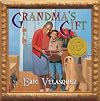
This book tells about a young boy who spends his Christmas, and most school breaks, with his grandmother. He has an assignment to visit the museum and see the new exhibit. Before his grandmother takes him, they head to the market and get supplies to make pasteles. They head home and cook up the food and Grandma makes extra to give away. Later she agrees to take him to the museum, away from the comfortable world that Grandma is used to. She searches for familiarity but finds none until they show more reach a painting of Juan De Paraeja, a famous Puerto Rican slave turned painter. She recognizes him and tells his story to her grandson. The book is filled with lines in Spanish and the English translation right after in parentheses. The illustrations are life-like and appear to be done in pastel or heavy/ thick acrylic. Similar to what a skilled crayon user might produce. For some reason this book made me very emotional. I never spent much time with my grandparents growing up and definitely didn't have traditions or heritage to look back at and be proud of. show less
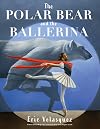
A young black ballerina visits a polar bear at a New York zoo' the bear, inspired, escapes its enclosure, picks up the girl's red scarf, and makes its way uptown to the Harlem Ballet, where the young dancer hears his roar at being denied entry and finds him a place in the audience, from which he watches her dance. At the end of the performance, she gives the bear her red scarf to keep, and the bear dreams of them dancing together. Four colors of oil paint on watercolor paper make a rich show more experience, including a double gatefold right at the beginning.
See also: Waltz of the Snowflakes by Elly Mackay show less
See also: Waltz of the Snowflakes by Elly Mackay show less
Lists
Awards


You May Also Like


Associated Authors
Statistics
- Works
- 11
- Also by
- 24
- Members
- 1,222
- Popularity
- #21,016
- Rating
- 4.1
- Reviews
- 70
- ISBNs
- 49
- Languages
- 1
- Favorited
- 1