

Violet Kupersmith
Author of Build Your House Around My Body
About the Author
Works by Violet Kupersmith
Tagged
Common Knowledge
- Birthdate
- 1989
- Gender
- female
- Education
- Mount Holyoke College
- Nationality
- USA
- Birthplace
- Pennsylvania, USA
- Map Location
- USA
Members
Reviews
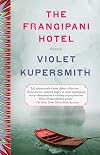
Blame it on Interpreter of Maladies. Ever since I read that moving, evocative collection of short stories I’ve been drawn to other collections with a distinct sense of place and exploring the experience of being a stranger in a strange land. The Frangipani Hotel is an enjoyable, imaginative entry into that genre with the added element of folktales intertwining with the supernatural. While it doesn’t rise to the level of Jumpa Lahiri’s masterpiece, it is a window into a world with show more traditions and culture that few Westerners know about. These are not ghost stories that are particularly frightening, but more unsettling, and give a sense of something unforgiving, whether they are set in Vietnam or among struggling immigrants and their children in the US.
There are things in the realism of it that stand out. The immigrant in Houston with a functional kitchen who washes dishes in a bucket in the bathroom. The huge rats scurrying along the market stall counters. The pathetic cat who wants desperately to be taken in. They are in their way as creepy and otherworldly as the semi-feral twins and the man who transforms into a snake. The writing is lovely and rich, the characters vivid in their particular anguish. The stories seem more like set pieces, though, rather than complete stories with and arc and a potent emotional punch. While most are a good length, they seem to peter out without much of anything happening or being resolved.
I’d be interested to see the world that Ms. Kupersmith creates in her first novel, which she is working on. I imagine it will be more satisfying for the reader to spend a whole book getting to know her fascinating characters and the world she creates around them. show less
There are things in the realism of it that stand out. The immigrant in Houston with a functional kitchen who washes dishes in a bucket in the bathroom. The huge rats scurrying along the market stall counters. The pathetic cat who wants desperately to be taken in. They are in their way as creepy and otherworldly as the semi-feral twins and the man who transforms into a snake. The writing is lovely and rich, the characters vivid in their particular anguish. The stories seem more like set pieces, though, rather than complete stories with and arc and a potent emotional punch. While most are a good length, they seem to peter out without much of anything happening or being resolved.
I’d be interested to see the world that Ms. Kupersmith creates in her first novel, which she is working on. I imagine it will be more satisfying for the reader to spend a whole book getting to know her fascinating characters and the world she creates around them. show less
I’ll be incredibly honest in admitting my ignorance about Vietnamese culture and traditions. (To me, my only relevant frame of reference is my limited knowledge about the horror of the Vietnam War. I mean, basic history class stuff coupled with brief interactions with veterans – usually old alcoholics that I encounter in bars, men still wrecked from their involvement in that botched war that happened over forty years ago. I can’t imagine living through that horror as an American – show more much less living with that horror as part of your national history. The Frangipani Hotel tries to verbalize the effects that this bloody history has had on the identity of the Vietnamese through a number of ghost stories inspired by traditional tales passed on by the author’s own grandmother.
I respect what the author was striving for here – even if I don’t necessarily understand the fine nuances and cultural references. I appreciated a number of stories in the collection – most notably “The Red Veil” and “One-Finger.” In these ghost stories, Vietnam is literally haunted by the lingering effects of the war on its people. The past haunts all of the characters – even those who were not around to experience the horror of the war firsthand. Not all of the stories are based in Vietnam; however, the ghosts of the past are not easy to shake, following immigrants who have settled elsewhere looking to escape their past. Long story short: there is no escape. The past informs our future and certain events embed themselves in our cultural identity. That said, not all of the stories read as successfully as the others did. I felt some of the endings to be unsatisfying and empty – despite their twists and turns. It wasn’t that I didn’t enjoy them – because I did. I’m just not sure if I would recommend it to others based on the strength of the author’s literary ability. The saving grace of this collection is the cultural background and historical narrative that drives the stories. show less
I respect what the author was striving for here – even if I don’t necessarily understand the fine nuances and cultural references. I appreciated a number of stories in the collection – most notably “The Red Veil” and “One-Finger.” In these ghost stories, Vietnam is literally haunted by the lingering effects of the war on its people. The past haunts all of the characters – even those who were not around to experience the horror of the war firsthand. Not all of the stories are based in Vietnam; however, the ghosts of the past are not easy to shake, following immigrants who have settled elsewhere looking to escape their past. Long story short: there is no escape. The past informs our future and certain events embed themselves in our cultural identity. That said, not all of the stories read as successfully as the others did. I felt some of the endings to be unsatisfying and empty – despite their twists and turns. It wasn’t that I didn’t enjoy them – because I did. I’m just not sure if I would recommend it to others based on the strength of the author’s literary ability. The saving grace of this collection is the cultural background and historical narrative that drives the stories. show less
Wow! This is something different. Not just because this is my first review of a work of fiction – that’s not really important. I do not usually read this kind of book, so I hope my reviewing is fair. These are brilliant stories, with a strong sense of setting, yet at the same time they are universal. I had a clear picture in my mind not only of the location but also the characters and their behavior. The closest style I can compare it to is magical realism, but I am far from an expert on show more any of this. I don’t want to say too much about the contents of the book. The stories are succinct, and capture so much in a little space; there is no excess. The twists and turns the plots take are perhaps the most impressive aspect. These are not exactly ghosts stories in the “traditional” sense – not the wailing bed sheet, but something much less defined, and therefore much more sinister. A few of the stories feel like the protagonist is caught in a deal with a devil, the danger of having one’s soul and/or life stolen.
The titles of the stories are not as memorable for me as the stories themselves –that is, I remember the people and events, but not what the story was called. “Reception,” for example could be the title story, and may also be the best, or at least strongest in the collection. The hotel is very realistic and the supernatural is woven in masterfully. Throughout the book we see North Americans (like those in “Guests”) and Vietnamese in each other’s places and the inherent strangeness that is felt with such translocation. My perception of Vietnam – I have not yet been to Asia, so I can only perceive it – was pretty much of two different places: the one occupied by the U.S. in the war, and the country it is today, which resembles my perception of Thailand, Myanmar/Burma, or Cambodia and other neighbors. These stories link the two: the effects of the war are still felt, and even the French colonialism before that. One “fun fact” I learned (though maybe in a dark way) is that those sandwiches served on baguettes are a result of the European imperialism. These cultural pieces are tied in so well, they do not disrupt the telling of the story. This is a great accomplishment: expanding our literary worldview and capturing the reader’s attention and emotions at the same time.
Note: this book was provided through Net Galley, and my review also appears on my blog (http://matt-stats.blogspot.com/). show less
The titles of the stories are not as memorable for me as the stories themselves –that is, I remember the people and events, but not what the story was called. “Reception,” for example could be the title story, and may also be the best, or at least strongest in the collection. The hotel is very realistic and the supernatural is woven in masterfully. Throughout the book we see North Americans (like those in “Guests”) and Vietnamese in each other’s places and the inherent strangeness that is felt with such translocation. My perception of Vietnam – I have not yet been to Asia, so I can only perceive it – was pretty much of two different places: the one occupied by the U.S. in the war, and the country it is today, which resembles my perception of Thailand, Myanmar/Burma, or Cambodia and other neighbors. These stories link the two: the effects of the war are still felt, and even the French colonialism before that. One “fun fact” I learned (though maybe in a dark way) is that those sandwiches served on baguettes are a result of the European imperialism. These cultural pieces are tied in so well, they do not disrupt the telling of the story. This is a great accomplishment: expanding our literary worldview and capturing the reader’s attention and emotions at the same time.
Note: this book was provided through Net Galley, and my review also appears on my blog (http://matt-stats.blogspot.com/). show less
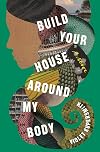
Loved this book. There are characters who appear throughout under slightly different designations and figuring out who is who is part of the fun. There is folklore and humor and big time revenge. And snakes, lots and lots of snakes. I liked the fact that some of the experiences were the kind of daily semi-threatening experiences nearly every woman has had ( playing keep away with your things e.g.)
A lot of the descriptions and events are a little nauseating, but I think it’s intentional. An show more indictment of colonialism and sexism. For a first time author to choose to tell the story in such a non-linear way was a bold choice, but I think it works.
The best part for me was the spiritual eradication squad, sort of a Vietnamese ghostbusters. It was some much needed comic relief. show less
A lot of the descriptions and events are a little nauseating, but I think it’s intentional. An show more indictment of colonialism and sexism. For a first time author to choose to tell the story in such a non-linear way was a bold choice, but I think it works.
The best part for me was the spiritual eradication squad, sort of a Vietnamese ghostbusters. It was some much needed comic relief. show less
Lists
Netgalley Reads (1)
Diverse Horror (1)
Awards


You May Also Like


Statistics
- Works
- 2
- Members
- 671
- Popularity
- #37,613
- Rating
- 3.9
- Reviews
- 53
- ISBNs
- 12
- Favorited
- 2


