
C Pam Zhang
Author of How Much of These Hills is Gold
About the Author
Works by C Pam Zhang
Associated Works
Mrs. Spring Fragrance and Other Writings (1912) — Introduction, some editions — 146 copies, 1 review
Shuggie Bain by Douglas Stuart [and] How Much of These Hills Is Gold by C Pam Zhang (2020) — Contributor — 2 copies
Tagged
Common Knowledge
- Birthdate
- 1990
- Gender
- female
- Education
- Brown University
University of Cambridge - Occupations
- novelist
- Short biography
- C Pam Zhang is an American writer best known for her work How Much of These Hills is Gold, released by Riverhead Books in 2020.
Zhang was born in Beijing and moved to the United States when she was 4. Growing up, she moved a lot and lived in ten different places by the time she was 18. She attended Brown University and has studied at Cambridge University. Zhang was the 2017 Truman Capote Fellow at the Iowa Writer's Workshop.
How Much of These Hills is Gold follows two newly orphaned children of immigrants, who are on the run, trying not just to survive but to find a home. The novel is set against the twilight of the American gold rush. How Much of These Hills is Gold is inspired by Zhang's childhood of moving around and reckons with the grief she experienced after losing her father when she was 22.
The New York Times said: "C Pam Zhang’s arresting, beautiful first novel is filled with myths of her own making as well as sorrows and joys."
The San Francisco Chronicle said that Zhang's novel is a “a fully immersive epic drama packed with narrative riches and exquisitely crafted prose…Zhang captures not only the mesmeric beauty and storied history of America’s sacred landscape, but also the harsh sacrifices countless people were forced to make in hopes of laying claim to its bounty.”
Zhang has been awarded support from Tin House, Bread Loaf, Aspen Words and elsewhere. - Nationality
- USA
China (birth) - Birthplace
- Beijing, China
- Places of residence
- San Francisco, California, USA
Kentucky, USA
Iowa City, Iowa, USA - Associated Place (for map)
- USA
Members
Reviews
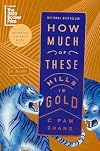
C Pam Zhang's debut novel, How Much of These Hills is Gold, is a beautiful, roaming, aching novel about the promise of the American dream and what it means to find a home. Set against the twilight of the American gold rush, two siblings are on the run in an unforgiving landscape—trying not just to survive but to find a home.
These siblings, Lucy and Sam, 12 and 11, children of Chinese laborers, take their father's body on a journey through the California hills in the middle of the Gold show more Rush. The quest for burial, the family strife, the smell of death, the hot sun, the dust, the storms, all recall Faulkner. Ba (Mandarin for "dad") haunts the narrative as Addie Bundren did, first as voice and then ultimately as a corpse, awful, unwieldy, and decomposing.
“How Much of These Hills Is Gold” is an aching book, full of myths of Zhang’s making (including tigers that roam the Western hills) as well as joys, as well as sorrows. It’s violent and surprising and musical. It's a book that doesn't provide easy answers. And it's one that quietly confrontational. Zhang wants you to remember the forgotten Chinese laborers, the very laborers who helped build the transcontinental railroad. More importantly, Zhang wants you to realize that they belong to this land too, even if they quite don't feel that way and even if their own individual ideas of what constitutes a home, a body, etc. may differ.
Zhang characters are flawed. Ba, is one mean-spirited but well meaning individual. And Lucy, tragically in the end, might be looking for a home in all the wrong places. Zhang does interesting things with genre too - subverting the Western to talk about race, gender, sexual identity, poverty and pubescence.
Alongside Sam and Lucy’s family story are the stories of the genocide and persecution of Native Americans, the colonization of the west and the compulsive exploitation of the land by desperate settlers and greedy opportunists. This is not your American history course from high school. This is poetic truth.
How Much of These Hills is Gold, is a beautiful and daring debut novel from a promising novelist. The novel doesn't necessarily have a neat ending. It's up to you to decide if Lucy and Sam ever truly find a home to call their own. show less
These siblings, Lucy and Sam, 12 and 11, children of Chinese laborers, take their father's body on a journey through the California hills in the middle of the Gold show more Rush. The quest for burial, the family strife, the smell of death, the hot sun, the dust, the storms, all recall Faulkner. Ba (Mandarin for "dad") haunts the narrative as Addie Bundren did, first as voice and then ultimately as a corpse, awful, unwieldy, and decomposing.
“How Much of These Hills Is Gold” is an aching book, full of myths of Zhang’s making (including tigers that roam the Western hills) as well as joys, as well as sorrows. It’s violent and surprising and musical. It's a book that doesn't provide easy answers. And it's one that quietly confrontational. Zhang wants you to remember the forgotten Chinese laborers, the very laborers who helped build the transcontinental railroad. More importantly, Zhang wants you to realize that they belong to this land too, even if they quite don't feel that way and even if their own individual ideas of what constitutes a home, a body, etc. may differ.
Zhang characters are flawed. Ba, is one mean-spirited but well meaning individual. And Lucy, tragically in the end, might be looking for a home in all the wrong places. Zhang does interesting things with genre too - subverting the Western to talk about race, gender, sexual identity, poverty and pubescence.
Alongside Sam and Lucy’s family story are the stories of the genocide and persecution of Native Americans, the colonization of the west and the compulsive exploitation of the land by desperate settlers and greedy opportunists. This is not your American history course from high school. This is poetic truth.
How Much of These Hills is Gold, is a beautiful and daring debut novel from a promising novelist. The novel doesn't necessarily have a neat ending. It's up to you to decide if Lucy and Sam ever truly find a home to call their own. show less
Lucy and Sam need to bury their Ba, but as poor Chinese orphans living in the American West just after the Gold Rush, no one wants to give them the needed silver dollars, and they must leave town.
At once a sweeping tale with a close focus on family, this debut novel shows a lot of promise. We mostly get the close third person of Lucy's point of view as she navigates her world, but we also get a glimpse of the family's backstory as well in what was my favorite part of the book. Beautiful show more descriptions, especially about the land, and wanting to know what would ultimately happen to Lucy kept me reading, though the tone is bleak and the plot a little disjointed. Not perfect, but an interesting story, and I'll definitely try another book by this author should she write more. show less
At once a sweeping tale with a close focus on family, this debut novel shows a lot of promise. We mostly get the close third person of Lucy's point of view as she navigates her world, but we also get a glimpse of the family's backstory as well in what was my favorite part of the book. Beautiful show more descriptions, especially about the land, and wanting to know what would ultimately happen to Lucy kept me reading, though the tone is bleak and the plot a little disjointed. Not perfect, but an interesting story, and I'll definitely try another book by this author should she write more. show less
Shockingly, hilariously crap. I don't think I've ever laughed so much while reading. This intellectually impoverished farrago of food porn clichés rides the coattails of the recent spate of thudding eat-the-rich movies: take a dash of Triangle of Sadness, a soupçon of Saltburn and The Menu, and add them to a casserole of modish themes — ecocide, oligarchy, the rise of nativism — and you get this deeply silly tale of a young line-cook summoned to be personal chef to a nameless show more supervillain in his mountaintop lair against the backdrop of a handwavey global catastrophe which has left everyone eating mung beans for breakfast, lunch and dinner. In a subterranean chamber, this evil overlord has assembled the cream of the world's scientists to grow sexy pomegranates, bring mammoths back from exinction so we can scoff them, tinker hubristically with genomes, and generally do evil overlord science things. Meanwhile on the surface, a rotating cast of jet-setters, each known only by their nationality and occupation e.g. "Italian munitions dealer", "Austrian trader", and not one but TWO "English sheep heiresses" sample the haute cuisine cooked up, apparently single-handedly, by the narrator. To complicate matters, our eager young chef soon falls in lesbian lust with the only named character, her boss's 20 year-old daughter, a domineering scientific genius called (obviously) Aida who has "a forty-year plan to craft the perfect hound".
I'm not sure I'll ever get the phrase "English sheep heiress" out of my mind, and tbh I'm not sure I want to.
Fans of Rupi Kaur will enjoy such prose-poetic pearls as "and so we come to the cusp of autumn, when summer breaks against the new season’s chilly heart..." or (talking about sex and shortcake) "on my tongue it was summer and it was spring and seasons flourished and vines ran high. Butter and fruit: my mouth an orchard in the sun." Fans of Edgar Allan Poe will appreciate the author's addiction to ostentatious adjectives like "sere". Connoisseurs of bathos will be smacking their lips at such choice morsels as "the beguilement of mushrooms" (which would actually be a great title for the book) and "I could hold back neither a burp nor my disdain". Elsewhere we're treated to redundancies like "a polar vortex by way of the arctic circle", portentous nonsense — our heroine recalls her introduction to smoking as when "I first learned to love this sip of death" — and the kind of head-scratching vocab choices that have traditionally provided work for editors: "a hymn, pensive and crashing with the thunder of the old gods". Zhang has all the words, or quite a lot of them anyway, but is comically clueless about how to use them.
As for the dialogue (written in cool italics, rather than fuddy-duddy speech marks), it yaws from the merely tin-eared to the cartoonish to the baldly expository. Most people talk in a kind of b-movie baddie cackle, saying things like "you fail to understand the delicacy of these considerations. Hubris. You are as insane as they say." At one point, several of the guests/denizens of the mountain debate the ethics of hunting with hounds in terms so facile I was reading while peeking between my fingers (the Italian automaker sides with the older English sheep heiress in favour of the practice, but they're outvoted by the son of a French director, the daughter of a British tech founder, and the Iranian meteorologist). And fiery Aida makes trenchant points about hypocrisy and personal complicity in the universal fucking up of things: "Please. As if you never ate tuna, or used plastics, or flew on planes when gas was artificially cheap. Every person on this planet had a hand in killing the chimps." That's us told!
Actually there's one other character on whom Zhang bestows a name: her oligarch, distractingly called Kandinsky. He's the richest man in the world and an absolute tosser, obviously. But like the films I mentioned above, what this book doesn't realize is that it's impossible to satirize the super-rich; they do it so consummately to themselves. Kandinsky's antics, far from seeming outrageous, make him the only halfway believable joker in this cast of clowns. The rest of them are barely even archetypes, the half-assed creations of an author with no facility for imagining the inner lives of others. In fact the only person with any inner life is the POV character, who after a Damascene moment with some jian bing on a trip to Milan comes to accept her own rich culinary heritage. Did you know that street food is real food, too, and just as valid as fancy French stuff? Well it is, so there! And the personal growth doesn't end there: in a spectacularly ill-judged epilogue, after chef girl walks away with megamillions and the bad guy and all his lackeys meet their makers in a Mars launch gone wrong, we get a wish-fulfillment happily-ever-after montage in which:
— "Quietly, [she's ever so 'umble] under a new name I chose for myself and my daughter, I endowed a foundation for young women in the food industry. To run it I gathered the best of the chefs I'd met over the years, those whose plates were admirable, and everything that went into them too, kitchens and hires, farms and hands [...] Each day its auditorium rang with the voices of girls come for free classes on sustainability, and ethical business, and accounting, and the care of the ecosystems that would ripple beneath the feet of my daughter, and girls like her to follow."
— Said daughter "got into her journalism program early decision" (how marvelous!) and quickly gets "a staff position at the LA Times". Good for her, but are we really supposed to believe that in this post-apocalyptic future, (a) there are still newspapers and (b) they are hiring staffers out of journalism programs? This is the nadir of the novel's implausability imo.
— Now an old woman, the narrator makes a pilgrimage to Beijing in fulfilment of a promise made long ago to Aida. There, she has a mystical experience: "I bought a baked yam [...] and thanked the vendor despite our lack of shared language. [That humility again!] I knew she understood. A part of the cook always makes it to the plate, sweat or curl of hair [??], desire or doubt, ambition or joy, and in that yam's salt crust I tasted her knowledge of loss. She dabbed tears from my face. Tried to sell me five more yams."
There you have it, ladies and gents. The Parable of the Yams.
Lots of other things about this book annoyed the shit out of me, but I'll just mention two of them. One is the author's habit of helpfully translating every Italian phrase the monolingual narrator overhears. Did you know that "manggia i ricchi" is Italian for "eat the rich"? You do now! And the other is the cat. There's a cat in this book, who like the rest of the characters, the author (or main character) can't be bothered to grace with a name. But it doesn't behave like a cat. For one thing, it won't go near the bed while its owner is romping on it with Aida. Anyone who has owned a cat while in a sexual relationship will tell you that cats supremely dgaf about humans doing it in their presence. Zhang can make her human characters as flat and characterless as she likes, but I draw the line when she does it to her cat. show less
I'm not sure I'll ever get the phrase "English sheep heiress" out of my mind, and tbh I'm not sure I want to.
Fans of Rupi Kaur will enjoy such prose-poetic pearls as "and so we come to the cusp of autumn, when summer breaks against the new season’s chilly heart..." or (talking about sex and shortcake) "on my tongue it was summer and it was spring and seasons flourished and vines ran high. Butter and fruit: my mouth an orchard in the sun." Fans of Edgar Allan Poe will appreciate the author's addiction to ostentatious adjectives like "sere". Connoisseurs of bathos will be smacking their lips at such choice morsels as "the beguilement of mushrooms" (which would actually be a great title for the book) and "I could hold back neither a burp nor my disdain". Elsewhere we're treated to redundancies like "a polar vortex by way of the arctic circle", portentous nonsense — our heroine recalls her introduction to smoking as when "I first learned to love this sip of death" — and the kind of head-scratching vocab choices that have traditionally provided work for editors: "a hymn, pensive and crashing with the thunder of the old gods". Zhang has all the words, or quite a lot of them anyway, but is comically clueless about how to use them.
As for the dialogue (written in cool italics, rather than fuddy-duddy speech marks), it yaws from the merely tin-eared to the cartoonish to the baldly expository. Most people talk in a kind of b-movie baddie cackle, saying things like "you fail to understand the delicacy of these considerations. Hubris. You are as insane as they say." At one point, several of the guests/denizens of the mountain debate the ethics of hunting with hounds in terms so facile I was reading while peeking between my fingers (the Italian automaker sides with the older English sheep heiress in favour of the practice, but they're outvoted by the son of a French director, the daughter of a British tech founder, and the Iranian meteorologist). And fiery Aida makes trenchant points about hypocrisy and personal complicity in the universal fucking up of things: "Please. As if you never ate tuna, or used plastics, or flew on planes when gas was artificially cheap. Every person on this planet had a hand in killing the chimps." That's us told!
Actually there's one other character on whom Zhang bestows a name: her oligarch, distractingly called Kandinsky. He's the richest man in the world and an absolute tosser, obviously. But like the films I mentioned above, what this book doesn't realize is that it's impossible to satirize the super-rich; they do it so consummately to themselves. Kandinsky's antics, far from seeming outrageous, make him the only halfway believable joker in this cast of clowns. The rest of them are barely even archetypes, the half-assed creations of an author with no facility for imagining the inner lives of others. In fact the only person with any inner life is the POV character, who after a Damascene moment with some jian bing on a trip to Milan comes to accept her own rich culinary heritage. Did you know that street food is real food, too, and just as valid as fancy French stuff? Well it is, so there! And the personal growth doesn't end there: in a spectacularly ill-judged epilogue, after chef girl walks away with megamillions and the bad guy and all his lackeys meet their makers in a Mars launch gone wrong, we get a wish-fulfillment happily-ever-after montage in which:
— "Quietly, [she's ever so 'umble] under a new name I chose for myself and my daughter, I endowed a foundation for young women in the food industry. To run it I gathered the best of the chefs I'd met over the years, those whose plates were admirable, and everything that went into them too, kitchens and hires, farms and hands [...] Each day its auditorium rang with the voices of girls come for free classes on sustainability, and ethical business, and accounting, and the care of the ecosystems that would ripple beneath the feet of my daughter, and girls like her to follow."
— Said daughter "got into her journalism program early decision" (how marvelous!) and quickly gets "a staff position at the LA Times". Good for her, but are we really supposed to believe that in this post-apocalyptic future, (a) there are still newspapers and (b) they are hiring staffers out of journalism programs? This is the nadir of the novel's implausability imo.
— Now an old woman, the narrator makes a pilgrimage to Beijing in fulfilment of a promise made long ago to Aida. There, she has a mystical experience: "I bought a baked yam [...] and thanked the vendor despite our lack of shared language. [That humility again!] I knew she understood. A part of the cook always makes it to the plate, sweat or curl of hair [??], desire or doubt, ambition or joy, and in that yam's salt crust I tasted her knowledge of loss. She dabbed tears from my face. Tried to sell me five more yams."
There you have it, ladies and gents. The Parable of the Yams.
Lots of other things about this book annoyed the shit out of me, but I'll just mention two of them. One is the author's habit of helpfully translating every Italian phrase the monolingual narrator overhears. Did you know that "manggia i ricchi" is Italian for "eat the rich"? You do now! And the other is the cat. There's a cat in this book, who like the rest of the characters, the author (or main character) can't be bothered to grace with a name. But it doesn't behave like a cat. For one thing, it won't go near the bed while its owner is romping on it with Aida. Anyone who has owned a cat while in a sexual relationship will tell you that cats supremely dgaf about humans doing it in their presence. Zhang can make her human characters as flat and characterless as she likes, but I draw the line when she does it to her cat. show less
I am not sure why this one gets such short shrift from other readers! I liked it well enough. Maybe it's the biblical cynicism some aren't liking. Maybe it's the borderline purple prose. Maybe it's the many mentions of extravagant foods us basic food people aren't aware of. (But to be fair, Zhang also has appreciation for McNuggets and KFC pudding in the acknowledgments and food such as Pop Tarts in the text... appreciation for not only the extravagant food!) Well... I liked this book show more anyway! What would happen if smog across most of the world caused most food supplies to dwindle? Of course, the main character should be a chef in this scenario. Said chef goes to work for a shark-eyed billionaire in a mansion that is seemingly made of only glass on top of a mountain. Does it sound Gothic? It is. But the book is a mix of genres, I think! My biggest problem with the book is probably that it reminds me of certain people that have been taking over eco-dystopias in recent fiction. But to counteract that, the book also reminds me of so many books I love... Claire Vaye Watkins, for sure. But I won't make a list... show less
Lists
Awards


You May Also Like


Associated Authors
Statistics
- Works
- 2
- Also by
- 5
- Members
- 1,699
- Popularity
- #15,108
- Rating
- 3.6
- Reviews
- 63
- ISBNs
- 39
- Languages
- 7
