
Megha Majumdar
Author of A Burning
About the Author
Image credit: Penguin Random House
Works by Megha Majumdar
Tagged
Common Knowledge
- Birthdate
- 1987
- Gender
- female
- Education
- Harvard University, Cambridge, Massachusetts, USA (social anthropology)
Johns Hopkins University (MA|Anthropolgy )
Johns Hopkins University (PhD|Social Anthropolgy ) - Occupations
- author
editor - Short biography
- MEGHA MAJUMDAR was born and raised in Kolkata, India. She moved to the United States to attend college at Harvard University, where she was a Traub Scholar, followed by graduate school in social anthropology at Johns Hopkins University. She works as an associate editor at Catapult, and lives in New York City. A Burning is her first book.
- Nationality
- India
- Birthplace
- Kolkata, West Bengal, India
- Places of residence
- Kolkata, India
Cambridge, Massachusetts, USA
New York, New York, USA - Map Location
- India
Members
Reviews
Real Rating: 4.75* of five
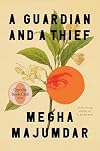
The Publisher Says: FINALIST FOR THE 2025 NATIONAL BOOK AWARD (Winner announced 19 November 2025) • FINALIST FOR THE KIRKUS PRIZE • Megha Majumdar’s electrifying new novel, following her acclaimed New York Times bestseller A Burning—longlisted for the National Book Award—is a piercing and propulsive tour de force.
In a near-future Kolkata beset by flooding and famine, Ma, her two-year-old daughter, and her elderly father are just days from leaving the show more collapsing city behind to join Ma’s husband in Ann Arbor, Michigan. After procuring long-awaited visas from the consulate, they pack their bags for the flight to America. But in the morning they awaken to discover that Ma’s purse, containing their treasured immigration documents, has been stolen.
Set over the course of one week, A Guardian and a Thief tells two stories: the story of Ma’s frantic search for the thief while keeping hunger at bay during a worsening food shortage; and the story of Boomba, the thief, whose desperation to care for his family drives him to commit a series of escalating crimes whose consequences he cannot fathom. With stunning control and command, Megha Majumdar paints a kaleidoscopic portrait of two families, each operating from a place of ferocious love and undefeated hope, each discovering how far they will go to secure their children’s future as they stave off encroaching catastrophe.
A masterful new work from one of the most exciting voices of her generation.
I RECEIVED A DRC FROM THE PUBLISHER VIA NETGALLEY. THANK YOU.
My Review: No better way to explain the world to itself exists than the telling of stories. We do not all create for ourselves stories of consequences and of forces that exact consequences absent any input from ourselves. It's why we have writers, they do this heavy lifting for us.
Author Majumdar does the lifting with a careful design and a powerful effort. Boomba, Ma, Dadu, and Mishti are all very much people in my story-eye. I know why Boommba did what he did; I know why Ma does what she does; I am in each place seeing each reality, feeling the desperation in each action.
Choosing the best of your very bad options is an evergreen storytelling plot. Being a guardian, a thief, a human, is always a moving spot on a spectrum, and highly dependent on the point of view of the observer. Nothing in life is fixed, or at least not for very long; Boomba exemplifies the observer-makes-the-interpretation paradox. No one in this story is going to end up happy. "HappiER" is even a stretch. Yet they all strive, they all do something, no matter how weird to our twice-removed eyes.
It can never, ever be more obvious that the drive to live, the will to go on because on is the only way to go, is the proper material of storytelling. We are creatures of story who require heartening to go on, even though it is the only way To Go. Hearten yourselves. Go on.
The Publisher Says: FINALIST FOR THE 2025 NATIONAL BOOK AWARD (Winner announced 19 November 2025) • FINALIST FOR THE KIRKUS PRIZE • Megha Majumdar’s electrifying new novel, following her acclaimed New York Times bestseller A Burning—longlisted for the National Book Award—is a piercing and propulsive tour de force.
In a near-future Kolkata beset by flooding and famine, Ma, her two-year-old daughter, and her elderly father are just days from leaving the show more collapsing city behind to join Ma’s husband in Ann Arbor, Michigan. After procuring long-awaited visas from the consulate, they pack their bags for the flight to America. But in the morning they awaken to discover that Ma’s purse, containing their treasured immigration documents, has been stolen.
Set over the course of one week, A Guardian and a Thief tells two stories: the story of Ma’s frantic search for the thief while keeping hunger at bay during a worsening food shortage; and the story of Boomba, the thief, whose desperation to care for his family drives him to commit a series of escalating crimes whose consequences he cannot fathom. With stunning control and command, Megha Majumdar paints a kaleidoscopic portrait of two families, each operating from a place of ferocious love and undefeated hope, each discovering how far they will go to secure their children’s future as they stave off encroaching catastrophe.
A masterful new work from one of the most exciting voices of her generation.
I RECEIVED A DRC FROM THE PUBLISHER VIA NETGALLEY. THANK YOU.
My Review: No better way to explain the world to itself exists than the telling of stories. We do not all create for ourselves stories of consequences and of forces that exact consequences absent any input from ourselves. It's why we have writers, they do this heavy lifting for us.
Author Majumdar does the lifting with a careful design and a powerful effort. Boomba, Ma, Dadu, and Mishti are all very much people in my story-eye. I know why Boommba did what he did; I know why Ma does what she does; I am in each place seeing each reality, feeling the desperation in each action.
Choosing the best of your very bad options is an evergreen storytelling plot. Being a guardian, a thief, a human, is always a moving spot on a spectrum, and highly dependent on the point of view of the observer. Nothing in life is fixed, or at least not for very long; Boomba exemplifies the observer-makes-the-interpretation paradox. No one in this story is going to end up happy. "HappiER" is even a stretch. Yet they all strive, they all do something, no matter how weird to our twice-removed eyes.
It can never, ever be more obvious that the drive to live, the will to go on because on is the only way to go, is the proper material of storytelling. We are creatures of story who require heartening to go on, even though it is the only way To Go. Hearten yourselves. Go on.
It was her duty, as a guardian, to put into action the beautiful ideal of hope. Ma thought harshly: This was what it looked like.show less
Hope for the future was no shy bloom but a blood-maddened creature, fanged and toothed, with its own knowledge of history’s hostilities and the cages of the present. Hope wasn’t soft or tender. It was mean. It snarled. It fought. It deceived. On this day, hope lived in the delivery of gold to a man who might be a scammer, and, perhaps, hope lived also in opening the doors to a thief.
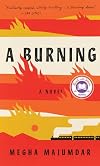
This is a beautifully-written, heartbreaking debut novel. It takes place in India and is about Jivan, a young woman who comes from extreme poverty but hopes to live a middle class life. She leaves school after finishing tenth grade to work at a shop called Pantaloons. She is arrested by the government for what is construed as a terrorist act, but what was truly a momentarily poor choice she made innocently enough. We meet her struggling parents and her friend Lovely, an hijra (transsexual) show more she is tutoring in English. We also learn about PT Sir who had been her physical education teacher at school. The story follows the trajectory of Jivan, Lovely and PT Sir through time and the influences they have on each other.
This is the kind of book that, once again in my life, makes me hate politics, mostly for the damage it does to some individuals and for shining a light on how corrupt it can be. I like this story, however, for its characters, and the way the story is told in halting English dialect. I would gladly read more of this author’s work and thought she created a deeply sad, but wonderful first novel. I wish her success on her future career in writing. She is off to an excellent start. show less
This is the kind of book that, once again in my life, makes me hate politics, mostly for the damage it does to some individuals and for shining a light on how corrupt it can be. I like this story, however, for its characters, and the way the story is told in halting English dialect. I would gladly read more of this author’s work and thought she created a deeply sad, but wonderful first novel. I wish her success on her future career in writing. She is off to an excellent start. show less
I read an ARC via Netgalley
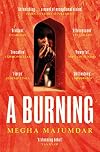
Told by alternating narrators the story centres on a young woman accused of a terrorist act. She is jailed based on little more than evidence that she was at the train station. We gradually learn how she came to live in the city, the story of her family's poverty. A hijra*, Lovely, tells her story of exclusion and of ambition to be an actress. And "PT Sir" (he's a sports teacher) gives his account of climbing the greasy pole of politics, witnessing abject poverty, show more promising much and supporting communal violence. Although Lovely offers some light relief with her wonderful ambition in the face of almost universal ridicule, there are no happy endings here. Majumdar looks directly at poverty and corruption and creates a narrative that asks hard questions about all those who choose not to see those suffering from bad government. Sometimes I felt as though I was reading from behind my fingers and had to put the book down for a bit. So not a light read by any means. But a powerful one.
"When Bimala Pal speaks next, he understands that she has known what happened all along.
If anybody asks, she tells him, PT Sir is to say that the unstable brick house in which the man was living collapsed. It spontaneously collapsed. And how does PT Sir know? He was doing a rally nearby. It is true that the house did collapse—when the party wrecked it with hammer and ax. It is true that the house did fall upon a man who died.
All of that is true, Bimala Pal reminds him, a gentle smile on her face." show less
Told by alternating narrators the story centres on a young woman accused of a terrorist act. She is jailed based on little more than evidence that she was at the train station. We gradually learn how she came to live in the city, the story of her family's poverty. A hijra*, Lovely, tells her story of exclusion and of ambition to be an actress. And "PT Sir" (he's a sports teacher) gives his account of climbing the greasy pole of politics, witnessing abject poverty, show more promising much and supporting communal violence. Although Lovely offers some light relief with her wonderful ambition in the face of almost universal ridicule, there are no happy endings here. Majumdar looks directly at poverty and corruption and creates a narrative that asks hard questions about all those who choose not to see those suffering from bad government. Sometimes I felt as though I was reading from behind my fingers and had to put the book down for a bit. So not a light read by any means. But a powerful one.
"When Bimala Pal speaks next, he understands that she has known what happened all along.
If anybody asks, she tells him, PT Sir is to say that the unstable brick house in which the man was living collapsed. It spontaneously collapsed. And how does PT Sir know? He was doing a rally nearby. It is true that the house did collapse—when the party wrecked it with hammer and ax. It is true that the house did fall upon a man who died.
All of that is true, Bimala Pal reminds him, a gentle smile on her face." show less
“Words. I know they are potent; they can bind and heal, rejuvenate and transform. But, I also know, in equal measure, they can kill.”
Wow! This is an impressive debut. Book of the summer? Well, I think so. In the opening pages, we are introduced to Jivan, a young Muslim woman, who has been trying to do all the right things to raise herself out the slum that she grew up in. All is shiny, until she witnesses the aftermath of a terrorist attack, where a train car is set on fire, burning many show more passengers. Using her very first smartphone, she logs into Facebook and leaves a fateful message, angered by the poor police reaction to the attack. Suddenly she finds herself, charged and jailed as a terrorist.
This is a riveting read, looking at class, justice and corruption. We have a new literary voice in town, and I welcome Majumdar with open arms. show less
Wow! This is an impressive debut. Book of the summer? Well, I think so. In the opening pages, we are introduced to Jivan, a young Muslim woman, who has been trying to do all the right things to raise herself out the slum that she grew up in. All is shiny, until she witnesses the aftermath of a terrorist attack, where a train car is set on fire, burning many show more passengers. Using her very first smartphone, she logs into Facebook and leaves a fateful message, angered by the poor police reaction to the attack. Suddenly she finds herself, charged and jailed as a terrorist.
This is a riveting read, looking at class, justice and corruption. We have a new literary voice in town, and I welcome Majumdar with open arms. show less
Lists
Awards


You May Also Like


Associated Authors
Statistics
- Works
- 2
- Members
- 1,992
- Popularity
- #12,914
- Rating
- 3.9
- Reviews
- 103
- ISBNs
- 35
- Languages
- 2
- Favorited
- 1