
Ayad Akhtar
Author of Homeland Elegies
About the Author
Ayad Akhtar is a screenwriter, playwright, actor, and novelist. He was nominated for a 2006 Independent Spirit Award for best screen-play for the film The War Within, and his plays include Disgraced, produced at New York's Lincoln Center Theater in 2012. He lives in New York City.
Works by Ayad Akhtar
Geächtet 1 copy
Tagged
Common Knowledge
- Birthdate
- 1970-10-28
- Gender
- male
- Education
- Brown University (BA)
Columbia University (MFA) - Occupations
- screenwriter
playwright
actor
novelist - Agent
- Chris Till
Donna Bagdasarian - Short biography
- Ayad Akhtar is a screenwriter, playwright, actor, and novelist. He was nominated for a 2006 Independent Spirit Award for best screenplay for the film The War Within. Akhtar lives in New York City. [from Disgraced (2013)]
- Nationality
- USA
- Birthplace
- Staten Island, New York, USA
- Places of residence
- New York, New York, USA
Milwaukee, Wisconsin, USA
Italy - Associated Place (for map)
- New York, USA
Members
Reviews
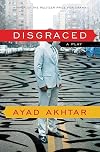
LATW version. A play that puts you in the middle of the most awkward dinner conversation you've ever experienced, with a Pakistani ex-muslim and his artist girlfriend who loves a liberal idea of Islam, together with a jewish coworker who also slept with the wife. The play is challenging enough about the topic to require 15 minutes of a panel of experts being concerned after the conclusion of the play, mostly bringing up a lack of nuances that - if included - would have made the thing a show more lecture and not a play.
It was refreshing to not have the script so guarded, but let the conflicts about heritage and belief be infected. Everyone's some flavour of asshole in this play, and it doesn't try to offer any easy answers. show less
It was refreshing to not have the script so guarded, but let the conflicts about heritage and belief be infected. Everyone's some flavour of asshole in this play, and it doesn't try to offer any easy answers. show less
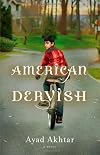
From the opening scenes of this novel, where the main character eats a bratwurst at a ball game, then goes to a Survey of Islamic History class the next day, I knew that I was going to like this book. There have been many books, fiction and nonfiction, written about those raised in a Christian tradition and who have deconverted, who have questioned their faith and moved form believer to agnostic or atheist; I have read and reviewed many of these. But this is the first book I have read which show more speaks from a Muslim point of view -- in this case, a ten-year-old boy named Hayat, born to a struggling Pakistani couple in the Midwest. It was revealing to see how similar the progression of the infatuation and adoption of religious faith is in a young Muslim and a young Christian, as well as the beginnings of the conflicts within those religious tenets, and how they are played out in a familial setting. Hayat's confusion and concern over the interpersonal turmoil amongst the adults in his life is something that carries over to young people from any cultural or religious background. This is one of my personal favorites out of the novels I've read in recent months. show less
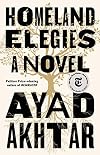
“Trump was no aberration or idiosyncrasy, as Mike saw it, but a reflection, a human mirror in which to see all we’d allowed ourselves to become. Trump had just felt the national mood, and his particular genius was a need for attention so craven, so unrelenting, he was willing to don any and every shade of our moment’s ugliness, consequences be damned.”
“America had begun as a colony and that a colony it remained, that is, a place still defined by its plunder, where enrichment was show more paramount and civil order always an afterthought.”
Akhtar, an award-winning playwright, was born on Staten Island to Pakistani physicians. His father, a cardiologist, treated Donald Trump, in the early '90s for an irregular heartbeat. He became infatuated with the man and began to drink the capitalistic kool-aid, leading to his own downfall. The author has chosen a unique narrative structure for this novel, blending fact and fiction. It is an American pastoral, with looks at identity, hope and dispossession. It also explores the immigrant experience, post- 9/11.
The writing is excellent. Smart and insightful. I had to reach for a dictionary, more than once. A book for the times and another top read from 2020. show less
“America had begun as a colony and that a colony it remained, that is, a place still defined by its plunder, where enrichment was show more paramount and civil order always an afterthought.”
Akhtar, an award-winning playwright, was born on Staten Island to Pakistani physicians. His father, a cardiologist, treated Donald Trump, in the early '90s for an irregular heartbeat. He became infatuated with the man and began to drink the capitalistic kool-aid, leading to his own downfall. The author has chosen a unique narrative structure for this novel, blending fact and fiction. It is an American pastoral, with looks at identity, hope and dispossession. It also explores the immigrant experience, post- 9/11.
The writing is excellent. Smart and insightful. I had to reach for a dictionary, more than once. A book for the times and another top read from 2020. show less
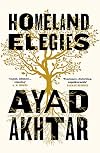
The story is well written and intellectually challenging. Akhtar writes in a form of meta fiction where the protagonist has his name and many reference points match those of the author, but cautions that this is a story and not autobiography. The narrative unfolds in various stories about his life, from growing up in Wisconsin with a father, a renowned heart specialist who once cared for Trump, to a mother who pined to go back to Pakistan and grieved over the murder of the man she truly show more loved. There are scenes of Akbar's own education from his aunt in Pakistan to college professors, one of whom convinces his to record his dream. We read of his economic understanding of the world according to Robert Bork’s contributions to the elimination of checks on private enterprise, and how he benefits from the insider market help of a friend. In addition there are personal stories about his experiences as Muslim after 9/11 and his ventures into romance. After reading the novel I happened upon an interview on a podcast called Tin House where the author further impressed with his sheer intellectual bounty of reflections and his ability to articulate how his reading and education shaped his writing.
NYT
For Ayad Akhtar, the Trump presidency has led to “Homeland Elegies,” a beautiful novel about an American son and his immigrant father that has echoes of “The Great Gatsby” and that circles, with pointed intellect, the possibilities and limitations of American life...
There’s a lot more in this novel. There is good writing about Salman Rushdie and Edward Said (one of the narrator’s aunts really wanted to get him into bed) and syphilis and hoof stew and Scranton, Pa., and screenwriting, among many other things...
Homeland Elegies” is a very American novel. It’s a lover’s quarrel with this country, and at its best it has candor and seriousness to burn.
I would highly recommend this book but only for the reader that will give it the attention it will need.
Lines:
I date my mother's intensifying anti Americanism to that summer, the summer when, in response to attacks on two US embassies in East Africa, Bill Clinton bombed a Sudanese medicine factory. When Mother-herself a doctor trained in the Third World-learned that the factory had been responsible for producing every ounce of Sudan's tuberculosis medications, she was particularly incensed. She already despised Clinton for his indiscretions with Monica Lewinsky, and the attack on the factory came three days after Clinton's disastrous address in which he admitted he'd been lying about the affair all along. She saw in this sequence a murderous cynicism: an American president under political siege distracts the nation by killing Muslims.”
It was from her that I first heard the analogy comparing love and arranged marriages to kettles of water pitched at different temperatures: the former already boiling, with no chance to get any hotter; the latter cold at the outset, requiring steady application to be sure but with ample room to heat up over the years.”
The established majority takes its we-image from a minority of its best, and shapes a they-image of the despised outsiders from the minority of their worst.”
Because being American is not about what they tell you—freedom and opportunity and all that horseshit. Not really. There is a culture here, for sure, and it has nothing to do with all the well-meaning nonsense. It’s about racism and money worship—and when you’re on the correct side of both those things? That’s when you really belong.”
Obama's victory had turned out to be little more than symbolic, only hastening our nation's long collapse into corporate autocracy, and his failures had raised the stakes immeasurably. Most Americans couldn't cobble together a week's expenses in case of an emergency. They had good reason to be scared and angry. They felt betrayed and wanted to destroy something. The national mood was Hobbesian: nasty, brutish, nihilistic-and no one embodied all this better than Donald Trump. Trump was no aberration or idiosyncrasy, as Mike saw it, but a reflection, a human mirror in which to see all we'd allowed ourselves to become. Sure, you could read the man for metaphors-an unapologetically racist real estate magnate embodying the rise of white property rights; a self-absorbed idiot epitomizing the rampant social self-obsession and narcissism that was making us all stupider by the day; greed and corruption so naked and endemic it could only be made sense of as the outsize expression of our own deepest desires-yes, you could read the man as if he were a symbol to be deciphered, but Mike thought it was much simpler than all that. Trump had just felt the national mood, and his particular genius was a need for attention so craven, so unrelenting, he was willing to don any and every shade of our moment's ugliness, consequences be damned. “ show less
NYT
For Ayad Akhtar, the Trump presidency has led to “Homeland Elegies,” a beautiful novel about an American son and his immigrant father that has echoes of “The Great Gatsby” and that circles, with pointed intellect, the possibilities and limitations of American life...
There’s a lot more in this novel. There is good writing about Salman Rushdie and Edward Said (one of the narrator’s aunts really wanted to get him into bed) and syphilis and hoof stew and Scranton, Pa., and screenwriting, among many other things...
Homeland Elegies” is a very American novel. It’s a lover’s quarrel with this country, and at its best it has candor and seriousness to burn.
I would highly recommend this book but only for the reader that will give it the attention it will need.
Lines:
I date my mother's intensifying anti Americanism to that summer, the summer when, in response to attacks on two US embassies in East Africa, Bill Clinton bombed a Sudanese medicine factory. When Mother-herself a doctor trained in the Third World-learned that the factory had been responsible for producing every ounce of Sudan's tuberculosis medications, she was particularly incensed. She already despised Clinton for his indiscretions with Monica Lewinsky, and the attack on the factory came three days after Clinton's disastrous address in which he admitted he'd been lying about the affair all along. She saw in this sequence a murderous cynicism: an American president under political siege distracts the nation by killing Muslims.”
It was from her that I first heard the analogy comparing love and arranged marriages to kettles of water pitched at different temperatures: the former already boiling, with no chance to get any hotter; the latter cold at the outset, requiring steady application to be sure but with ample room to heat up over the years.”
The established majority takes its we-image from a minority of its best, and shapes a they-image of the despised outsiders from the minority of their worst.”
Because being American is not about what they tell you—freedom and opportunity and all that horseshit. Not really. There is a culture here, for sure, and it has nothing to do with all the well-meaning nonsense. It’s about racism and money worship—and when you’re on the correct side of both those things? That’s when you really belong.”
Obama's victory had turned out to be little more than symbolic, only hastening our nation's long collapse into corporate autocracy, and his failures had raised the stakes immeasurably. Most Americans couldn't cobble together a week's expenses in case of an emergency. They had good reason to be scared and angry. They felt betrayed and wanted to destroy something. The national mood was Hobbesian: nasty, brutish, nihilistic-and no one embodied all this better than Donald Trump. Trump was no aberration or idiosyncrasy, as Mike saw it, but a reflection, a human mirror in which to see all we'd allowed ourselves to become. Sure, you could read the man for metaphors-an unapologetically racist real estate magnate embodying the rise of white property rights; a self-absorbed idiot epitomizing the rampant social self-obsession and narcissism that was making us all stupider by the day; greed and corruption so naked and endemic it could only be made sense of as the outsize expression of our own deepest desires-yes, you could read the man as if he were a symbol to be deciphered, but Mike thought it was much simpler than all that. Trump had just felt the national mood, and his particular genius was a need for attention so craven, so unrelenting, he was willing to don any and every shade of our moment's ugliness, consequences be damned. “ show less
Lists
Obama Reads (1)
Awards


You May Also Like


Associated Authors
Statistics
- Works
- 11
- Members
- 2,107
- Popularity
- #12,218
- Rating
- 4.0
- Reviews
- 107
- ISBNs
- 97
- Languages
- 12
- Favorited
- 1

