
Akimi Yoshida
Author of Banana Fish, Volume 1
About the Author
Image credit: via myanimelist.net
Series
Works by Akimi Yoshida
Banana Fish: Ultimative Edition 4 copies
Yasha Perfect Edition T05 2 copies
Yasha Perfect Edition T06 2 copies
Yasha Perfect Edition T04 2 copies
Yasha Perfect Edition T03 2 copies
Than the river for a long time gently (2) (PF Comics) (1985) ISBN: 4091784828 [Japanese Import] (1985) 1 copy
Yasha Perfect Edition T02 1 copy
Le sommeil d'Ève T01 1 copy
Le sommeil d'Ève T02 1 copy
Tagged
Common Knowledge
- Canonical name
- Yoshida, Akimi
- Other names
- 吉田 秋生
- Birthdate
- 1956-08-12
- Gender
- female
- Education
- Musashino Art University
- Nationality
- Japan
- Associated Place (for map)
- Japan
Members
Reviews
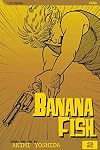
This volume is much better than volume 1. The story and character stuff is much stronger. There's a lot of moving parts in the plot, and while I still don't particularly find the actual banana fish part of the plot all that interesting, the character interactions more than make up for it. It also outright shows just how corrupt and awful cops are, and how much of a farce interrogations can be, as well as how evil US prisons and prison guards can be.
That being said, the stuff with Eiji show more getting everyone caught is still kind of silly. Admittedly it's realistic in the sense that Eiji has no idea what he's doing, and Ash has no options, but Eiji weirdly showing up to the undercover thing dressed like a magazine model for no apparent reason (unless he's playing into the idea that this is like a movie?) and predictably screwing everything up is still not a fun plot. I do enjoy his and Ash's relationship developing, though. And Eiji's relationship with Ibe is lovely .
The depiction of child sex trafficking is well-done, and I think people prevaricating over it have no experience in how this stuff works. The story is attempting to - at least on some level - be a realistic depiction of this era and particularly children and how they're treated by organized crime and people in power, particularly white cis men. It does a pretty decent job of that. It's not surprise the cops are acting like this (though of course we have the "good" cops). I do agree that Skip'sdeath is... complicated at best in the sense that the story doesn't have any major black characters outside of Skip (at least until Cain, but outside him, I think that's about it, and he's not in the story yet). All the black characters are extras. It's still focused on people of color and their struggles (I mean Eiji is Japanese, Shorter is Chinese), but it does treat violence against black people as more typical and unavoidable than it does with other people of color. Black characters here are collateral damage. Yes, they can help give white characters justification for murder, but they don't end well (unless you're that one prison guard, I guess). And while the story is still about people of color... it's just interesting on who is allowed to walk away from it, and who isn't .
All in all, this is a very good volume, and I say that as someone who generally doesn't like organized crime stories, or stories about cops. If you're considering dropping after volume 1, I highly recommend waiting until you get through volume 2. show less
That being said, the stuff with Eiji show more
The depiction of child sex trafficking is well-done, and I think people prevaricating over it have no experience in how this stuff works. The story is attempting to - at least on some level - be a realistic depiction of this era and particularly children and how they're treated by organized crime and people in power, particularly white cis men. It does a pretty decent job of that. It's not surprise the cops are acting like this (though of course we have the "good" cops). I do agree that Skip's
All in all, this is a very good volume, and I say that as someone who generally doesn't like organized crime stories, or stories about cops. If you're considering dropping after volume 1, I highly recommend waiting until you get through volume 2.
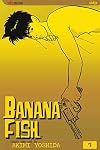
This felt a lot like the manga equivalent of an exploitation film. We practically get the shots of characters on 42nd street, in front of the array of various grindhouse movie theaters. However, unlike exploitation films, this manga has a production valume you can see on the page. Akimi Yoshida has an art style that reminds me, a lot of Katsuhiro Otomo, from the way she draws faces, to the detail in her background.
If I was to lay one complaint at her work, it's that she doesn't draw black show more people very well. It's not that the characters are drawn like Black Sambo (like some artists have a bad habit of doing - lookin' at you, Akira Toriyama). The character of "Skip" is supposed to be a black kid in his mid-teens - but his lips are drawn just a little too big. It's not so much that it's a caricature, but it's enough to stand out and be jarring. show less
If I was to lay one complaint at her work, it's that she doesn't draw black show more people very well. It's not that the characters are drawn like Black Sambo (like some artists have a bad habit of doing - lookin' at you, Akira Toriyama). The character of "Skip" is supposed to be a black kid in his mid-teens - but his lips are drawn just a little too big. It's not so much that it's a caricature, but it's enough to stand out and be jarring. show less
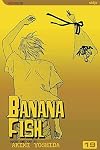
I don't know what to say. I don't have words. I'm heartbroken. My heart ached for Ash, Eiji, Shorter and Sing.
I never knew I needed Shorter's pov of Ash. Their friendship is one of the best things that happen in their lives, so it must be really hard for Ash to take his life, to set him free from his misery. The last line from Angel Eyes about Ash was devastating.
In Garden of Light when Akira asked Sing, if Ash and show more Eiji were lovers. And Sing answered with "They were more than that." I totally agree with his sentiments because Ash and Eiji did not need a label for their relationship. They loved each other dearly, and that's all that matters.
Ash will be forever my strongest child. He was true to his heart till the end. Ash, I'm gonna miss you forever. show less
I never knew I needed Shorter's pov of Ash. Their friendship is one of the best things that happen in their lives, so it must be really hard for Ash to take his life, to set him free from his misery. The last line from Angel Eyes about Ash was devastating.
"His face, when he laughed was cute and childlike, and totally angelic.
In Garden of Light when Akira asked Sing, if Ash and show more Eiji were lovers. And Sing answered with "They were more than that." I totally agree with his sentiments because Ash and Eiji did not need a label for their relationship. They loved each other dearly, and that's all that matters.
Ash will be forever my strongest child. He was true to his heart till the end. Ash, I'm gonna miss you forever. show less
Unfortunately I lack the proper historical perspective to appreciate this series for its place in shoujo/queer comics history, so if you want that, look elsewhere, since I know a lot has been written about this series by people smarter than me who have that context. While I will not be doing this series the justice it deserves without that perspective, what I can say is, for me: it's fine enough for organized crime queer comics from the 80s. I'm also biased in that I find organized crime show more media rather boring, but I enjoyed the anime adaptation well enough, so. The variety of character designs is pretty neat, and the way it shows cops is well... accurate to my understanding of cop-centric media at the time, toeing the line between sympathetic to the poor and marginalized and also sympathetic to cops who are I guess just doing whatever cops are supposed to be doing (while noting they're kind of incompetent and gross). The story is very 80s America, and that works quite well. The main drug plotline isn't all that fascinating, but I am biased in that I've seen a lot of stories about drug wars, gang violence, and the horrors faced by veterans. But I do still find Ash/Eiji compelling, even in their brief interactions here. Ash is still a wonderful character.
Since this story actually came out in the 80s and is intended to be ABOUT the 80s, it works well enough, rather than the beautifully done and more visually enjoyable anime adaptation that also kind of Frankenstein-monster'd its way to modernization while still attempting to retain the aesthetic/culture of 80s America, which truly doesn't work. The story here just doesn't work as is but set in 2016. But here, it's fine. If you combine the visuals of the anime with the story here, you get something solid between them. And that's not to say the art is bad here, because it is rather good (even if I don't care for how Eiji is drawn, and the way the manga sometimes does bad stereotype art for black people), but the anime does have much better art mostly. The plots that were good in the anime come right from here, includingAsh letting Eiji touch his gun, and Eiji vaulting over a wall and getting injured, and Ash being deeply impressed by him , so there's that. show less
Since this story actually came out in the 80s and is intended to be ABOUT the 80s, it works well enough, rather than the beautifully done and more visually enjoyable anime adaptation that also kind of Frankenstein-monster'd its way to modernization while still attempting to retain the aesthetic/culture of 80s America, which truly doesn't work. The story here just doesn't work as is but set in 2016. But here, it's fine. If you combine the visuals of the anime with the story here, you get something solid between them. And that's not to say the art is bad here, because it is rather good (even if I don't care for how Eiji is drawn, and the way the manga sometimes does bad stereotype art for black people), but the anime does have much better art mostly. The plots that were good in the anime come right from here, including
Lists
Awards


You May Also Like


Statistics
- Works
- 106
- Members
- 3,285
- Popularity
- #7,790
- Rating
- 4.3
- Reviews
- 27
- ISBNs
- 226
- Languages
- 10
- Favorited
- 6