
C. M. Mayo
Author of The Last Prince of the Mexican Empire
About the Author
Image credit: Teresa Castracane
Works by C. M. Mayo
Miraculous Air: Journey of a Thousand Miles Through Baja California, the Other Mexico (2002) 33 copies, 1 review
Metaphysical Odyssey Into the Mexican Revolution: Francisco I. Madero and His Secret Book, Spiritist Manual (2014) 4 copies
Odisea Metafísica hacia la Revolución Mexicana. Francisco I. Madero y su libro secreto, Manual espírita (2014) 1 copy
Miraculous air: journey of a thousand miles through Baja Californa, the other Mexico [by] C.M. Mayo. 1 copy
Sky Over El Nido 1 copy
On Decluttering Your Writing 1 copy
Tagged
Common Knowledge
- Canonical name
- Mayo, C. M.
- Legal name
- Mansell, Catherine
- Gender
- female
- Organizations
- PEN
American Literary Translators Association
Womens National Book Association
The Writers Center
Authors Guild
Authors Guild (show all 8)
Biographers International Organization
Women Writing the West - Awards and honors
- Flannery O'Connor Award for Short Fiction
Washington Writing Prize - Nationality
- USA
- Places of residence
- Mexico City, Mexico
Washington, D.C., USA - Associated Place (for map)
- USA
Members
Reviews
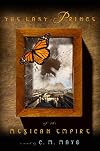
Rarely does a novel come with a list of references at the end, but C.M. Mayo’s engaging novelization of the political machinations surrounding Maximilian’s brief reign in 1860s Mexico does. It also has an epilogue that details Mayo’s search for facts about the rather tragic family of the former Mexican emperor Agustin de Iturbide.
Mayo does an excellent job describing the complicated political situation surrounding Maximilian’s tenuous position and the many international intrigues of show more both the Hapsburgs and the United States in regard to Mexico. She also tells the emotional story of an American woman embracing a new land and family with a dangerous amount of naïveté. The many shifts in points of view give you empathy (if not sympathy) for each of the characters. The Last Prince of the Mexican Empire is a good and recommended read for anyone with an interest in the politics and dramas of the nineteenth century. show less
Mayo does an excellent job describing the complicated political situation surrounding Maximilian’s tenuous position and the many international intrigues of show more both the Hapsburgs and the United States in regard to Mexico. She also tells the emotional story of an American woman embracing a new land and family with a dangerous amount of naïveté. The many shifts in points of view give you empathy (if not sympathy) for each of the characters. The Last Prince of the Mexican Empire is a good and recommended read for anyone with an interest in the politics and dramas of the nineteenth century. show less
 This review was written for LibraryThing Early Reviewers.
While Americans fight and die during the Civil War, another battle continues in Mexico. Political unrest within that country sets the stage for a French invasion led by Louis Napoleon. Propped up by the French and accompanied by his wife Carlota, the Archduke of Austria (Maximilian von Habsburg) reluctantly arrives in Mexico City to secure his role as Emperor. Faced with no child of their own, Maximilian and Carlota arrange a plot to take custody of a toddler, whose grandfather was the first show more Emperor of Mexico, in order to provide an heir to the throne. Agustin de Iturbide y Green is the child of a Mexican diplomat and an American belle with ties to Washington politics. The Iturbides agree to the custody arrangement when it becomes evident that Maximilian intends to take the child with or without their consent. Within days, however, Agustin’s distraught mother begins a campaign to reunite with her child - and in so doing ignites an international scandal while Maximilian’s empire begins to crumble and Carlota slips into madness.
The Last Prince of the Mexican Empire is a fictionalized re-telling of this time in Mexican history. Filled with colorful characters, the novel brings to life an event which has been buried in the history books. Mayo tells her story from a variety of viewpoints, alternating between the parents of Agustin, Agustin’s aunt Pepa, Agustin himself, Maximilian and Carlota, political heads of state, and those who surrounded the families as nannies, butlers, and cooks. It is a complex cast of characters.
Mayo’s writing is detailed and obviously well-researched. Her sense of place and history are strengths of the novels, with detailed descriptions of setting including the clothes and food from that time period. Mayo quickly embroils her reader in the politics of the time, including the internal workings of the royal family as well as international governments. Most of the characters are real persons of history, but their interactions are largely imagined. Mayo deftly reveals the subtle interplay which made up royal intrigue in the mid to late 1800s.
The complexity of the novel and number of characters (with foreign names) confused me at times. I think it might have been helpful for Mayo to include a “cheat sheet” of dates and events, along with characters and their relationship to each other, especially for readers like myself who do not have in-depth knowledge of history during the mid-nineteenth century. Although Mayo’s writing cannot be faulted, I found myself drifting at times in a sea of details that were difficult to sort through. **EDITED TO ADD - Thank you for Ms. Mayo for providing a terrific reference to all characters in this book here.
The Last Prince of the Mexican Empire is impeccably researched and beautifully rendered. Those readers who love complex historical novels and who want to learn more about this time period in Mexican history will enjoy Mayo’s work. show less
The Last Prince of the Mexican Empire is a fictionalized re-telling of this time in Mexican history. Filled with colorful characters, the novel brings to life an event which has been buried in the history books. Mayo tells her story from a variety of viewpoints, alternating between the parents of Agustin, Agustin’s aunt Pepa, Agustin himself, Maximilian and Carlota, political heads of state, and those who surrounded the families as nannies, butlers, and cooks. It is a complex cast of characters.
Mayo’s writing is detailed and obviously well-researched. Her sense of place and history are strengths of the novels, with detailed descriptions of setting including the clothes and food from that time period. Mayo quickly embroils her reader in the politics of the time, including the internal workings of the royal family as well as international governments. Most of the characters are real persons of history, but their interactions are largely imagined. Mayo deftly reveals the subtle interplay which made up royal intrigue in the mid to late 1800s.
The complexity of the novel and number of characters (with foreign names) confused me at times. I think it might have been helpful for Mayo to include a “cheat sheet” of dates and events, along with characters and their relationship to each other, especially for readers like myself who do not have in-depth knowledge of history during the mid-nineteenth century. Although Mayo’s writing cannot be faulted, I found myself drifting at times in a sea of details that were difficult to sort through. **EDITED TO ADD - Thank you for Ms. Mayo for providing a terrific reference to all characters in this book here.
The Last Prince of the Mexican Empire is impeccably researched and beautifully rendered. Those readers who love complex historical novels and who want to learn more about this time period in Mexican history will enjoy Mayo’s work. show less

C. M. Mayo’s The Last Prince of the Mexican Empire is the historically accurate, fictionalized account of Emperor Maximilian’s short reign over Mexico in the 1860s. Mayo’s hook is Maximilian’s “adoption” of the half-American grandson of the first Emperor of Mexico, General Agustín de Iturbide. The childless Maximilian makes the toddler his “heir apparent” to help shore up Mexican support for his French-backed regime, bribing the parents with pensions and promises of show more aristocratic lives in Paris – a bargain the Inturbides soon regret.
But the book is more than simply the story of the Iturbide family. It encompasses Maximilian’s entire, brief reign, from his forced relinquishment of family rights as a Hapsburg and Archduke of Austria when he accepted the Mexican crown from Louis Napoleon, to his wife Charlotte’s crack up, and his ultimate defeat at the hands of Mexican nationalists. Mayo spent years researching the story of Maximilian and the Inturbides, focusing on obscure primary source materials stashed away in historical archives.
The underlying story is fascinating. It is one thing to have a general understanding that the French were meddling around in Mexico the same time America was fighting its Civil War and the Prussians were vying with France for power in Europe. It is another thing to have all those moving parts come together in a coherent, entertaining novel that weaves the personal in with the political. As Mayo explains in the Epilogue, she chose to write the story as fiction because:
I wanted to tell it true, which means, of course, getting the facts as straight as possible but also, and this was the most interesting to me, telling an emotional truth. Why did Alice, Angel, Pepa, Maximilian, and Charlotte do what they did? Who encouraged and supported them, and who criticized, intimidated, and frustrated them – and for what motives? The answer is not only in historical and political analysis, but in their hearts, and the hearts of others can only be experienced with the imagination, that is, through fiction.
Mayo tells the story from the perspective of several characters, from Maximilian and Charlotte down to illiterate servants and even the toddler Agustín himself. This is an effective technique for layering details and pulling the most out of every aspect of the tale. But the continuous switching around made it difficult to become completely absorbed in the story.
Despite this and a few other minor flaws – the diplomatic maneuvering got a little repetitive and the ending was rushed – The Last Prince deserves attention. It is an ambitious book for tackling such a complicated little sliver of history, and Mayo brings her historic characters to life with a compelling story for a modern audience.
Also posted on Rose City Reader. show less
But the book is more than simply the story of the Iturbide family. It encompasses Maximilian’s entire, brief reign, from his forced relinquishment of family rights as a Hapsburg and Archduke of Austria when he accepted the Mexican crown from Louis Napoleon, to his wife Charlotte’s crack up, and his ultimate defeat at the hands of Mexican nationalists. Mayo spent years researching the story of Maximilian and the Inturbides, focusing on obscure primary source materials stashed away in historical archives.
The underlying story is fascinating. It is one thing to have a general understanding that the French were meddling around in Mexico the same time America was fighting its Civil War and the Prussians were vying with France for power in Europe. It is another thing to have all those moving parts come together in a coherent, entertaining novel that weaves the personal in with the political. As Mayo explains in the Epilogue, she chose to write the story as fiction because:
I wanted to tell it true, which means, of course, getting the facts as straight as possible but also, and this was the most interesting to me, telling an emotional truth. Why did Alice, Angel, Pepa, Maximilian, and Charlotte do what they did? Who encouraged and supported them, and who criticized, intimidated, and frustrated them – and for what motives? The answer is not only in historical and political analysis, but in their hearts, and the hearts of others can only be experienced with the imagination, that is, through fiction.
Mayo tells the story from the perspective of several characters, from Maximilian and Charlotte down to illiterate servants and even the toddler Agustín himself. This is an effective technique for layering details and pulling the most out of every aspect of the tale. But the continuous switching around made it difficult to become completely absorbed in the story.
Despite this and a few other minor flaws – the diplomatic maneuvering got a little repetitive and the ending was rushed – The Last Prince deserves attention. It is an ambitious book for tackling such a complicated little sliver of history, and Mayo brings her historic characters to life with a compelling story for a modern audience.
Also posted on Rose City Reader. show less
We spend many years in history classes and most of us end up retaining the major themes and facts of US history, some European major events and a smattering of the rest of the world’s story. Of course the 1860s were tumultuous years in America with the Civil War occupying the main stage for five years. But, how many of us are aware that just across the Rio Grande, Mexico was going through a similar upheaval and that the events are fascinating.
C. M. Mayo relates an utterly absorbing story, show more putting faces, feelings and emotions into a intense, brief episode in Mexican History, when Archduke Maximilian I of Austria reigned as Emperor of Mexico for three years. This seemingly incongruous situation was the result of the bizarre intersection of European and Mexican politics. A group representing the conversative, monarchical movement in Mexico, took advantage of the chaos following the overthrow of Benito Juarez and with French support, offered the crown of Mexico to Maximilian, the younger brother of Emperor Franz Joseph of Austria.
The imposition of a European royal court upon the political structure of 19th century Mexico is an interesting story in itself and Mayo tells it well. But, the author narrows her focus further by putting at the center two year old Augustin Iturbide y Green, the “last prince of the Mexican Empire.” The childless Maximilian and Carlota decided to identify an “heir presumptive” and in 1865 selected the grandson of Mexico’s first “emperor” Augustin Iturbide, as a means to increase acceptance of the struggling monarchy. Young Augustin’s parents, Angel Iturbide and his American wife, Alice Green, welcomed the proposed arrangement. In return for this designation, the new heir was to be raised in luxury, educated in the best schools in Europe and groomed to become Maximilian’s successor and restore the fortunes of the Iturbide family. But, when the child is actually cut off from all contact with his parents, and his parents forced to leave Mexico, Alice Green Iturbide begins a relentless campaign to reclaim her son, a quest that takes her to the court of Louis Napoleon and to the Vatican. Her quest, and the efforts of Maximilian and Carlota to retain their tottering throne make a spellbinding conclusion to this truly fresh and well-crafted novel.
Satisfying historic fiction contains the best elements of any good novel: excellent writing, strong plot, conflict, believable characters and an interesting setting. C. M. Mayo has brought all of these elements together around an intriguing and completely mesmerizing story. The impact of the novel was very strong and that has led me to read some background articles, do further research and given me some ideas for my next trip to Mexico. Hat off to Ms Mayo for a job well done. I eagerly look forward to her next effort. show less
C. M. Mayo relates an utterly absorbing story, show more putting faces, feelings and emotions into a intense, brief episode in Mexican History, when Archduke Maximilian I of Austria reigned as Emperor of Mexico for three years. This seemingly incongruous situation was the result of the bizarre intersection of European and Mexican politics. A group representing the conversative, monarchical movement in Mexico, took advantage of the chaos following the overthrow of Benito Juarez and with French support, offered the crown of Mexico to Maximilian, the younger brother of Emperor Franz Joseph of Austria.
The imposition of a European royal court upon the political structure of 19th century Mexico is an interesting story in itself and Mayo tells it well. But, the author narrows her focus further by putting at the center two year old Augustin Iturbide y Green, the “last prince of the Mexican Empire.” The childless Maximilian and Carlota decided to identify an “heir presumptive” and in 1865 selected the grandson of Mexico’s first “emperor” Augustin Iturbide, as a means to increase acceptance of the struggling monarchy. Young Augustin’s parents, Angel Iturbide and his American wife, Alice Green, welcomed the proposed arrangement. In return for this designation, the new heir was to be raised in luxury, educated in the best schools in Europe and groomed to become Maximilian’s successor and restore the fortunes of the Iturbide family. But, when the child is actually cut off from all contact with his parents, and his parents forced to leave Mexico, Alice Green Iturbide begins a relentless campaign to reclaim her son, a quest that takes her to the court of Louis Napoleon and to the Vatican. Her quest, and the efforts of Maximilian and Carlota to retain their tottering throne make a spellbinding conclusion to this truly fresh and well-crafted novel.
Satisfying historic fiction contains the best elements of any good novel: excellent writing, strong plot, conflict, believable characters and an interesting setting. C. M. Mayo has brought all of these elements together around an intriguing and completely mesmerizing story. The impact of the novel was very strong and that has led me to read some background articles, do further research and given me some ideas for my next trip to Mexico. Hat off to Ms Mayo for a job well done. I eagerly look forward to her next effort. show less
This review was written for LibraryThing Early Reviewers.Awards

You May Also Like


Associated Authors
Statistics
- Works
- 19
- Members
- 197
- Popularity
- #111,409
- Rating
- 3.6
- Reviews
- 34
- ISBNs
- 16
- Languages
- 1

