

Sybille Bedford (1911–2006)
Author of A Legacy
About the Author
Series
Works by Sybille Bedford
Bedford, Sybille Archive 1 copy
Associated Works
The World of Law, Volumes I-II: The Law in Literature, The Law as Literature (1960) — Contributor — 54 copies
Tagged
Common Knowledge
- Canonical name
- Bedford, Sybille
- Other names
- von Schoenebeck, Sybille Aleid Elsa (nee)
- Birthdate
- 1911-03-16
- Date of death
- 2006-02-17
- Gender
- female
- Occupations
- journalist
novelist
aristocrat - Awards and honors
- Royal Society of Literature (Companion of Literature, 1994)
Golden PEN Award (1993)
Order of the British Empire (Officer ∙ 1981) - Relationships
- Huxley, Aldous (friend)
- Short biography
- Sybille Aleid Elsa von Schoenebeck was born in the Charlottenberg district of Berlin, the daughter of a German aristocrat and his German-Jewish wife (later an Italian princess). On her father's death when she was seven years old, Sybille moved with her mother to Rome, London, and the south of France. She began a lifelong friendship with Aldous Huxley, who encouraged her to begin writing at age 16. In 1935, she made a brief marriage of convenience to Walter Bedford, an English army officer, which gave her British citizenship. During World War II, she went to the USA, but later returned to London and to her frequent European travels. Sybille Bedford's second novel, A Legacy (1956), is often considered her masterpiece. Her other books included three semi-autobiographical novels, A Favourite of the Gods (1963), A Compass Error (1968) and Jigsaw (1989), and several travel books. Working as a legal journalist for many years, she covered about 100 trials. In her book As It Was (1990), she discussed travel, the prosecution of D.H. Lawrence for Lady Chatterley's Lover, Jack Ruby's trial for the murder of Lee Harvey Oswald, and the trial of the Auschwitz officials in 1964. Although shy, Sybille Bedford could tell funny stories about her friends and fellow writers, including Thomas Mann, Lion Feuchtwanger, Edith Wharton, and the Huxleys. Her memoir, Quicksands, published in 2005 when she was nearly 94, revived interest in her elegant, insightful work. Her honors included OBE 1981; FRSL 1964; CLit 1994.
- Nationality
- Germany
UK - Birthplace
- Charlottenburg, Berlin, Germany
- Places of residence
- Berlin, Germany
Sanary-sur-Mer, France
Chelsea, London, England, UK
Rome, Italy
Portugal
California, USA (show all 7)
Schloss Feldkirch, Baden, Germany - Place of death
- London, England, UK
Members
Reviews
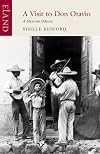
This entertaining book is an account of a journey that [[Sybille Bedford]] made to Mexico shortly after WWII.
A few chapters deal with the major sights they saw, but more time is spent describing tortuous journeys to places which turn out to be not quite worth it. Bedford portrays herself as someone who puts up pretty stoically with the discomforts ("There was a road bed, in a fairly advanced stage of construction, much of it really passable"), and her friend E as highly unimpressed by her show more surroundings and by Bedford's hare-brained travelling schemes ("E stalked past it all, the way Doctor Johnson must have stalked about the Hebrides").
There are happier elements to the visit too, from the beauties of some of the countryside to the titular visit to Don Otavio, a young and otherworldly Mexican from an aristocratic family who lives in a mansion by a lake.
Although I don't think this book told me much about Mexico, I still found Bedford an engaging companion. She gets as much humour from the foibles of the expats that she meets from the vagaries of transport and accommodation difficulties, and she appreciates the good sides of what she sees.
Sample: The posadas are most jolly. The ground floor is always a large, unkempt parlour opening into the patio without much transition, full of overgrown plants, wicker-chairs, objects without visible use, birds free and caged, and a number of sleeping dogs. Here the innkeepers jot their accounts, sort the linen, drive bargains with the poultry woman and the egg child, arraign the servants, play the gramophone, drink chocolate, chat and doze; and here the guests sit, smoke cigars, have their hair cut, shout for servants, play the gramophone, drink rum and chocolate, chat and doze. Everybody has their own bottle, sent out for by the mozo. The innkeeper would think you mad to pay him bar prices; every time you draw cork he will supply you - compliments of the house - with glasses, lime, salt (without which spirits are considered to be unswallowable), pistachio nuts, fried anchovies, toasted tortillas strewn with crumbs of cheese and lettuce, stuffed cold maize dumplings and pickled chilli peppers. show less
A few chapters deal with the major sights they saw, but more time is spent describing tortuous journeys to places which turn out to be not quite worth it. Bedford portrays herself as someone who puts up pretty stoically with the discomforts ("There was a road bed, in a fairly advanced stage of construction, much of it really passable"), and her friend E as highly unimpressed by her show more surroundings and by Bedford's hare-brained travelling schemes ("E stalked past it all, the way Doctor Johnson must have stalked about the Hebrides").
There are happier elements to the visit too, from the beauties of some of the countryside to the titular visit to Don Otavio, a young and otherworldly Mexican from an aristocratic family who lives in a mansion by a lake.
Although I don't think this book told me much about Mexico, I still found Bedford an engaging companion. She gets as much humour from the foibles of the expats that she meets from the vagaries of transport and accommodation difficulties, and she appreciates the good sides of what she sees.
Sample: The posadas are most jolly. The ground floor is always a large, unkempt parlour opening into the patio without much transition, full of overgrown plants, wicker-chairs, objects without visible use, birds free and caged, and a number of sleeping dogs. Here the innkeepers jot their accounts, sort the linen, drive bargains with the poultry woman and the egg child, arraign the servants, play the gramophone, drink chocolate, chat and doze; and here the guests sit, smoke cigars, have their hair cut, shout for servants, play the gramophone, drink rum and chocolate, chat and doze. Everybody has their own bottle, sent out for by the mozo. The innkeeper would think you mad to pay him bar prices; every time you draw cork he will supply you - compliments of the house - with glasses, lime, salt (without which spirits are considered to be unswallowable), pistachio nuts, fried anchovies, toasted tortillas strewn with crumbs of cheese and lettuce, stuffed cold maize dumplings and pickled chilli peppers. show less

Sybille Bedford entführt uns mit diesem Roman in die Welt der Aristokratie: mit Eleganz und Ironie erzählt sie die Geschichte dreier starker Frauen zu Beginn des 20. Jahrhunderts. Im Mittelpunkt steht die schöne, elegante Constanza, die die exzentrische Lebensweise ihrer Eltern – einer reichen Amerikanerin und eines dekadenten römischen Fürsten – kultiviert und auf die Spitze treibt.
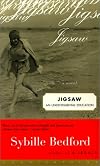
Sybille Bedford's well-told, intimate memoir Jigsaw (1989) unfolds her fraught relationship with her wayward mother, who abandoned her as a child and took her up again more-or-less when Sybille, aka Baroness Billi, was a teenager. Between the two world wars, Sybille's adventures in Italy and the south of France with her mother, stepfather, and neighbors who became surrogate parents of sorts include Aldous & Maria Huxley and a couple who seemed to have glided from a painting by Tamara show more Lempicka. Sent to London in quest of education, Sybille lives first among a moveable household of hard-up bohemians and then more or less with a pair of literary sisters from Berlin who have melodramas of their own. Jigsaw is best read after Bedford's masterpiece, A Legacy (1956), which recounts the florid history of her father's family. Jigsaw is less forthcoming about Bedford's maternal ancestry though the portrait of a writer-manqué mother who became a morphine addict is vividly conveyed by physical descriptions and dialogue. show less

A Legacy was Sybille Bedford’s first novel, and like the rest of her fiction is very autobiographical. Based upon Bedford’s own upbringing in Germany, it is the story of two large and complex families united by a brief marriage. This is an extraordinary novel- charting these intertwined lives from around the time of the Franco-Prussian War to just before the First World War. The story is narrated by Francesca the youngest daughter of Baron Julius von Felden by his second wife, although show more most of the story takes place many years before her birth, and even before her parents meet.
“I spent the first nine years of my life in Germany, bundled to and fro between twohouses. One was outrageously large and ugly; the other was beautiful. They were a huge Wilhelminian town house in the old West of Berlin, built and inhabited by the parents of my father’s first wife, and a small seventeenth-century chateau and park in the South, near Vosges, bought for my father by my mother.”
Upon the marriage of Julius Von Felden and his first wife Melanie Merz the fortunes of two very different families become linked. The aristocratic, Catholic Von Felden’s from rural Baden, who in the mid 1800’s were still French speaking, and the Merzs a wealthy, bourgeois (non-practising) Jewish family from Berlin. Bedford recounts numerous family trials and tribulations in her fictionalised account of German life that quite obviously bears a striking resemblance to her own. In A Legacy Sybille Bedford shows us a world we don’t often see, a world now totally lost to us. It is a world of brutal military academies, the Kaiser’s Germany, backwoodsmen, eccentric landed gentry, gamblers, money and legacies.
The cast of characters is fairly large, Julius one of a large family of brothers, the most memorable of these Johannes is sent by his father to a brutal military cadet school. His experiences here totally destroy him, his flight being the beginning of a long political and diplomatic tussle that involves the family of his sister’s fiancé – and is still being felt many years later when our narrator herself is a young girl. Amid the darker aspects to the stories of these families, Sybille Bedford scatters some truly joyously humorous moments, we see an eccentric younger Julius travelling Europe in the company of three chimpanzees at the time he meets his first wife – booking himself and them into smart Berlin hotels – and needing to pay the price of the repairs which naturally must follow. To say that Julius and his chimps are something of a shock to his prospective in-laws, is an understatement. Poor Melanie… when informed she must be baptised before she marries the Catholic Julius (to her family’s horror) she takes herself off to church without telling anyone – later proudly producing her certificate of baptism – from a protestant church!
“In the morning Edu went to the hotel to fetch Julius. The boy had not arrived. Julius explained that he could not go out.
“The servants here do not seem to be kind.”
Edu inquired what he was to tell his parents. Julius said “You see, it is only because of Robert. Robert has a difficult nature. He is his own worst enemy.”
The boy remained lost for several days. Edu and Friedrich did the telegraphing. Grandpapa was persuaded to call at the Kaiserhof. Julius had wangled an anthracite stove, the management having refused to re-light the central plant. Julius himself suffered, but Grandpapa found it as warm as his own house. The chimpanzees too, comfortable for the first time, were in an amiable mood; Robert poured Madeira, and Tzara showed an interest in the old gentleman. He gave her a gold-piece, and went home impressed.
“As good as the Opera,” he described at luncheon. “The Opera in the old days.”
Following Melanie’s early death Julius remains very much at the heart of his in-laws family. His sister-in-law Sarah, a wealthy woman in her own right who has for years refused to pay her husband’s gambling debts – becomes perhaps his greatest friend. I have to admit to particularly liking Sarah – her toughness and straight talking, her friendship with Julius I really liked. It is through Sarah that Julius meets Caroline, thirty years his junior, who becomes his second wife, the mother of our narrator. Caroline’s story is continued in the sequel to this novel, Jigsaw: an Unsentimental education.
The writing is glorious, unsurprising to me, having already read A Favourite of the gods and A Compass Error, which introduced me to Bedford’s fabulous prose, her dialogue is superb, the interplay between characters feels very authentic. Once or twice the dialogue is a little hard to follow, but overall it’s really exceptional, giving voice to the society in which the author herself grew up. (There is one conversation that takes place on the final page, frustratingly- which I was a little confused about – so if there is anyone who has read the book who can remind me of the significance of the Spanish letters Caroline refers to, I would be very grateful.) Don’t let that put you off – true, this is the kind of book the reader needs to concentrate on, it is probably not an easy read –but even admitting one or two mild confusions I really loved it. Nancy Mitford apparently called A Legacy ‘One of the very best novels I have ever read’ while Francis King called it ‘One of the great books of the twentieth Century.’ Thankfully I have the sequel to this novel Jigsaw: an Unsentimental Education waiting on my bookcase, I can’t wait to read it. show less
“I spent the first nine years of my life in Germany, bundled to and fro between twohouses. One was outrageously large and ugly; the other was beautiful. They were a huge Wilhelminian town house in the old West of Berlin, built and inhabited by the parents of my father’s first wife, and a small seventeenth-century chateau and park in the South, near Vosges, bought for my father by my mother.”
Upon the marriage of Julius Von Felden and his first wife Melanie Merz the fortunes of two very different families become linked. The aristocratic, Catholic Von Felden’s from rural Baden, who in the mid 1800’s were still French speaking, and the Merzs a wealthy, bourgeois (non-practising) Jewish family from Berlin. Bedford recounts numerous family trials and tribulations in her fictionalised account of German life that quite obviously bears a striking resemblance to her own. In A Legacy Sybille Bedford shows us a world we don’t often see, a world now totally lost to us. It is a world of brutal military academies, the Kaiser’s Germany, backwoodsmen, eccentric landed gentry, gamblers, money and legacies.
The cast of characters is fairly large, Julius one of a large family of brothers, the most memorable of these Johannes is sent by his father to a brutal military cadet school. His experiences here totally destroy him, his flight being the beginning of a long political and diplomatic tussle that involves the family of his sister’s fiancé – and is still being felt many years later when our narrator herself is a young girl. Amid the darker aspects to the stories of these families, Sybille Bedford scatters some truly joyously humorous moments, we see an eccentric younger Julius travelling Europe in the company of three chimpanzees at the time he meets his first wife – booking himself and them into smart Berlin hotels – and needing to pay the price of the repairs which naturally must follow. To say that Julius and his chimps are something of a shock to his prospective in-laws, is an understatement. Poor Melanie… when informed she must be baptised before she marries the Catholic Julius (to her family’s horror) she takes herself off to church without telling anyone – later proudly producing her certificate of baptism – from a protestant church!
“In the morning Edu went to the hotel to fetch Julius. The boy had not arrived. Julius explained that he could not go out.
“The servants here do not seem to be kind.”
Edu inquired what he was to tell his parents. Julius said “You see, it is only because of Robert. Robert has a difficult nature. He is his own worst enemy.”
The boy remained lost for several days. Edu and Friedrich did the telegraphing. Grandpapa was persuaded to call at the Kaiserhof. Julius had wangled an anthracite stove, the management having refused to re-light the central plant. Julius himself suffered, but Grandpapa found it as warm as his own house. The chimpanzees too, comfortable for the first time, were in an amiable mood; Robert poured Madeira, and Tzara showed an interest in the old gentleman. He gave her a gold-piece, and went home impressed.
“As good as the Opera,” he described at luncheon. “The Opera in the old days.”
Following Melanie’s early death Julius remains very much at the heart of his in-laws family. His sister-in-law Sarah, a wealthy woman in her own right who has for years refused to pay her husband’s gambling debts – becomes perhaps his greatest friend. I have to admit to particularly liking Sarah – her toughness and straight talking, her friendship with Julius I really liked. It is through Sarah that Julius meets Caroline, thirty years his junior, who becomes his second wife, the mother of our narrator. Caroline’s story is continued in the sequel to this novel, Jigsaw: an Unsentimental education.
The writing is glorious, unsurprising to me, having already read A Favourite of the gods and A Compass Error, which introduced me to Bedford’s fabulous prose, her dialogue is superb, the interplay between characters feels very authentic. Once or twice the dialogue is a little hard to follow, but overall it’s really exceptional, giving voice to the society in which the author herself grew up. (There is one conversation that takes place on the final page, frustratingly- which I was a little confused about – so if there is anyone who has read the book who can remind me of the significance of the Spanish letters Caroline refers to, I would be very grateful.) Don’t let that put you off – true, this is the kind of book the reader needs to concentrate on, it is probably not an easy read –but even admitting one or two mild confusions I really loved it. Nancy Mitford apparently called A Legacy ‘One of the very best novels I have ever read’ while Francis King called it ‘One of the great books of the twentieth Century.’ Thankfully I have the sequel to this novel Jigsaw: an Unsentimental Education waiting on my bookcase, I can’t wait to read it. show less
Lists
Booker Prize (1)
Female Author (1)
Awards


You May Also Like


Associated Authors
Statistics
- Works
- 16
- Also by
- 3
- Members
- 2,892
- Popularity
- #8,861
- Rating
- 3.9
- Reviews
- 40
- ISBNs
- 127
- Languages
- 7
- Favorited
- 9
