
Huy Voun Lee
Author of At the Beach
About the Author
Works by Huy Voun Lee
Associated Works
Tagged
Common Knowledge
There is no Common Knowledge data for this author yet. You can help.
Members
Reviews
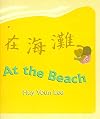
I enjoyed reading this book for many different reasons. This book is an informational book mixed with Contemporary Realistic Fiction. This is because the author included a story about how a child learns how to write and read Mandarin Chinese. I liked the language of this book because the author compares how to read and write mandarin Chinese by comparing it to real life events. For example, the author writes, “And this one looks like a person stretching out his arms and legs. It means show more big.” I also liked the illustrations because they enhanced the story by imitating the letters in Chinese. This gives students a visual to compare what the Mandarin Chinese letters look like compared to events that happen in the real world. This book was using to teach Mandarin Chinese in a unique way and I would recommend this book to teachers who are teaching multiculturalism and other languages in their classroom. show less
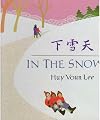
I absolutely love this book. This was one of my favorite books as a child and the first book that included Chinese characters into the story that I read as a child. The story, which is very simple, is about a child and his mother who take a walk through the snow and learn different Chinese characters by drawing them into the snow. It is a very good informational book that includes several simple Chinese characters for young children learning a new language. I love how the author uses the show more characters and compares the way that they are written to how they look in real life. For example for the character 木, which means tree, Xiao Ming, the little boy, exclaims that “it looks just like a tree. I can see its trunk, branches and roots.” This is a very good way for young children to be able to visualize and remember how to write Chinese characters. The book contains charts at the beginning and end of the book depicting all the words used in the story, how they are pronounced phonetically, their definition in English, and pictures of what they represent and how similar they look to the characters. Finally, I really enjoy the art in this book and was able to remember several scenes from this book, although it had been years since I last picked it up. The pictures are very simple and have solid colors. It almost looks like cutouts of colored paper that is glued together to create one picture. The art does not take away from the information being presented and does a good job of supplementing what the writing cannot. Without the pictures, it would be very hard to visualize how the characters can be translated into real life objects. show less
In my opinion, the book "In the Snow" is an excellent book for young readers. The first thing I liked about this book was the multicultural aspect. Many young students may not have been exposed to things like Chinese character writing and it is definitely an interesting topic to learn about. The book also explains the Chinese characters in a way that is easy to remember and understand. For example, one page shows the Chinese symbol for "tree" which can also mean "wood." The text reads, show more "'This is the character for tree,' she says, 'It looks just like a tree. I can see it's trunk, branches and roots,' exclaims Xiao Ming." From looking at the picture, a reader might be able to remember the symbol since the explanation puts the symbol into perspective, which can help the reader learn something new. Another thing I liked about this book was the illustrations. They are very simple and seem to be done in a collage type format with very strong lines and simple landscapes. There is also a border around each page which I find appealing. One page, for example, has a rounded red border with white snowflakes. The more complex borders help you appreciate the simplicity of the illustrations inside the border and help you to focus on the text as well. An additional feature I liked about this book was the fact that it had a page with different symbols on it as well as their meaning. This page has four columns. The first has a graphic of what the symbol represents, like one of the sun. The second column has the Chinese symbol, the third column has the word in English ("sun") and the fourth has the meaning of the symbol in Chinese; in the suns case, "ri (rur, pronounced with rounded lips)." Readers can also find this page helpful if they are interested in learning more about the language and extending their knowledge outside of the actual story. The big idea of this story was so expose children to the Chinese culture and teach about different Chinese symbols and their meanings. show less
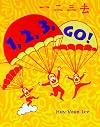
I feel it's important to note that this book i extremely short and has no real plot of any kind. That being said, it's a great counting book that teaches introductory Chinese characters. Each page has a different situation, counting up from 1 to 10 (for example, "One catches"). Accompanying each numeral phrase is the corresponding Chinese characters. It was - as previously mentioned - a very simple book, but for a student with no exposure to Chinese characters, it could be a great stepping show more stone into learning more about the language. I think that its simplicity makes it great in that sense, as it would not be an intimidating book for children to approach. It's a good example of an informational text because what it lacks in detail, it makes up for in simply teaching the reader about Chinese characters. This book would be well used when teaching about different languages, cultures, or more specifically if you happened to have a student who spoke Chinese and wanted to include some of their culture into your curriculum.
Media: stencil/digital show less
Media: stencil/digital show less
Lists
Awards


You May Also Like


Associated Authors
Statistics
- Works
- 7
- Also by
- 2
- Members
- 520
- Popularity
- #47,759
- Rating
- 3.8
- Reviews
- 32
- ISBNs
- 21
- Languages
- 1