
Henry Mayhew (1812–1887)
Author of London Labour and the London Poor [abridged - Neuburg]
About the Author
Henry Mayhew had a varied career as a London writer of the mid-Victorian period. He was the son of a London solicitor, Joshua Mayhew, who reputedly was a rather tyrannous father. Apparently, Henry was a bitter disappointment to his father; the younger Mayhew had been educated at the Westminster show more School but, in objection to a flogging he had received, ran away from school and went to sea for a year. On his return, he was articled to his father but after three years, he abandoned the law to seek a career as a journalist and a dramatist. Mayhew achieved some early success as a dramatist, most notably with his 1834 farce, "The Wandering Minstrel." In the late 1830's, he was the joint editor of a successful satirical weekly, Figaro in London, and later helped to found Figaro's most significant and long-lived successor, Punch. Evidently, a fairly serious rift developed between Mayhew and his magazine colleagues, although the details of this falling-out remain a mystery---one of the many unanswered questions about Mayhew's life. Mayhew was never without financial worries, and, as a means of making quick money, he collaborated on a number of comic novels with his younger brother, Augustus (1826--75). Their most successful work is "The Greatest Plague of Life" (1847), which was issued in monthly numbers and proved very popular. They followed it with "Whom to Marry and How to Get Married" (1848); later Mayhew singly authored 1851, or, "The Adventures of Mr. and Mrs. Sandbags 1851," (1851). Mayhew's attempt, in 1851, to publish the 82 "letters" he had written for the Morning Chronicle, in which he investigates the plight of London's urban poor, was a financial failure. They were issued in 1861, however, in four volumes under the title London Labour and the London Poor. It is for this classic work that Mayhew is today best known. In it, he unhesitatingly depicts the opprobrium under which most of the London working classes led their lives. In many ways, London Labour and the London Poor epitomizes the Victorian tendency to be simultaneously repulsed and fascinated by the working classes, the "Great Unwashed" huddled together in the urban centers of England. Along with Edwin Chadwick and J.P. Kay-Shuttleworth, Mayhew stands as one of the earliest of urban sociologists. Although recent years have witnessed an increase in interest in Henry Mayhew, a "definitive" biography remains to be written. The introductions to his work, notably John Rosenberg's preface to the Dover facsimile edition of London Labour and the London Poor and the essays framing the edition of "The Unknown Mayhew," are good sources of information. (Bowker Author Biography) show less
Image credit: wikipedia
Series
Works by Henry Mayhew
The London Underworld in the Victorian Period: Authentic First-Person Accounts by Beggars, Thieves and Prostitutes (v. 1) (2005) 185 copies
London Labour and the London Poor [abridged - O'Day/Englander] (2008) — Writer; Author — 104 copies, 1 review
THE GREATEST PLAGUE OF LIFE: or the Adventures of a Lady in Search of a Good Servant. By One Who Has Been "Almost Worrie (2017) 7 copies
The Boyhood of Martin Luther; or, The Sufferings of the Heroic Little Beggar-Boy Who Afterwards Became the Great German Reformer (2007) 6 copies
Morning chronicle survey of labour and the poor. the metropolitan districts / Volume 2 (1981) 5 copies
The Morning chronicle survey of labour and the poor : the metropolitan districts. Volume 4 (1981) 4 copies
The morning chronicle survey of labour and the poor. the metropolitan districts / Volume I (2016) 4 copies
The story of the peasant-boy philosopher: or, "A child gathering pebbles on the sea-shore." (Founded on the early life of Ferguson, the shepherd-boy astronomer, and intended to… (1856) 4 copies, 1 review
1851: or, The Adventures of Mr. and Mrs. Sandboys and Family, who came up to London to Enjoy Themselves, and to See the Great Exhibition (2017) 4 copies, 1 review
Whom to Marry and How to get Married! or, The Adventures of a Lady in search of a good husband 4 copies
The morning chronicle survey of labour and the poor. the metropolitan districts / Volume 6 (1982) 4 copies
The morning chronicle survey of labour and the poor : the metropolitan districts. Volume 5 (1982) 3 copies
Voices of the poor : selections from the Morning Chronicle Labour and the poor (1849-1850) (2013) 2 copies
Punch Vols. 5-8 (1843-45) 2 copies
Punch, Or the London Charivari, Volumes 41-44, July 1861 to June 1863, [in 1 volume] (1861) 2 copies
Punch, Or the London Charivari, Volumes 33-36, July 1857 to June 1859, [in 1 volume] (1857) 2 copies
The morning chronicle survey of labour and the poor. the metropolitan districts / Volume 3 (2017) 2 copies
Mayhew's London + Mayhew's Characters + London's Underworld — Writer — 2 copies
Punch, Volume X 1 copy
The great world of London 1 copy
Young Benjamin Franklin 1 copy
Associated Works
The Art of Fact: A Historical Anthology of Literary Journalism (1997) — Contributor — 226 copies, 1 review
Doré's London: All 180 Images from the Original London Series with Selected Writings (2008) — Contributor — 63 copies
Les visiteurs du pauvre. Anthologie d'enquêtes britanniques sur la pauvreté urbaine, 19e-20e siècle (2000) — Contributor — 1 copy
Tagged
Common Knowledge
- Birthdate
- 1812-11-25
- Date of death
- 1887-07-25
- Gender
- male
- Education
- Westminster School, London
- Occupations
- journalist
sociologist
reformer
playwright - Organizations
- Punch magazine (co-founder)
- Relationships
- Mayhew, Augustus (brother)
- Nationality
- UK
- Birthplace
- London, England, UK
- Places of residence
- London, England, UK
Paris, France - Place of death
- London, UK
- Associated Place (for map)
- UK
Members
Reviews
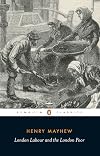
"London Labour and the London Poor" is an extraordinary piece of mid-19th-century journalism. Henry Mayhew, a writer and editor well-known in his time (he was an early editor of Punch), spent years roaming the poor neighborhoods of London, seeking out stories of the poor and downtrodden. He carefully describes the work and economics involved with each profession, and presents many faithfully recorded statements from the people he finds.
From mudlarks (scavengers during low tide on the show more Thames), to prostitutes (of several distinct classes, such as soldiers' women and moonlighting housewives), to street food-sellers (who knew that one could write so engagingly about the sale of baked potatoes?), Mayhew presents an astonishing portrait of the lives and struggles of poor people in the world's richest city at the height of its power. His writing is detailed but never dull, and he provides invaluable economic data without letting it overwhelm his storytelling. (In particular, his description early in the book of the bustle of activity in the Brill market is one of the loveliest stretches of historical descriptive writing I've ever seen.) Additionally, the statements from his informants are extraordinary and heartbreaking; each one could spawn a novel all by itself.
This particular edition is a collection of well-chosen excerpts from the original three-volume work, plus a few selections from the later fourth volume (edited by Mayhew but largely written by others). My only complaint about this version is that it has no index and only a very general table of contents, for which it loses half a star. But even with these oversights, it is a marvelous reading experience and a priceless source of information about Victorian London. Today, "London Labour and the London Poor" has become an essential resource for anyone who writes about Victorian culture, from Dickens scholars to steampunk and alternate-history authors, and I cannot recommend it highly enough. show less
From mudlarks (scavengers during low tide on the show more Thames), to prostitutes (of several distinct classes, such as soldiers' women and moonlighting housewives), to street food-sellers (who knew that one could write so engagingly about the sale of baked potatoes?), Mayhew presents an astonishing portrait of the lives and struggles of poor people in the world's richest city at the height of its power. His writing is detailed but never dull, and he provides invaluable economic data without letting it overwhelm his storytelling. (In particular, his description early in the book of the bustle of activity in the Brill market is one of the loveliest stretches of historical descriptive writing I've ever seen.) Additionally, the statements from his informants are extraordinary and heartbreaking; each one could spawn a novel all by itself.
This particular edition is a collection of well-chosen excerpts from the original three-volume work, plus a few selections from the later fourth volume (edited by Mayhew but largely written by others). My only complaint about this version is that it has no index and only a very general table of contents, for which it loses half a star. But even with these oversights, it is a marvelous reading experience and a priceless source of information about Victorian London. Today, "London Labour and the London Poor" has become an essential resource for anyone who writes about Victorian culture, from Dickens scholars to steampunk and alternate-history authors, and I cannot recommend it highly enough. show less

This is a gem of a book as it is a good source material of social history of London's Underworld around the 1850s.
Henry Mayhew while proclaiming to be objective is not that all, he certainly comes in with 'an holier than thou attitude' about the profession that 'these' people undertake.
He goes through an extensive analysis of prostitution, he categorises the levels of engagement that women participate. For example Mayhew defines one class as 'female operatives' who can be milliners, dress show more makers, furriers, shoe-binders who only partake in prostitution to fund their extravagant life style or their own sexual gratification. In other classes of prostitution he reasons that some women undertake this type of work in the hope of finding a husband. I mean it is really fascinating the way he tries to reason prostitution. With the female operatives he decides the following is the cause of the lax morality:
'1 Low wages inadequate to their sustenance
2 Natural levity and the example around them
3 Love of dress and display, couple with the desire for a sweetheart
4 Sedentary employment and want of proper exercise
5 Low and cheap literature of an immoral tendency
6 Absence of parental care and the inculcation of proper precepts, In short, bad bringing up.'
Number 4 is where he blames the abundance of penny romance novels as a reason that women were driven to prostitution.
There are wonderful characters and descriptions in this book for example "Opposite to this was the Rose and Crown public-house, resorted to by all classes of the light-fingered gentry, from the mobman and his 'Amelia' to the lowest of the street thieves and his 'Poll'. I n the tap-room might be seen Black Charlie the fiddler, with ten or a dozen lads and lasses enjoying the dance and singing and smoking over potations of gin and water, more or less plentiful according to the proceeds of the previous night - all apparently free from care in their wild carousals."
If you enjoy social history, if you reading almost first hand accounts, if you want to understand a period of English history, then this is a really interesting read. show less
Henry Mayhew while proclaiming to be objective is not that all, he certainly comes in with 'an holier than thou attitude' about the profession that 'these' people undertake.
He goes through an extensive analysis of prostitution, he categorises the levels of engagement that women participate. For example Mayhew defines one class as 'female operatives' who can be milliners, dress show more makers, furriers, shoe-binders who only partake in prostitution to fund their extravagant life style or their own sexual gratification. In other classes of prostitution he reasons that some women undertake this type of work in the hope of finding a husband. I mean it is really fascinating the way he tries to reason prostitution. With the female operatives he decides the following is the cause of the lax morality:
'1 Low wages inadequate to their sustenance
2 Natural levity and the example around them
3 Love of dress and display, couple with the desire for a sweetheart
4 Sedentary employment and want of proper exercise
5 Low and cheap literature of an immoral tendency
6 Absence of parental care and the inculcation of proper precepts, In short, bad bringing up.'
Number 4 is where he blames the abundance of penny romance novels as a reason that women were driven to prostitution.
There are wonderful characters and descriptions in this book for example "Opposite to this was the Rose and Crown public-house, resorted to by all classes of the light-fingered gentry, from the mobman and his 'Amelia' to the lowest of the street thieves and his 'Poll'. I n the tap-room might be seen Black Charlie the fiddler, with ten or a dozen lads and lasses enjoying the dance and singing and smoking over potations of gin and water, more or less plentiful according to the proceeds of the previous night - all apparently free from care in their wild carousals."
If you enjoy social history, if you reading almost first hand accounts, if you want to understand a period of English history, then this is a really interesting read. show less

The people in general is ashamed to say how they thinks on their children. It's wretched in the extreme to see one's children, and not be able to do to 'em as a parent ought; and I'll say this here after all you've heard me state - that the Government of my native land ought to interpose their powerful arm to put a stop to such things. Unless they do, civil society with us is all at an end. Everybody is becoming brutal - unnatural. Billy, just turn up that shell now, and let the gentleman show more see what beautiful fabrics we're in the habit of producing - and then he shall say whether we ought to be in the filthy state we are. Just show the light, Tilly! That's for ladies to wear and adorn them, and make them handsome. [It was an exquisite piece of maroon-coloured velvet, that, amidst all the squalor of the place, seemed marvellously beautiful, and it was a wonder to see it unsoiled amid all the filth that surrounded it.] "I say, just turn it up, Billy, and show the gentleman the back. That's cotton partly, you see, sir, just for the manufacturers to cheat the public, and get a cheap article, and have all the gold out of the poor working creatures they can, and don't care nothing about them. But death, Billy - death gets all the gold out of them. They're playing a deep game, but death wins after all. Oh, when this here's made known, won't the manufacturers be in a way to find the public aware on their tricks. They've lowered the wages so low, that one would hardly believe the people would take the work. But what's one to do? - the children can't quite starve. Oh no! -oh no!"
This book is a collection of Henry Mayhew's letters to the Morning Chronicle, concentrating on those that he didn't later use in London Labour and the London Poor. I had been looking forward to reading it, but the introductory essays were almost enough to put me off, being repetitive and frankly, quite dull.
The first, 'Mayhew and the 'Morning Chronicle', describes Mayhew as being indolent, often in debt and teetering on the edge of bankruptcy, and not well liked by his colleagues in journalism and publishing. The second, 'Mayhew as a Social Investigator', is repetitive and rather boring, and I was left wondering what slop-work and the sweating trades might be, as the author of the essay didn't bother to define them. However Mayhew comes out of this essay rather better, as although his political opponents keep on denigrating his working methods and findings, he is able to defend himself successfully with the support of the people working on 'London Labour and the London Poor' with him.
But when it comes to the actual letters I found them a much more interesting read, as Mayhew didn't paraphrase what the workers told him, so their authentic voices shine through. In the case of most of the trades covered in these letters, wages have gone down so much over the previous twenty or thirty years, that workmen are earning much less even though they are working much longer hours and even working on Sundays which they used to have off and in many cases their wives and children have to work with them, instead of keeping house and attending school as they used to. Told in their own words, their poverty and desperation comes across strongly, and Mayhew's analysis shows that the increase in poverty should be blamed on increased competition rather than increased population which was the received wisdom at that time. show less
This book is a collection of Henry Mayhew's letters to the Morning Chronicle, concentrating on those that he didn't later use in London Labour and the London Poor. I had been looking forward to reading it, but the introductory essays were almost enough to put me off, being repetitive and frankly, quite dull.
The first, 'Mayhew and the 'Morning Chronicle', describes Mayhew as being indolent, often in debt and teetering on the edge of bankruptcy, and not well liked by his colleagues in journalism and publishing. The second, 'Mayhew as a Social Investigator', is repetitive and rather boring, and I was left wondering what slop-work and the sweating trades might be, as the author of the essay didn't bother to define them. However Mayhew comes out of this essay rather better, as although his political opponents keep on denigrating his working methods and findings, he is able to defend himself successfully with the support of the people working on 'London Labour and the London Poor' with him.
But when it comes to the actual letters I found them a much more interesting read, as Mayhew didn't paraphrase what the workers told him, so their authentic voices shine through. In the case of most of the trades covered in these letters, wages have gone down so much over the previous twenty or thirty years, that workmen are earning much less even though they are working much longer hours and even working on Sundays which they used to have off and in many cases their wives and children have to work with them, instead of keeping house and attending school as they used to. Told in their own words, their poverty and desperation comes across strongly, and Mayhew's analysis shows that the increase in poverty should be blamed on increased competition rather than increased population which was the received wisdom at that time. show less

One of the short books published by Penguin to mark 80 years in business, this is a few extracts from London Labour and the London Poor and other Mayhew works. Fascinating social history despite the flowery style. I particularly liked the description of a train journey from Waterloo to Clapham, a ride I know well, now passing between tall blocks of new apartments mostly bought by foreign investors.
Lists
Awards

You May Also Like


Associated Authors
Statistics
- Works
- 63
- Also by
- 6
- Members
- 2,091
- Popularity
- #12,305
- Rating
- 4.1
- Reviews
- 19
- ISBNs
- 96
- Languages
- 3
- Favorited
- 2