

André Malraux (1901–1976)
Author of Man's Fate
About the Author
Andre (Georges) Malraux, 1901- 1976 French novelist Andre Malraux was born in Paris to a wealthy family. His father was Fernand-Georges Malraux, a stockbroker, and his mother was Berthe (Lamy) Malraux. He attended the Lycee Condorcet and studied oriental languages at the Ecole des Langues show more Orientales. His parents separated when he was a child, and his mother brought him up. His father committed suicide in 1930. Malraux was also considered an adventurer, art historian, and statesman. He was the Minister for Cultural Affairs for eleven years from 1958-1969. He worked as an art editor at Gallimard publishers in Paris. He attended archaeological expeditions in Iran and Afghanistan. At the age of twenty-one, Malraux went to Cambodia with his wife, writer Clara Goldsmidt, where he was imprisoned for taking bas-reliefs from a Khmer temple. In 1925, he went to Saigon and joined the anti-colonial Young Annam League. In World War II, Malraux served in a French tank Unit. He was wounded and captured, but he managed to escape and join the Resistance where he met General Charles de Gaulle. He escaped a second capture in 1944 and received the Medaille de la Resistance, the Croix de Guerre and the British Distinguished Service Order for his service. Malraux's short novel "Le Temps De Mapris" (1935), tells the story of a Communist who's held prisoner in a Nazi concentration camp. In the Spanish Civil War, Malraux fought for the Republicans (1936-1939). He was wounded twice in the effort to stop Franco's advance on Madrid. His novel "L'Espoir" (1937) tells of Republican Spain in combat. This was also adapted for the screen in 1938 and the film was titled Sierrade Teruel. After "L'Espoir", Malraux divorced and had a liaison with Josette Clotis. She died in a railroad accident in 1945. At this time, Malraux broke from communism and began writing non-fiction. In 1948, Malrauxe married Marie-Madeline Lioux, a concert pianist and widow of his half-brother. In 1961, he lost his two sons in an accident. In 1958, when de Gaulle came to power, he was appointed first Minister of Information and then, a year later, Minister of State for Cultural Affairs. In 1967, Malraux's autobiography "Anti-Memoires" was published. In it, Malraux mixed fact with fiction and excerpts from his novels. Later volumes of his personal recollections involved Pablo Picasso, Leopold Sedar Senghor and de Gaulle. In "Felled Oaks" (1971), Malraux tells of his conversations with de Gaulle, his political idol. After leaving politics, Malraux retired to a suburb of Paris and continued to write until his death on November 23, 1976. (Bowker Author Biography) show less
Series
Works by André Malraux
OEuvres completes Tome 2 (Bibliotheque de la Pleiade) (French Edition) (Bibliotheque de la Pleiade) (Bibliothèque de la Pléiade) (1996) — Author — 14 copies
Drawings of Goya in the Prado Museum (Master Draughtsman) (1969) — some editions — 10 copies, 1 review
Miroir Des Limbes (Folio) 5 copies
Brasília na Palavra de André Malraux 2 copies
Malraux, past, present, future : conversations with Guy Suare`s / translated from the French by Derek Coltman (1974) 2 copies
Dola człowiecza 2 copies
La grande pitié des monuments de France. Débats parlementaires, 1960-1968 (1998) — Author — 2 copies
Erobrerne 1 copy
℗La ℗speranza 1 copy
Sierra de Teruel 1 copy
Antimemoirer 1 copy
A esperança 1 copy
Királyok útja regény 1 copy
Antimémoires... 1 copy
La tête d'obsidienne 1 copy
Man’s Estate 1 copy
ANDRE MALRAUX-SALVADOR DALI 1 copy
Fondation Maeght 1 copy
Les conquérants 1 copy
Els Conqueridors 1 copy
Os Imortais 1 copy
quest for proust 1 copy
LES CONQUÉRANTS 1 copy
LES NOYERS DE L´ALTENBURG 1 copy
Los que fueron a España 1 copy
Antimémoires / André Malraux 1 copy
L'intemporel 1 copy
La metamorphose des dieux 1 copy
Les voix du silence : Le musée imaginaire, Les métamorphoses d'Apollon, La création artistique, La monnaie de l'absolu (1953) 1 copy
"This is war" 1 copy
Scènes choisies 1 copy
G.Braque 1 copy
বাংলাদেশে পাকিস্তানের মানবাধিকার লঙ্ঘনঃ কয়েকটি জবানবন্দি — Preface — 1 copy
Die künstlerische Gestaltung 1 copy
Les Chênes qu' on Abat . 1 copy
L' espoir 1 copy
Ogledalo limba 1 copy
Goya drawings from the Prado — Introduction — 1 copy
Le Miroir des limbes 1 copy
Discurso Ante el Acrópolis. 1 copy
El verdadero Trotsky 1 copy
L'écume des jours 1 copy
Política de la cultura 1 copy
El escritor combatiente 1 copy
Associated Works
Theories and Documents of Contemporary Art: A Sourcebook of Artists' Writings (1995) — Contributor — 417 copies, 1 review
Persian Art: The Parthian and Sassanian Dynasties, 249 B.C.-A.D. 651 (1962) — Editor, some editions — 63 copies, 1 review
"La condition humaine" (1933) André Malraux : résumé, personnages, thèmes. (1996) — Contributor — 6 copies
Correspondance (1941-1959) et autres textes: 1941-1959 (2016) — Author, some editions — 4 copies, 1 review
Arts Mayas du Guatemala, Grand Palais, Paris, juin-septembre 1968 — Foreword — 2 copies
Die Andenvölker von den frühen Kulturen bis zu den Inka. Universum der Kunst (1985) — Editor — 2 copies
Les cahiers de la Petite Dame. Notes pour l'histoire authentique d'André Giide. Tome 1/4 : 1918-1929 (1973) — Foreword, some editions — 1 copy
Ägypten - Spätzeit und Hellenismus 1070 v. Chr. bis 4. Jahrhundert n. Chr. (Universum der Kunst) (1981) — Editor — 1 copy
Tagged
Common Knowledge
- Canonical name
- Malraux, André
- Legal name
- Malraux, Georges André
- Birthdate
- 1901-11-03
- Date of death
- 1976-11-23
- Gender
- male
- Education
- Lycée Condorcet
École des Langues Orientales, Paris, France - Occupations
- writer
journalist
editor
resistance fighter
government minister - Organizations
- French Resistance
French Army - Awards and honors
- Médaille de la Résistance
Croix de Guerre
Distinguished Service Order
American Academy of Arts and Letters (Foreign Honorary ∙ Literature ∙ 1955)
Prix Goncourt (1933)
Jawaharlal Nehru Award for International Understanding (1974) - Relationships
- de Vilmorin, Louise (companion)
Clotis, Josette (companion) - Cause of death
- pulmonary embolism
- Nationality
- France
- Birthplace
- Paris, Île-de-France, France
- Places of residence
- Cambodia
Paris, Île-de-France, France - Place of death
- Créteil, France
- Burial location
- Verrières-le-Buisson, Essonne, Île-de-France, France (1976)
Panthéon, Paris, Île-de-France, France (1996) - Map Location
- France
- Associated Place (for map)
- France
Members
Reviews
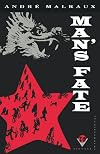
What a tale of jihad and lust during a civil war. If that appears reductive, there is a touch more shadow and verse at play in this gripping and frenetic novel of Shanghai in 1927.
Equally dogmatic and dour, Man's Fate is episodic in terms of narrative and ensemble. There is gore and grief and considerable historical certainty at what the Future holds----even as the vanquished are tortured and often burned alive. Elements are included of miscegenation and misogyny. These simply enhance the show more noir. There's plenty of silence, muttering and plaintive smoking. There's a suicide bomber and a confidence man straight out of Melville. show less
Equally dogmatic and dour, Man's Fate is episodic in terms of narrative and ensemble. There is gore and grief and considerable historical certainty at what the Future holds----even as the vanquished are tortured and often burned alive. Elements are included of miscegenation and misogyny. These simply enhance the show more noir. There's plenty of silence, muttering and plaintive smoking. There's a suicide bomber and a confidence man straight out of Melville. show less

Man’s Hope is an epic novel about the Spanish Civil War of 1936-1939. During this bloody conflict, the Fascist elements of the Spanish military and the Catholic church, under the leadership of the Falangist dictator Francisco Franco, were supported vigorously by Benito Mussolini’s Italy and Adolf Hitler’s Germany and overthrew the leftist Republican government of Spain which was supported by the Soviet Union and by individual citizens of the Western European nations.
André Malraux was show more among many anti-Fascist Europeans who volunteered to fight for the Republicans, and he played a significant role as an organizer of the International Squadron of aircraft for the Republic. Man’s Hope is based on Malraux's experiences which he chronicled during the battles on the Republican side and and published while the war was still raging; it depicts the events of 1936-1937 as an adventure of the human spirit within a framework of historical, political, and philosophical ideas.
The novel is divided into three parts of which the first, “Careless Rapture”, begins with the optimistic and carefree mood of the Republican militia and their international volunteer comrades during the first summer of the Civil War. The second section of part 1, entitled “Prelude to Apocalypse,” concerns the mismanagement of the emotions of the Republican movement. This is followed by “The Manzanares” (the second part), with sections are entitled “Action and Reaction” and “Comrades’ Blood.” “The Manzanares” begins with the rout of the Republicans from Toledo in September, continues with the siege and bombing of the Republicans in Madrid (now a city in flames), and ends in December with the Republican counterattack. The final part of the novel was originally entitled “The Peasants,” but Malraux changed the title to “Hope” in his definitive 1947 revision—probably to underscore its importance for the work as a whole.
A significant theme of the novel concerns the nature of a revolution or popular uprising. From Malraux's perspective, a revolution comes into being under the impetus of a lyric burst of feeling, the best of which is found in freedom and fraternity. At this stage, Anarchism seems to fit well with the revolution. For a revolution to be sustained, however, these feelings have to be disciplined and organized; hence the need for a political machinery such as that of the Communist Party (which will, ironically, destroy the lyric impulses of revolution).
On a political level, then, Man’s Hope dramatizes the self-defining process of a revolution. As it does so, Malraux also explores the meaning of being human. When humanist intellectuals such as Scali are confronted with the brutalities of war and carefree individuals such as Manuel evolve into effective military leaders, they have to come to terms with the meaning of humanity—their own as well as others’. By means of symbolic epiphanies Malraux provides an assurance of hope in the endurance of fundamental humanity. Overall this book is a great sort of mess mirroring the morass of war. show less
André Malraux was show more among many anti-Fascist Europeans who volunteered to fight for the Republicans, and he played a significant role as an organizer of the International Squadron of aircraft for the Republic. Man’s Hope is based on Malraux's experiences which he chronicled during the battles on the Republican side and and published while the war was still raging; it depicts the events of 1936-1937 as an adventure of the human spirit within a framework of historical, political, and philosophical ideas.
The novel is divided into three parts of which the first, “Careless Rapture”, begins with the optimistic and carefree mood of the Republican militia and their international volunteer comrades during the first summer of the Civil War. The second section of part 1, entitled “Prelude to Apocalypse,” concerns the mismanagement of the emotions of the Republican movement. This is followed by “The Manzanares” (the second part), with sections are entitled “Action and Reaction” and “Comrades’ Blood.” “The Manzanares” begins with the rout of the Republicans from Toledo in September, continues with the siege and bombing of the Republicans in Madrid (now a city in flames), and ends in December with the Republican counterattack. The final part of the novel was originally entitled “The Peasants,” but Malraux changed the title to “Hope” in his definitive 1947 revision—probably to underscore its importance for the work as a whole.
A significant theme of the novel concerns the nature of a revolution or popular uprising. From Malraux's perspective, a revolution comes into being under the impetus of a lyric burst of feeling, the best of which is found in freedom and fraternity. At this stage, Anarchism seems to fit well with the revolution. For a revolution to be sustained, however, these feelings have to be disciplined and organized; hence the need for a political machinery such as that of the Communist Party (which will, ironically, destroy the lyric impulses of revolution).
On a political level, then, Man’s Hope dramatizes the self-defining process of a revolution. As it does so, Malraux also explores the meaning of being human. When humanist intellectuals such as Scali are confronted with the brutalities of war and carefree individuals such as Manuel evolve into effective military leaders, they have to come to terms with the meaning of humanity—their own as well as others’. By means of symbolic epiphanies Malraux provides an assurance of hope in the endurance of fundamental humanity. Overall this book is a great sort of mess mirroring the morass of war. show less

Early in Man’s Fate, before the armed uprising in Shanghai that proved a key conflict in China’s early 20th century history, André Malraux describes an interesting way his Chinese revolutionaries transmit secret messages.
Two vinyl recordings labeled as language-teaching records are played, each starting at the same instant. The first record hisses so one can’t hear the words on the second record. At select moments the hissing briefly stops, a quiet interval just long enough so that a show more single word from the second record is heard. Then the hissing resumes until it stops again to allow a second word to be heard. The hissing/quiet/hissing/quiet continues until, by the time both records reach their ends, all words of the message have been revealed. Plus, the two records are always shipped separately to ensure security of the message.
Vinyl Encryption! Nice. Effective for 1920s rebels and not a bad name for a band. It’s even possible to see it as a symbol for how essential coordination and communication are to success, which becomes terribly evident as the revolt goes on.
In this novel Malraux gives the impression he would rather be thought to have a highly original intelligence, or a great capacity for the profound, than anything else praiseworthy. The risk of appearing ordinary in the extraordinary scenes he has composed seems to me slight but, just in case, his characters often express thoughts more apt to arrest and distract the reader than immerse him in the story. In this he does those characters, notably the Gisors, no favors. This heightened desire for originality reminds me of the similarly surnamed Norman Mailer who often seemed to be striving to find ideas that would make people want to talk to him at parties. Malraux emerged into fame from 1920s Paris, a competitive scene for the creatively gifted where one could not, I imagine, not value any effort that might make a memorable impression.
In contrast, Malraux does well with how he makes us aware of conditions provoking the general strike that occurred just before the uprising, simply reporting the slogans expressing demands on banners hung about Shanghai: “A twelve-hour working day,” “No more employment of children under eight,” “Right to sit down for women-workers.” No explanation needed. No wonder the protests and revolt.
I’ve read complaints about Haakon Chevalier’s translation of La Condition Humaine, voiced mostly by readers who acknowledge not knowing French. When one doesn’t know the original language, how is it decided that the translator, not the author, is at fault? One way would be to compare Chevalier’s version to Alistair MacDonald’s, titled A Storm in Shanghai, a title not boding well for McDonald’s effort. Let’s give Haakon some credit. Man’s Fate is a way better title than MacDonald‘s invention. As for the immediately obvious The Human Condition, that strikes me as a literalism that could hardly be duller or more vague. If we have to choose between pretentious titles then at least let us choose the most portentous.
But, well, that’s just, like, my opinion, man.
My other opinion is that this is a dramatic story Malraux has told, with the playing out of the revolution having the qualities of suspense, excitement, and surprise that I like such a story to have. And despite what can seem excessive devotion to profundity and portent in Malraux’s telling, he often enough hits on just the right tone and mood to make his story have an impact it could not otherwise have. He is even, at times, original and possibly profound.
For a more conventional but also good novel set during the Chinese revolution of the 1920s, try The Sand Pebbles by Richard McKenna. show less
Two vinyl recordings labeled as language-teaching records are played, each starting at the same instant. The first record hisses so one can’t hear the words on the second record. At select moments the hissing briefly stops, a quiet interval just long enough so that a show more single word from the second record is heard. Then the hissing resumes until it stops again to allow a second word to be heard. The hissing/quiet/hissing/quiet continues until, by the time both records reach their ends, all words of the message have been revealed. Plus, the two records are always shipped separately to ensure security of the message.
Vinyl Encryption! Nice. Effective for 1920s rebels and not a bad name for a band. It’s even possible to see it as a symbol for how essential coordination and communication are to success, which becomes terribly evident as the revolt goes on.
In this novel Malraux gives the impression he would rather be thought to have a highly original intelligence, or a great capacity for the profound, than anything else praiseworthy. The risk of appearing ordinary in the extraordinary scenes he has composed seems to me slight but, just in case, his characters often express thoughts more apt to arrest and distract the reader than immerse him in the story. In this he does those characters, notably the Gisors, no favors. This heightened desire for originality reminds me of the similarly surnamed Norman Mailer who often seemed to be striving to find ideas that would make people want to talk to him at parties. Malraux emerged into fame from 1920s Paris, a competitive scene for the creatively gifted where one could not, I imagine, not value any effort that might make a memorable impression.
In contrast, Malraux does well with how he makes us aware of conditions provoking the general strike that occurred just before the uprising, simply reporting the slogans expressing demands on banners hung about Shanghai: “A twelve-hour working day,” “No more employment of children under eight,” “Right to sit down for women-workers.” No explanation needed. No wonder the protests and revolt.
I’ve read complaints about Haakon Chevalier’s translation of La Condition Humaine, voiced mostly by readers who acknowledge not knowing French. When one doesn’t know the original language, how is it decided that the translator, not the author, is at fault? One way would be to compare Chevalier’s version to Alistair MacDonald’s, titled A Storm in Shanghai, a title not boding well for McDonald’s effort. Let’s give Haakon some credit. Man’s Fate is a way better title than MacDonald‘s invention. As for the immediately obvious The Human Condition, that strikes me as a literalism that could hardly be duller or more vague. If we have to choose between pretentious titles then at least let us choose the most portentous.
But, well, that’s just, like, my opinion, man.
My other opinion is that this is a dramatic story Malraux has told, with the playing out of the revolution having the qualities of suspense, excitement, and surprise that I like such a story to have. And despite what can seem excessive devotion to profundity and portent in Malraux’s telling, he often enough hits on just the right tone and mood to make his story have an impact it could not otherwise have. He is even, at times, original and possibly profound.
For a more conventional but also good novel set during the Chinese revolution of the 1920s, try The Sand Pebbles by Richard McKenna. show less

Mindenkinek van Képzeletbeli Múzeuma. Ott hordozza a fejében. Benne képviseli magát az összes műalkotás, amit valaha látott, ami megragadt benne, egymás mellett a sok szobor és festmény, szépen elrendezve, esetleg egymás hegyén-hátán, zsúfoltan vagy nagy üres tereket hagyva, a'la Marie Kondo. A Képzeletbeli Múzeum eszméje végigkíséri magát a művészetet a kezdetektől fogva, de folyamatosan bővül, különösen a fényképezés és a különböző médiumok show more térnyerésével - elképzelhető tehát, hogy ma egy pusztamonostori kisboltos vagy csirketenyésztő fejében több műalkotás van elhelyezve (még ha egyiket-másikat rosszul is címkézték fel), mint amennyi anno Raffaelo fejében volt. Ez a Képzeletbeli Múzeum ennek a különös, riportkönyv és művészettörténeti fejtegetés jellemzőit ötvöző kötetnek a központi eleme, közelebbről két személy múzeuma: Malraux-é és Picassóé.
Picassót, azt hiszem, nem kell bemutatni. Még az is alkot valamilyen véleményt róla, aki egy Mondrian képet összetéveszt egy Volvo hűtőrácsával, Matisse-t pedig keveri Festéktüsszentő Hapci Benővel. Hogy miért ilyen közismert Picasso? Ha parasztos választ akarnék adni, az úgy hangozna, hogy "Mer' hülyeségeket festett. Szemet a fül helyére, a fület meg a térdre. Há' ilyent én is tudok, osztán mégis ű lett milijomos." Persze (maximálisan tiszteletben tartva ezt a megközelítést) elképzelhető, hogy ennél komplexebb jelenséggel állunk szemben. Azzal, hogy Picasso a fejében lévő Képzeletbeli Múzeumot úgy használta fel, mint előtte senki más. Míg elődei és kortársai stílust kovácsoltak maguknak, a spanyol megvetette a stílust. Az alkotás nála hatalmas ugrások sorozata, és sosem tudta, hogy ahová ugrik, ott éppen mi van, van-e ott egyáltalán bármiféle talaj, vagy csak a puszta űr. Nem elmélyítette, amit addig elsajátított, hanem igyekezett elfelejteni, szembeszállni vele, folyamatosan konfrontálódott saját addigi sikereivel is. "Nem utánozni kell, amit az élet csinál, hanem úgy kell dolgozni, ahogy ő dolgozik. Mert így az élet ellenében dolgozunk." - mondta. Ezért tűnik úgy, hogy művészete (Picasso amúgy rühellte a "művészet" szót) folyamatos és megdöbbentő metamorfózisok sorozata, amit ha nem is értettek, de mindig érdeklődést váltott ki.
Malraux-t viszont egy picit be kell mutatni. Bár a maga idejében itthon is népszerű regényeket írt, de Franciaországban ennél ismertebb volt mint kultuszminiszter és kultúraszervező, illetve veretes művészeti tanulmányok írója. No most ha Picasso az ösztönember, aki saját múzeuma talajáról újra és újra az ismeretlenbe veti magát, Malraux a teoretikus, aki nagyjából ugyanebből a Képzeletbeli Múzeumból táplálkozik, de ő inkább rendszerezné, összevetné, katalogizálná azt - magyarán igyekszik megérteni az egész miskulanciát. Találkozásuk e könyv lapjain ezért kicsit valamiféle tiszteletteljes párviadalra vagy még inkább fogócskára emlékeztet: Picasso alkot, Malraux meg rohan utána, és próbálja értelmezni. Világos, a teoretikus hátránya behozhatatlan: egy olyan kérdésre keresi a választ, amit lehet, fel sem tettek, olyasvalamit akar megfejteni, ami (legalábbis a művész szerint) nem csak megfejthetetlen, de valójában teljesen érdektelen is. Aztán a Halál (mert "a Halál mindig győz", ahogy Sztálin mondta volt) magával viszi a művészt, a teoretikus pedig magára marad az Életművel. Azt csinál vele, amit akar. A fene tudja, ez megkönnyíti-e a dolgát. show less
Picassót, azt hiszem, nem kell bemutatni. Még az is alkot valamilyen véleményt róla, aki egy Mondrian képet összetéveszt egy Volvo hűtőrácsával, Matisse-t pedig keveri Festéktüsszentő Hapci Benővel. Hogy miért ilyen közismert Picasso? Ha parasztos választ akarnék adni, az úgy hangozna, hogy "Mer' hülyeségeket festett. Szemet a fül helyére, a fület meg a térdre. Há' ilyent én is tudok, osztán mégis ű lett milijomos." Persze (maximálisan tiszteletben tartva ezt a megközelítést) elképzelhető, hogy ennél komplexebb jelenséggel állunk szemben. Azzal, hogy Picasso a fejében lévő Képzeletbeli Múzeumot úgy használta fel, mint előtte senki más. Míg elődei és kortársai stílust kovácsoltak maguknak, a spanyol megvetette a stílust. Az alkotás nála hatalmas ugrások sorozata, és sosem tudta, hogy ahová ugrik, ott éppen mi van, van-e ott egyáltalán bármiféle talaj, vagy csak a puszta űr. Nem elmélyítette, amit addig elsajátított, hanem igyekezett elfelejteni, szembeszállni vele, folyamatosan konfrontálódott saját addigi sikereivel is. "Nem utánozni kell, amit az élet csinál, hanem úgy kell dolgozni, ahogy ő dolgozik. Mert így az élet ellenében dolgozunk." - mondta. Ezért tűnik úgy, hogy művészete (Picasso amúgy rühellte a "művészet" szót) folyamatos és megdöbbentő metamorfózisok sorozata, amit ha nem is értettek, de mindig érdeklődést váltott ki.
Malraux-t viszont egy picit be kell mutatni. Bár a maga idejében itthon is népszerű regényeket írt, de Franciaországban ennél ismertebb volt mint kultuszminiszter és kultúraszervező, illetve veretes művészeti tanulmányok írója. No most ha Picasso az ösztönember, aki saját múzeuma talajáról újra és újra az ismeretlenbe veti magát, Malraux a teoretikus, aki nagyjából ugyanebből a Képzeletbeli Múzeumból táplálkozik, de ő inkább rendszerezné, összevetné, katalogizálná azt - magyarán igyekszik megérteni az egész miskulanciát. Találkozásuk e könyv lapjain ezért kicsit valamiféle tiszteletteljes párviadalra vagy még inkább fogócskára emlékeztet: Picasso alkot, Malraux meg rohan utána, és próbálja értelmezni. Világos, a teoretikus hátránya behozhatatlan: egy olyan kérdésre keresi a választ, amit lehet, fel sem tettek, olyasvalamit akar megfejteni, ami (legalábbis a művész szerint) nem csak megfejthetetlen, de valójában teljesen érdektelen is. Aztán a Halál (mert "a Halál mindig győz", ahogy Sztálin mondta volt) magával viszi a művészt, a teoretikus pedig magára marad az Életművel. Azt csinál vele, amit akar. A fene tudja, ez megkönnyíti-e a dolgát. show less
Lists
Awards


You May Also Like


Associated Authors
Statistics
- Works
- 184
- Also by
- 21
- Members
- 6,573
- Popularity
- #3,734
- Rating
- 3.7
- Reviews
- 93
- ISBNs
- 346
- Languages
- 23
- Favorited
- 17


