
Jacques Bonnet (1) (1949–)
Author of Phantoms on the Bookshelves
For other authors named Jacques Bonnet, see the disambiguation page.
Works by Jacques Bonnet
Tagged
Common Knowledge
- Legal name
- Bonnet, Jacques
- Birthdate
- 1949-07-23
- Gender
- male
- Occupations
- publisher
editor
novelist
art historian
translator
journalist - Nationality
- France
- Places of residence
- Paris, France
- Map Location
- France
- Associated Place (for map)
- Paris, France
Members
Reviews
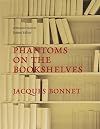
40,000 books. Bonnet has 40,000 books in his personal library. At one point he had bookshelves in his bathroom, so he couldn't use the shower and could only run the bath with the window open. He also had bookshelves in his kitchen, so no cooking with strong flavours could be done either. I've been looking at my 1300 or so books thinking to myself I'm staring into the face of a possible obsession, but 40,000?!? I suddenly feel quite well-adjusted.
I loved this book; it hit just the right note show more of chatty and philosophical, with so many quotable bits I just stopped trying to keep track - I'd have ended up reproducing the book itself. Unlike Books: A Memoir this is entirely about the books: collecting, reading, organising; what Bonnet says about himself might amount to 2 sentences in total if you threw in a few articles and punctuation.
My only, only niggle is the result of my own reading inadequacies: he drops a lot of titles into the text (of course), and most of them are ones I've never heard of and seem to be only available in French. This is entirely understandable, because Bonnet is French and this book was originally written and published in French. So I was left in a few places skimming over French titles that meant little to me; c'est la vie.
Speaking of this being a translation, I can't speak with any authority, but I thought this was an excellent translation insomuch as I felt like the author's personality came through perfectly; the narrative felt smooth and natural and Reynolds took pains at the beginning to explain how French titles would be translated to English based on whether or not an English translation of the book was ever published. A bibliography is also included at the back of books mentioned in the text.
This one is for the book collectors out there; those who love physical books and find tranquility in standing in a room surrounded by them. For you, this is a book worth reading (and owning, of course!). show less
I loved this book; it hit just the right note show more of chatty and philosophical, with so many quotable bits I just stopped trying to keep track - I'd have ended up reproducing the book itself. Unlike Books: A Memoir this is entirely about the books: collecting, reading, organising; what Bonnet says about himself might amount to 2 sentences in total if you threw in a few articles and punctuation.
My only, only niggle is the result of my own reading inadequacies: he drops a lot of titles into the text (of course), and most of them are ones I've never heard of and seem to be only available in French. This is entirely understandable, because Bonnet is French and this book was originally written and published in French. So I was left in a few places skimming over French titles that meant little to me; c'est la vie.
Speaking of this being a translation, I can't speak with any authority, but I thought this was an excellent translation insomuch as I felt like the author's personality came through perfectly; the narrative felt smooth and natural and Reynolds took pains at the beginning to explain how French titles would be translated to English based on whether or not an English translation of the book was ever published. A bibliography is also included at the back of books mentioned in the text.
This one is for the book collectors out there; those who love physical books and find tranquility in standing in a room surrounded by them. For you, this is a book worth reading (and owning, of course!). show less
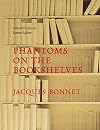
Finally, someone gets me! Someone understands why there are so many books in my house! Someone else is a bibliophile! A gentle book written by someone who reads and buys books for many of the same reasons I do. He is much more erudite, I operate on a much more plebian level, but our thinking about books is much the same. We are not collectors, not really, we just have collected a lot of books. He explains so others can see how this came to be. How you can end up with more books than you will show more ever read -- but you might read them -- so you have to have them on hand. An enjoyable visit with someone who seems to be a pleasure to be around. We could talk books all night.... show less

A short sort of love letter to collecting books, but on a personal level. Many such books, think those by Basbanes, are about rich collectors buying rare books (like Shakespeare folios, or Gutenberg Bibles, etc.), or about institutional, particularly academic, libraries. Here is a book by someone who acquires books for work or personal reasons, and tries to read them or at least use them. Thus he often echoes my reasons for acquiring books: to read, for reference, to remind you of a place, show more to collect a certain author or genre or series. How books are sorted or loaned out or bought, et cetera. The author is a Frenchman, so lots of references to French authors, but lots of English language works an authors make an appearance too. And, the author seems to be a tad bit richer than me, but not too much. An interesting book with some deep insights here and there. A long quotation from page 98 as an appetizer:
The library protects us from external enemies, filters the noise of the world, tempers the cold winds around us – but also gives us the feeling of being all-powerful. For the library makes our puny human capabilities fade into insignificance: it concentrates time and space. It contains on its shelves all the strata of the past. The centuries that have gone before us are there. ("[Writing is] great, very great, in enabling us to converse with the dead, the absent, and the unborn, at all distances of time and space" Abraham Lincoln.) The past haunts libraries, not only in documents bearing witness to past ages, but through scholarly works, literary reconstructions and images of all kinds. But my library is also a concentrate of space. Every region on earth is represented there somewhere, the continents with all their landscapes, their climates and their ways of life. Even imaginary countries like Swift's Lilliput, Musil's Cacania, Buzatti's Desert of the Tartars, Faulkner's Yoknapatawpha County. Or places little known to humans but explored by authors – Ray Bradbury's Martian Chronicles, Dante's Inferno, or Cyrano de Bergerac's Voyages to the Moon and the Sun. I can be transported there in an instant, change my mind immediately, or even find myself in two places at once. All this has something divine about it – which is perhaps why when we talk about libraries, we so easily think in religious terms. show less
The library protects us from external enemies, filters the noise of the world, tempers the cold winds around us – but also gives us the feeling of being all-powerful. For the library makes our puny human capabilities fade into insignificance: it concentrates time and space. It contains on its shelves all the strata of the past. The centuries that have gone before us are there. ("[Writing is] great, very great, in enabling us to converse with the dead, the absent, and the unborn, at all distances of time and space" Abraham Lincoln.) The past haunts libraries, not only in documents bearing witness to past ages, but through scholarly works, literary reconstructions and images of all kinds. But my library is also a concentrate of space. Every region on earth is represented there somewhere, the continents with all their landscapes, their climates and their ways of life. Even imaginary countries like Swift's Lilliput, Musil's Cacania, Buzatti's Desert of the Tartars, Faulkner's Yoknapatawpha County. Or places little known to humans but explored by authors – Ray Bradbury's Martian Chronicles, Dante's Inferno, or Cyrano de Bergerac's Voyages to the Moon and the Sun. I can be transported there in an instant, change my mind immediately, or even find myself in two places at once. All this has something divine about it – which is perhaps why when we talk about libraries, we so easily think in religious terms. show less
Jacques Bonnet works in the French publishing industry, and between his profession and a self-professed case of bibliomania, he has a personal collection of some 40,000 books. Phantoms on the Bookshelves is a brief, breezy reflection on a lifetime spent book-collecting, sprinkled with quotations, aphorisms and anecdotes. Bonnet doesn't develop a lot of his ideas, and I disagreed with several of them, but this is nonetheless an enjoyable trifle.
Lists
You May Also Like


Associated Authors
Statistics
- Works
- 12
- Members
- 742
- Popularity
- #34,227
- Rating
- 3.7
- Reviews
- 30
- ISBNs
- 40
- Languages
- 8