
Tetsu Kariya
Author of Oishinbo à la Carte: Japanese Cuisine
About the Author
Image credit: via AniDB
Series
Works by Tetsu Kariya
美味しんぼ (32) (ビッグコミックス) 5 copies
美味しんぼ (13) (ビッグコミックス) 4 copies
美味しんぼ (38) (ビッグコミックス) 4 copies
美味しんぼ (10) (ビッグコミックス) 3 copies
美味しんぼ (16) (ビッグコミックス) 3 copies
美味しんぼ (18) (ビッグコミックス) 2 copies
美味しんぼ (22) (ビッグコミックス) 2 copies
美味しんぼ (11) (ビッグコミックス) 2 copies
美味しんぼ (19) (ビッグコミックス) 2 copies
美味しんぼ (28) (ビッグコミックス) 2 copies
美味しんぼ (9) (ビッグコミックス) 2 copies
美味しんぼ (25) (ビッグコミックス) 2 copies
美味しんぼ (15) (ビッグコミックス) 2 copies
美味しんぼ (74) (ビッグコミックス) 1 copy
美味しんぼ (99) (ビッグコミックス) 1 copy
美味しんぼ (93) (ビッグコミックス) 1 copy
美味しんぼ (39) (ビッグコミックス) 1 copy
美味しんぼ (34) (ビッグコミックス) 1 copy
美味しんぼ (41) (ビッグコミックス) 1 copy
美味しんぼ 62 = Oishinbo 62 1 copy
Oishinbo (31) 1 copy
[ [ [ Oishinbo: a la Carte: Sake[ OISHINBO: A LA CARTE: SAKE ] By Kariya, Tetsu ( Author )Mar-01-2009 Paperback (2009) 1 copy
美味しんぼ(90) (ビッグコミックス) 1 copy
Oishinbo a la carte 21 I love all! Eggs (Big Comics Special) (2006) ISBN: 4091805388 [Japanese Import] (2006) 1 copy
美味しんぼ 寿司編 1 copy
Tagged
Common Knowledge
- Birthdate
- 20th century
- Gender
- male
- Education
- Tokyo University
- Nationality
- Japan
- Associated Place (for map)
- Japan
Members
Reviews
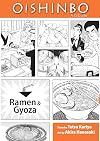
More adventures of Shiro and his friends (and also some who are most decidedly not his friends, such as his father). In this volume, the gang investigates ramen and gyoza (as you might have noodled out from the title), and, in the longest arc in the book, helps a gyoza purveyor save his business from obsolence by cooking up a rather unusual offering.
As always, these English translations are presented "a la carte," a cute way of saying they're taken out of sequence for English readers. show more However, the notes in the back help you fill in any backstory you don't already know.
Downside: you will start craving gyoza in a serious way before you're finished. show less
As always, these English translations are presented "a la carte," a cute way of saying they're taken out of sequence for English readers. show more However, the notes in the back help you fill in any backstory you don't already know.
Downside: you will start craving gyoza in a serious way before you're finished. show less
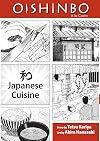
Foodies, Japanese-style. Oishinbo follows the adventures of culinary journalist and slacker Shiro Yamaoka and his partner Yuko Kurita in their apparently never-ending quest to create the "Ultimate Menu," a meal embodying the pinnacle of Japanese cuisine. Shiro often butts heads with his estranged father Yuzan Kaibara, a famous artist (whose sculptures Shiro once smashed to bits -- thus the estrangement) and founder of the ultra-exclusive Gourmet Club.
The American version of this popular show more manga series is published "a la carte," which means that the American publisher pulled it apart and put it back together according to food category. So instead of a coherent narrative, you get all the episodes dealing with sake, sushi, pub food, etc., in one volume. As a result, the continuity gets lost, and you'll probably be a little confused while reading the series in the order it's published in the United States. Still, the end notes do a decent job of explaining the back story you lose, and the main story is simple enough that you won't be lost. This is a fun series that will make you run to the nearest Japanese restaurant hoping to find something you read about here. (This review applies to the other volumes that I read in the series .) show less
The American version of this popular show more manga series is published "a la carte," which means that the American publisher pulled it apart and put it back together according to food category. So instead of a coherent narrative, you get all the episodes dealing with sake, sushi, pub food, etc., in one volume. As a result, the continuity gets lost, and you'll probably be a little confused while reading the series in the order it's published in the United States. Still, the end notes do a decent job of explaining the back story you lose, and the main story is simple enough that you won't be lost. This is a fun series that will make you run to the nearest Japanese restaurant hoping to find something you read about here. (This review applies to the other volumes that I read in the series .) show less

The information about Japanese cooking is the star of this manga, the plot and characters are strident and unsympathetic except when food is involved, and the artwork is pretty repetitive - b&w doesn't really have much appetite appeal.
Japan has one of the very greatest eating and drinking cultures in the world – deep, rich, complex and delicious. Many Japanese people are passionate about food, and will travel all over the country and the globe in search of interesting regional specialities. For a visitor the choice is bewildering. As with many things there, a person could happily spend an entire lifetime just finding new and awesome Japanese food experiences. Where to begin? Well, what worked best for me is this: show more Oishinbo, written by Tetsu Kariya with art by Akira Hanasaki, is a manga about Japanese food and drink. And it’s brilliant.
It’s incredibly detailed. This is because the characters talk about food and pretty much nothing else. From preparation, recipes, ingredients and where they come from, discussion often spins out into the wider subject of old versus new – the necessity of preserving precious traditional ways of doing things as set against the exciting possibilities of new developments, new techniques, new influences.
But all this detail also comes wrapped in a surprisingly compulsive /story/. When challenged by the newspaper he works for to create an Ultimate Menu, moody young misfit journalist Yamaoka Shiro and his friends become locked in a titanic ‘battle of the foodies’ with Shiro’s estranged father, Kaibara Yuzan. Between that and the episodes from the lives of Oishinbo‘s cast of supporting characters – each one of whom is impeccably believable and entertaining to hear about – the result is a reading feast as fascinating and moreish as its subject. And then, after putting the book down, I’ve gone out and eaten, drunk and enjoyed things I’d never even heard about before I picked Oishinbo up. Result! :D
The theory that you can tell a lot about a country and its culture from its food is proved again in Oishinbo: it’s a riveting insight into both Japanese food and Japan itself. But I think this manga’s even better than that. If you’re at all interested in good eating you’ll get a kick out of Oishinbo. In fact if you’re interested in living your life with care and passion for anything else either I reckon you’ll get a kick out of it, too. show less
It’s incredibly detailed. This is because the characters talk about food and pretty much nothing else. From preparation, recipes, ingredients and where they come from, discussion often spins out into the wider subject of old versus new – the necessity of preserving precious traditional ways of doing things as set against the exciting possibilities of new developments, new techniques, new influences.
But all this detail also comes wrapped in a surprisingly compulsive /story/. When challenged by the newspaper he works for to create an Ultimate Menu, moody young misfit journalist Yamaoka Shiro and his friends become locked in a titanic ‘battle of the foodies’ with Shiro’s estranged father, Kaibara Yuzan. Between that and the episodes from the lives of Oishinbo‘s cast of supporting characters – each one of whom is impeccably believable and entertaining to hear about – the result is a reading feast as fascinating and moreish as its subject. And then, after putting the book down, I’ve gone out and eaten, drunk and enjoyed things I’d never even heard about before I picked Oishinbo up. Result! :D
The theory that you can tell a lot about a country and its culture from its food is proved again in Oishinbo: it’s a riveting insight into both Japanese food and Japan itself. But I think this manga’s even better than that. If you’re at all interested in good eating you’ll get a kick out of Oishinbo. In fact if you’re interested in living your life with care and passion for anything else either I reckon you’ll get a kick out of it, too. show less
Lists
You May Also Like


Associated Authors
Statistics
- Works
- 94
- Members
- 1,490
- Popularity
- #17,239
- Rating
- 3.7
- Reviews
- 41
- ISBNs
- 99
- Languages
- 2
- Favorited
- 1