

Nick Stone
Author of Mr. Clarinet
About the Author
Nick Stone is a British author, born in Cambridge, England in 1966. He lived in Haiti with his grandparents for four years. He returned to England in 1970, where he has lived on and off throughout his life. He is a graduate of Cambridge University in history. Before becoming a writer, he worked as show more a legal clerk, dishwasher, and various white-collar office jobs. In 1996, he returned to Haiti. It is there that he found inspiration for his first novel, Mr. Clarinet (2006). It is the first book in the Max Mingus series and followed by King of Swords (2007), and Voodoo Eyes (2011). His most recent book is The Verdict (2014). He is an award-winning writer. His debut novel, Mr. Clarinet, won him The CWA Steel Dagger (2006), International Thriller Writers Award for Best First Novel (2007), and the Macavity Award for Best First Novel (2007). (Bowker Author Biography) show less
Image credit:
www.vjbooks.com
Series
Works by Nick Stone
Angrep i dypet 2 copies
Kuoleman kätyri 1 copy
Yoodoo 1 copy
Voodoo : Roman 1 copy
Conversion Tables 1 copy
Paradis i flammer 1 copy
Snikmorderen 1 copy
Kokainbanden 1 copy
Associated Works
Tagged
Common Knowledge
- Birthdate
- 1966-10-31
- Gender
- male
- Education
- University of Cambridge
- Occupations
- novelist
short story writer - Awards and honors
- Waterstones 25 Authors for the Future (2007)
- Relationships
- Stone, Norman (father)
- Nationality
- UK
- Birthplace
- Cambridge, Cambridgeshire, England, UK
- Places of residence
- London, England, UK
Haiti - Associated Place (for map)
- England, UK
Members
Reviews
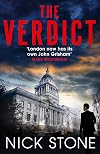
From the outset The Verdict states it's case as an old-fashioned legal thriller; nothing more, nothing less. It is, however, notable for being especially well-written, with the insight of someone acquainted with the law obvious from the start.
Our way into this ethically and morally conflicted world is Terry: at times extremely likeable, at others flawed, but always eye-rollingly human. He keeps our empathy despite his infuriating contradictions and is surprisingly layered. There are all the show more big themes here: family, friendship, justice, revenge, and, yes, plain old right and wrong. All done to death but here they are intertwined pretty well. I was never bored, I was always present (and I'm not the biggest fan of the genre). Some of the characters started out as cliche but were given at least more than one dimension by the end.
I have to give mention to the sense of place created here. This aspect was the most rewarding for me. Descriptions of locations Terry finds himself travelling through were instantly recognisable and vividly drawn. This gave the novel an immediacy and a sharp contemporary feel which complemented the more classic elements of the plot structure.
It speaks volumes that even though this is really not quite my thing I'd recommend it. For those who want to look there is depth here, even seeds of an existential restlessness, and a bit of social commentary. Of course, there is also scandal, breathless action and wicked suspense. These themes are set up rather nicely, the pacing spot-on and the build-up to the mostly satisfying conclusion is deftly constructed.
The inevitable courtroom battle (I'm not giving too much away: it is called The Verdict) kept me engaged and the book is ultimately wrapped up in an enjoyable bow. Fans of the genre should lap this up and the curious might give it a try.
I received a copy of this book through a giveaway from Goodreads First Reads, but all opinions are my own. show less
Our way into this ethically and morally conflicted world is Terry: at times extremely likeable, at others flawed, but always eye-rollingly human. He keeps our empathy despite his infuriating contradictions and is surprisingly layered. There are all the show more big themes here: family, friendship, justice, revenge, and, yes, plain old right and wrong. All done to death but here they are intertwined pretty well. I was never bored, I was always present (and I'm not the biggest fan of the genre). Some of the characters started out as cliche but were given at least more than one dimension by the end.
I have to give mention to the sense of place created here. This aspect was the most rewarding for me. Descriptions of locations Terry finds himself travelling through were instantly recognisable and vividly drawn. This gave the novel an immediacy and a sharp contemporary feel which complemented the more classic elements of the plot structure.
It speaks volumes that even though this is really not quite my thing I'd recommend it. For those who want to look there is depth here, even seeds of an existential restlessness, and a bit of social commentary. Of course, there is also scandal, breathless action and wicked suspense. These themes are set up rather nicely, the pacing spot-on and the build-up to the mostly satisfying conclusion is deftly constructed.
The inevitable courtroom battle (I'm not giving too much away: it is called The Verdict) kept me engaged and the book is ultimately wrapped up in an enjoyable bow. Fans of the genre should lap this up and the curious might give it a try.
I received a copy of this book through a giveaway from Goodreads First Reads, but all opinions are my own. show less
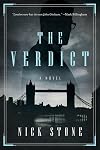
Ooo, here's a big fat juicy Brit courtroom procedural with so many excellent characters and an unusual premise: a leading man who can't decide whether to quit, get fired, or drink the Kool Aid.
Former childhood friends Terry and Vernon attend Cambridge with vastly different outcomes: Vernon becomes a wealthy property owner and Terry flunks out and lands into an alcoholic morass. Twenty years after, the tables are turned and Terry is part of the defense team when Vernon is charged with show more murdering one of two mysterious blonde women in green dresses.
With an extremely diverse cast, including Zambians, Israelis, and Londoners of mixed race, all play crucial roles. Every single person in the large population of dramatis personae is critical to the outcome of the story. This is the type of novel where the reader wishes to stay in place, abandoning all other pursuits, and to turn the pages until replete. Highly recommended. show less
Former childhood friends Terry and Vernon attend Cambridge with vastly different outcomes: Vernon becomes a wealthy property owner and Terry flunks out and lands into an alcoholic morass. Twenty years after, the tables are turned and Terry is part of the defense team when Vernon is charged with show more murdering one of two mysterious blonde women in green dresses.
With an extremely diverse cast, including Zambians, Israelis, and Londoners of mixed race, all play crucial roles. Every single person in the large population of dramatis personae is critical to the outcome of the story. This is the type of novel where the reader wishes to stay in place, abandoning all other pursuits, and to turn the pages until replete. Highly recommended. show less
I will always remember where I was when I finished Presumed Innocent by Scott Turow all those many years ago (a small dilapidated rental in Indianapolis, Indiana) because the twist ending totally surprised me (which doesn’t happen often)! Nick Stone has been described as England’s John Grisham, but I see more of Turrow in him, myself. The Verdict doesn’t have one big surprise ending, but multiple twists throughout the narrative that make it almost impossible to put down. (I actually show more stayed up until 1:00am finishing this book on a work day)!
One of the things I most enjoyed about this novel was the view into the British legal system, and the similarities to differences between our own. Terry Flynt is a law clerk (as opposed to a paralegal, solicitor or barrister) whose temporary job has turned into a full time stint at the prestigious Kopf-Randall-Purdom assisting the head of the Criminal Defense Division – essentially keeping the wealthy corporate clients and their progeny out of trouble and/or jail. When KRP lands a big case, the defense of a wealthy banker accused of murdering a woman in his hotel room, the entire firm is ecstatic – except for Terry. For Vernon James, the accused, is a former friend from Terry’s past who was instrumental in a huge betrayal from which Terry is still recovering.
To keep his job, Terry must participate in VJ’s defense, but his hatred of his former friend causes an internal moral struggle – help find evidence of VJ’s innocence, ignore evidence of his guilt, or do his best to make sure VJ is incarcerated for the rest of his life.
Who is telling the truth and who is lying? What really happened in that hotel room? Does insurmountable evidence necessarily prove guilt? And what secrets should remain hidden. Nick Stone provides enough twists and turns, as well as fascinating trial details, to keep the reader quickly turning the pages of this legal thriller, until the satisfying, but unexpected, ending. show less
One of the things I most enjoyed about this novel was the view into the British legal system, and the similarities to differences between our own. Terry Flynt is a law clerk (as opposed to a paralegal, solicitor or barrister) whose temporary job has turned into a full time stint at the prestigious Kopf-Randall-Purdom assisting the head of the Criminal Defense Division – essentially keeping the wealthy corporate clients and their progeny out of trouble and/or jail. When KRP lands a big case, the defense of a wealthy banker accused of murdering a woman in his hotel room, the entire firm is ecstatic – except for Terry. For Vernon James, the accused, is a former friend from Terry’s past who was instrumental in a huge betrayal from which Terry is still recovering.
To keep his job, Terry must participate in VJ’s defense, but his hatred of his former friend causes an internal moral struggle – help find evidence of VJ’s innocence, ignore evidence of his guilt, or do his best to make sure VJ is incarcerated for the rest of his life.
Who is telling the truth and who is lying? What really happened in that hotel room? Does insurmountable evidence necessarily prove guilt? And what secrets should remain hidden. Nick Stone provides enough twists and turns, as well as fascinating trial details, to keep the reader quickly turning the pages of this legal thriller, until the satisfying, but unexpected, ending. show less
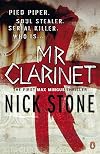
Just who REALLY paid the piper?
Reading an author's debut book sometimes feels like a double edged sword, yes should the they be successful and go on to write a whole series about a particular character then you are starting at the very beginning, on the ground floor so to speak (unless the second offering, as in this case, is a prequal) but then the writing style may not be fully honed as yet and later books are above basement level. On the whole I feel that this a fairly accomplished first show more novel.
The story revolves around an ex-cop, ex-PI and recent ex-con Max Mingus being employed to search for the missing son of powerful and wealthy parents in Haiti, a brutal and highly superstitious country where death in its many guises is never far away.
Now the author has certainly done a lot of background research into Haiti, its people, politics and environment and in particular how its people has been let down both by its own leaders but also the larger world and the UN in particular, some of the descriptions of the squalid living conditions that the majority endure is pretty harrowing. However, in a rather strange way this also had a negative effect on me as I ended up thinking a lot more of their plight and how it might be improved than I did of the main characters.
The main characters are fairly well portrayed from the determined and callous Gustav, the beautiful Chantale, the distraught mother Francesca and the powerful but benevolent drug Baron Vincent Paul. However, there are also a couple of typical sterotypes in particular the weak, gay 'father' Allain. Yet strangely the character that I really found hardest to like was Max himself. He fits too many cliches, he is obviuosly still grieving for his late wife, a recovering alcoholic and is steadfastedly determined to succeed. The typical flawed lead character.
Throughout the book there is an almost palpable undercurrent of violence with a couple of the most excrutiating (from a male point of view at least) punishment sections that I think that I have ever read, but strangely despite Max putting himself in some pretty precarious situations, mainly due to alcohol, and obviously a pretty tough guy himself he is kept pretty well insulated from it all.
The pace of the book starts off slowly, it is a cold case afterall, and then picks up but in the end it felt just a little too rushed, a little too neat. That said my main fault was that I did not feel that Max actually uncovered anything evidence on his own account in the end but was rather led along througthout the story by others rather like a bull with a ring thougth its nose. Also just why did Chantale suddenly have to disappear from the scene after the author had so painstakingly portrayed her.
I was split between awarding this book either 3 or 4 stars but eventually plumped for the latter. As a debut book it certainly showed plenty of promise and perhaps above all it left me thinking about the plight of the people of Haiti, this blighted half of Espanyol.A country I admit I know little about. I mean would the local children really be better off living in other richer countries, althought obviously not with loving families not peadophiles, rather than their own? Even if that meant someone selling them? show less
Reading an author's debut book sometimes feels like a double edged sword, yes should the they be successful and go on to write a whole series about a particular character then you are starting at the very beginning, on the ground floor so to speak (unless the second offering, as in this case, is a prequal) but then the writing style may not be fully honed as yet and later books are above basement level. On the whole I feel that this a fairly accomplished first show more novel.
The story revolves around an ex-cop, ex-PI and recent ex-con Max Mingus being employed to search for the missing son of powerful and wealthy parents in Haiti, a brutal and highly superstitious country where death in its many guises is never far away.
Now the author has certainly done a lot of background research into Haiti, its people, politics and environment and in particular how its people has been let down both by its own leaders but also the larger world and the UN in particular, some of the descriptions of the squalid living conditions that the majority endure is pretty harrowing. However, in a rather strange way this also had a negative effect on me as I ended up thinking a lot more of their plight and how it might be improved than I did of the main characters.
The main characters are fairly well portrayed from the determined and callous Gustav, the beautiful Chantale, the distraught mother Francesca and the powerful but benevolent drug Baron Vincent Paul. However, there are also a couple of typical sterotypes in particular the weak, gay 'father' Allain. Yet strangely the character that I really found hardest to like was Max himself. He fits too many cliches, he is obviuosly still grieving for his late wife, a recovering alcoholic and is steadfastedly determined to succeed. The typical flawed lead character.
Throughout the book there is an almost palpable undercurrent of violence with a couple of the most excrutiating (from a male point of view at least) punishment sections that I think that I have ever read, but strangely despite Max putting himself in some pretty precarious situations, mainly due to alcohol, and obviously a pretty tough guy himself he is kept pretty well insulated from it all.
The pace of the book starts off slowly, it is a cold case afterall, and then picks up but in the end it felt just a little too rushed, a little too neat. That said my main fault was that I did not feel that Max actually uncovered anything evidence on his own account in the end but was rather led along througthout the story by others rather like a bull with a ring thougth its nose. Also just why did Chantale suddenly have to disappear from the scene after the author had so painstakingly portrayed her.
I was split between awarding this book either 3 or 4 stars but eventually plumped for the latter. As a debut book it certainly showed plenty of promise and perhaps above all it left me thinking about the plight of the people of Haiti, this blighted half of Espanyol.A country I admit I know little about. I mean would the local children really be better off living in other richer countries, althought obviously not with loving families not peadophiles, rather than their own? Even if that meant someone selling them? show less
Lists
Awards


You May Also Like


Associated Authors
Statistics
- Works
- 25
- Also by
- 3
- Members
- 925
- Popularity
- #27,744
- Rating
- 3.3
- Reviews
- 28
- ISBNs
- 76
- Languages
- 6
- Favorited
- 2