
John Connolly
Author of The Book of Lost Things
About the Author
John Connolly is the author of "Every Dead Thing" which was a bestseller in Britain and Ireland. He is a regular contributor to "The Irish Times," and has traveled extensively in the United States. He lives in Dublin, Ireland. (Publisher Provided) John Connolly was born May 31, 1968 in Dublin. He show more is an Irish writer who is best known for his series of novels starring private detective Charlie Parker. His first novel, Every Dead Thing was nominated for the Bram Stoker Award for Best First Novel and went on to win the 2000 Shamus Award for Best First Private Eye Novel (he is the first author outside of the US to have won the award). Connolly's debut introduced readers to the anti-hero Charlie Parker, a former police officer hunting the killer of his wife and daughter. Connolly has since written a further 5 books in the popular Parker series and a non-Parker thriller, as well as venturing outside of the crime genre with the publication of first, an anthology of ghost stories and later, a novel about a young boy's coming-of-age journey during World War II England. Before becoming a full-time novelist, Connolly worked as a journalist, a barman, and a local government official. After graduating with a B.A. in English from Trinity College, Dublin and a M.A. in Journalism from Dublin City University, he spent five years working as a freelance journalist for The Irish Times newspaper. He quickly became frustrated with the profession, and began to write Every Dead Thing in his spare time. Connolly continues to contribute articles to the paper. His eighth book in the Charlie Parker series, The Reapers, was published in 2008. The tenth Parker novel, titled The Whisperers, was published in 2010. His current bestseller is A Time of Torment, the fourteenth in the Charlie Parker series.. (Bowker Author Biography) show less
Image credit: John Connolly on May 19, 2013 in Saint-Malo, France
Series
Works by John Connolly
Filthy Rich: A Powerful Billionaire, the Sex Scandal that Undid Him, and All the Justice that Money Can Buy - The Shocking True Story of Jeffrey Epstein (2016) 516 copies, 19 reviews
Books to Die For: The World's Greatest Mystery Writers on the World's Greatest Mystery Novels (2012) — Editor — 279 copies, 10 reviews
The Social Organisation of Marketing A Figurational Approach to People, Organisations, and Markets (2017) 6 copies
Gaelic Games in Society: Civilising Processes, Players, Administrators and Spectators (Palgrave Studies on Norbert Elias) (2020) 3 copies
The Inkpot Monkey 2 copies
Musica Nocturna 2 copies
Defender 1 copy
Il libro delle ossa 1 copy
Furia omicida 1 copy
En lo mas profundo del Sur 1 copy
Στον βρώμικο νότο 1 copy
I Live Here 1 copy
Connolly Export Shrinkwrap 3 for 2 containing White Road, Killing Kind and Dark Hollow (2004) 1 copy
US Magazine (Heidi Fleiss: A Dangerous Woman - The Hollywood Madam / Tom Hanks / Mariah Carey) (1993) 1 copy
Crimespree Magazine #49 1 copy
Associated Works
Bibliomysteries: Crime in the World of Books and Bookstores, Volume One (2013) — Contributor — 241 copies, 14 reviews
The Lineup: The World's Greatest Crime Writers Tell the Inside Story of Their Greatest Detectives (2009) — Contributor — 239 copies, 5 reviews
Where Nightmares Come From: The Art of Storytelling in the Horror Genre (2017) — Interviewee — 46 copies, 3 reviews
Down These Green Streets: Irish Crime Writing in the 21st Century (2011) — Contributor — 25 copies, 1 review
Hebbes ... : nieuwe smaakmakers voor ... — Contributor — 2 copies
Tagged
Common Knowledge
- Legal name
- Connolly, John
- Birthdate
- 1968-05-31
- Gender
- male
- Education
- Trinity College, Dublin (BA)
Dublin City University (MA) - Occupations
- journalist
writer - Organizations
- Irish Times
- Relationships
- Ridyard, Jennifer (spouse)
- Nationality
- Ireland
- Birthplace
- Dublin, Ireland
- Places of residence
- Dublin, Ireland
- Map Location
- Ireland
Members
Discussions
The Book of Lost Things book discussion in Hogwarts Express (May 2024)
WWII, boy, alternate world? in Name that Book (February 2009)
Reviews
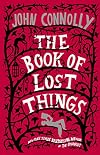
I don't even know what to say. This book will break your heart, make you shudder in fright, and have you widening your eyes over how Connolly changes up some of our favorite fairy tales and myths. I thought this book was great from beginning to end and I worried throughout about would happen to David (our young protagonist). The book's writing and flow were exceptional though in the end I wanted more. It felt like the book ended too soon.
"The Book of Lost Things" follows a young character show more named David. David, is 12, and loves to read, just like his mother. His best memories are of them reading side by side without talking. Books talk to David in a way that no one else is able to besides his mother. When David's mother dies his world changes again and he is left angry with only the books whispering to him. One night things change and he finds himself in a world that resembles some of the books that he has read. He comes across friends and foes and travels in order to meet a king of a book that he believes can send him home.
So David. Ah my heart. I was walking beside him as he met the Woodsman, Roland, and the Loups. I felt for him and his anger at losing his mother and how his world kept changing. I even understood the bitterness he had for certain other characters (I won't spoil) too. But in the end, he had a lot of heart and courage. I don't think I have liked a character this much since Lyra Belacqua (see His Dark Materials). We get to see David's character evolve from beginning to end and I thought it was excellently shown.
I have to say that David's father kind of drove me up the wall. Based on context clues we can guess what he was up to during WWII. However, he didn't seem that engaged as a father though you know he loves his son.
The characters that David meets in his journey once he crosses over are memorable. We have the Woodsman who decides he will keep David safe. Then we have Roland, a knight who is off to find out what happened to his friend. We also have the Loups (dangerous half men and half wolves) and the Crooked Man. The leader of the Loups was provided his own POV at times, and I definitely did not pity him until we get to the end. The Crooked Man was devious and I kept racking my brain what fairy tale character he was supposed to represent until we get some clues here and there. Definitely liked how it was set up. We also get some funny looks at "Snow White and the 6 Dwarfs" yeah don't ask what happened to one of them. And we find out more about who Sleeping Beauty really is underneath.
The writing was very good and I loved that the headers of the chapter give you a sense of what was coming next. Connolly manages to get you into David's head and it causes you to recall all of the anger and frustration that you used to feel at your parents when you were young and felt like they just didn't understand you. I thought the flow was great too.
I maybe went, well next time listen to your sister after this tale was finished. No hints about who this is about.
Seriously the dwarfs were a highlight. I laughed a lot. Considering how dark the rest of the book was, I can appreciate that Connolly let a little light in.
The setting of the book starts during WWII in England. When David crosses over I called the place "Not A Storybook Ending" because you randomly kept having tales provided to you about what really happened to certain people like Goldilocks and what it means when tales end with "and so and so was never seen again." Everything definitely has a darker tint to it in this world.
In the end I have to applaud Connolly for having a realistic ending to this book. Considering what came before and what we find out about fairy tales, you can't expect and then they lived "happily ever after." I liked the afterword and the information we got on the fairy tales that were discussed and used as plot points or tales in this book like "Little Red Riding Hood,", "The Water of Life," and others. show less
"The Book of Lost Things" follows a young character show more named David. David, is 12, and loves to read, just like his mother. His best memories are of them reading side by side without talking. Books talk to David in a way that no one else is able to besides his mother. When David's mother dies his world changes again and he is left angry with only the books whispering to him. One night things change and he finds himself in a world that resembles some of the books that he has read. He comes across friends and foes and travels in order to meet a king of a book that he believes can send him home.
So David. Ah my heart. I was walking beside him as he met the Woodsman, Roland, and the Loups. I felt for him and his anger at losing his mother and how his world kept changing. I even understood the bitterness he had for certain other characters (I won't spoil) too. But in the end, he had a lot of heart and courage. I don't think I have liked a character this much since Lyra Belacqua (see His Dark Materials). We get to see David's character evolve from beginning to end and I thought it was excellently shown.
I have to say that David's father kind of drove me up the wall. Based on context clues we can guess what he was up to during WWII. However, he didn't seem that engaged as a father though you know he loves his son.
The characters that David meets in his journey once he crosses over are memorable. We have the Woodsman who decides he will keep David safe. Then we have Roland, a knight who is off to find out what happened to his friend. We also have the Loups (dangerous half men and half wolves) and the Crooked Man. The leader of the Loups was provided his own POV at times, and I definitely did not pity him until we get to the end. The Crooked Man was devious and I kept racking my brain what fairy tale character he was supposed to represent until we get some clues here and there. Definitely liked how it was set up. We also get some funny looks at "Snow White and the 6 Dwarfs" yeah don't ask what happened to one of them. And we find out more about who Sleeping Beauty really is underneath.
The writing was very good and I loved that the headers of the chapter give you a sense of what was coming next. Connolly manages to get you into David's head and it causes you to recall all of the anger and frustration that you used to feel at your parents when you were young and felt like they just didn't understand you. I thought the flow was great too.
"The boy cast the berries aside as the path behind him vanished forever, and he followed the woman into the house, where a great cauldron bubbled on the fire and a sharp knife lay waiting on the butcher’s block. And he was never seen again."
I maybe went, well next time listen to your sister after this tale was finished. No hints about who this is about.
"He had quite liked the dwarfs. He often had no idea what they were talking about, but for a group of homicidal, class-obsessed small people, they were really rather good fun."
Seriously the dwarfs were a highlight. I laughed a lot. Considering how dark the rest of the book was, I can appreciate that Connolly let a little light in.
The setting of the book starts during WWII in England. When David crosses over I called the place "Not A Storybook Ending" because you randomly kept having tales provided to you about what really happened to certain people like Goldilocks and what it means when tales end with "and so and so was never seen again." Everything definitely has a darker tint to it in this world.
In the end I have to applaud Connolly for having a realistic ending to this book. Considering what came before and what we find out about fairy tales, you can't expect and then they lived "happily ever after." I liked the afterword and the information we got on the fairy tales that were discussed and used as plot points or tales in this book like "Little Red Riding Hood,", "The Water of Life," and others. show less
These books just keep getting better. Nastiest villain so far. And I do mean naaasty and his hit man is the stuff of nightmares. If you find spiders to be unsettling, you are really in for a treat. I found myself brushing imaginary webs off my arms during this one several times. Parker and his friends Angel and Louis may be over their heads in this one as they go up against a well connected ostensibly religious cult that uses murder as one of its main ways of keeping its power base in line.
I show more found the historical aspects of this installment to add a whole new level of interest—a fascinating history of religious cults/religious communities is woven into a relentless story line.
Highest recommendation.
And again, I bought the 4th book before I finished this one. show less
I show more found the historical aspects of this installment to add a whole new level of interest—a fascinating history of religious cults/religious communities is woven into a relentless story line.
Highest recommendation.
And again, I bought the 4th book before I finished this one. show less
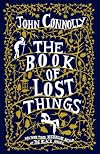
A fairy tale for adults along the lines of Neil Gaiman's Neverwhere. Definitely some Grimm influence here - you'll recognize shades of the tales - and echoes of Narnia. David is a young boy when his mother dies and they had shared a love of books and stories, which give him some solace upon her death, but it is wartime in London and his father is very busy with a government job and David misses his mother terribly. When his father meets and marries Rose who quickly becomes pregnant, they all show more move to the countryside to her family manor and strange things begin to happen. David has "episodes" - like seizures - in part brought on by his feelings of no control and his dislike for Rose and the family's new life. But he also begins to hear books whispering to him, has vivid disturbing dreams, and thinks he sees a "crooked" man in his room. The room he was given is rather creepy -- literally, with vines that grow thick and cover his window and it was filled with books, which in some ways was a good fit, but many of them are bizarre tales and they have the name Jonathan Tulvey inscribed. This was Rose's great-uncle who disappeared when he was a young boy, along with a ward of the family, Anna. Creepier. Meanwhile, David is feeling displaced by his baby brother, Georgie, and hates him and acts out and sulks. One night, a German bomber goes down on the vast property, near the sunken garden David frequents. He goes to investigate and is propelled into an alternate world. This becomes another whole story - the true fairy tale - of a kingdom in ruins and besieged by wolves and other beasts. David must try to find the king and his Book of Lost Things to return to his real life. It is a heroic, coming of age journey, where David learns to use his smarts, gains bravery, sees horrific deaths and destruction (definitely for adults - my stomach turned at some of the descriptions). David must take on the insidious trickery of the crooked man who promises to return him home if he will just reveal his little brother's name. He also fights wolves, trolls, various spell-bound creatures and comes to learn the true identity of the ineffective, sham king. His true heart and his brains save him and restore order. A dark and compelling tale that comes around to a deeper truth and meaning about life in the end. show less
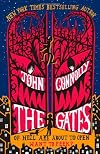
The Gates by John Connolly had me laughing and reading bits and pieces out loud to my husband for the entire book. Yes ... there are demons, witchcraft dabblers, The Great Malevolence, mayhem, and the possible end-of-the-world. I know these are not typically characters and topics that one would think of as funny, but in Connolly's hands they are screamingly so. It helps that there is a narrator who pops in, mainly in the footnotes ... Let me stop here for a moment and discuss the footnotes show more bit. I find footnotes to be quite distracting and usually do not appreciate them in my fiction. Heck, I can hardly stand them when I'm reading scholarly material, but I understand the necessity in that venue. But the footnotes Connolly writes into The Gates add to the hilarity. I couldn't help hearing the musical jingle from Hitchhikers Guide to the Galaxy fade in and out as I read the footnotes. I also couldn't help hearing the narrator's voice from Hitchhikers Guide to the Galaxy when I read the footnotes. I can probably attribute this to the fact that in both Hitchhikers Guide and The Gates the narrator is trying to explain the outrageous that really can't be explained. So, what I'm trying to say is that I didn't find the footnotes to be a distraction at all and thought they made the book even funnier. Anyway, moving on from the footnotes ...
Young Samuel Johnson is a little boy that you can't help but love. He is rather nerdy, wears thick glasses and tries really hard to please people. For instance, he thinks he is showing initiative (and don't adults love it when kids show initiative?) by getting a head start on the Halloween night crowds and going door-to-door three days early. Instead he simply baffles the adults who misinterpret his actions as obnoxious or, at the very least, see him as a bit daft. So when Samuel witnesses the beginnings of an invasion of earth by a horde of demons he has a difficult time convincing the adults that he is not just a little boy with an overactive imagination. YES! Impending doom! The end-of-the-world is coming! Caused by the intersection of the supernatural and science (this is where the Hadron Collider comes in; really, you just have to read it)!
Can little Samuel Johnson and his dog, Boswell, save the world? show less
Young Samuel Johnson is a little boy that you can't help but love. He is rather nerdy, wears thick glasses and tries really hard to please people. For instance, he thinks he is showing initiative (and don't adults love it when kids show initiative?) by getting a head start on the Halloween night crowds and going door-to-door three days early. Instead he simply baffles the adults who misinterpret his actions as obnoxious or, at the very least, see him as a bit daft. So when Samuel witnesses the beginnings of an invasion of earth by a horde of demons he has a difficult time convincing the adults that he is not just a little boy with an overactive imagination. YES! Impending doom! The end-of-the-world is coming! Caused by the intersection of the supernatural and science (this is where the Hadron Collider comes in; really, you just have to read it)!
Can little Samuel Johnson and his dog, Boswell, save the world? show less
Lists
Unread books (1)
Devilish Books (1)
Must-Read Maine (1)
Edgar Award (1)
To Read - Horror (1)
True Crime Books (1)
To Read (3)
Best Young Adult (2)
At the Library (2)
Magic Realism (1)
Awards


You May Also Like


Associated Authors
Statistics
- Works
- 96
- Also by
- 21
- Members
- 32,068
- Popularity
- #609
- Rating
- 3.9
- Reviews
- 1,257
- ISBNs
- 1,119
- Languages
- 22
- Favorited
- 98


