
Bryan Collier (1) (1967–)
Author of All Because You Matter
For other authors named Bryan Collier, see the disambiguation page.
Works by Bryan Collier
Between the Lines: How Ernie Barnes Went from the Football Field to the Art Gallery (2018) — Illustrator — 141 copies, 10 reviews
Associated Works
Martin's Big Words: The Life of Dr. Martin Luther King, Jr. (2001) — Illustrator — 4,726 copies, 223 reviews
The Art of Reading: Forty Illustrators Celebrate RIF's 40th Anniversary (2005) — Contributor — 273 copies, 3 reviews
Our Children Can Soar: A Celebration of Rosa, Barack, and the Pioneers of Change (2009) — Illustrator — 255 copies, 17 reviews
Tagged
Common Knowledge
- Birthdate
- 1967-01-31
- Gender
- male
- Education
- Pratt Institute (BFA)
- Nationality
- USA
- Associated Place (for map)
- USA
Members
Reviews

"Award-winning illustrator Collier sets images of the present and the past against the text of a beloved song.
Lyrics of “We Shall Overcome,” a song associated with the 1960s-era civil rights movement, are printed in orange capital letters against a strip of brown background along the bottom of each spread. The pictures tell stories, juxtaposing present-day scenes and children in full color against significant events and sites of past struggle in black and white. Endmatter explains the show more significance of said sites and scenes for those who may not know: the Sixteenth Street Baptist Church, Rosa Parks sitting down on a bus, children integrating schools. The opening spreads feature a school-age Black child rising and getting ready for the day with a smile; the middle spreads show the child arriving at school and learning with a multiracial group of peers, a Black teacher at the head of the class. Final spreads show the child walking by a street being painted with Black Lives Matter in yellow, then small crowds standing together and painting a mural together. Collier uses collage with a multitude of faces and layers to place the times and movements in relationship, creating a powerful opportunity for comparison, reflection, and discussion about the past and present. The opening and closing spreads with the smiling child offer the hopeful message Collier reinforces in his note.
This thoughtful work of art comes together with beauty and meaning. (historical note, illustrator's note) (Picture book. 3-10)" www.kirkusreviews.com, A Kirkus Starred Review show less
Lyrics of “We Shall Overcome,” a song associated with the 1960s-era civil rights movement, are printed in orange capital letters against a strip of brown background along the bottom of each spread. The pictures tell stories, juxtaposing present-day scenes and children in full color against significant events and sites of past struggle in black and white. Endmatter explains the show more significance of said sites and scenes for those who may not know: the Sixteenth Street Baptist Church, Rosa Parks sitting down on a bus, children integrating schools. The opening spreads feature a school-age Black child rising and getting ready for the day with a smile; the middle spreads show the child arriving at school and learning with a multiracial group of peers, a Black teacher at the head of the class. Final spreads show the child walking by a street being painted with Black Lives Matter in yellow, then small crowds standing together and painting a mural together. Collier uses collage with a multitude of faces and layers to place the times and movements in relationship, creating a powerful opportunity for comparison, reflection, and discussion about the past and present. The opening and closing spreads with the smiling child offer the hopeful message Collier reinforces in his note.
This thoughtful work of art comes together with beauty and meaning. (historical note, illustrator's note) (Picture book. 3-10)" www.kirkusreviews.com, A Kirkus Starred Review show less

"Two accomplished creators invite Black children to take up their spaces in the world.
Charles’ lyrical text addresses “you, dear child,” in the voice of a loving caregiver, recounting how the world anticipated and prepared for the child’s existence. The child was “dreamed of, / like a knapsack / full of wishes / carried on the backs / of your ancestors,” who worked and built, “because to them, / you always mattered.” The word “matter” is used in both ways: as a noun, as show more the child is made up of the same stuff that makes up the universe, and as a verb, because “strength, power and beauty / lie within,” even though the world will sometimes make the child question whether “they, / or you, / will ever matter.” The universe made room for “you, / your people, / their dreams, / your future,” Charles assures the child. The protesters (“take a breath, / take a stand, / take a knee”) and victims of racist violence (“Trayvon, / Tamir, / Philando”) are mentioned explicitly without becoming the focus; the journey from beginning to end of the book sends a message that is nurturing, nourishing, loving, and reassuring, expanding and deepening the words of the movement it echoes. Collier’s trademark paint-and-collage illustrations use petal shapes with patterns and faces, blue and brown hues, and family scenes and close-ups to embody the child’s growth within affectionate circles of family, community, and universe.
A gem for every household. (author's note, illustrator's note) (Picture book. 5-10)" www.kirkusreviews.com, a kirkus starred review show less
Charles’ lyrical text addresses “you, dear child,” in the voice of a loving caregiver, recounting how the world anticipated and prepared for the child’s existence. The child was “dreamed of, / like a knapsack / full of wishes / carried on the backs / of your ancestors,” who worked and built, “because to them, / you always mattered.” The word “matter” is used in both ways: as a noun, as show more the child is made up of the same stuff that makes up the universe, and as a verb, because “strength, power and beauty / lie within,” even though the world will sometimes make the child question whether “they, / or you, / will ever matter.” The universe made room for “you, / your people, / their dreams, / your future,” Charles assures the child. The protesters (“take a breath, / take a stand, / take a knee”) and victims of racist violence (“Trayvon, / Tamir, / Philando”) are mentioned explicitly without becoming the focus; the journey from beginning to end of the book sends a message that is nurturing, nourishing, loving, and reassuring, expanding and deepening the words of the movement it echoes. Collier’s trademark paint-and-collage illustrations use petal shapes with patterns and faces, blue and brown hues, and family scenes and close-ups to embody the child’s growth within affectionate circles of family, community, and universe.
A gem for every household. (author's note, illustrator's note) (Picture book. 5-10)" www.kirkusreviews.com, a kirkus starred review show less
This picture book for young readers (age 4 and up) is addressed to “you, dear child”: a young African American boy confronting the world around him.
The boy learns:
“Long before you took
your place in this world,
you were dreamed of,
like a knapsack
full of wishes
carried on the backs
of your ancestors . . .
. . . to them, you always mattered.”
Similarly, he is told, no matter what happens, he always has, and always will, matter to his family.
Nevertheless, the author says to the little boy, show more “there will be times when you … will question your place in the universe.” She gives examples of those times, such as:
“. . . . when your Pop Pop turns on the news, and you see people everywhere take a breath, take a stand, take a knee. And you hear Pop Pop’s whispered prayers, as another name is called: Trayvon, Tamir, Philando, and you wonder, if they, or you, will ever matter."
The author writes:
"But did you know that you do?
Did you know that you were born from queens, chiefs, legends?
Did you know that you are the earth?
That strength, power, and beauty lie within you?"
“Since the beginning of time,” she concludes, “you mattered. They mattered. We matter. . . . and always will.”
In an Author’s Note, Tami Charles explained that when her son began to ask questions, she knew she needed to have “The Big Talk” with her son:
“The one where I tell him that while there are many nice people in the world, not everyone is. And that sometimes people will treat others unfairly because of their skin color, race, or religion.”
She explains that she wrote this book to provide parents with a starting point for those conversations, and to remind all children that no matter where they come from, they matter.
Bryan Collier has won a number of Caldecott Honors, in addition to other awards, for his illustrations. Here he employs paint and collage images in a rich palette to show the young boy surrounded by all the influences in his life. He adeptly conveys the emotions of the boy as he reacts to his world with wonder, fear, love, and joy. In his Illustrator’s Note, Collier writes that his grandmother, who raised him, was a quilt maker, and explains how her influence is reflected in his artwork in this story. The use of collage to suggest quilts is evident throughout the story, and adds to the meaning of the words about ancestry, inheritance, and cultural influences.
Evaluation: The words and illustrations combine to create a caring, reassuring message, and perhaps more importantly, an empowering message. Children of all backgrounds will find something to take away from this story. show less
The boy learns:
“Long before you took
your place in this world,
you were dreamed of,
like a knapsack
full of wishes
carried on the backs
of your ancestors . . .
. . . to them, you always mattered.”
Similarly, he is told, no matter what happens, he always has, and always will, matter to his family.
Nevertheless, the author says to the little boy, show more “there will be times when you … will question your place in the universe.” She gives examples of those times, such as:
“. . . . when your Pop Pop turns on the news, and you see people everywhere take a breath, take a stand, take a knee. And you hear Pop Pop’s whispered prayers, as another name is called: Trayvon, Tamir, Philando, and you wonder, if they, or you, will ever matter."
The author writes:
"But did you know that you do?
Did you know that you were born from queens, chiefs, legends?
Did you know that you are the earth?
That strength, power, and beauty lie within you?"
“Since the beginning of time,” she concludes, “you mattered. They mattered. We matter. . . . and always will.”
In an Author’s Note, Tami Charles explained that when her son began to ask questions, she knew she needed to have “The Big Talk” with her son:
“The one where I tell him that while there are many nice people in the world, not everyone is. And that sometimes people will treat others unfairly because of their skin color, race, or religion.”
She explains that she wrote this book to provide parents with a starting point for those conversations, and to remind all children that no matter where they come from, they matter.
Bryan Collier has won a number of Caldecott Honors, in addition to other awards, for his illustrations. Here he employs paint and collage images in a rich palette to show the young boy surrounded by all the influences in his life. He adeptly conveys the emotions of the boy as he reacts to his world with wonder, fear, love, and joy. In his Illustrator’s Note, Collier writes that his grandmother, who raised him, was a quilt maker, and explains how her influence is reflected in his artwork in this story. The use of collage to suggest quilts is evident throughout the story, and adds to the meaning of the words about ancestry, inheritance, and cultural influences.
Evaluation: The words and illustrations combine to create a caring, reassuring message, and perhaps more importantly, an empowering message. Children of all backgrounds will find something to take away from this story. show less
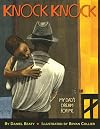
Gorgeous. Definitely not limited to the experience of black boys whose fathers are incarcerated; in fact it's only from the notes that we know that he's in prison (rather than banished, dying in an institution, whatever). Do not miss the symbolism of flight & freedom with the paper airplanes, and of 'the elephant in the room' of those (too subtle for some) silhouettes. Highly recommended to any child or teen who is growing up without one of their role models... and to everyone else who is show more open to empathizing with someone in that situation.
It does seem odd to me that this wonderful father is in prison and for so long... but then, that's true to the extremely racist 'justice' system we have here in the US. show less
It does seem odd to me that this wonderful father is in prison and for so long... but then, that's true to the extremely racist 'justice' system we have here in the US. show less
Lists
Awards


You May Also Like


Associated Authors
Statistics
- Works
- 10
- Also by
- 13
- Members
- 2,873
- Popularity
- #8,917
- Rating
- 4.3
- Reviews
- 297
- ISBNs
- 74
- Languages
- 3