
George Jean Nathan (1882–1958)
Author of Five Great Modern Irish Plays
Series
Works by George Jean Nathan
Critics' Choice: New York Drama Critics' Circle Prize Plays, 1935-1955 (1980) — Introduction — 26 copies
The American Credo A Contribution Toward the Interpretation of the National Mind (2009) 14 copies, 1 review
Testament of a Critic 3 copies
Land Of The Pilgrim's Pride 3 copies
The American Spectator : A Literary Newspaper, Vol. 1 No. 1 (November, 1932) — Editor — 3 copies
The Theatre, the Drama, the Girls 2 copies
The theatre book of the year 2 copies
The theatre in the fifties 2 copies
Comedians all 2 copies
The American Spectator : A Literary Newspaper, Vol. 1 No. 3 — Editor — 1 copy
The American Spectator : A Literary Newspaper, Vol. 1 No. 7 — Editor — 1 copy
The American Spectator : A Literary Newspaper, Vol. 1 No. 6 — Editor — 1 copy
The American Spectator : A Literary Newspaper, Vol. 1 No. 5 — Editor — 1 copy
The American Spectator : A Literary Newspaper, Vol. 1 No. 4 — Editor — 1 copy
The New American Credo 1 copy
Design for loving 1 copy
The House of Satan 1 copy
Associated Works
Tagged
Common Knowledge
- Legal name
- Nathan, George Jean
- Birthdate
- 1882-02-14
- Date of death
- 1958-04-08
- Gender
- male
- Education
- Cornell University
- Occupations
- editor
drama critic - Organizations
- Smart Set magazine
American Mercury magazine [co-founder and editor]
American Spectator newspaper [founding editor]
New York Drama Critics Circle (co-creator) - Relationships
- Nirdlinger, Charles Frederic (uncle)
- Nationality
- USA
- Birthplace
- Fort Wayne, Indiana, USA
- Place of death
- New York, New York, USA
- Burial location
- Gate of Heaven Cemetery, Hawthorne, New York, USA
- Associated Place (for map)
- New York, USA
Members
Reviews

One of the earlier entries in Nathan's annual machine-gunning of the wounded. A few exceptions here, like "Voice of the Turtle," and "Carmen Jones," and a few other plays that he seems to like. But in the main, a certain schadenfreude in watching plays go down. "Allah Be Praised" has the line from Cy Howard about abandoning the play and keeping the store open at nights, and Nathan takes ghoulish glee in putting down a CPA that apparently had the temerity to actually try and write and produce show more a play (just try that today). Back to your desk, peasant. show less

Quite delightfully bitchy, yet informative and contemplative, overview of Broadway productions for the year 1949-1950, part of a series that he produced in the 1940s and 1950s. Very few of the productions meet with his approval, and if it wasn't for the biting wit that accompanies his reviews, as well as his insights, it might get wearisome. But it doesn't. Also interesting in that a number of well-known figures are on the boards at this era. Kate Hepburn comes in for a rare old roasting, as show more does Burgess Meredith, for example. show less

Another in the series of rhetorical machine-gunnings of Broadway productions written by Nathan, whose criticism tended to run into counting failures (much in the same manner as billiard-markers chalking up scores), recitations of how such-and-such a production cribbed from previous productions, and long asides on themes. He does like a handful of productions, like the Glass Menagerie and Carousel, which appeared this year, but for the most part, he seems to be a pretty miserable person.
First sentence from the prologue: You damned tightwad!
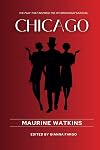
Premise/plot: Roxie Hart stands trial for murder in Maurine Dallas Watkins' play titled Chicago. Will Amos, her husband, stand by her side faithfully? Will Flynn, her lawyer, be able to talk his client out of trouble? Will the newspapers stay focused on the prettiest little murderer the city has ever seen?
The fictional play was inspired by a handful of crime stories from the time--circa 1924--notably Beulah Annan. The play premiered on show more Broadway in December 1926 (at least according to Wikipedia).
My thoughts: I saw the musical in theaters when it released ages ago; I wasn't particularly impressed. I became interested in the story again during my deep-diving into silent films. I watched the 1927 silent film, Chicago, and found it intriguing/entertaining. The next day I watched Roxie Hart a 1942 film adaptation. Chicago (1927) and Roxie Hart (1942) are two very different adaptations. Same basic story, radically different interpretations. After watching these two I decided to seek out the play which I believe may be in the public domain? I found it on archive.org.
I am glad I read this three-act play. It was interesting to see what lines (dialogue) the film(s) kept and how they interpreted the story. Of course, the silent film didn't really have dialogue. But it did capture ALL the melodrama. And it had quite the cat fight between women prisoners. There were scenes that were just GOLD in terms of their timelessness in being entertaining. The 1942 film, of course, had dialogue. Both movies were WORTH watching. I appreciated them for different reasons.
Notably the main difference between Chicago (1927) and Roxie Hart (1942) was WHO was likeable!
In terms of preference, I LOVED, LOVED, LOVED Roxie Hart (1942). I loved Chicago (1927). I liked the play. show less
Premise/plot: Roxie Hart stands trial for murder in Maurine Dallas Watkins' play titled Chicago. Will Amos, her husband, stand by her side faithfully? Will Flynn, her lawyer, be able to talk his client out of trouble? Will the newspapers stay focused on the prettiest little murderer the city has ever seen?
The fictional play was inspired by a handful of crime stories from the time--circa 1924--notably Beulah Annan. The play premiered on show more Broadway in December 1926 (at least according to Wikipedia).
My thoughts: I saw the musical in theaters when it released ages ago; I wasn't particularly impressed. I became interested in the story again during my deep-diving into silent films. I watched the 1927 silent film, Chicago, and found it intriguing/entertaining. The next day I watched Roxie Hart a 1942 film adaptation. Chicago (1927) and Roxie Hart (1942) are two very different adaptations. Same basic story, radically different interpretations. After watching these two I decided to seek out the play which I believe may be in the public domain? I found it on archive.org.
I am glad I read this three-act play. It was interesting to see what lines (dialogue) the film(s) kept and how they interpreted the story. Of course, the silent film didn't really have dialogue. But it did capture ALL the melodrama. And it had quite the cat fight between women prisoners. There were scenes that were just GOLD in terms of their timelessness in being entertaining. The 1942 film, of course, had dialogue. Both movies were WORTH watching. I appreciated them for different reasons.
Notably the main difference between Chicago (1927) and Roxie Hart (1942) was WHO was likeable!
In terms of preference, I LOVED, LOVED, LOVED Roxie Hart (1942). I loved Chicago (1927). I liked the play. show less
Lists
Tom's Bookstore (1)
Awards

You May Also Like


Associated Authors
Statistics
- Works
- 62
- Also by
- 8
- Members
- 392
- Popularity
- #61,821
- Rating
- 3.8
- Reviews
- 9
- ISBNs
- 44
